Brand:

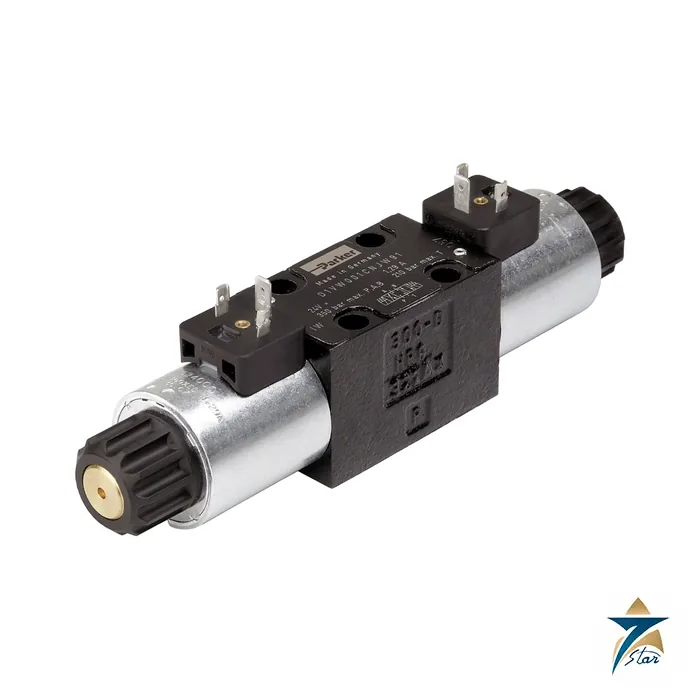
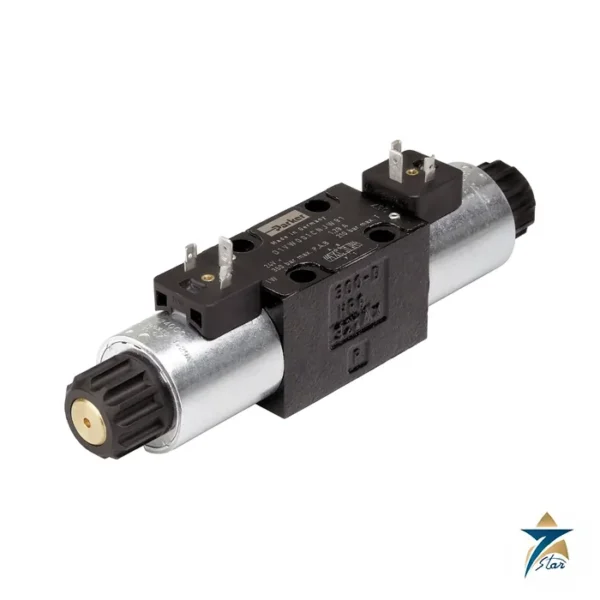
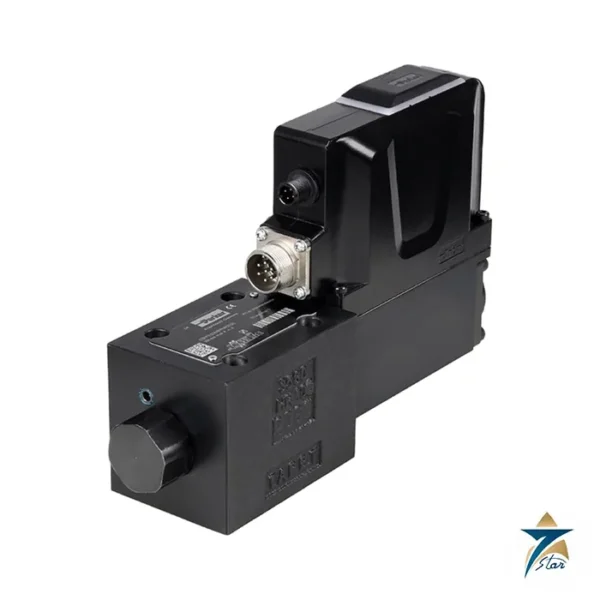
Parker D1VW001CVJW NG06 Solenoid Valve, FPM Seals, 24 V DC

Description

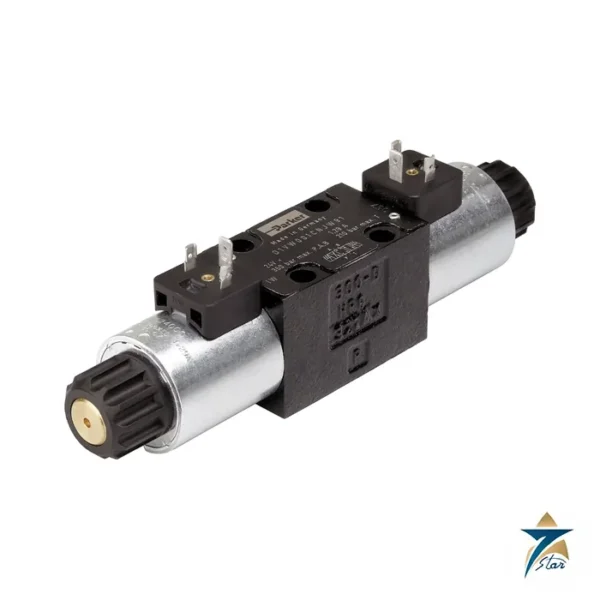
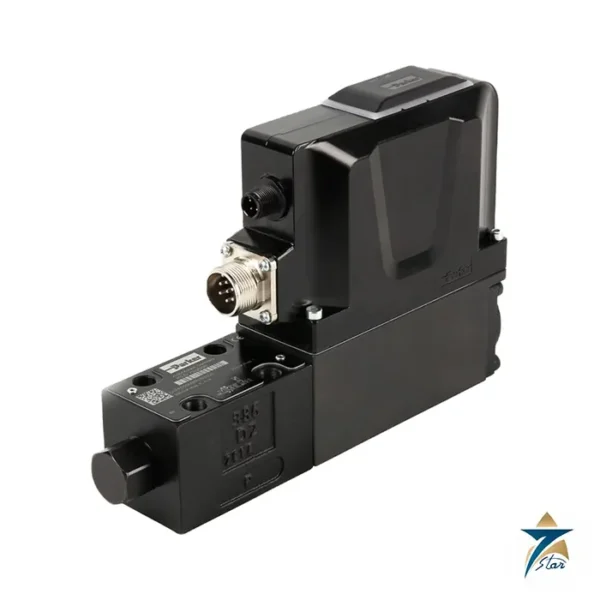
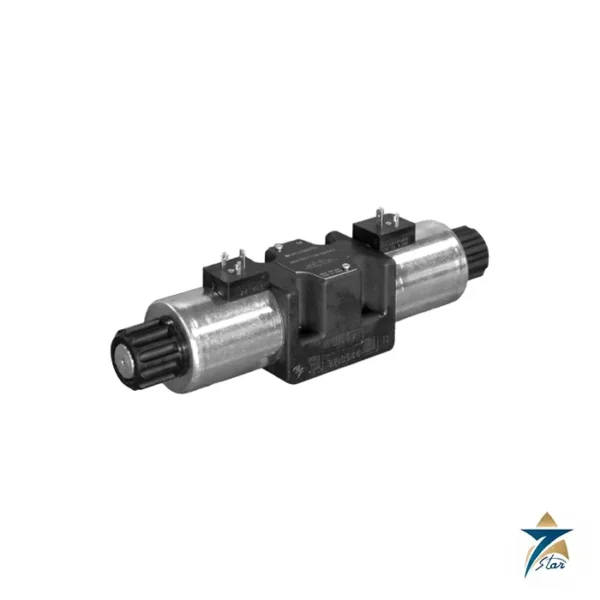
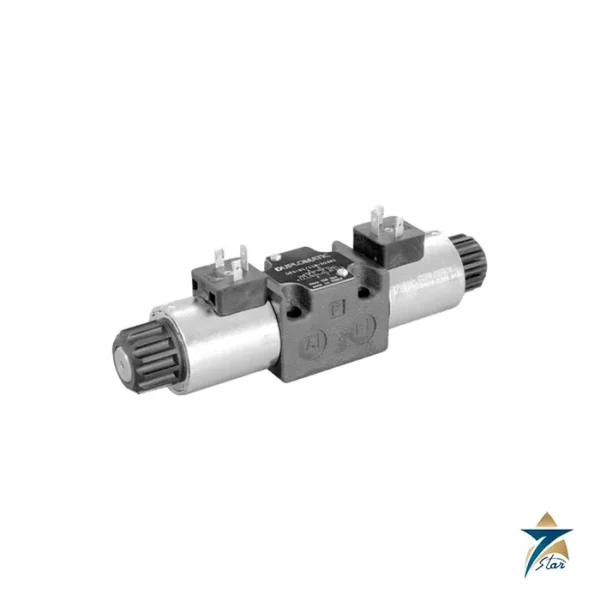
D1VW001CVJW NG06 solenoid valve with FPM seals

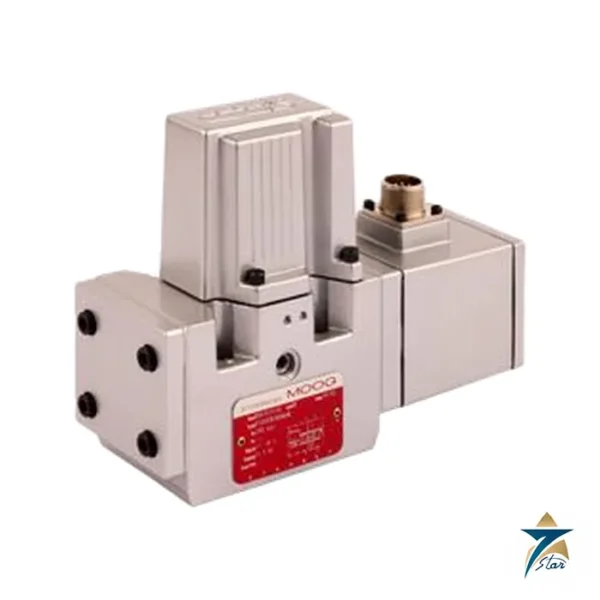
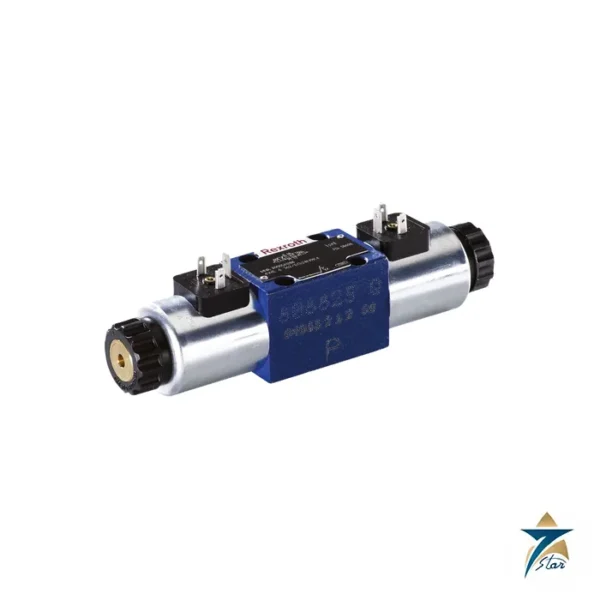
The Parker D1VW001CVJW is the fluorocarbon-sealed version of the D1VW001 directional valve. It keeps the NG06 (CETOP 03 / NFPA D03) footprint, the 24 V DC wet-pin solenoids and the 350 bar rating of the standard valve, but the V in the part number replaces the nitrile seals with FPM. That single letter decides where the valve can be used, so it is the first thing to check when a nitrile valve has hardened, swollen or leaked in an existing machine. Seven Star LLC supplies the D1VW001CVJW in Oman and the GCC.

Reading D1VW001CVJW: what the V changes

The code splits into D (directional valve), 1 (NG06), V (3-chamber body), W (wet-pin solenoid), 001 (spool type), C (three positions, spring offset in 0), V (FPM seals), J (24 V DC), and a closing W for the EN 175301-803 connector without plug. Compared with D1VW001CNJW, only the seal letter differs, so hydraulic symbol, dimensions, solenoids and electrical data are identical. The catalogue also lists a separate mounting-surface seal kit for each material: SK-D1VW-V-91 for FPM against SK-D1VW-N-91 for NBR. Order the kit that matches the valve when you replace the valve on an existing subplate.

D1VW001CVJW technical specifications

Parameter Specification
Manufacturer / part number Parker D1VW001CVJW
Spool type / position 001 / C: three positions, spring offset in position 0, operated in position a or b
Seals FPM (code V)
Solenoid voltage 24 V DC (code J), 1.29 A hold current, 31 W
Weight 2.1 kg (two solenoids)
Valve family Directional spool valve, series D1VW, 3-chamber body with wet-pin threaded-in-tube solenoids
Actuation Solenoid, direct operated
Nominal size / interface DIN NG06 / CETOP 03 / NFPA D03; DIN 24340 A6, ISO 4401, CETOP RP 121-H
Mounting Subplate, any orientation, horizontal preferred
Maximum operating pressure P, A, B: 350 bar; T: 210 bar (DC solenoids)
Maximum flow 80 l/min (limited by the shift-limit curve of the chosen spool)
Fluid Mineral hydraulic oil to DIN 51524; viscosity 2.8 to 400 mm²/s, 30 to 80 recommended
Cleanliness ISO 4406 18/16/13
Ambient temperature −25 to +60 °C
Duty ratio / switching frequency 100 % ED; up to 15,000 switches per hour
Protection class IP65 with the plug-in connector correctly fitted
Electrical connection Connector to EN 175301-803 (plug ordered separately)

Why choose FPM on the D1VW001CVJW

Fluorocarbon elastomers tolerate heat and many fluids that attack nitrile. For this series the catalogue states a fluid temperature range of −20 to +70 °C for FPM, while NBR extends the cold limit to −25 °C. The two materials therefore share the same upper limit, and the gain from FPM lies in chemical and ageing resistance rather than a higher published temperature. The catalogue approves mineral hydraulic oil to DIN 51524 as the working fluid; for any other fluid, send the fluid data sheet and confirm the compatibility before ordering. In practice, plants choose the D1VW001CVJW when the oil is a synthetic hydrocarbon, when the power unit runs hot for long periods, or when previous nitrile seals have failed prematurely.

FPM is stiffer at low temperature, so very cold start-up is a consideration, although Oman and the Gulf rarely see conditions that stress the cold limit. Heat is the more relevant factor: enclosed power packs in direct sun can run well above ambient, and the valve ambient limit is +60 °C.

Flow paths and response of spool 001

The valve switches between three positions. Position 0 is the spring-centred position when both solenoids are off, position a is reached by energising one solenoid, and position b by energising the other. The flow-curve table lists P to A with B to T in position b and P to B with A to T in position a. Standard DC solenoids energise in 45 to 60 ms and de-energise in 20 to 30 ms according to the catalogue, while AC types reach 13 and 20 ms. These numbers depend on spool, flow, pressure and temperature, so treat them as nominal values for timing a sequence rather than as fixed limits.

Switching frequency can reach 15,000 per hour for DC solenoids that are not soft shift. The coil runs at full duty without derating, but its surface can reach 150 °C, so mount the valve where it cannot be touched or covered.

Selection and compatibility notes for D1VW001CVJW

  • Use it as a direct replacement for the nitrile version when the circuit drawing already calls for spool 001 and 24 V DC.
  • For a different centre or two-position behaviour pick another spool and position code in the same family; do not assume a change of seals alone alters the symbol.
  • The manifold must be NG06 with the A6 pattern; four M5 x 30 screws at 7.6 Nm ± 15 % fix the valve.
  • Connectors are not included: order the EN 175301-803 plugs for each solenoid.
  • Check that the pump relief and tank line respect 350 bar on P, A, B and 210 bar on T.

Commissioning and care of the D1VW001CVJW

Before the first start, flush the circuit and bring the oil to ISO 4406 18/16/13. Remove the transport plate, check the O-rings of the subplate are the FPM type if the valve is fitted to an FPM system, and tighten the screws diagonally. Wire the solenoids with 3 x 1.5 mm² cable up to about 50 m and connect the protective conductor. With the system pressurised at low level, use the manual override to shift the spool and confirm the cylinder or motor direction, then run the PLC sequence. A spool that sticks usually points to dirt or varnish in the oil, and a solenoid that runs hot or hums suggests low supply voltage, a missing rectifier or an incorrect plug.

Where the D1VW001CVJW is used in Oman and the GCC

FPM-sealed valves like the D1VW001CVJW are specified for power units that work with hot oil: hydraulic presses and test benches, valve actuator packs on pipeline and plant isolation valves, dock and gate equipment, and skid-mounted pumps in refineries. The combination of dust, salt air in coastal sites and high summer temperatures gives seals a hard life, so the extra material margin can be worthwhile. Typical uses include clamping, tilting, retracting and sequencing functions rather than precise positioning.

D1VW electrical options compared

Code Supply Hold current Hold power
K 12 V DC 2.72 A 32.7 W
J 24 V DC 1.29 A 31 W
U 98 V DC 0.33 A 31.9 W
G 205 V DC 0.13 A 28.2 W
Y 110 V 50 Hz / 120 V 60 Hz 0.6 / 0.55 A 70 VA
T 230 V 50 Hz / 240 V 60 Hz 0.3 / 0.27 A 70 VA

The D1VW001CVJW uses the J row. Inrush on AC coils is far higher than hold current, which is why a controller output must be rated for it.

Information to send with an RFQ for D1VW001CVJW

  • Part number D1VW001CVJW and quantity.
  • Current valve model if this is a replacement, including seal material.
  • Fluid type and maximum working temperature.
  • Plugs, subplates, seal kits or mounting bolts needed.
  • Delivery location.

Documents and quotation

The Parker D1VW catalogue with the ordering code, spool tables, shift limits and dimensions is attached on this page for reference.

Seven Star LLC supplies Parker hydraulic valves in Oman and the GCC. Send the part number D1VW001CVJW and your quantity and we will confirm availability and send a quotation.

Other Models in the Parker D1vw Ng06 Range

Seven Star LLC supplies models from the Parker D1vw Ng06 range in Oman and the GCC. Compare the related models below and request a quote for the one that matches your application.

ModelCategory
Parker D1VW001CNJW NG06 Solenoid Directional Valve 24 V DCHydraulic Valves & ComponentsView details
Parker D1VW001CVJW NG06 Solenoid Valve, FPM Seals, 24 V DCHydraulic Valves & ComponentsYou are viewing this model
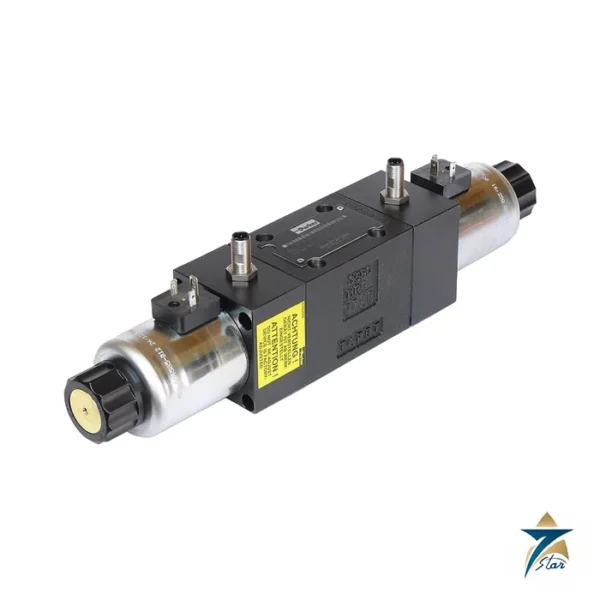
Parker D1VW004CNJW NG06 Solenoid Valve, Tank-Open CentreHydraulic Valves & ComponentsView details
Datasheets & Documents
  • PDF Catalog Parker D1VW Directional Control Valve Catalogue Download
Reviews (0)

Reviews

There are no reviews yet.

How would you rate this product?

It takes about 10 seconds — just tap a star. Your email is never published.

About brand

Parker Hannifin is an American manufacturer of motion and control technologies, founded in 1917 in Cleveland, Ohio, by Arthur L. Parker as the Parker Appliance Company. Its first product was a pneumatic brake system for trucks and buses. In 1957 the company bought Hannifin, a maker of hydraulic and pneumatic cylinders and valves, and took the Parker Hannifin name. It is headquartered in the Cleveland area and listed on the New York Stock Exchange.

Seven Star LLC supplies the Parker items that maintenance teams request most: Lucifer solenoid valves, including NAMUR types for actuated valves, along with filter elements and hydraulic gear pumps.

Parker company profile

Founded 1917, Cleveland, Ohio, USA, by Arthur L. Parker
Headquarters Cleveland area, Ohio, USA
Ownership Public company, New York Stock Exchange (PH), listed since 1964
First product Pneumatic brake system for trucks and buses
Product families Hydraulic pumps, cylinders and valves, pneumatic valves and FRLs, instrumentation fittings and valves, hoses and couplings, filtration (including Racor and Velcon), seals and O-rings

Milestones

  • 1917: Arthur L. Parker starts the Parker Appliance Company in Cleveland.
  • 1924: Parker restarts the business after a 1919 accident destroyed its inventory.
  • 1957: Parker acquires Hannifin and becomes Parker Hannifin.
  • 1964: The shares are listed on the New York Stock Exchange.

Parker product lines listed here

Most of the listing is Lucifer, the Parker solenoid valve line that many nameplates still show as a brand in its own right. The 341N types (341N01, 341N22, 341N31) are NAMUR-interface valves that bolt straight onto a pneumatic actuator to pilot it. The E131K03 is a direct-acting 3/2 valve, and the 322K4706 and 7341NAKBHNM0 are further Lucifer solenoid valves. Parker sells Lucifer valve bodies and their coils or electrical parts as separate items, so one body can be combined with different voltages and enclosure types.

Other Parker lines appear: a hydraulic gear pump (P51A478BEY25-07-ZY), a coalescing filter element (9000040001) and a Triple-Lok 37-degree flare tube fitting.

Where Parker components are used

Lucifer NAMUR valves sit on quarter-turn actuators for on-off and shutdown valves in oil and gas, power and water plants across the GCC. Line-mounted solenoid valves switch instrument air, water, steam and light oils on skids and machines. Gear pumps drive hydraulic power units and mobile equipment, and coalescing elements protect instrument air and gas sampling systems from oil and water aerosols.

Parker products we list

Family Examples
Solenoid Valves 7341NAKBHNM0 Lucifer Series Solenoid Valve, Lucifer 322K4706 2-Way Solenoid Valve, Lucifer 341N01 NAMUR Solenoid Valve, Lucifer 341N22 SOLENOID VALVE, Lucifer 341N31 NAMUR Solenoid Valve, Lucifer E131K03 Solenoid Valve
Filtration Elements 9000040001 Coalescing Filter Element
Pumps P51A478BEY25-07-ZY Hydraulic Gear Pump
Pipes & Fittings Triple-Lok 37° Flare Tube Fitting

Ordering Parker parts: what we need

Parker part numbers are long and every character counts. Please send:

  • Solenoid valves: valve number from the body, coil or electrical part number, voltage and frequency, and the Ex marking if the coil is certified
  • Gear pumps: the complete code from the nameplate, including the assembly number, which fixes displacement, shaft, ports and rotation
  • Filter elements: element number and the housing model it fits

A photo of the nameplate is welcome. We check the code against Parker documentation and identify the manufacturer's current equivalent if a number has been superseded.

Facts checked against Parker's centennial timeline and the Encyclopedia of Cleveland History, October 2026.

FAQ

Questions about the Parker D1VW001CVJW NG06 Solenoid Valve, FPM Seals,

Answers from our engineering team on installation, compatibility and integration.

01What is different between D1VW001CVJW and D1VW001CNJW?
Only the seal material. The V in the part number means FPM seals and the N in the other valve means NBR; spool, solenoids and ratings are the same.
02What voltage does the D1VW001CVJW use?
It uses 24 V DC solenoids, shown by the letter J, with 1.29 A hold current and 31 W per solenoid.
03What is the maximum pressure?
The catalogue rates ports P, A and B to 350 bar and the tank port to 210 bar for DC solenoids, with a maximum flow of 80 l/min depending on the spool shift limit.
04Is the valve supplied with plugs?
No. The final W in the code means the EN 175301-803 connection without plug, so the plug-in connectors must be ordered separately.
05Which fluid should be used?
The catalogue specifies hydraulic oil to DIN 51524 with a recommended viscosity of 30 to 80 mm²/s, filtered to ISO 4406 18/16/13. Confirm other fluids before ordering.