RL31-54/73c/136 retroreflective sensor, 9 m range, push-pull, M12
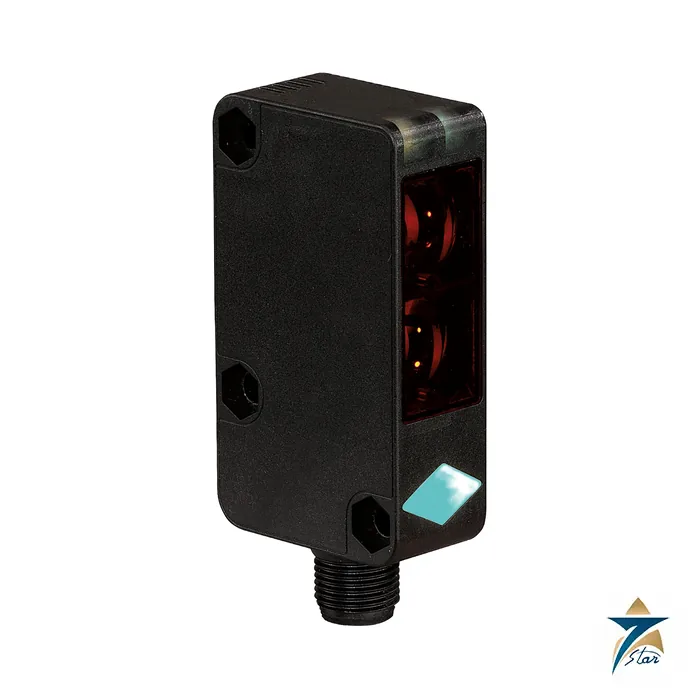
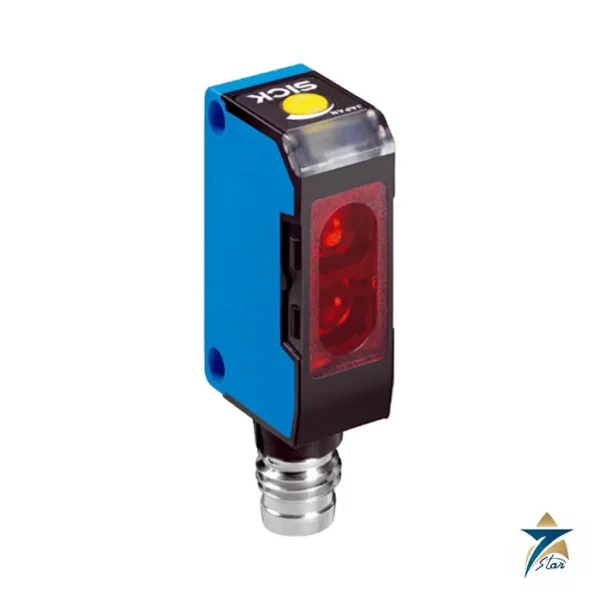
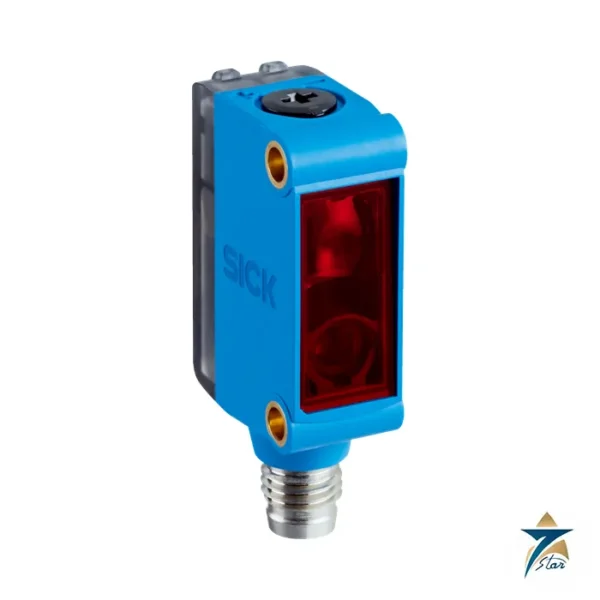
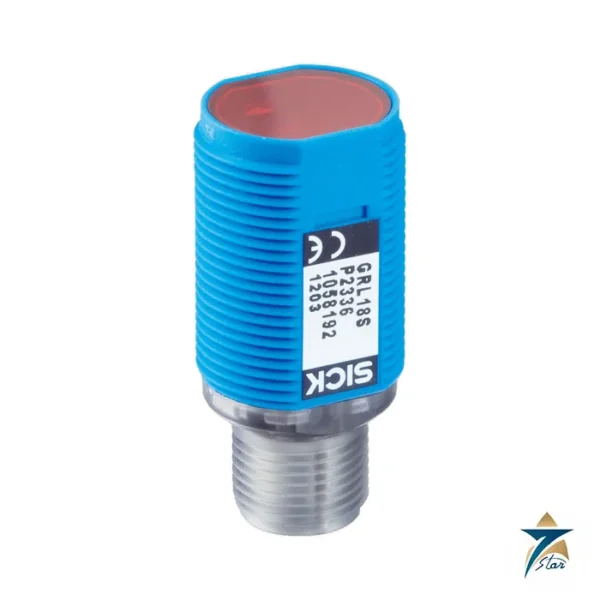
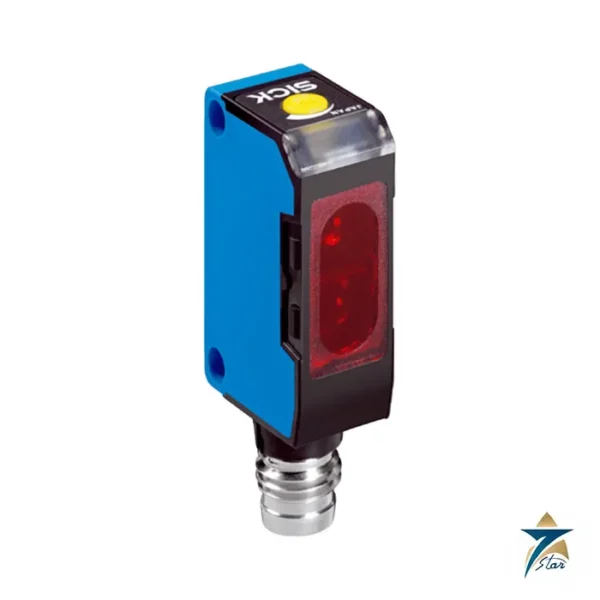
The RL31-54/73c/136 is a retroreflective photoelectric sensor with a polarization filter in a compact plastic housing 18 mm wide. It uses red light of 630 nm and detects objects between the sensor and a reflector at up to 9 m, with dark-on switching and two push-pull outputs on a 4-pin M12 plug.
In the code, RL31 is the series, 54 the 9 m retroreflective version, 73c the dark-on push-pull output and 136 the M12 plug variant. The related GL30-RT/32/40a/98a is a slot sensor,.
Seven Star LLC supplies this module in Oman and the GCC as an independent supplier in Muscat.
Technical specifications of the RL31-54/73c/136
| Parameter |
Specification |
| Manufacturer / part number |
Pepperl+Fuchs RL31-54/73c/136 |
| Principle |
Retroreflective sensor with polarization filter, reference reflector C110-2 |
| Detection range |
Effective 0 to 9000 mm; reflector distance 20 to 9000 mm; threshold range 12 m |
| Light |
LED, modulated visible red 630 nm; spot approx. 200 mm at 6 m; opening angle 3° |
| Ambient light |
Limit 50,000 lux acc. to EN 60947-5-2 |
| Supply |
10 to 30 V DC, ripple 10 %; no-load current ≤ 20 mA |
| Output |
Dark-on, 2 push-pull (4 in 1) outputs, short-circuit and reverse-polarity protected; max. 30 V DC, max. 100 mA, drop ≤ 1.5 V |
| Speed |
Switching frequency ≤ 500 Hz; response time ≤ 1 ms |
| Indicators |
LED green power; LED yellow function: steady above 2x switching point, flashing between 1x and 2x, off below |
| Safety data |
MTTFd 920 years; mission time 20 years; DC 0 % |
| Ambient temperature |
-30 to 55 °C; storage -40 to 70 °C |
| Housing |
Plastic, 18 x 62 x 35 mm, IP67, M12 x 1 4-pin plug, 24 g |
| Approval |
cULus Listed, Class 2 power source, Type 1 enclosure |
How the RL31-54/73c/136 sees an object
The emitter sends red light to a reflector, and the polarization filter ensures that the receiver only responds to the depolarized light returned by the prismatic reflector. Shiny objects, which reflect light without changing polarization, are therefore not mistaken for the reflector. The sensor reports an object when the beam to the reflector is interrupted, which is the dark-on output state.
The yellow LED works as a function reserve indicator, showing how much margin exists, which helps with alignment and with monitoring contamination over time.
System fit and related parts
The RL31-54/73c/136 suits conveyors, gate and door monitoring and packaging lines, where a reflector can be mounted opposite the sensor. For small parts passing through a fixed slot, see GL30-RT/32/40a/98a. For distance measurement of the object rather than presence detection, ultrasonic sensors such as UB500-F42-I-V15 give an analog output.
Selection and ordering checklist for the RL31-54/73c/136
- Range: up to 9 m with the C110-2 reflector.
- Output logic: dark-on push-pull.
- Connection: 4-pin M12 plug.
- Ambient temperature -30 to 55 °C.
- Reflector size and mounting.
- Ambient light and contamination in the application.
Installation, commissioning and maintenance of the RL31-54/73c/136
Mount the sensor and reflector, align them using the yellow LED until it is steady, and fix both firmly. Clean the lens and reflector at intervals suitable for the dust level.
Because the sensor has no control elements, functions are fixed; verify output polarity with your PLC input type (PNP/NPN compatibility is provided by the push-pull output).
Alignment and contamination with the RL31-54/73c/136
A margin of at least twice the switching threshold (yellow LED steady) is the target in a dusty site. Oil film and dust on the reflector reduce the signal, so in Oman and GCC conditions with fine desert dust, plan cleaning intervals and consider reflectors with protective housings.
Do not exceed the rated range with the reflector chosen; a smaller reflector reduces range. Record the reflector type and the mounting distance in the maintenance file so that a replacement sensor is installed with the same margin.
When two sensors operate close to each other, keep their beams apart or use reflectors of the specified size, so that one sensor does not see the other emitter. Check the output wiring to the PLC input module with a meter during commissioning, since push-pull outputs are compatible with both PNP and NPN type inputs only when wired to the correct supply polarity.
Typical applications in Oman and the GCC
The RL31-54/73c/136 is used on conveyors, gates and packaging lines in Oman and the GCC wherever long range presence detection is needed. Bright sunlight is within the 50,000 lux limit for most outdoor shaded installations, but direct sun into the receiver should be avoided, and dust on the reflector should be wiped at planned intervals.
Family comparison
| Part |
Key difference |
| RL31-54/73c/136 (this part) |
Retroreflective, 9 m, M12 |
| GL30-RT/32/40a/98a |
Slot sensor, 30 mm slot, PNP, M8 |
| GL30-RT/32/40a/98a |
Slot sensor for small parts |
| UB500-F42-I-V15 |
Ultrasonic distance sensor with analog output |
Information to send with an RFQ
- Part number RL31-54/73c/136 and quantity
- Detection distance
- Reflector requirements
- Ambient light and dust
- Connection
- Delivery location
Site conditions in Oman for the RL31-54/73c/136
Field instruments in Oman are exposed to strong sun, high ambient temperature, wind-blown dust and, on coastal plants, salt in the air. When you specify the RL31-54/73c/136, check the ambient and process temperature limits, the enclosure rating and the wetted and housing materials against the actual installation point, and consider sunshades for transmitters mounted in direct sunlight. Cable entries should be sealed with suitable glands so that dust and moisture cannot enter the housing.
Calibration and verification planning matters as much as selection. Record the range, configuration and tag data of each RL31-54/73c/136 at commissioning, define a check interval that suits the criticality of the loop, and keep the certificates with the plant documentation so that audits and shutdown work can proceed without delay.
Documents and quotation
The manufacturer datasheet for RL31-54/73c/136 is attached on this page, so you can check wiring, approvals and dimensions before ordering. Send the exact part number, quantity and delivery location in Oman or the GCC and Seven Star LLC will reply with a quotation.
Seven Star LLC is an independent supplier in Muscat and is not the manufacturer; confirm availability, lead time and any project approval requirements in your RFQ.




















Reviews
There are no reviews yet.