W8 miniature sensor with background suppression up to 300 mm
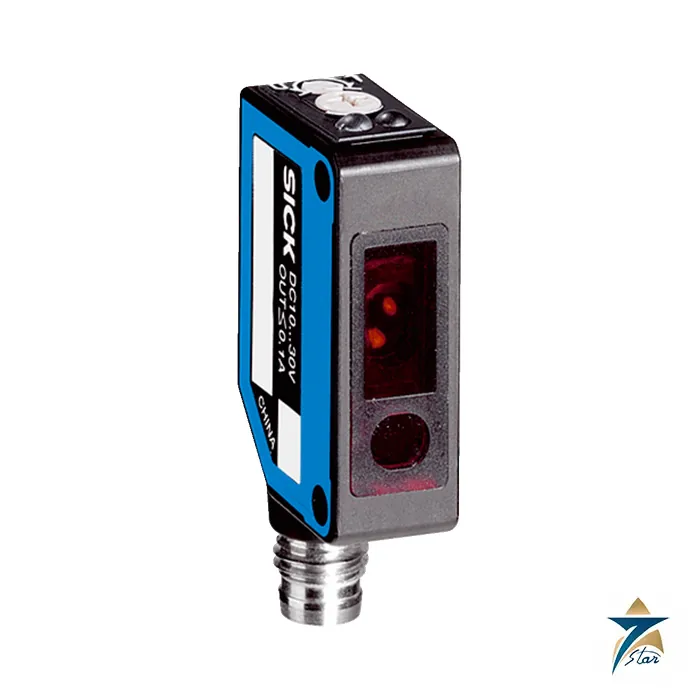
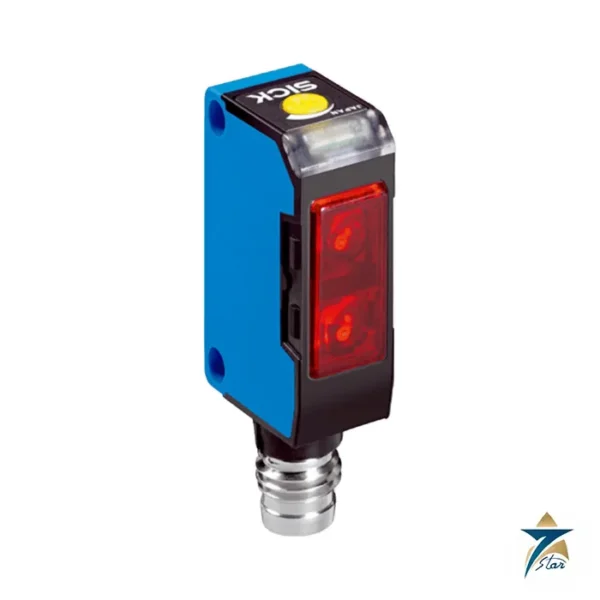
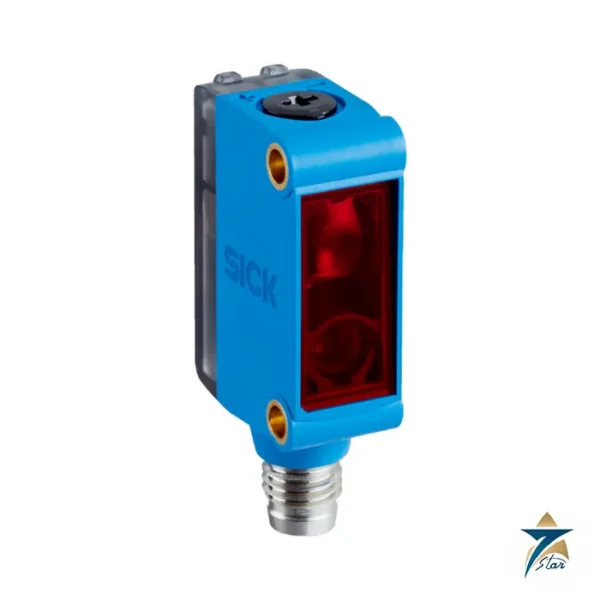
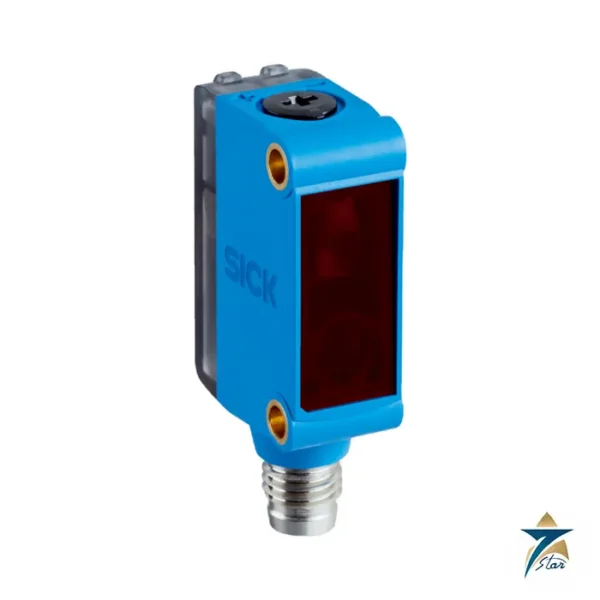
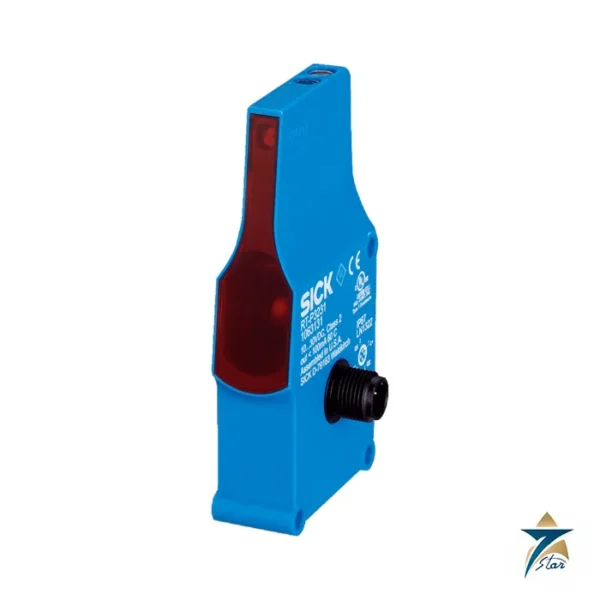
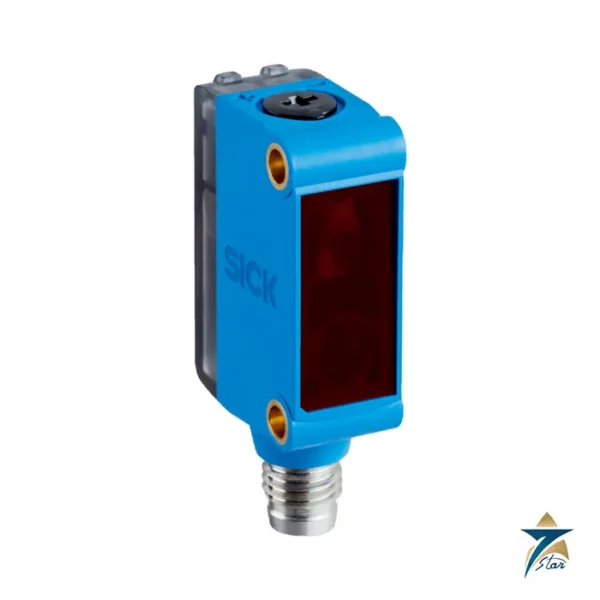
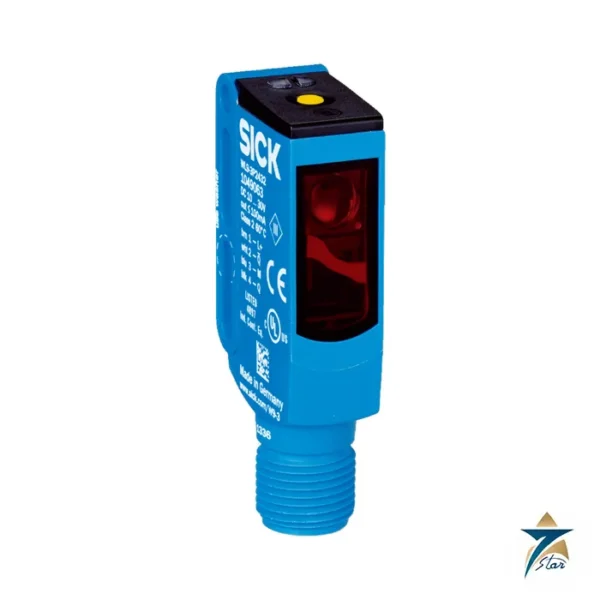
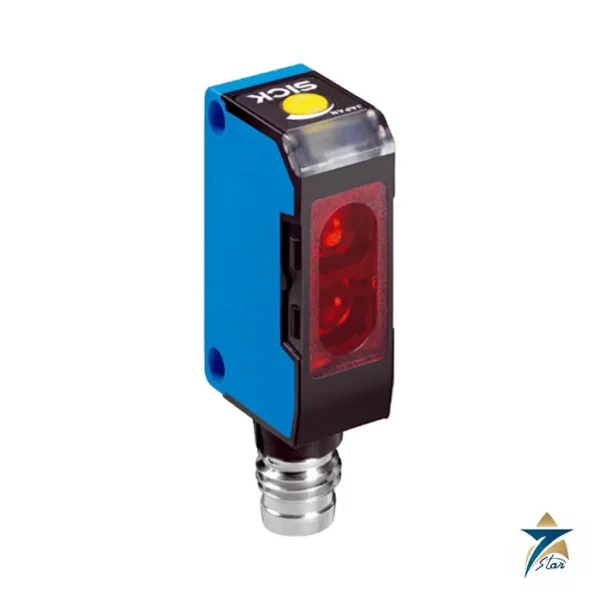
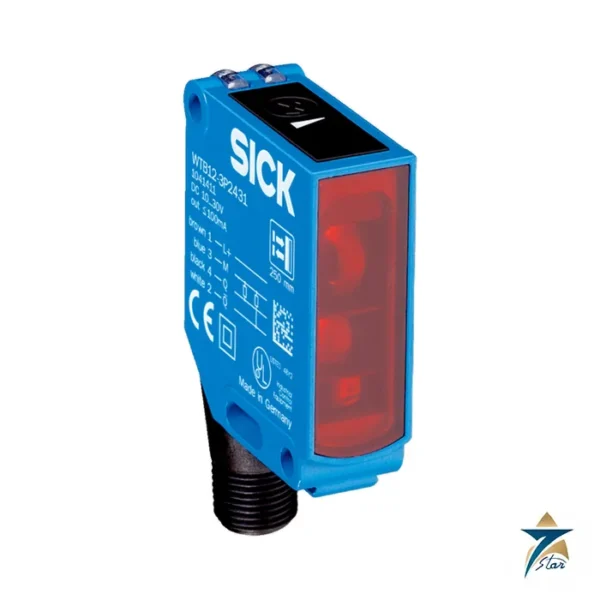
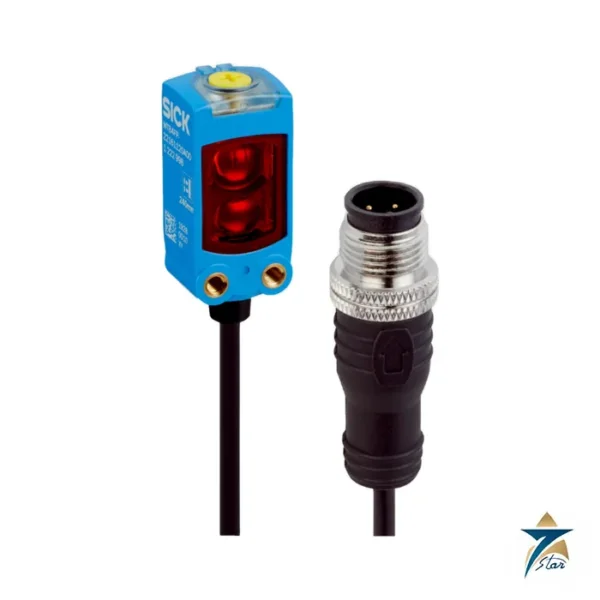
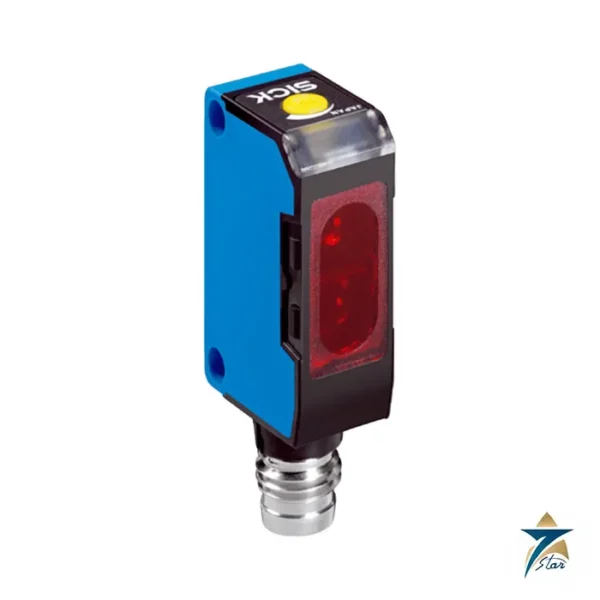
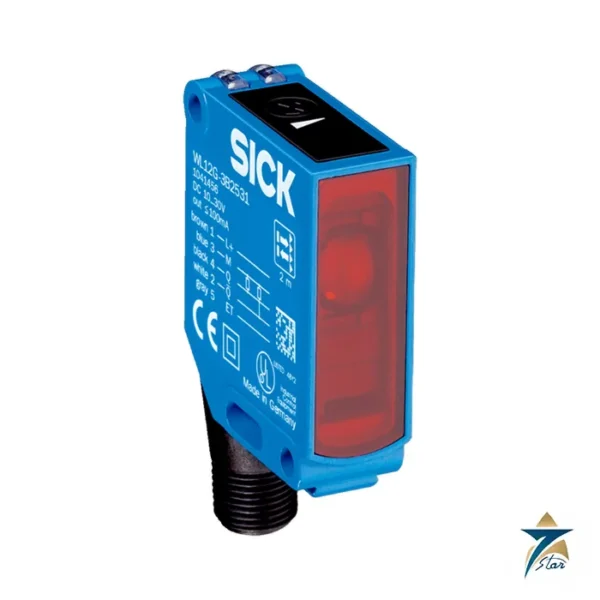
The SICK WTB8-P2231 (part no. 6033209) is a miniature W8 photoelectric proximity sensor with background suppression. It weighs only 10 g and measures 11 mm by 31 mm by 20 mm, so it fits in tight spots on pick-and-place units, small assembly stations and feeders. Detection runs from 40 mm to 300 mm (30 mm to 300 mm maximum) with visible red light at 650 nm.
A light/dark rotary switch and a four-turn potentiometer allow fast set-up on the machine, and a stainless steel BEF-W100-A bracket is supplied.
Technical specifications
| Parameter |
Specification |
| Manufacturer |
SICK |
| Type / family |
WTB8-P2231 / W8 |
| Part no. |
6033209 |
| Functional principle |
Photoelectric proximity sensor, background suppression |
| Sensing range max. / typical |
30 mm … 300 mm / 40 mm … 300 mm |
| Light source / type |
LED, visible red light, 650 nm |
| Light spot size |
20 mm diameter at 300 mm |
| Adjustment |
Potentiometer, 4 turns; light/dark rotary switch |
| Supply voltage UB |
10 V DC … 30 V DC |
| Ripple |
10 % |
| Current consumption |
30 mA |
| Output |
PNP, light/dark switching |
| Signal voltage PNP HIGH/LOW |
approx. VS – 1.8 V / 0 V |
| Output current Imax. |
100 mA |
| Response time / switching frequency |
0.5 ms max. / 1,000 Hz |
| Dimensions (W x H x D) |
11 mm x 31 mm x 20 mm |
| Connection |
Male connector M8, 4-pin |
| Housing / optics |
Plastic ABS / plastic PMMA |
| Weight |
10 g |
| Enclosure rating |
IP67 |
| Items supplied |
Stainless steel bracket BEF-W100-A (1.4301/304) |
| Ambient temperature |
-25 °C … +55 °C operation; -40 °C … +70 °C storage |
| MTTFD |
1,568 years (DCavg 0 %) |
Typical uses and set-up
With a light spot of 20 mm at 300 mm and a body the size of a matchbox, the W8 is chosen for small-part detection in automation cells. Background suppression stops a metal fixture behind the part from causing false switching. Turn the potentiometer until the sensor just switches on the target, then back off a little to create a margin. The rotary switch selects light or dark switching without re-wiring.
The sensor uses an M8 4-pin connector, so a matching M8 cordset is needed. The data sheet lists IP67 and a temperature range of -25 °C to +55 °C in operation. For wet or hot washdown use, a higher-rated sensor family is more appropriate.
Ordering code and what to confirm
The order reference is WTB8-P2231 with part number 6033209. SICK lists W8 variants with different ranges and connections; the digits and letters are described in the type key on sick.com. Confirm the connector type, cable and bracket you need before ordering, as the bracket in the delivery is the stainless BEF-W100-A.
Mounting and aligning the WTB8-P2231
Fix the sensor on the supplied bracket so that it cannot shift when the machine vibrates, and aim the red light spot squarely at the area where the target passes. Because the visible spot shows exactly where the sensor is looking, alignment is usually done by eye with the machine stopped. Keep the target within the sensing range and avoid angles where a glossy part reflects the light away from the receiver.
Route the M8 cordset along the machine frame with gentle bends and strain relief near the connector, and keep it clear of moving parts and sharp edges. Separate sensor cables from motor and solenoid wiring where possible to limit electrical noise on the PNP output signal.
Commissioning on the machine
Wire the sensor to a 10 to 30 V DC supply and a PNP input on the PLC or controller, then check the input changes state when a target is presented. Set the switching point with the potentiometer using real production parts, not a test card, because colour, surface finish and size affect the result. Test with the lightest and darkest parts the station handles, and with the background or fixture in its normal position, to confirm that background suppression ignores it reliably.
Select light or dark switching to suit the program logic and document the setting together with the potentiometer position, so that a replacement sensor can be set up the same way. For fast indexing machines, confirm the parts pass at a rate the response time and switching frequency can follow.
Dust, heat and humidity in Oman and GCC plants
Packaging lines, food plants and assembly halls in Oman and the Gulf can be warm, dusty and, near the coast, humid. The PMMA optics will collect dust and residues over time, which weakens the received light and can shift the switching point. Include the sensor front in the routine cleaning schedule, using a soft cloth and a cleaner that does not attack plastic.
Check that the sensor location stays within the stated operating temperature, particularly when it is mounted close to heat sealers, ovens or motors, or on equipment near open loading doors in summer. Where the sensor is close to hot surfaces, a slightly different mounting position can make a significant difference to its operating temperature.
Selection checks
Confirm that the target size and distance suit the sensing range and light spot, that the plant uses PNP inputs, and that an M8 4-pin cordset is available or ordered. If the application involves washdown, high-pressure cleaning or temperatures above the stated range, review a sensor family designed for those conditions.
It also helps to list every station where the WTB8-P2231 will be used, with the target material, the distance to the part and the distance to the background behind it. Sharing that list with the enquiry makes it easier to confirm that one sensor type covers all positions, or to identify the few locations where the conditions call for a different approach.
Documents and quotation
This page links the original SICK data sheet for WTB8-P2231 (part no. 6033209). Values in the specification table were copied from that document. Seven Star LLC supplies SICK products as an independent supplier in Muscat; send your request with the exact type and part number, the quantity and the delivery point, and mention any need for a reflector, bracket or mating cordset. Please verify the details with us before placing an order, since the manufacturer may change data without notice. See also sensors and transmitters and the SICK WTB4-3 miniature photoelectric sensor.




Reviews
There are no reviews yet.