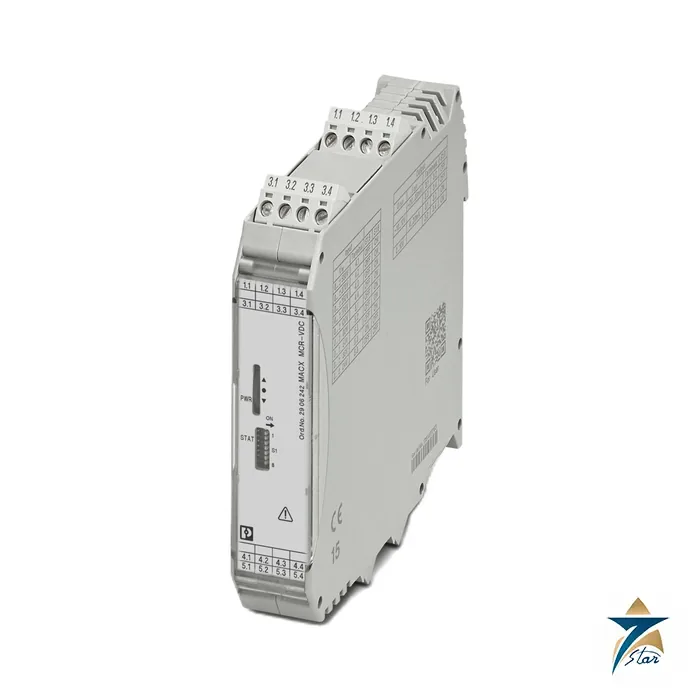
MACX MCR-VDC DC voltage measuring transducer up to 660 V DC
The MACX MCR-VDC (item number 2906242) is a DC voltage measuring transducer that captures voltages from a few volts up to 550 V DC with a maximum input of ±660 V DC and converts them into a standard 4 to 20 mA, 0 to 20 mA or voltage signal for a PLC or recorder. The manufacturer describes the MACX MCR transducer line as devices that capture DC or AC voltages and convert them into standard analogue signals; the MACX MCR-VDC is the DC type, with 3-way electrical isolation between the measuring circuit, the supply and the output. Seven Star LLC supplies the MACX MCR-VDC in Oman and the GCC as an independent supplier in Muscat for battery, rectifier and DC-bus monitoring, and the values below are from the manufacturer product technical data.
Reading the MACX MCR-VDC designation
- MACX MCR: Phoenix Contact signal conditioner family for DIN rail mounting.
- VDC: voltage measurement, DC. The sibling MACX MCR-VAC (2906239) measures AC voltage and the MACX MCR-VAC-PT (2906244) is a further AC type.
MACX MCR-VDC technical specifications
| Parameter |
Specification |
| Manufacturer / part number |
Phoenix Contact MACX MCR-VDC, item no. 2906242 |
| Product type |
Voltage transducer |
| Input voltage ranges |
±24 V, ±36 V, ±54 V, ±80 V, ±120 V, ±170 V, ±250 V, ±370 V and ±550 V DC (selectable); maximum input ±660 V DC |
| Input resistance |
24 V range 240 kΩ; 36 … 80 V ranges 800 kΩ; 120 V 1,200 kΩ; 170 V 1,700 kΩ; 250 V 2,500 kΩ; 370 V 3,700 kΩ; 550 V 5,500 kΩ |
| Output |
Voltage -10 … +10 V or 2 … 10 V (max 11 V, load > 10 kΩ); current -20 … +20 mA or 4 … 20 mA (max 22 mA, load < 500 Ω) |
| Accuracy |
Max. transmission error < 1 % of range end value; temperature coefficient < 0.015 %/K; zero and span alignment ±20 % |
| Step response (10 … 90 %) |
< 16 ms |
| Supply |
24 V DC (-20 % … +25 %), range 19.2 … 30 V DC; current consumption < 60 mA; power dissipation 1.2 W |
| Isolation |
Measuring circuit to supply and output: reinforced insulation, test voltage 5.3 kV AC (IEC 61010-2-030), measuring category II (1000 V), III (600 V), IV (300 V); supply to output: basic insulation, test voltage 2.2 kV AC |
| Surge protection |
33 V suppressor diode on the circuit |
| Ambient temperature |
-25 °C … +60 °C; storage -40 … +85 °C; 10 … 95 % humidity non-condensing; altitude ≤ 2,000 m |
| Connection |
Screw terminals M3, 0.2 … 2.5 mm² (AWG 24 … 14), strip length 8 mm |
| Dimensions / weight |
22.5 x 113 x 114 mm (W x H x D); DIN rail mounting, side-by-side with 10 mm spacing allowed; IP20 |
| Approvals / standards |
CE; UL 61010 listed (USA/Canada); EMC EN 61000-6-2 and EN 61000-6-4 |
What the isolation ratings mean in practice
Voltage transducers for several hundred volts are only as safe as their insulation. The MACX MCR-VDC specifies reinforced insulation between the measuring circuit and both the supply and the output, tested at 5.3 kV AC, and lists measuring categories II (1000 V), III (600 V) and IV (300 V) according to IEC 61010-2-030. The supply-to-output path has basic insulation tested at 2.2 kV AC. This separation is what lets a PLC input, which works at extra-low voltage, monitor a DC bus or a battery string without introducing a fault path. The data also names a 33 V suppressor diode as surge protection in the circuit. The figures should be compared with the actual overvoltage category of the installation.
Choosing the range and output
The MACX MCR-VDC offers a ladder of bipolar input ranges from ±24 V to ±550 V, which lets the designer pick the smallest range that comfortably covers the maximum expected voltage and so gets the best resolution. For a 110 V DC station battery with a charging peak of 140 V, for example, the ±170 V range is the practical choice; a 24 V system uses the ±24 V or ±36 V range. The output can be bipolar (-20 to +20 mA or -10 to +10 V) for reversing voltages or live-zero (4 to 20 mA or 2 to 10 V) when a wire-break indication is wanted. With a transmission error below 1 % of the range end value, the transducer is suited to monitoring and alarm purposes rather than metering-class measurement.
System fit and related types
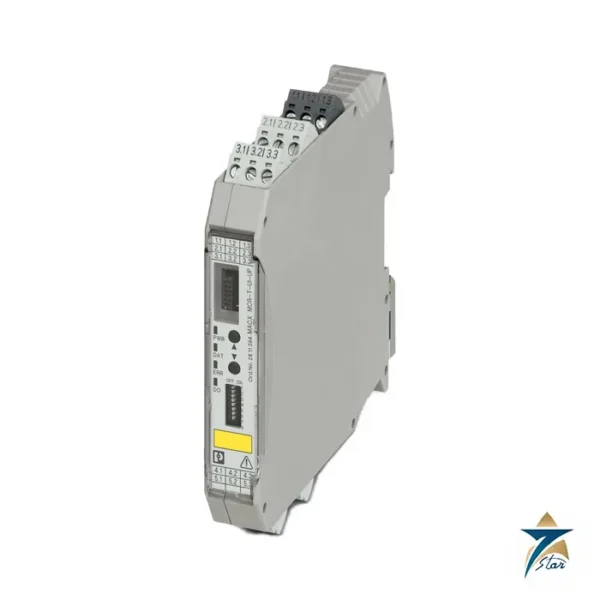
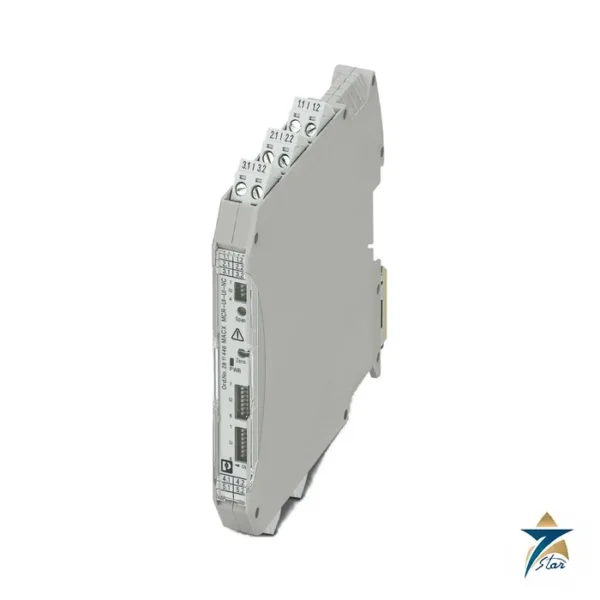
The MACX MCR-VDC sits in the Phoenix Contact voltage measuring family beside the MACX MCR-VAC (2906239) and MACX MCR-VAC-PT (2906244) for AC. For low-level analogue conditioning the MACX MCR-UI-UI-NC and MINI MCR-2-UI-UI conditioners are neighbours, and for temperature sensors the MACX MCR-T-UI-UP. Output signals are typically wired to PLC analogue input cards, DCS I/O or remote terminal units.
Selection checklist
- Maximum voltage including ripple and transients; stay below the range end and far below 660 V DC.
- Choose the range and the output (bipolar or live-zero) and check the load against the limits.
- Confirm the 24 V DC supply (19.2 to 30 V DC) and 60 mA consumption.
- Check the measuring category needed at the installation point.
- Allow 22.5 mm of DIN rail width per module and mounting position.
- Decide who will configure the range and output, using the settings described in the manufacturer documentation.
Installation and commissioning
Mount the MACX MCR-VDC on a DIN rail with the measuring terminals on the safe side of any fusing, wire the supply and output, and set the range and output configuration as described in the manufacturer documentation before connecting the live circuit. Because the input handles hundreds of volts, de-energise the circuit while wiring, fuse the measuring leads suitably for the application, and verify with a calibrated voltage source before putting the loop into service. Modules can be aligned with 10 mm spacing, and the alignment of zero and span, up to ±20 %, allows final calibration against a reference.
Typical applications in Oman and the GCC
Typical uses are monitoring of substation battery banks and chargers, rectifier outputs, DC buses of UPS and solar installations, cathodic protection rectifiers, and DC supply to drives in process plants. In hot climates the 60 °C upper limit of the operating range should be checked against the temperature inside the panel.
Information to send with an RFQ
- Full type designation or item number, and quantity
- Input signal type and range, output signal required, and any special scaling
- Supply voltage available and whether DIN rail mounting space is limited
- Required approvals or isolation level
- Delivery location and documents needed
Documents and quotation
Send the part number MACX MCR-VDC or item number 2906242 and Seven Star LLC will confirm the documents available for this item. Include quantity and delivery location when you request a quotation.
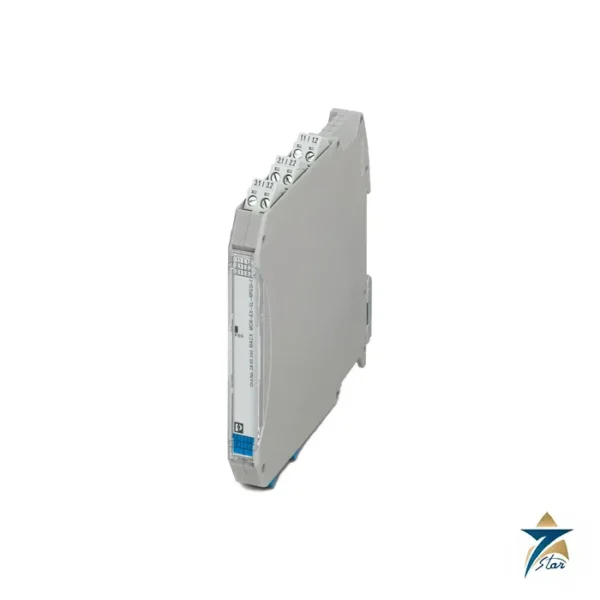
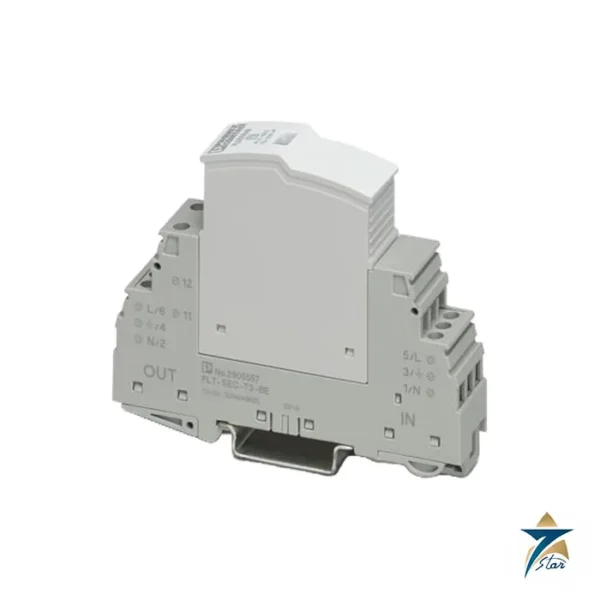
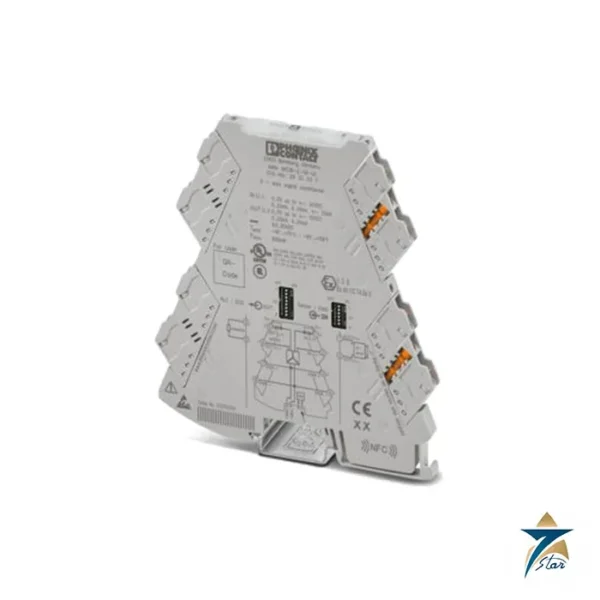
Other Models in the Pc Macx Analog Range
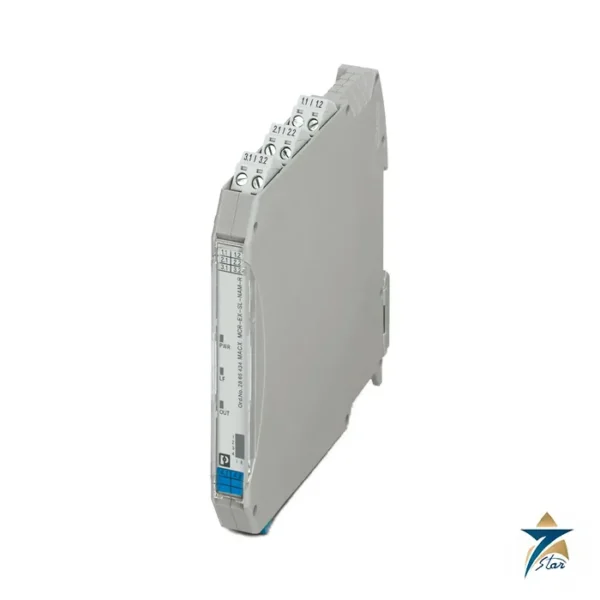
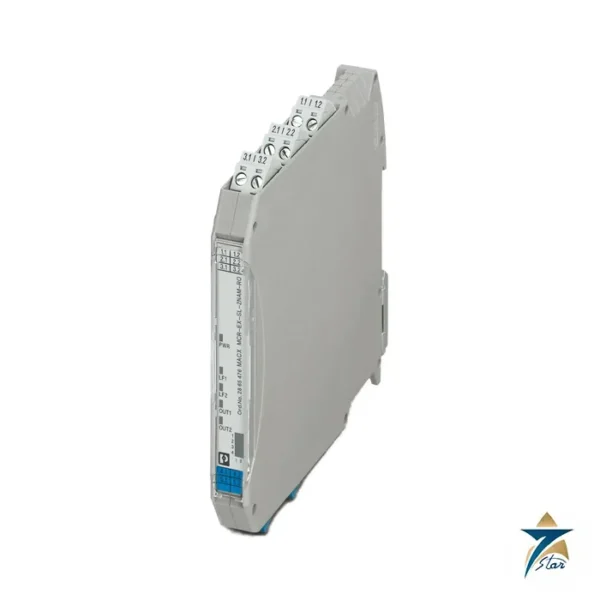
Seven Star LLC supplies models from the Pc Macx Analog range in Oman and the GCC. Compare the related models below and request a quote for the one that matches your application.
























Reviews
There are no reviews yet.