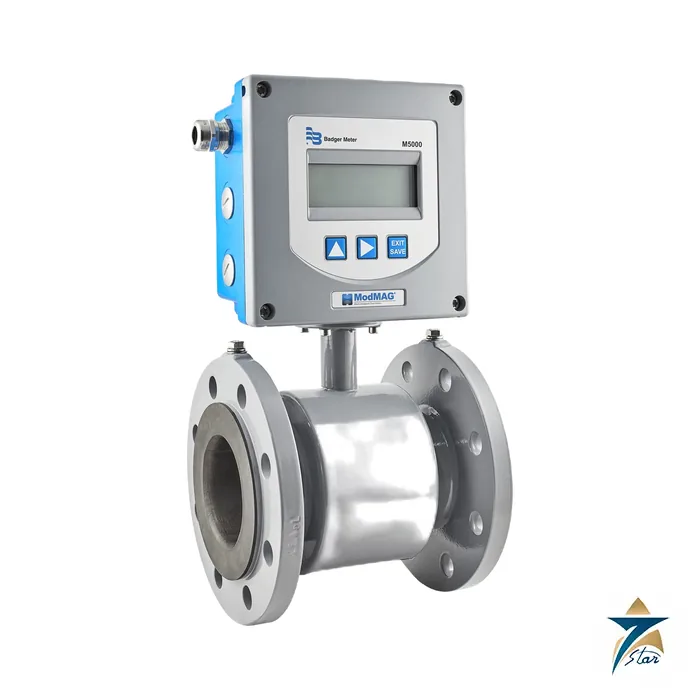
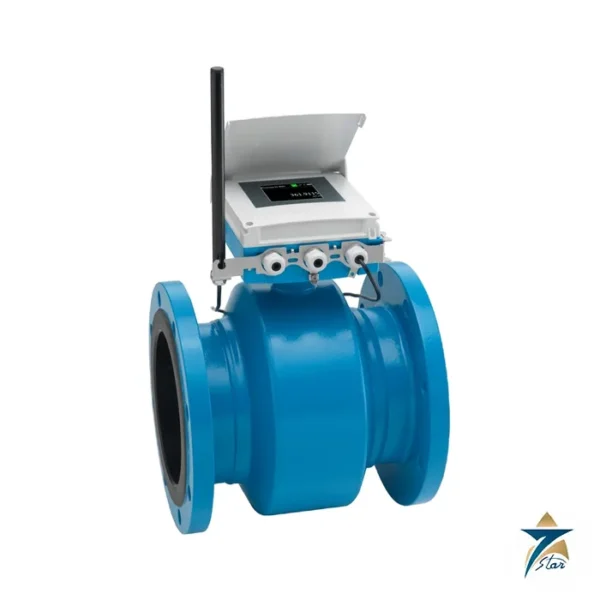
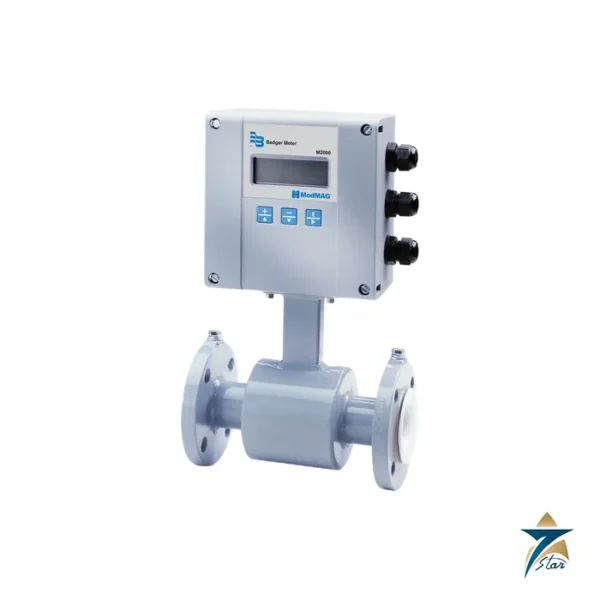
Badger Meter ModMAG M5000 battery-powered electromagnetic flow meter, 1/2 to 24 in
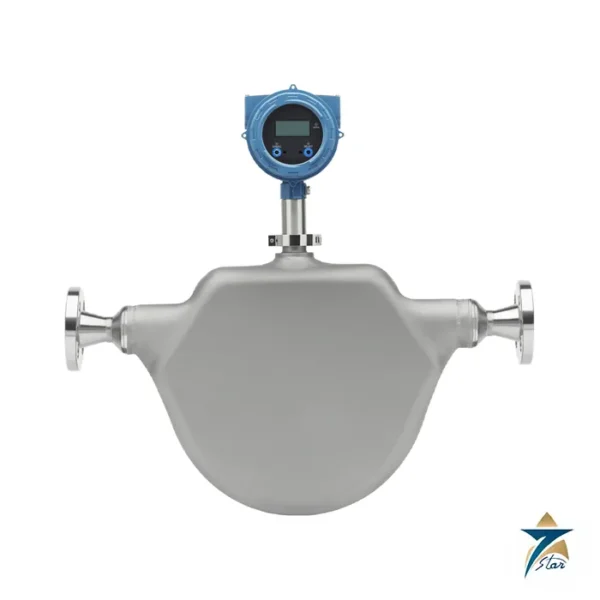
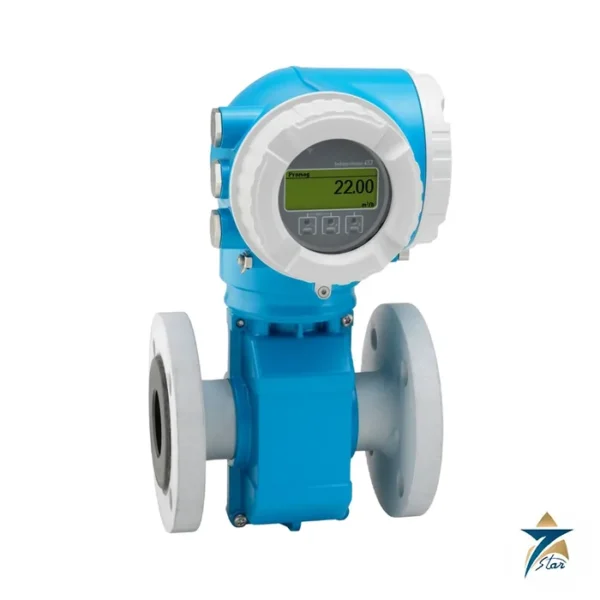
The Badger Meter ModMAG M5000 is a battery-powered electromagnetic flow meter for places where there is no mains power: distribution mains, valve chambers, irrigation lines and remote water installations. It is available from 1/2 in to 24 in (DN 15 to 600) with an accuracy of ±0.4 percent of the measured value ±2 mm/s, an internal data logger or M-Bus interface and an IP67 amplifier housing (IP68 optional). The ModMAG M2000 on our site is the mains-powered sibling in the same M series. Seven Star LLC supplies the M5000 in Oman and the GCC as an independent supplier in Muscat, and this page lists the data-sheet specifications and the checks needed for an RFQ.
Operating principle of the M5000
The meter is a stainless steel tube lined with a non-conductive material. Two pulsed-DC coils sit opposite each other outside the tube and create a magnetic field across the pipe. As a conductive liquid flows through the field, a voltage is induced across two electrodes at the three and nine o’clock positions; that voltage is proportional to the average flow velocity. A third electrode between twelve and one o’clock provides empty-pipe detection: if it is uncovered for at least five seconds, the meter shows an alarm and stops measuring. A fourth, optional grounding electrode at five o’clock can be built in. Since nothing protrudes into the flow, there is no pressure loss, and accuracy is independent of viscosity, density, temperature and pressure.
Technical specifications of the M5000
| Parameter |
Specification |
| Manufacturer / part number |
Badger Meter / ModMAG M5000 (M5000 Refresh) |
| Sizes |
1/2 … 24 in (DN 15 … 600) |
| Flow range (velocity) |
0.03 … 10 m/s (0.1 … 32.8 ft/s) |
| Accuracy |
±0.4 % of measured value ±2 mm/s |
| Repeatability |
±0.1 % |
| Minimum conductivity |
20 µS/cm or more |
| Liners |
PTFE 1/2 … 24 in; hard rubber 1 … 24 in; ETFE 12 … 24 in |
| Fluid temperature |
PTFE and ETFE: 150 °C remote, 100 °C meter-mounted; hard rubber: 80 °C |
| Electrodes |
Hastelloy C (standard); tantalum, platinum/gold plated, platinum/rhodium or 316 stainless steel optional |
| Process connection |
DIN, ANSI, JIS, AWWA flanges; carbon steel (standard) or 304/316 stainless steel |
| Pressure limit |
Up to 100 bar (1450 psi) PED |
| Power supply |
Internal 3.6 V lithium batteries; 10-year life standard, up to 20 years with two packs (sizes up to DN 150); external pack or 100…240 V AC / 9…36 V DC back-up model optional |
| Outputs and communication |
4 isolated open-collector digital outputs; absolute digital encoded output for AquaCUE/BEACON endpoints; RS232 Modbus RTU, IrDA, M-Bus; optional RS485 |
| Data logging |
About 7,000 records, interval 1 min to 24 h |
| Display |
LCD, two lines x 15 characters; three external buttons |
| Amplifier housing |
Cast aluminium, NEMA 4X (IP67); optional IP68 / NEMA 6P with remote amplifier |
| Ambient temperature |
-20 … +60 °C |
| Approvals listed |
NSF/ANSI/CAN 61 and 372, OIML R49-1, MID MI-001, AWWA C715, WRAS (hard rubber), ACS, KTW (PTFE), MCERT |
Choosing liner, electrode and mounting
The liner decides the temperature and chemical compatibility. PTFE is offered in every size and carries the highest temperature rating, hard rubber is a water-duty liner for 1 in and above, and ETFE is offered from 12 in up. Electrodes are Hastelloy C as standard, with tantalum, platinum alloys or 316 stainless steel as options for aggressive or fouling liquids. The amplifier can be mounted on the detector or on a wall with the bracket supplied, and the submersible IP68 housing requires a remote amplifier. Grounding rings or a built-in grounding electrode must be specified for non-metallic or lined piping.
Verification and data handling
A verification device lets the meter be checked without interrupting the process, which is valuable in remote chambers. The internal logger holds about 7,000 records and can be read through Modbus or IrDA, and the optional AMR or GSM/GPRS module sends the data to a central system. The absolute digital encoded output supports connection to the manufacturer’s cellular endpoints, and the M-Bus version fits utility reading systems. Programmable low-flow cut-off (0 to 10 percent of maximum flow), min and max flow alarms and pulse width (5 to 500 ms) are also listed.
Selection and ordering checklist for the M5000
- Line size and flange standard (ANSI, EN 1092-1, JIS or AWWA) and pressure class.
- Flow range against the 0.03 to 10 m/s velocity span for the line size; avoid oversizing.
- Liquid: conductivity of at least 20 µS/cm, temperature and abrasion or corrosion.
- Liner and electrode material suited to the liquid.
- Mains-free battery version or a back-up model with external supply.
- Integral or remote amplifier; IP67 or IP68 housing, depending on chamber flooding risk.
- Communication: M-Bus, Modbus RTU, RS485, GSM/GPRS and logging interval.
- Grounding rings or electrode, and approvals for drinking water (NSF, WRAS, KTW, ACS).
Installation and commissioning
Install with the pipe full at all times and with the electrodes at the three and nine o’clock positions, in a straight run if the flow profile is disturbed, though the manufacturer states the measurement is largely independent of flow profile. Ground the meter properly through rings or the electrode, check that the empty-pipe electrode is covered, and set low-flow cut-off, units and pulse value. Sampling can be programmed from 1 to 63 seconds, with a standard period of 15 seconds, which is a trade-off between response and battery life. Keep a record of the programmed values and the battery installation date.
Typical applications in Oman and the GCC
Typical uses are bulk water metering and district metered areas on distribution networks, groundwater and well-field supply lines, reclaimed water and irrigation mains, and transfer lines at remote tank farms without power. Long desert pipelines and remote valve chambers favour a meter that runs for years on batteries and reports by GSM or radio. For plant process lines with mains power and 4 to 20 mA outputs, the mains-powered M2000 or the M4000 are more usual.
Information to send with an RFQ for the M5000
- Line size, flange standard and pressure
- Liquid, temperature and conductivity
- Liner, electrode and grounding choice
- Communication and logging requirements
- Quantity and delivery site
Documents and quotation
The Badger Meter ModMAG M5000 product data sheet is attached on this page. It includes dimension and weight tables for each flange class.
Send the line data and Seven Star LLC will confirm availability and prepare a quotation.



















Reviews
There are no reviews yet.