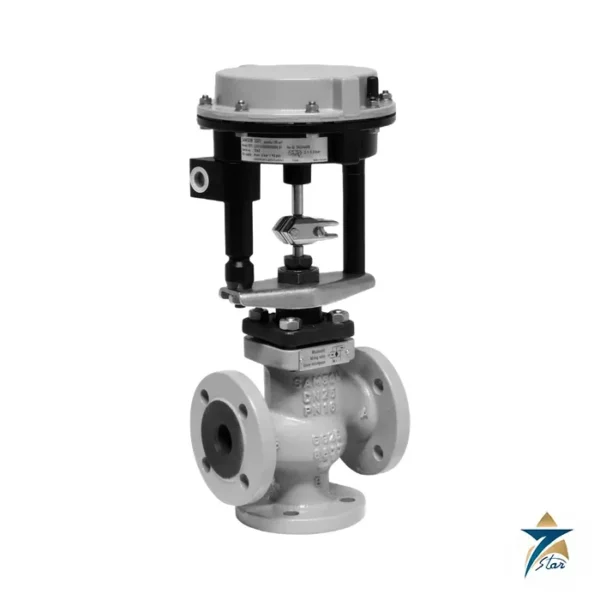
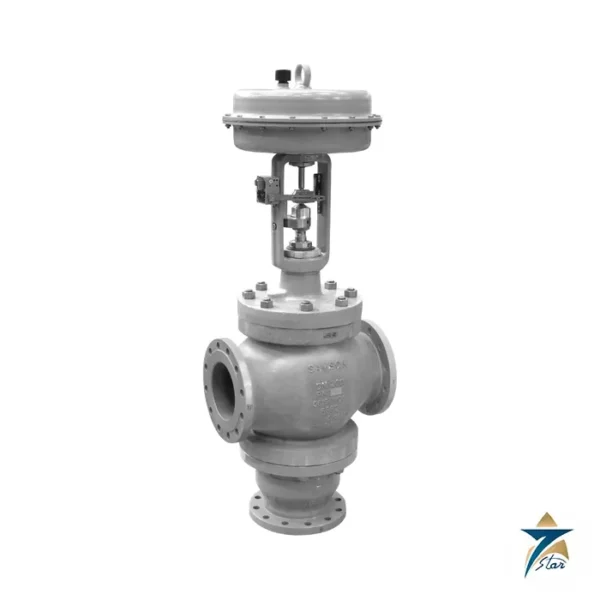
Samson Type 3535 three-way valve for heat transfer oil systems
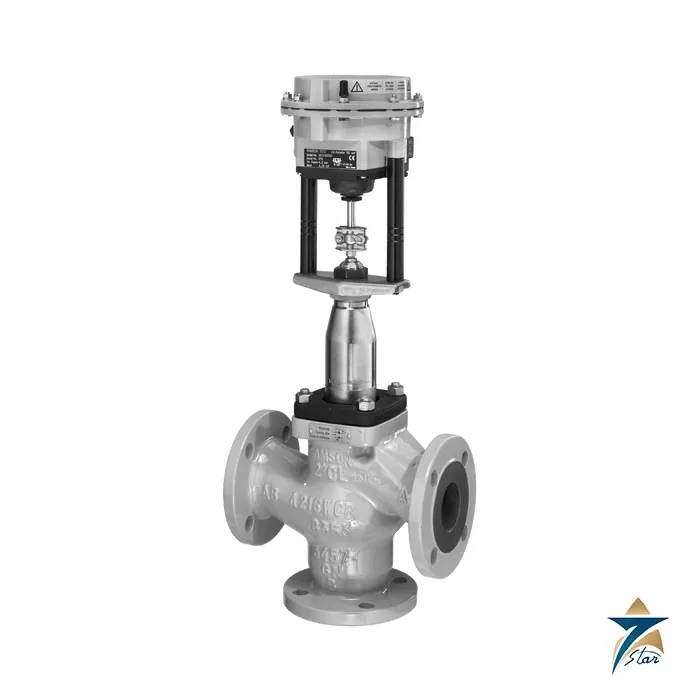
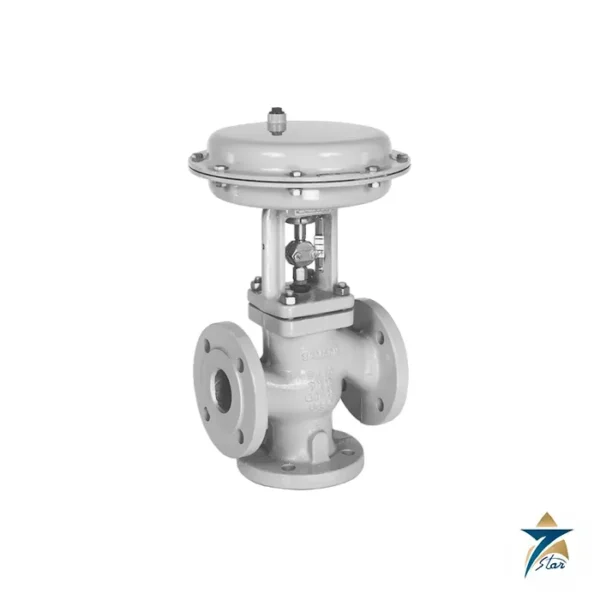
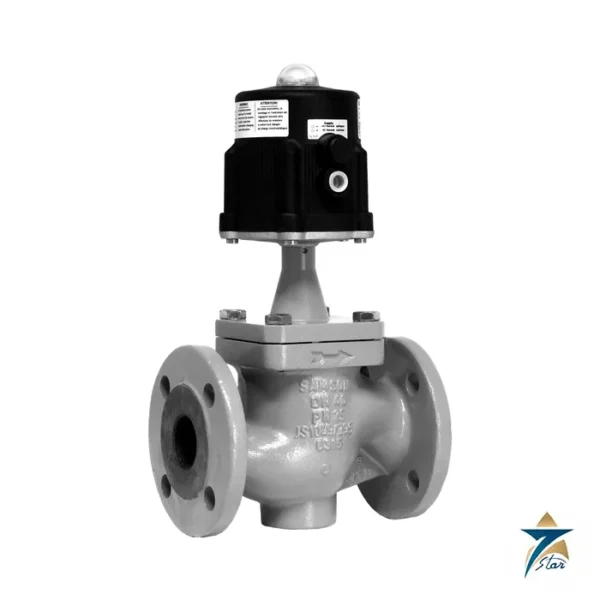
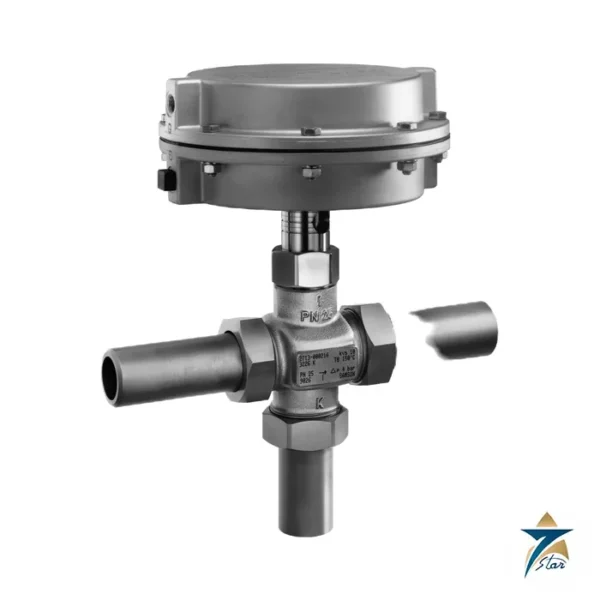
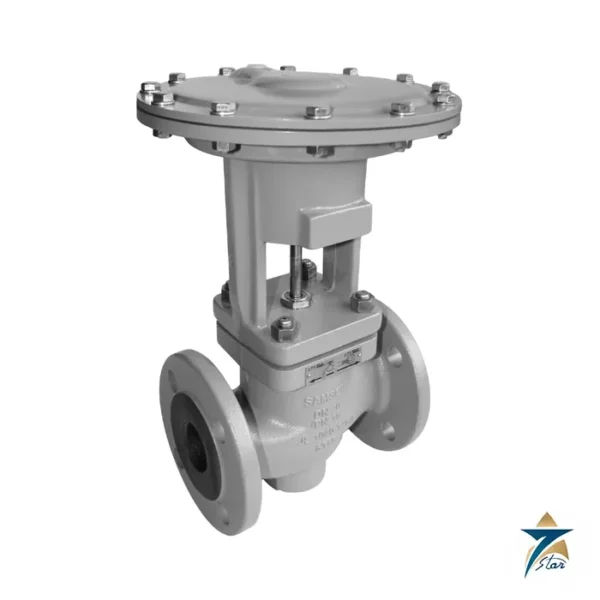
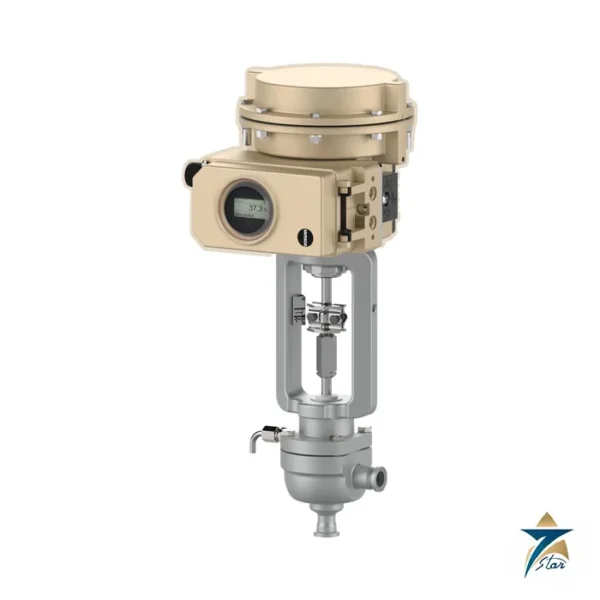
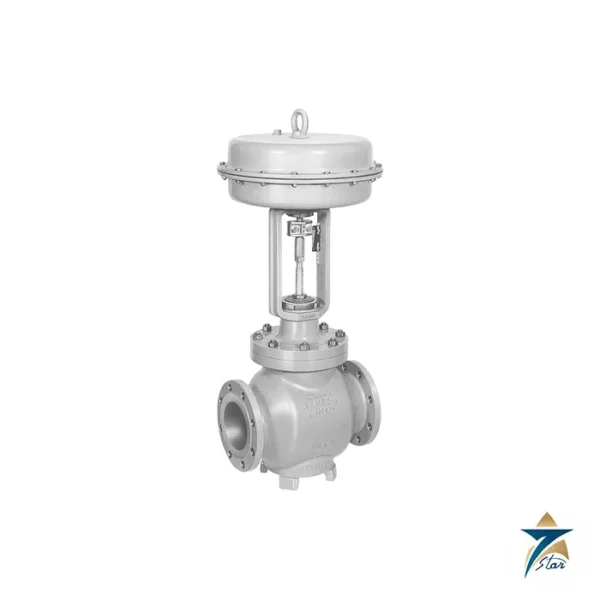
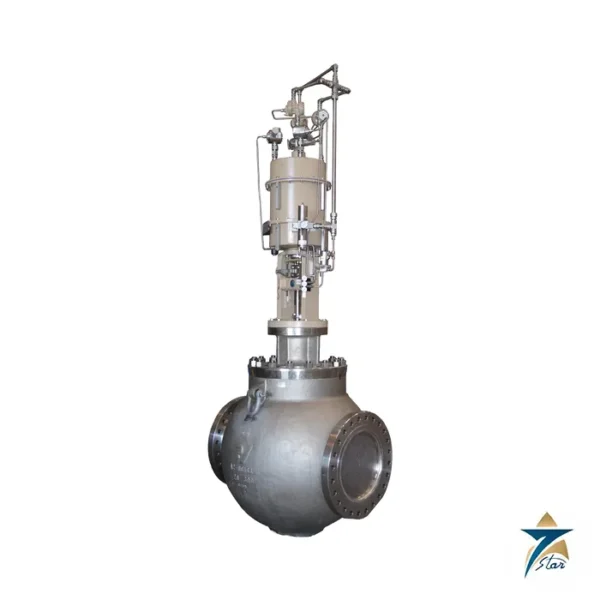
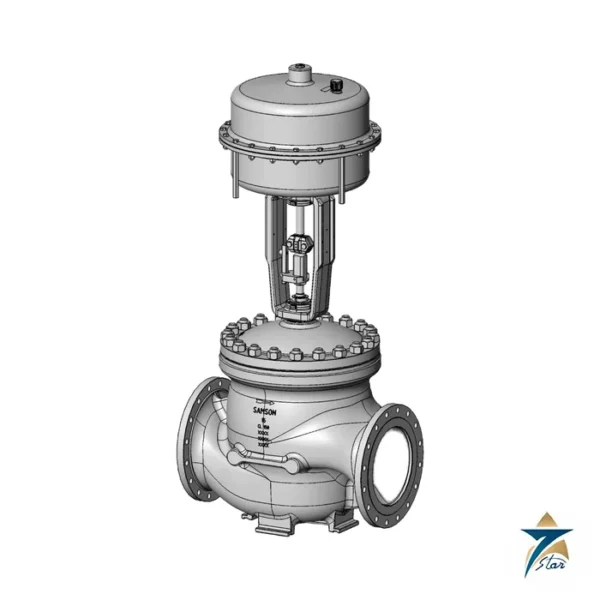
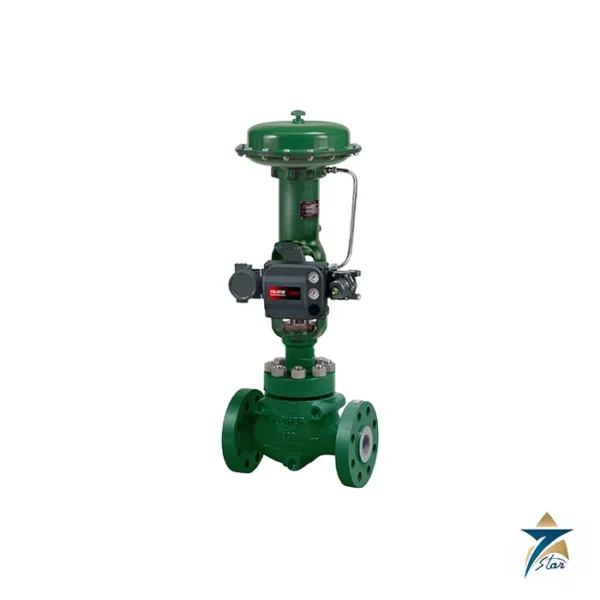
The Samson Type 3535 is a three-way valve of Series V2001 for heat transfer applications that use organic media, as covered by DIN 4754. It works as a mixing or a diverting valve, is made in nominal sizes NPS ½ to 3 for pressure Class 150, and handles medium temperatures from 14 to 660 °F (–10 to +350 °C). Seven Star LLC supplies the Type 3535 in Oman and the GCC as an independent supplier in Muscat. This is the ANSI version; the DIN version is described in a separate Samson data sheet (T 8135), and the related Type 3531 globe valve for heat transfer oil is already listed on this site.
Thermal-oil circuits are unforgiving: the oil is hot, leakage to atmosphere is a fire hazard, and a valve that sticks can overheat a heater. The Type 3535 answers this with a stem sealed by a metal bellows plus an additional packing, a metal-seated plug and a body of cast steel or stainless steel.
Type 3535 version codes: IP, PP, E1 and E3
The part number itself is only four digits; what changes the product is the suffix that names the actuator. The datasheet defines four versions.
| Version |
Actuator |
Key data |
| 3535-IP |
Type 3372 pneumatic actuator with Type 3725 positioner |
Electropneumatic; 4 to 20 mA set point; max. 60 psi (4 bar) supply air; optional Type 4744-2 limit switch |
| 3535-PP |
Type 3371 pneumatic actuator |
Bench range 20 to 34 psi (1.4 to 2.3 bar); optional Type 4744-2 limit switch |
| 3535-E1 |
Type 5827-N3 electric actuator |
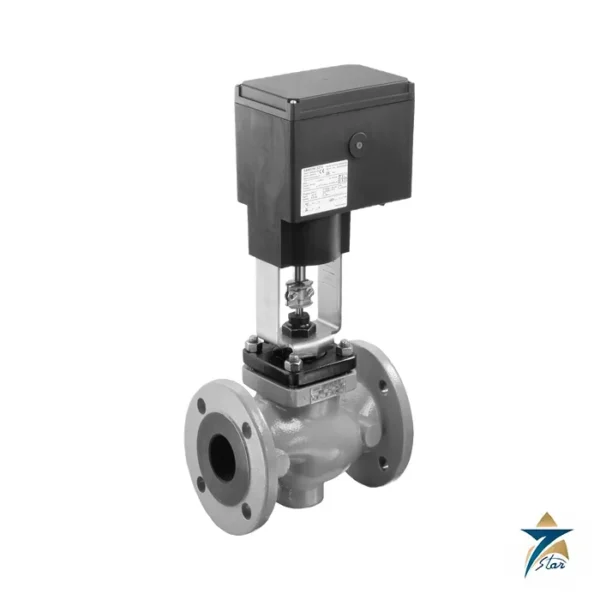
230 V/50 Hz or 24 V/50 Hz; optional limit contacts, resistance transmitter or positioner |
| 3535-E3 |
Type 3374 electric actuator |
230 or 24 V, 50 or 60 Hz; limit contacts, resistance transmitter and positioner options |
Pneumatic versions use a 120 cm² actuator with fail-safe action stem extends (FA) or stem retracts (FE). A tight-closing function for completely venting or filling the actuator is listed for the 3535-IP. A temperature range down to –70 °C and an explosion-protected version with electric actuators are available on request.
Type 3535 technical specifications
| Parameter |
Specification |
| Manufacturer / part number |
Samson / Type 3535 three-way valve for heat transfer oil (ANSI version, Series V2001) |
| Nominal size |
NPS ½, ¾, 1, 1½, 2, 2½, 3 (DN 15 to 80) |
| Pressure rating |
Class 150, flanges RF |
| Body material |
Cast steel A216 WCC or stainless steel A351 CF8M |
| Seat-plug seal |
Metal seal |
| Characteristic |
Linear |
| Rangeability |
30:1 up to NPS 1; 50:1 for NPS 1½ and larger |
| Temperature range |
14 to 660 °F (–10 to +350 °C); down to –94 °F (–70 °C) on request |
| Leakage class (DIN EN 1349) |
I (0.05 % of Cv) |
| KVS / Cv |
4 / 5; 6.3 / 7.5; 8 / 9.4; 20 / 23; 32 / 37; 50 / 60; 80 / 94 (NPS ½ to 3) |
| Seat diameter / travel |
24 mm for NPS ½ to 1; 40 mm for 1½ and 2; 65 mm for 2½ and 3; rated travel 15 mm |
| Stem seal |
Metal bellows A479 316Ti with PTFE packing; body gasket graphite on metal core |
How the Type 3535 mixes or diverts
In a mixing valve the two media enter at ports A and B and leave combined at port AB; the share coming from A or B depends on the open area between each seat and plug. In a diverting valve the medium enters at AB and splits into the A and B outlets. Mixing valves in NPS ½ to 1 can also be used for diverting duty. With a pneumatic actuator, the fail-safe position closes either port B (mixing) or port A (diverting) when the stem extends, and the opposite port when the stem retracts, so the failure direction should match what the oil heater needs on loss of air.
Where the Type 3535 fits in a thermal-oil loop
The usual position is on the user side of a heater, where a three-way valve blends hot supply oil with cooler return oil to hold a process temperature, or diverts flow between a heat exchanger and a bypass. The electropneumatic 3535-IP matches modulating control from a temperature controller, while the 3535-E1 and 3535-E3 suit plants without instrument air. Companion Samson parts are the Type 3725 positioner and the Type 3374 electric actuator, both on this site.
Selection checklist for a Type 3535
- Mixing or diverting duty, and the port assignment for A, B and AB.
- Required KVS or Cv, from NPS ½ to 3.
- Body material: cast steel A216 WCC or stainless steel A351 CF8M, with the temperature range, including the extended cold range if needed.
- Actuator version: 3535-IP, PP, E1 or E3, with supply voltage or air pressure.
- Fail-safe direction on loss of supply air.
- Positioner, limit switch (Type 4744-2) or resistance transmitter needs.
- Explosion-protection requirement for electric actuators.
Installation, commissioning and maintenance of the 3535
Observe the A, B and AB port markings and confirm which line is hot and which is cool before welding or bolting the flanges. Allow for thermal expansion of the pipework and insulate the body but leave the bellows and packing area and the actuator yoke free so that heat does not reach the actuator. After filling the oil system and heating it slowly, retighten the flange bolts at operating temperature. Stroke the valve over the 15 mm travel, check the fail-safe position and record the leakage rate: the datasheet class I figure of 0.05 % of Cv is a metal-seat value and not a tight shut-off value.
Maintenance is mainly a periodic inspection of the packing and bellows area for oil seepage. Keep a spare packing and gasket set for each size, since graphite-on-metal-core gaskets should not be reused after a joint is opened.
Typical applications of the Type 3535 in Oman and the GCC
Thermal-oil heating is used in petrochemical and chemical units, bitumen and asphalt plants, oil and gas process skids, and some industrial laundries and food plants. In Oman and the GCC the high ambient temperature means that insulation and actuator position matter, and the electric versions help where no clean air is available. The valve also suits the heating of heavy fuel, glycol-based systems and similar organic heat-transfer media within the stated temperature range.
Information to send with your Type 3535 RFQ
- Heat-transfer medium, operating temperature and pressure.
- Mixing or diverting duty and required KVS or Cv.
- Line size and flange class.
- Body material and temperature range, including any cold-start case.
- Actuator version and supply (air pressure, 24 V or 230 V, 50 or 60 Hz).
- Positioner, limit switch and signal requirements; hazardous-area classification.
- Tag numbers, quantity and delivery site.
Documents and quotation
The Samson data sheet T 8136 for the Type 3535 is attached on this page. Send your duty data and the version you need, and we will confirm availability and lead time. Seven Star LLC is an independent supplier and does not claim any official status with the manufacturer.






















Reviews
There are no reviews yet.