Alfa Laval SolidC standard hygienic centrifugal pump explained
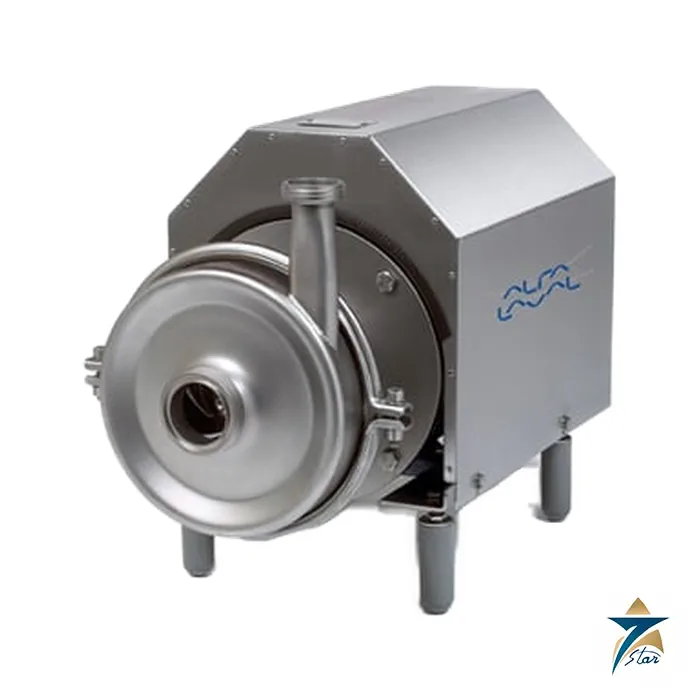
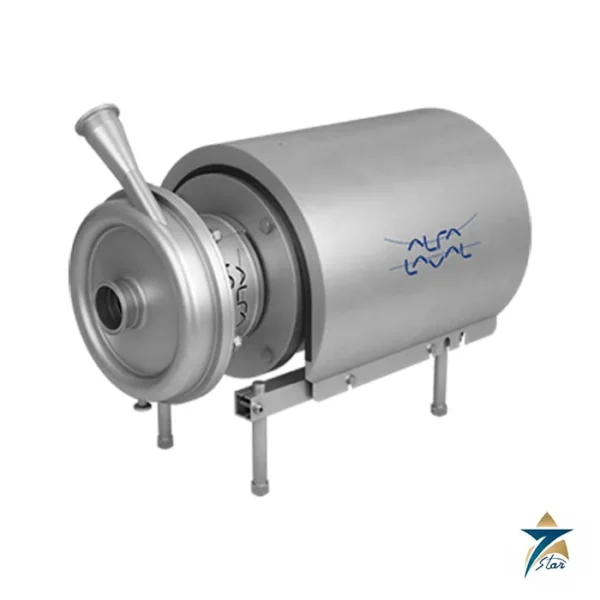
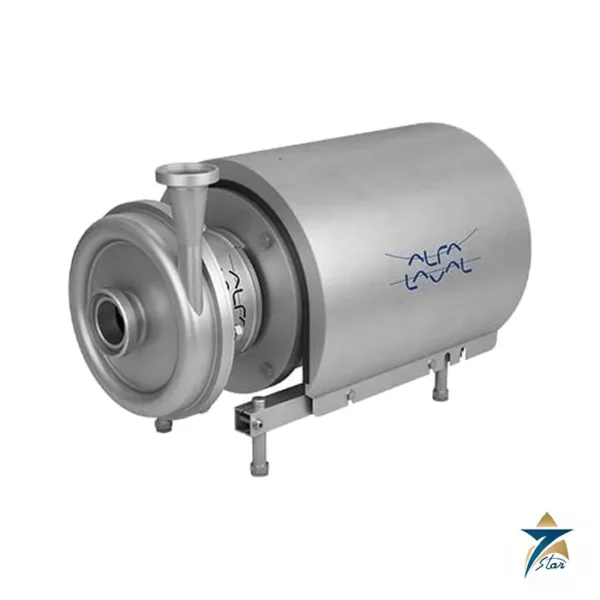
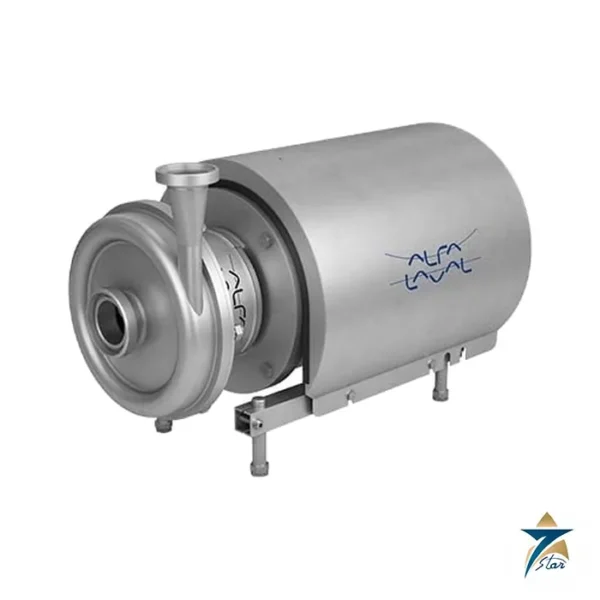
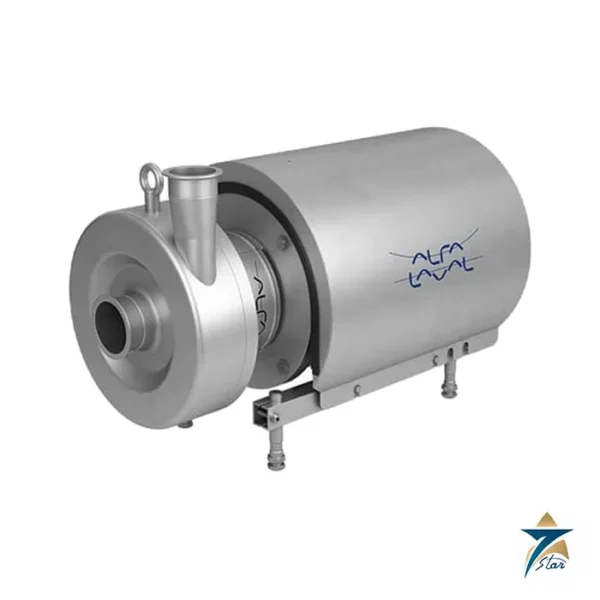
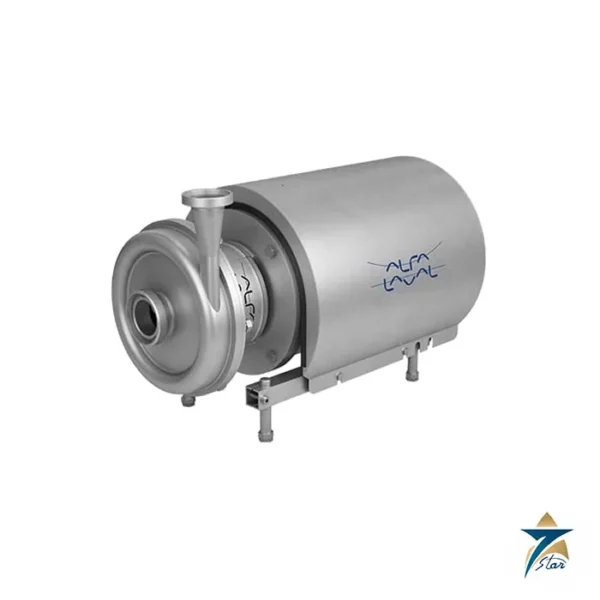
The Alfa Laval SolidC is a standardised hygienic centrifugal pump intended for the basic transport of process fluids. It is the cost-conscious member of the Alfa Laval centrifugal family: a single-piece stainless steel housing, a semi-open impeller, an external front-loading shaft seal and long-life compression couplings are combined in a compact design. Seven Star LLC supplies SolidC pumps in Oman and the GCC as an independent supplier in Muscat.
Four SolidC models cover flow rates up to 80 m³/h, pressures up to 8 bar at 50 Hz and inlet pressures up to 4 bar. This page shows how those limits translate into selection, which spares to keep and what to send when you request a quotation for a SolidC pump.
Reading the SolidC range and model selection
The public range description lists four models rather than a long code string. Use the model size, motor rating and seal arrangement together when you identify an existing pump or specify a new one.
| Item |
Range value |
| Number of models |
Four SolidC models |
| Maximum flow |
Up to 80 m³/h |
| Maximum pressure |
Up to 8 bar at 50 Hz |
| Maximum inlet pressure |
Up to 4 bar |
| Pump housing |
Single piece of stainless steel |
| Seal |
External, front-loading mechanical shaft seal |
SolidC technical specifications
| Parameter |
Specification |
| Manufacturer / part number |
Alfa Laval / SolidC |
| Pump type |
Standard hygienic centrifugal pump |
| Flow rate |
Up to 80 m³/h across four models |
| Differential pressure |
Up to 8 bar at 50 Hz |
| Inlet pressure |
Up to 4 bar |
| Impeller |
Semi-open, multi-vane, with balancing holes |
| Casing |
One-piece stainless steel housing |
| Coupling |
Compression coupling between stub shaft and motor shaft |
| Hygienic standards cited by maker |
3-A Sanitary Standards, CE, FDA and EHEDG requirements |
| Warranty note from maker |
Extended three-year warranty |
How the SolidC pump moves liquid
The impeller is mounted on a stub shaft driven by an electric motor. As it turns, the liquid is thrown outward, gaining speed and pressure, and the casing guides it to the outlet. The semi-open impeller with a multi-vane design keeps NPSH required low, which helps prevent cavitation. Balancing holes in the impeller keep fluid moving around the shaft seal and reduce axial forces, which supports cleanability and slows wear of seal and motor bearings.
A practical benefit of the one-piece housing is that the pipe connections stay on the casing, so inspection or seal service does not require the casing to be disconnected from the process line. Combined with the front-loading seal, this shortens downtime.
SolidC in the system and related pump families
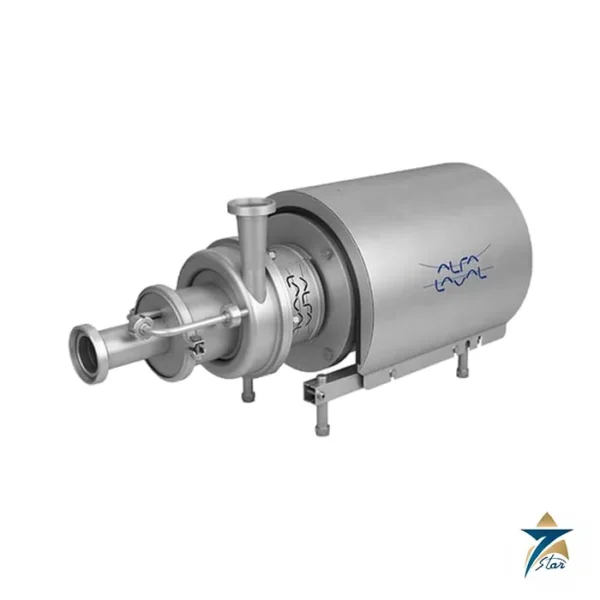
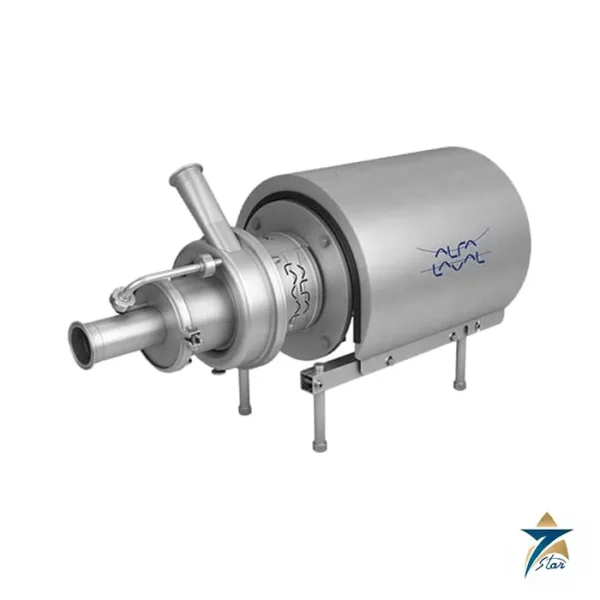
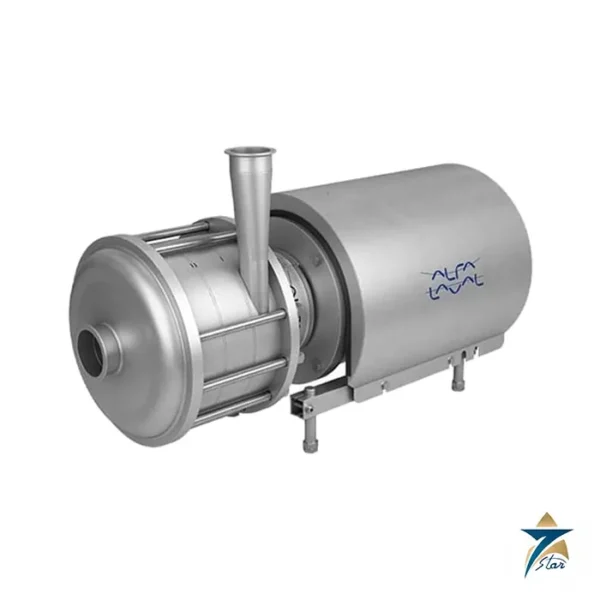
SolidC shares its external mechanical shaft seal with the LKH premium range, so a plant running both can hold a single spare seal stock. Neighbouring pumps in the Alfa Laval hygienic catalogue include the SolidC UltraPure for high purity duties, the LKH, LKH Prime (self-priming) and LKH Multistage for higher pressure, and positive displacement options for viscous or shear-sensitive products.
Choose SolidC when the duty is straightforward transfer, CIP supply or tank-to-tank movement at moderate pressure. When the process needs high purity documentation, high outlet pressure or self-priming, one of the sister families is the better starting point.
Selection and ordering checklist for SolidC
- Flow rate and head required, compared with the 80 m³/h and 8 bar limits of the family.
- Suction conditions: available NPSH, inlet pressure (up to 4 bar) and suction line length.
- Fluid, density, viscosity, solids content and temperature, plus the cleaning chemicals used.
- Seal arrangement and elastomer to suit product and CIP agents.
- Motor voltage and frequency, and whether the pump will be on a frequency drive.
- Connection standard and orientation of the inlet and outlet.
- Documentation and traceability needs for the plant’s quality system.
Installation, commissioning and maintenance of SolidC
Fit the pump on a level base with adequate support for the motor, keep the suction pipe short and fall-free so that air does not collect, and fill the casing before starting. Check rotation direction with a brief bump of the motor before running with product. Do not run dry for more than a few moments, because the seal faces rely on the liquid.
Routine maintenance concentrates on the shaft seal and elastomers. With the front-loading seal, spring and washers on the atmospheric side, a seal change is a short task. Keep a spare seal kit, O-rings and a set of casing clamps ready. Log CIP cycles and temperature excursions, since heat and aggressive chemicals shorten elastomer life more than operating hours alone.
SolidC applications in Oman and the GCC
The SolidC is a typical choice for dairy, juice, beverage and bottled water plants, personal care manufacturing and general light process fluids. In the Gulf region the heat load on the motor, dust ingress in open production halls and frequent hot washdown are the practical conditions to design around.
Plants that expand quickly often use SolidC for utility-type transfers such as CIP supply, return and buffer tank duties, keeping premium pumps for critical process lines. The shared seal with LKH helps keep the spares inventory small.
SolidC compared with sister pumps
| Pump |
Typical role |
| SolidC |
Standard hygienic duty, up to 80 m³/h and 8 bar |
| SolidC UltraPure |
High purity version with traceability and USP Class VI elastomers |
| LKH Multistage |
Two to four stages for high outlet pressure up to 19 bar differential |
| M Gear |
Positive displacement gear pump for low-volume filling and dosing |
Information to send with an RFQ for SolidC
- Existing pump nameplate or model, if replacing a unit.
- Duty point: flow, head and suction pressure.
- Fluid and temperature data, including CIP conditions.
- Seal and elastomer preference.
- Motor electrical data and enclosure requirement.
- Quantity, delivery location and required date.
Documents and quotation
Send the SolidC model, motor data and duty requirements and we will confirm which documents are available. For replacements, a photo of the nameplate speeds up identification.
Seven Star LLC quotes SolidC pumps and common spares for Oman and the GCC from Muscat, and replies with availability and lead time on request.

























Reviews
There are no reviews yet.