Fisher T205 tank blanketing regulator series
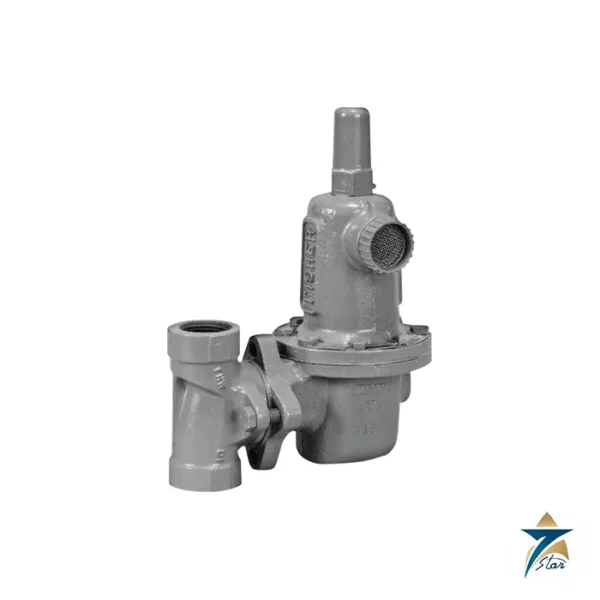
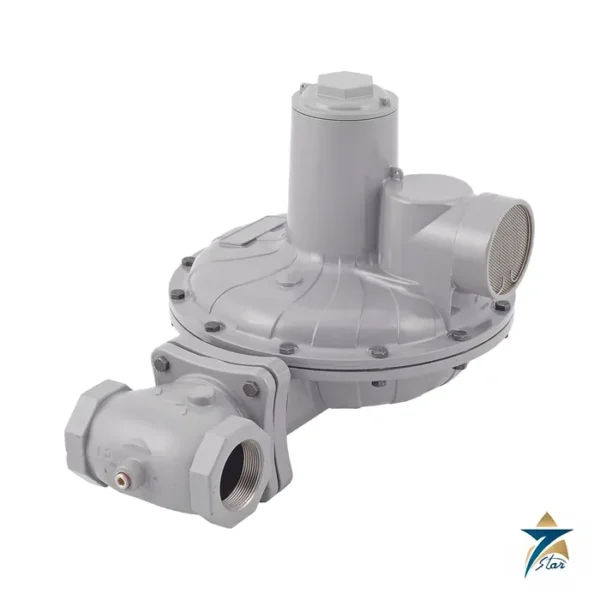
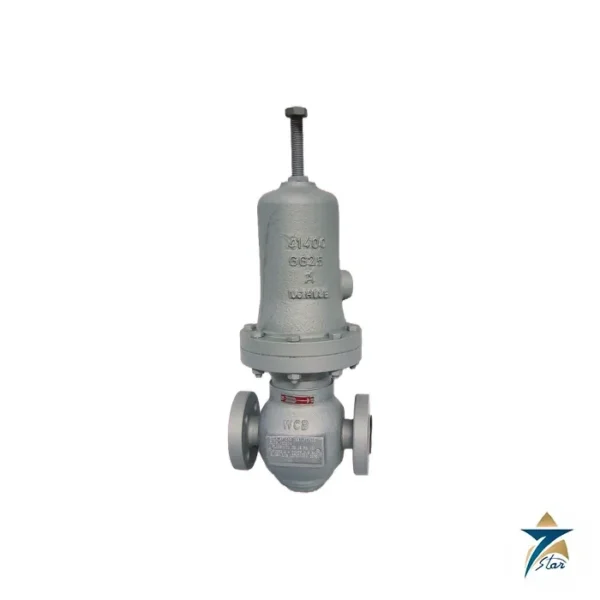
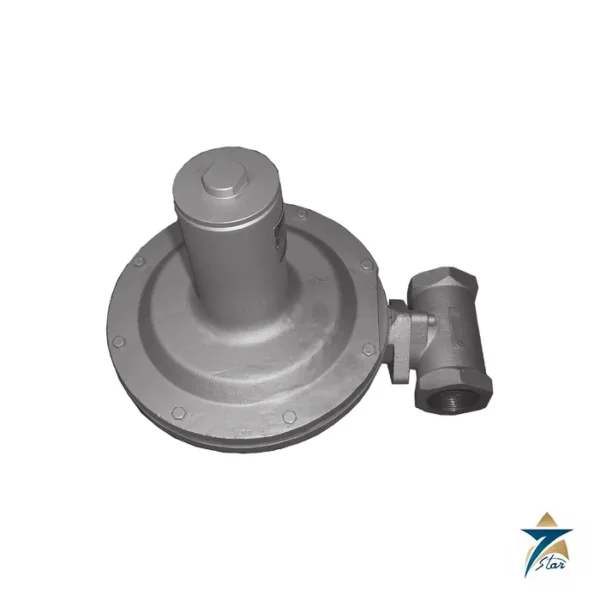
The Fisher T205 series is a direct-operated, spring-loaded regulator built for tank blanketing. It feeds a small, steady flow of gas such as nitrogen into the vapor space of a storage tank to keep a slight positive pressure, which stops the stored liquid from vaporizing into the atmosphere, reduces combustibility and keeps air and moisture out of the product. The same positive pressure also helps prevent tank wall collapse during pump-out.
Seven Star LLC supplies the Fisher T205 series in Oman and the GCC as an independent supplier in Muscat. The four type codes are decoded here so the correct one is quoted.
Decoding the T205 types
| Type |
Construction |
Key point |
| T205 |
Internal pressure registration, no control line |
Outlet 1 in. w.c. to 7 psig in seven spring ranges |
| T205M |
Blocked throat, external registration via downstream control line |
Control line 1/2 NPT |
| T205H |
Like T205, inlet equals casing pressure of 150 psig / 10.3 bar |
Low temperature to -20 °F / -29 °C |
| T205HM |
Like T205M with the H pressure rating |
150 psig / 10.3 bar |
Fisher T205 technical specifications
| Parameter |
Specification |
| Manufacturer / part number |
Fisher (Emerson) / T205 Series (Bulletin 74.1, D103747X012, May 2024) |
| Outlet (control) pressure |
1 in. w.c. to 7 psig / 2.5 mbar to 0.48 bar, seven spring ranges |
| Body sizes |
3/4 or 1 in. (DN 20 or 25); 3/4 x 1 in. flanged uses the 3/4 in. body |
| End connections |
NPT; CL150 RF, CL300 RF, PN 16/25/40 RF flanged (welded flanges) |
| Max allowable inlet |
Gray cast iron 150 psig / 10.3 bar; steel and stainless 200 psig / 13.8 bar (150 psig for H types) |
| Max outlet (casing) |
T205 and T205M: gray iron 35 psig / 2.4 bar; steel or stainless 75 psig / 5.2 bar. H types: 150 psig / 10.3 bar |
| Body materials |
Gray cast iron, WCC carbon steel, LCC carbon steel, CF8M/CF3M stainless steel |
| Shutoff |
Class VI soft seat per ANSI/FCI 70-3-2004 |
| Elastomer temperature |
Nitrile -40 to 180 °F / -40 to 82 °C; FEP -20 to 180 °F; FKM 40 to 300 °F; EPDM -20 to 225 °F; FFKM 0 to 300 °F |
| Low temperature |
Special constructions to -76 °F / -60 °C available by request |
| Gases |
Air, nitrogen, natural gas, sour gas (NACE MR0175-2002 construction), butane, propane |
| Spring case vent |
1/4 NPT |
| Approximate weight |
17.7 lb / 8 kg |
| Hygienic options |
Types T205 and T205M available with FDA / USP Class VI / ADI-free elastomers |
How the T205 keeps a blanket pressure
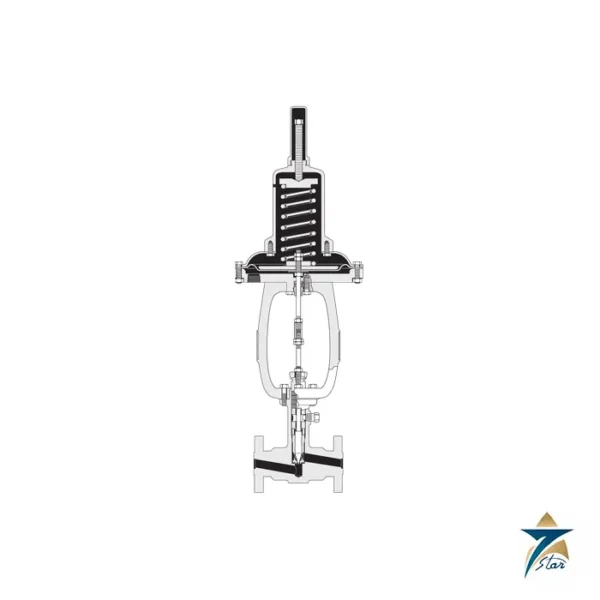
The T205 compares tank pressure with a control spring through a large diaphragm. With the spring set for a few inches of water column, any small fall in tank pressure, for instance when liquid is pumped out, makes the spring open the disk through a lever and nitrogen flows in. When the pressure returns to the setting, the disk closes tightly with a small lockup pressure. The large diaphragm area and lever style give fine throttling control at low settings and a response to demand changes that is quick for a direct-operated unit.
In the T205 and T205H the regulator senses outlet pressure internally with a pitot tube. In the M versions the throat is blocked and a downstream line brings the tank pressure to the diaphragm, which is the better choice when pressure drop through the outlet piping would distort the reading.
Spring ranges for the Fisher T205
| Outlet range |
Spring color |
Remark |
| 1 to 2.5 in. w.c. / 2.5 to 6.2 mbar |
Orange |
Spring case must point down for the full range |
| 2.5 to 7 in. w.c. / 6.2 to 17 mbar |
Red |
Spring case pointing down |
| 7 to 16 in. w.c. / 17 to 40 mbar |
Unpainted |
|
| 0.5 to 1.2 psig / 34 to 83 mbar |
Yellow |
|
| 1.2 to 2.5 psig / 83 to 172 mbar |
Green |
|
| 2.5 to 4.5 psig / 0.17 to 0.31 bar |
Light blue |
|
| 4.5 to 7 psig / 0.31 to 0.48 bar |
Black |
|
For the first two ranges, do not use an FKM diaphragm below 60 °F / 16 °C diaphragm temperature. Related Fisher regulators for other duties include the CS800 series and the 299H series, which handle gas supply rather than blanketing.
Fisher T205 selection and ordering checklist
- Type: T205, T205M, T205H or T205HM, based on registration and casing pressure.
- Setpoint and spring range, plus the lowest tank pressure change you must control.
- Inlet pressure of the blanketing gas against the maximum operating inlet table for the chosen orifice.
- Body size and connection, and body material for site corrosion and temperature (LCC or stainless for cold sites).
- Elastomer: nitrile standard, or FKM, EPDM, FEP, FFKM for chemical compatibility.
- Gas: nitrogen, air, natural gas, sour gas (NACE construction), butane or propane.
- Hydrogen duty: the maker lists T205 Series configurations evaluated for hydrogen use; state this when ordering.
- Orientation of body and vent, with the vent pointing down on horizontal lines for drainage.
Installation and maintenance of the Fisher T205
Install the T205 in a clean gas supply line to the tank, ahead of a vent or relief arrangement that handles the tank breathing separately. On external registration units, run the control line to a point on the tank away from turbulence. Make sure the spring case vent screen is clear; the casing drains through the vent, so the vent orientation shown in the bulletin should be followed to keep water out.
Easy conversion is built in: the T205 and T205H convert to the T205M and T205HM with two O-rings and one machine screw. At service, replace diaphragm, disk and O-rings, check the lever and pusher post for wear, and then reset and verify the setpoint with a low-range gauge.
Applications in Oman and the GCC
Tank blanketing appears in refineries, petrochemical plants, chemical storage terminals and fuel terminals, as well as food and pharmaceutical tanks that need an inert atmosphere. In Oman and the GCC, high ambient heat makes tank breathing and vapor loss large, so a regulator that holds a few inches of water column is useful for solvent, aromatics and product tanks. The FDA and USP Class VI elastomer option points to clean-service use, and the NACE sour gas construction to gas treatment locations.
Information to send with a Fisher T205 RFQ
- Type (T205, M, H or HM) and nameplate photo if replacing.
- Blanketing gas, supply pressure and tank setpoint.
- Maximum flow demand during pump-out and thermal breathing.
- Ambient and process temperature range.
- Body material, size, connection and elastomer preference.
- Spare diaphragms, disks and springs.
Documents and quotation
The T205 series bulletin is attached on this page as a datasheet.
Send the T205 type and your tank data to Seven Star LLC in Muscat, and we will quote against the confirmed configuration.
























Reviews
There are no reviews yet.