Samson Type 41-73 universal excess pressure valve for upstream pressure control
The Samson Type 41-73 is a self-operated excess pressure valve, also called a back-pressure or pressure-holding valve. Instead of controlling the pressure after the valve, it controls the pressure before it: the valve opens when the upstream pressure climbs above the set point and keeps the line at that value. It covers set points from 0.05 to 28 bar, DN 15 to 100 and PN 16 to 40, for liquids, gases and vapors from –50 to 350 °C. Seven Star LLC supplies the Type 41-73 in Oman and the GCC as an independent supplier based in Muscat.
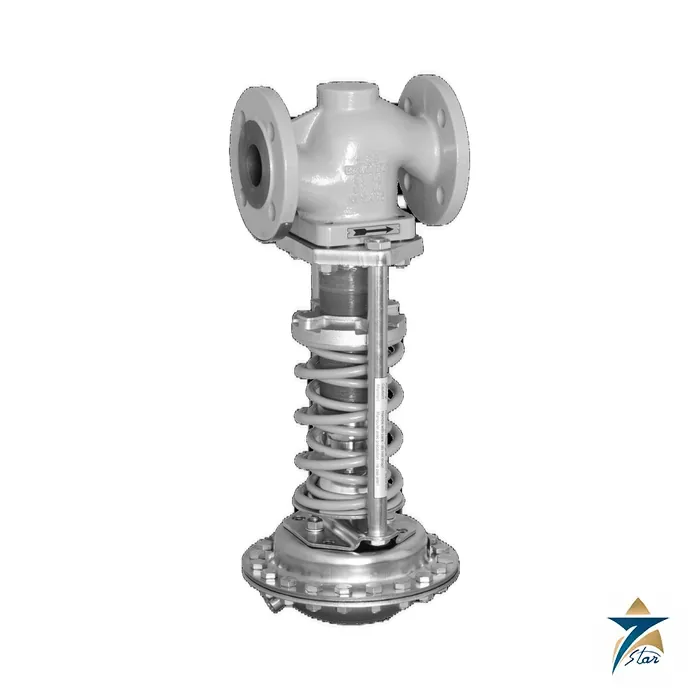
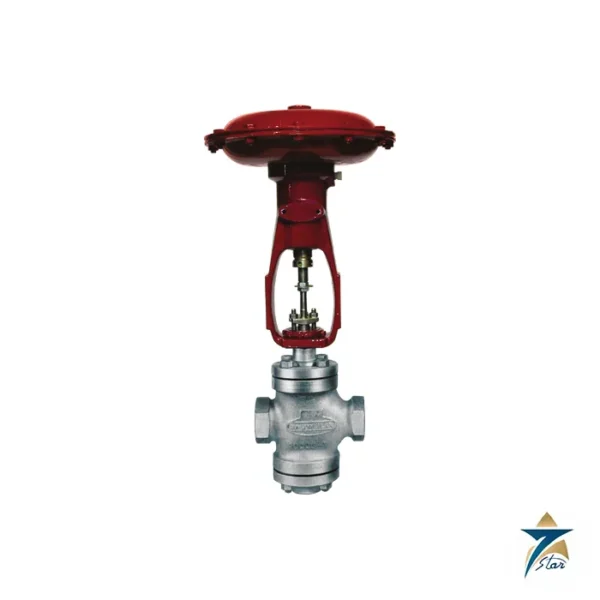
It consists of a Type 2417 globe valve and a Type 2413 diaphragm or bellows actuator, the same actuator family used on the Type 41-23 reducing valve. No compressed air, power or other auxiliary energy is required.
Reading the 41-73 configuration
The type number 41-73 fixes the function (excess pressure valve, opens on rising upstream pressure). The rest of the configuration is stated in the ordering text: additional features, DN, body material, PN, KVS coefficient, set point range and optional accessories or special version. Body choices are cast iron EN-GJL-250, spheroidal graphite iron EN-GJS-400-18-LT, cast steel 1.0619, forged steel or stainless steel 1.4408; the standard actuator has an EPDM rolling diaphragm.
Type 41-73 technical specifications
| Parameter |
Specification |
| Manufacturer / part number |
Samson / Type 41-73 Universal Excess Pressure Valve (DIN version) |
| Function |
Opens when upstream pressure rises; controls upstream pressure p1 |
| Valve / actuator |
Type 2417 globe valve with Type 2413 diaphragm or bellows actuator |
| Nominal size |
DN 15 to 100 |
| Pressure rating |
PN 16, 25 or 40 |
| Set point range |
0.05 to 28 bar |
| Temperature |
–50 to 350 °C overall; 300 °C body limit at PN 16; FDA version max. 60 °C |
| Max. differential pressure |
16 bar (PN 16) or 25 bar for DN 15 to 50; 16 or 20 bar for DN 65 to 80; 16 bar for DN 100 |
| Leakage class (DIN EN 60534-4) |
Metal seal: class I (≤0.05 % of KVS); soft seal: class IV (≤0.01 % of KVS) |
| Balancing |
Stainless steel bellows; valves with KVS of 4 or less have no balancing bellows |
| Noise reduction |
Low-noise plug as standard; flow divider ST 1 optional |
| Sizing terms |
FL = 0.95; xT = 0.75 |
How the 41-73 excess pressure valve works
The set point spring and its adjusting nut press the plug onto the seat, so with no pressure the valve is closed. The upstream pressure p1 is tapped before the valve and fed through a control line to the operating diaphragm, where it creates a force against the spring. When that force exceeds the set point, the plug lifts and the valve opens in proportion to the pressure rise, letting medium flow to the downstream side until the upstream pressure falls back.
This is the opposite action to a pressure reducing valve. In the 41-73 the spring closes the valve, whereas in the 41-23 the spring holds it open. In both, the plug is pressure balanced by a stainless steel bellows, with downstream pressure inside and upstream pressure outside, so the inlet pressure has little influence on the stroke.
Sizes and KVS values of the 41-73
| Size |
Standard KVS |
KVS with flow divider ST 1 |
| DN 15 |
4 |
3 |
| DN 25 |
8 |
6 |
| DN 40 |
20 |
15 |
| DN 50 |
32 |
25 |
| DN 65 |
50 |
38 |
| DN 80 |
80 |
42 |
| DN 100 |
125 |
66 |
Weights depend on actuator and set point range. For the diaphragm version they are listed from about 13 kg for a DN 15 valve with a 2 to 16 bar actuator up to about 74 kg for a DN 100 valve with a 0.05 to 0.6 bar actuator; face-to-face length L runs from 130 mm at DN 15 to 350 mm at DN 100.
Where the 41-73 fits and related Samson parts
A Type 41-73 is normally placed on a bypass or discharge branch of a header, pump line or vessel, where it limits the pressure upstream. It pairs naturally with the Type 41-23 universal pressure reducing valve: the 41-23 protects the consumer side of a pressure break, and the 41-73 maintains a minimum pressure on the supply side or relieves surplus flow. For low-pressure fuel gas and inert gas duty, the Type 2405 offers set points down to 2 mbar.
Accessories are the same as for the reducing valve. A control line kit allows the pressure to be tapped directly at the valve body for set points of 0.8 bar and above, and compression fittings for 8 or 10 mm pipe are ordered separately. A compensation chamber of 0.7, 1.5 or 2.4 litres is needed for liquids above 150 °C and for steam.
Selection checklist for Type 41-73
- Confirm that the duty is upstream pressure holding or overpressure discharge, not reduction.
- Take the maximum and minimum flow at the set point and calculate the KVS; check the differential pressure limit.
- Choose DN, PN and body material for the pressure, temperature and corrosiveness of the fluid.
- Select a set point range and the diaphragm or bellows actuator (bellows for 2 to 28 bar).
- Choose a metal seat for general duty, a soft seat for tight closing, or a Stellite-faced trim for wear.
- Consider a flow divider ST 1 for gas or steam where noise is critical.
- State special requirements: FKM, oil-free, increased-safety actuator, remote set point.
Installation, commissioning and maintenance
Mount the valve so that the actuator hangs downward and the flow follows the arrow, and slope the horizontal pipe slightly on both sides to allow condensate to drain. The control line takes its pressure from the upstream side and is not part of the delivery, so plan the connection and a restriction fitting (a screw joint with 6 mm restriction is supplied). The valve seat must be exchanged if a flow divider is retrofitted later.
Set the pressure on the adjusting nut while watching an upstream gauge, and verify that the valve closes again once the line pressure falls. Spare diaphragms, seat and plug sets and bellows assemblies should be held for continuously running lines.
Typical applications in Oman and the GCC
Excess pressure valves of this kind are installed on pump discharge bypasses, steam and condensate headers, boiler feed and cooling-water circuits, and gas letdown stations in oil and gas, power, desalination and petrochemical plants. They are valued at remote or unattended locations in Oman and the GCC because they run without instrument air or power. High ambient temperature and humid coastal air favor the stainless body option and a leakage-proof actuator construction.
Information to send with an RFQ
- DN, PN, flange standard and quantity
- Medium, temperature, set point and expected flow rate
- Upstream and downstream pressure ranges
- Body material, seat seal and diaphragm material
- Control line kit, compensation chamber or flow divider
- Special version requirements
Documents and quotation
A datasheet for the Samson Type 41-73 is attached on this page.
Send us the part number 41-73 with the duty data and Seven Star LLC will prepare a quotation for supply to Oman and the GCC. We are an independent supplier, not a Samson representative.
Other Models in the Samson Self Operated Regulators Range
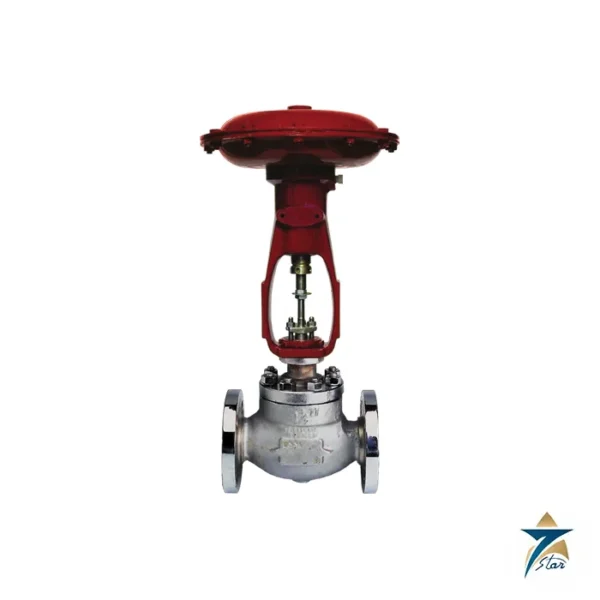
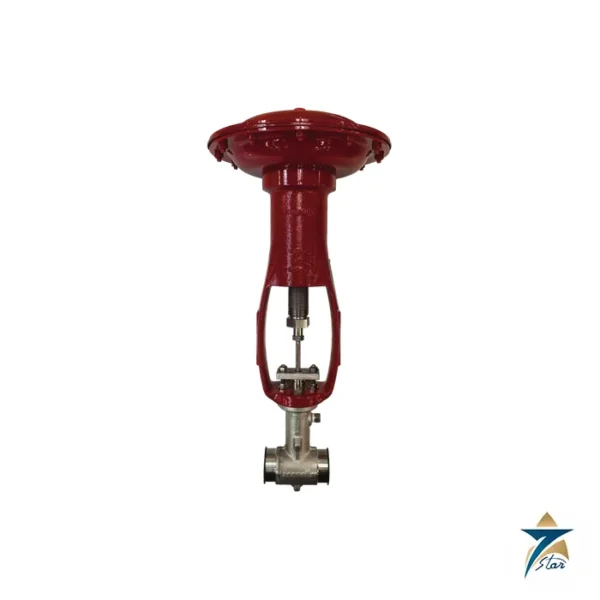
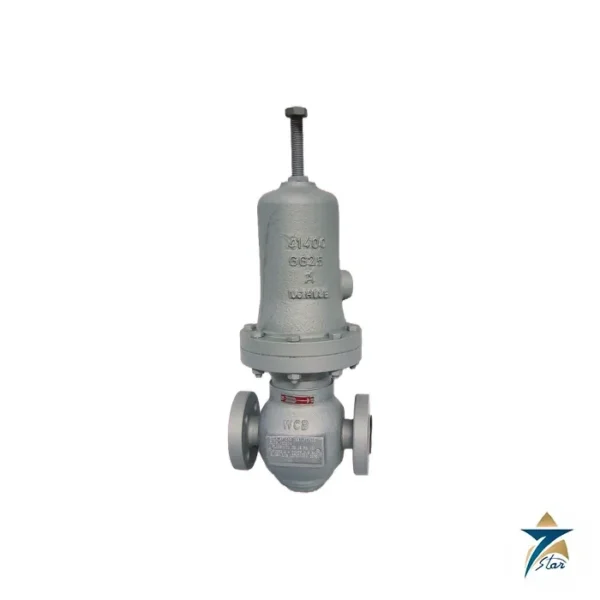
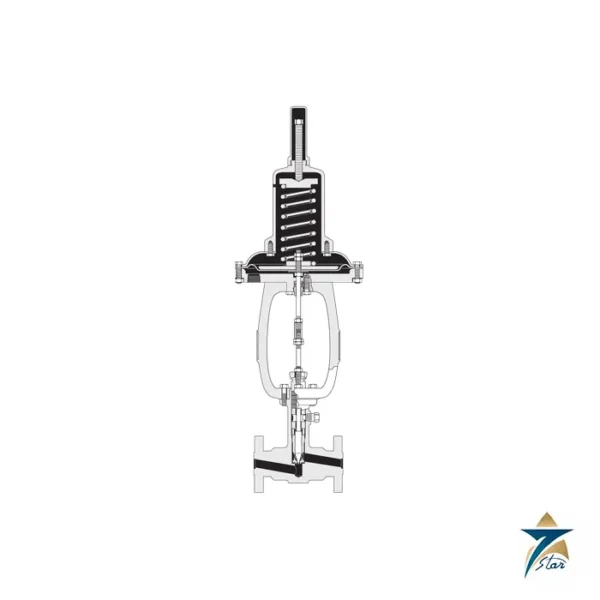
Seven Star LLC supplies models from the Samson Self Operated Regulators range in Oman and the GCC. Compare the related models below and request a quote for the one that matches your application.
























Reviews
There are no reviews yet.