Moore ECT/4-20MA/4-20MA/12-42DC [DIN] overview
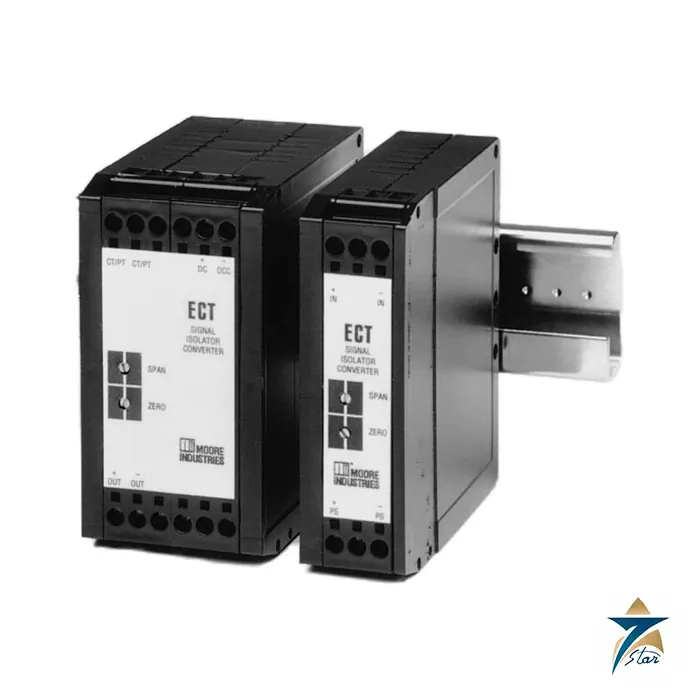
The Moore ECT/4-20MA/4-20MA/12-42DC [DIN] is a two-wire, output-loop powered signal isolator from the Moore Industries ECT family. It takes a 4-20 mA input, provides full galvanic isolation and delivers a 4-20 mA output, powered from the output side of the loop through a 24 Vdc supply.
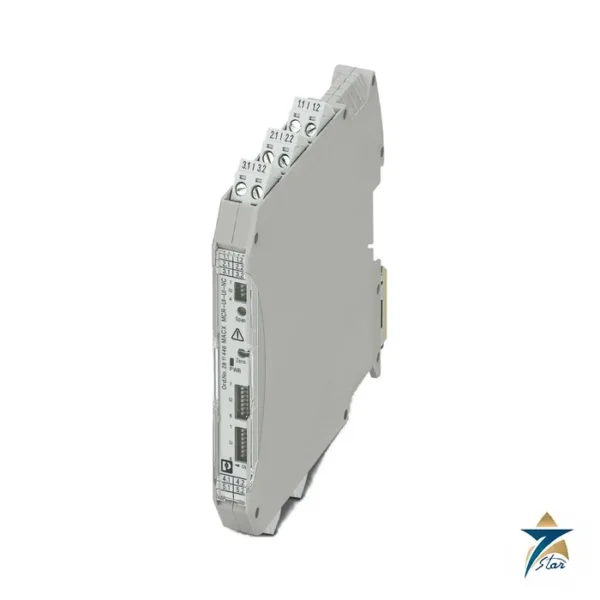
The ECT family is described by the manufacturer as an economical solution for isolating, converting and boosting signals. This configuration is the plain isolator form, in a compact thermoplastic DIN-style housing that snaps onto G-type and Top Hat rails.
The ECT/4-20MA/4-20MA/12-42DC [DIN] is helpful for removing ground-loop errors between a transmitter and a receiving device such as a DCS, PLC, recorder or indicator.
The part number written as ECT/4-20MA/4-20MA/12-42DC [DIN] is the model string given in the manufacturer datasheet as a worked ordering example for the ECT family, so it describes one complete, orderable configuration rather than a loose product family. Every field of the string (unit, input, output, supply or power, option and housing) can be changed when a different configuration is needed, and the datasheet table lists the allowed choices. If your plant standard differs from this example, send the configuration you need with your RFQ and we will check it against the table.
Key features of the Moore Industries ECT/4-20MA/4-20MA/12-42DC [DIN]
- Industrial-strength isolation of 1500 Vrms between input and output for output-loop powered models.
- Two-wire design that takes power from the output loop, so no extra supply wiring is needed.
- Can resolve bucking power supplies where a four-wire transmitter and a DCS both try to supply loop power.
- Low-cost troubleshooter for start-up problems caused by non-isolated transmitters.
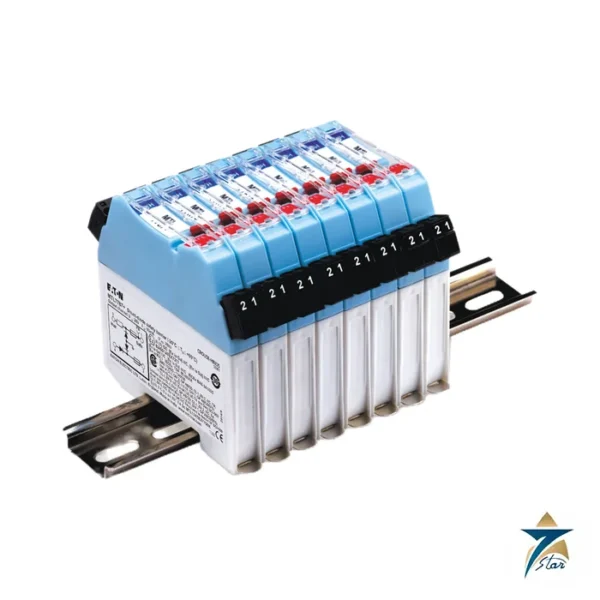
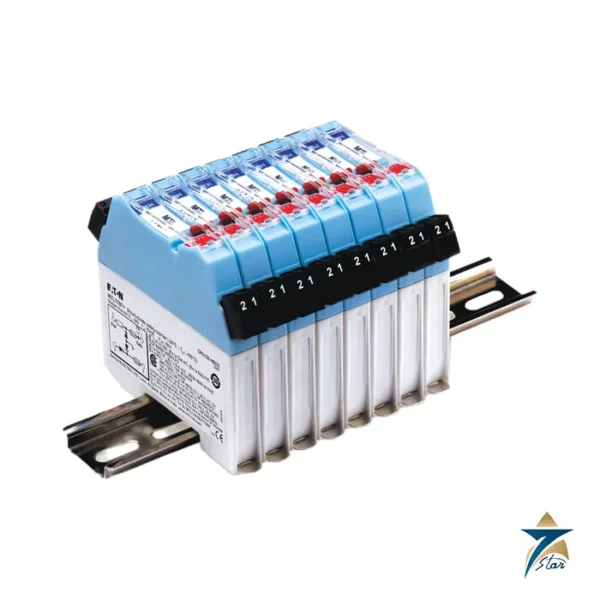
- Compact thermoplastic DIN-style housing for G-type and Top Hat rails.
- Front-panel zero and span potentiometers.
Technical specifications for ECT/4-20MA/4-20MA/12-42DC [DIN]
| Parameter |
Value |
| Model string |
Moore ECT/4-20MA/4-20MA/12-42DC [DIN] |
| Input |
4-20 mA |
| Output |
4-20 mA |
| Power |
12-42 Vdc, supplied through the output loop |
| Accuracy |
DC inputs plus or minus 0.1% of span |
| Isolation |
1500 Vrms between input and output |
| Response time |
100 ms maximum to 99% of output for DC inputs |
| Output current limiting |
25 mA typical |
| Ripple |
10 mV, measured across a 250 ohm resistor |
| Ambient temperature range |
-20 to +70 degrees C |
| Zero adjustment |
Front panel potentiometer, plus or minus 5% |
| Weight |
85 g (3 oz) |
| Housing |
Thermoplastic DIN-style housing, 32 mm G-type (EN50035) and Top Hat (EN50022) rail |
| Certifications |
UL general location; CE conformant to EMC 89/336/EEC, EN 61326 |
The values above come from the manufacturer datasheet for the ECT family. Specifications can depend on the option and housing chosen, so always read the matching page of the datasheet before you finalise a purchase specification, and keep the full model string on your purchase documents.
Typical applications in Oman and the GCC
Signal isolators are installed to protect measurement loops from ground loops and common-mode faults. Typical places to use them are:
- Oil and gas control rooms, where field signals are isolated before they enter DCS, PLC or safety-system input cards.
- Power plants and utilities, for signal sharing between a control system and a recorder or monitoring package.
- Water treatment and pumping stations, where long cable runs and several earth points can create ground-loop errors.
- Manufacturing plants that need to interface non-isolated transmitters with modern input cards.
An isolator is low-cost insurance for expensive input hardware and is often the quickest fix when a new loop shows unexplained signal drift or noise during commissioning.
Selection and compatibility notes
Choose the ECT power type first. Output-loop powered units use 12-42 Vdc from the output loop, input-loop powered units use the 5.5VLP or 8.5VLP codes with 500 Vrms isolation, and line-powered units are chosen where mains or 24 Vdc supply is available. The ECT/4-20MA/4-20MA/12-42DC [DIN] is the output-loop powered type.
If you need to convert 1-5 V, 0-10 V or AC signals to 4-20 mA rather than simply isolate a 4-20 mA signal, specify the matching input code in the datasheet table.
Questions to settle before ordering ECT/4-20MA/4-20MA/12-42DC [DIN]:
- Is a two-wire output-loop powered unit suitable, with 24 Vdc available at the receiver?
- Is the input a 4-20 mA signal or another type that needs conversion?
- What load does the receiving device present?
- Is the DIN rail space available in the cabinet?
- Is an enclosure needed for the field?
Installation and commissioning
Snap the unit onto the rail, connect the input and output according to the terminal diagram in the datasheet and connect the 24 Vdc supply through the output loop. Verify polarity and confirm the loop compliance for the load.
Adjust zero and span using the front-panel pots; the datasheet notes that they are non-interactive when span is set first.
Maintenance and service life
The unit has no moving parts. Confirm periodically that input and output signals track as expected and that the supply voltage remains within range.
If a ground loop reappears, check the cable shields and earthing rather than the isolator.
Related products and ordering notes
Other isolators on this site include the Moore Industries SIX signal isolator, and the HIX and HIT HART isolators are available for HART loops.
Please give the complete model string when ordering.
Seven Star LLC is an independent supplier serving Oman and the GCC and is not affiliated with the manufacturer. Product names and model designations belong to their owners and are used here only to identify the equipment you are asking about.
Frequently asked questions in brief
- What does the ECT/4-20MA/4-20MA/12-42DC [DIN] do? It isolates a 4-20 mA signal and passes it to a receiver as a 4-20 mA signal.
- How is the ECT/4-20MA/4-20MA/12-42DC [DIN] powered? It is a two-wire unit powered through the output loop from 12 to 42 Vdc.
- What isolation does the ECT/4-20MA/4-20MA/12-42DC [DIN] give? The datasheet states 1500 Vrms for output-loop powered models.
- Does the ECT/4-20MA/4-20MA/12-42DC [DIN] pass HART? The ECT is not described as a HART isolator; for HART loops use the HIX or HIT.
- How do I request a quote for the ECT/4-20MA/4-20MA/12-42DC [DIN]? Send an RFQ with the part number, quantity and delivery location in Oman or the GCC.
Documents and quotation
The manufacturer datasheet for the ECT family is available for download from this page, and it contains the full ordering table, dimensional drawings and wiring diagrams referred to above. To request a quotation, send an RFQ that includes the part number ECT/4-20MA/4-20MA/12-42DC [DIN], the quantity you need, the delivery location in Oman or the GCC and any special requirements such as certification or documentation. We will confirm availability and lead time and reply with a written offer. Please check the datasheet and your own hazardous-area and safety requirements before you place an order.





















Reviews
There are no reviews yet.