
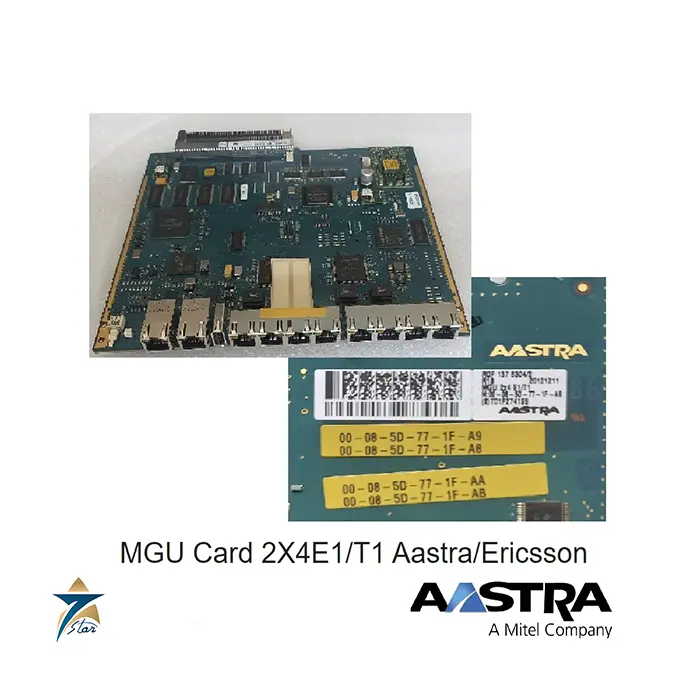
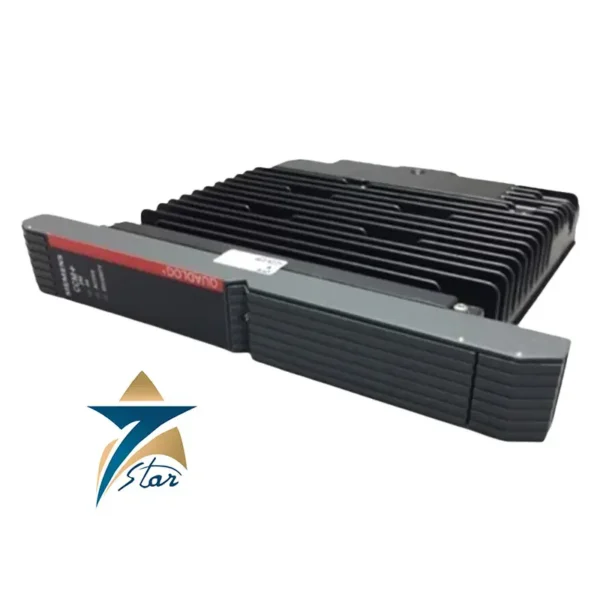
The reliable convergence of enterprise-tier voice communication, real-time automated data transport, and legacy circuit-switched networks forms the structural backbone of modern high-availability infrastructure. The Ericsson MGU Card 2X4E1/T1 functions as an essential, high-density Media Gateway Unit (MGU) engineered explicitly for the Aastra/Ericsson MX-ONE Telephony System and Service Node architectures. In massive petrochemical facilities, automated electrical substations, marine port authorities, and utility grids across Oman and the wider GCC region, enterprise communication systems must process massive loads without performance degradation or signal dropouts.
Seven Star LLC supplies this robust, factory-verified hardware solution as an independent vendor and technical consultant to support large-scale facility retrofits and network expansions. By serving as the primary architectural link between legacy Time Division Multiplexing (TDM) channels and next-generation IP/SIP infrastructures, this card secures uncompromised voice fidelity and continuous system uptime.
The internal processing logic of the module centers on a high-throughput architecture driven by dedicated Digital Signal Processing (DSP) matrices. The board is designed to bridge public and private telephony networks by natively processing Real-time Transport Protocol (RTP) and Secure RTP (SRTP) media streams. When routing voice calls across legacy and IP networks, the card executes real-time media transcoding, automated Dual-Tone Multi-Frequency (DTMF) detection, DTMF relay, and high-fidelity facsimile tone translation using advanced T.38 protocols.
To maintain crystal-clear audio metrics across long-distance copper or fiber backhauls, the embedded electronics implement a highly configurable hardware echo cancellation loop. Furthermore, the operational topology includes integrated Keycode receivers, Keycode senders, and Tone senders that manage call progress tones according to strict market specifications. For multi-party environments, the card provides robust conference and intrusion resources alongside an integrated non-blocking TDM switching fabric equipped with precise signal attenuation controls.
Internally, the board’s non-blocking Time-Space-Time switch handles up to 2,048 64 kbps timeslots, while its dual-DSP Media Stream Processor supports G.711 A-law/µ-law and G.729a (with Annex B voice-activity detection and comfort-noise generation) codecs at packetization intervals from 5 to 60 milliseconds, plus a configurable jitter buffer of up to 200 milliseconds for links with variable IP latency. Depending on codec, packetization, and encryption settings, the MGU Card 2X4E1/T1 allocates and tears down a VoIP session in under 30 milliseconds and 20 milliseconds respectively, keeping end-to-end voice latency in the 25–58 millisecond range – performance headroom that matters when the same trunk group carries both everyday office traffic and time-critical alarm or teleprotection signalling across an Omani utility network.
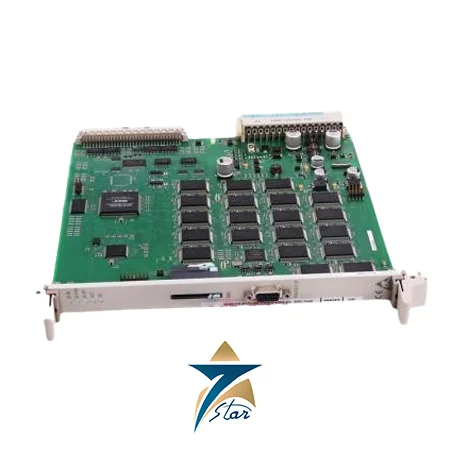
The mechanical and physical engineering of the interface board is optimized for seamless drop-in integration into standard industrial communication subracks. The module is fully compatible with standard 19-inch MX-ONE Media Gateway enclosures, deploying effortlessly across Slim 1U, Lite 3U, and Classic 7U chassis configurations. The front plate incorporates eight physical E1/T1 Primary Rate Interfaces (PRI) alongside dual 10/100 Base-T RJ45 LAN ports, providing high-speed physical access to public switched telephone networks (PSTN) and public land mobile networks (PLMN).
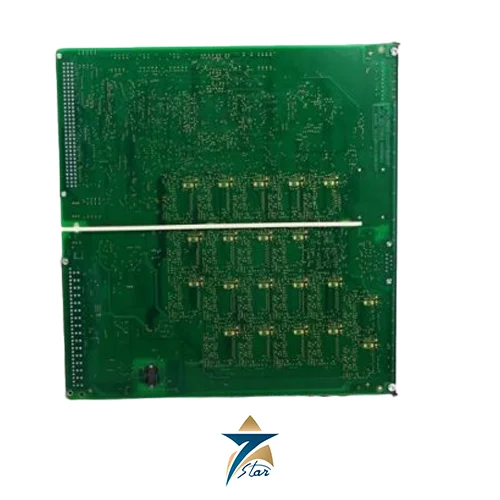
The multi-layer printed circuit board (PCB) is populated with low-power, high-durability semiconductor components that rely entirely on passive thermal convection cooling within the subrack. To resist the elevated ambient humidity and salt-air oxidation common in coastal Middle Eastern processing facilities like Sohar, Duqm, and Muscat, the backplane interface pins feature heavy gold plating over a stable nickel diffusion barrier. This robust metallurgy prevents contact fret corrosion, mitigating the risk of intermittent bus errors over decades of deployment.
The Ericsson MGU Card 2X4E1/T1 is engineered with layered resilience for facilities where a lost trunk group cannot be tolerated. Its dual 10/100 Base-T LAN0/LAN1 ports support Ethernet-level link failover with a monitoring interval of roughly 30 seconds, subnet redundancy reassigns the media stream processor to a standby IP address in as little as 8 seconds, and server redundancy allows a standby MX-ONE service node to take over active sessions during an outage. For sites carrying voice traffic over shared IP backbones, the card supports IPsec tunnelling with IKEv1 key exchange and AES-128/256, 3DES, or Blowfish encryption alongside SHA-1/SHA-2 authentication, and SRTP media encryption per RFC 3711 and RFC 6188 using AES counter mode with HMAC-SHA1 integrity checking.
Auxiliary media resources on the card include up to 64 conference resources supporting as many as 16 participants each, up to 400 simultaneous keycode senders and tone senders for call-progress signalling, and recorded voice announcement storage supporting roughly 60 minutes of stored media across as many as 195 concurrent playout sessions. These figures make the MGU Card 2X4E1/T1 suitable for consolidating several legacy switching functions – conferencing, RVA playback, tone generation – onto a single field-replaceable board rather than maintaining separate legacy units.
The advanced media gateway board delivers an extensive array of structural and electronic advantages designed to fulfill strict B2B engineering specifications:
High-density digital interface equipping systems with 8 independent E1/T1 PRI trunk lines for extensive public and private network connectivity.
Concurrency capacity of up to 290 parallel RTP sessions (G.711, 30 ms packetisation, standard echo canceller), reducing to up to 150 sessions when SRTP media encryption is enabled.
Integrated hardware-driven echo cancellation logic ensuring clean, noise-free acoustic metrics across complex transport runs.
Native support for T.38 fax relay protocols, securing high-reliability data transmissions to and from internet-aware fax units or standard gateways.
Integrated recorded voice announcement (RVA) storage blocks, enabling local playout of pre-recorded media files over the TDM switch.
Advanced network redundancy support to protect critical operations against sudden localized link failures and backbone fiber cuts.
Layered resilience combining Ethernet link failover, sub-8-second subnet redundancy, and standby server takeover keeps trunk groups in service during network faults.
IPsec tunnelling and SRTP media encryption protect voice and signalling traffic carried over shared or public IP backbones.
Seven Star LLC facilitates the strategic supply, component lifecycle provisioning, and turnaround replacement of this telecommunications asset across multiple high-stakes networks:
Electrical Utility Substations: Providing reliable voice, teleprotection synchronization, and SCADA transport links over corporate TDM networks in Oman.
Oil and Gas Central Control Rooms: Powering high-availability emergency hotline grids and multi-channel public addressing networks inside major refineries.
Maritime Port Authorities: Maintaining converged IP and circuit-switched communications backhauls across extensive coastal shipping terminals.
Railway and Transportation Logistics: Supporting centralized dispatching voice networks and automated trackside signaling communication loops.
Enterprise Telephony Modernization: Serving as a vital hardware bridge during multi-stage plant migrations from legacy PBX hardware to pure SIP/VoIP systems.
| Specification | Technical Data |
| Product Model Identification | MGU Card 2X4E1/T1 |
| Manufacturer / Brand | Ericsson / Aastra (Mitel MiVoice MX-ONE Series) |
| Equipment Classification | Media Gateway Unit (MGU) Telecommunications Board |
| Digital Trunk Interface Array | 8 x E1/T1 PRI (Primary Rate Interfaces) |
| Network Ethernet Interfaces | 2 x 10/100 Base-T RJ45 LAN Ports |
| Concurrent Media Resources | Up to 290 active RTP sessions (G.711: 140 / 240 / 290 at 10 / 20 / 30 ms packetisation); up to 150 with SRTP encryption |
| Fax Protocol Compliance | T.38 Fax Relay (G3 Fax Interoperability) |
| Chassis Compatibility | MX-ONE Slim (1U), Lite (3U), and Classic (7U) Media Gateways |
| Backplane Interface Metallurgy | High-Density Gold-Plated Connector Alignment Pins |
| Signal Processing Features | Configurable Echo Canceller, DTMF Detection, MFC Receivers |
| Local Media Storage | Integrated Recorded Voice Announcement (RVA) Engine |
| Hardware State / Location | Factory New Industrial Inventory / Sourced via UK |
| TDM Switching Capacity | 2,048 x 64 kbps timeslots (1,280 connected) |
| Codec Support | G.711 A-law/µ-law, G.729a (Annex B VAD/CNG) |
| Jitter Buffer | 0–200 ms, adaptive or non-adaptive |
| Network Redundancy | LAN0/LAN1 link failover (~30 s); subnet redundancy (~8 s); server redundancy |
| Security Protocols | IPsec (IKEv1, AES-128/256, 3DES); SRTP (RFC 3711/6188) |
| VoIP Session Setup / Teardown | < 30 ms / < 20 ms |
| Conference Resources | Up to 64 resources, 16 participants each |
| Warranty Terms | 12 Months Continuous Commercial Operation |
Seven Star LLC is a dedicated specialized vendor of high-availability industrial communication components and multi-service transport hardware across Oman and the GCC region. To secure a formal business-to-business price quotation, verify subrack firmware compatibility parameters, or request the official engineering documentation for the Ericsson MGU Card 2X4E1/T1 Telecommunications Module, contact our corporate sales division today.
Browse Ericsson products by category: Industrial Communications.
Aastra Technologies, established in 1983, is a name found on enterprise telephony equipment: telephone exchanges, system boards and desk phones. Many of these boards also show Ericsson or Mitel markings, depending on the production year. Seven Star LLC lists Aastra boards for the MX-ONE exchange and supplies them as spare parts to sites in Oman.Browse Aastra Technologies products by category: Industrial Communications, Power Modules.
Choose the option that best fits your needs to get the fastest response from our team.
Automatically fill the RFQ form with this product's details for a faster process.
Manually enter multiple part numbers, specific brands, or custom requirements.







Reviews
There are no reviews yet.