- Automation & ControlView all 3,185 products
- Automation Accessories
- AC Drives
- PLC & I/O Cards
- Industrial Communications
- Vibration Monitoring
- Controllers & Data Acquisition
- Isolator & Barrier
- Safety Switches & Guard Locking
- Encoders
- Motor Soft Starters
- CCTV & Security
- Pneumatic Cylinders
- HMI Displays
- Servo Drives
- Industrial Computers
- Machine Vision
- Automation Software
- Robotics
Brand: K-TEK
K-TEK PS45 Pneumatic Magnetic Level Gauge Switch, No-Bleed
Description
Overview
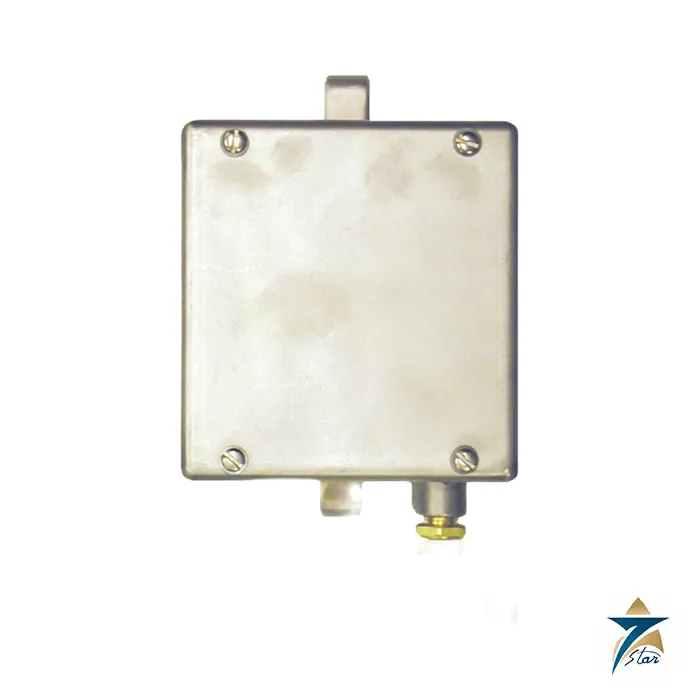
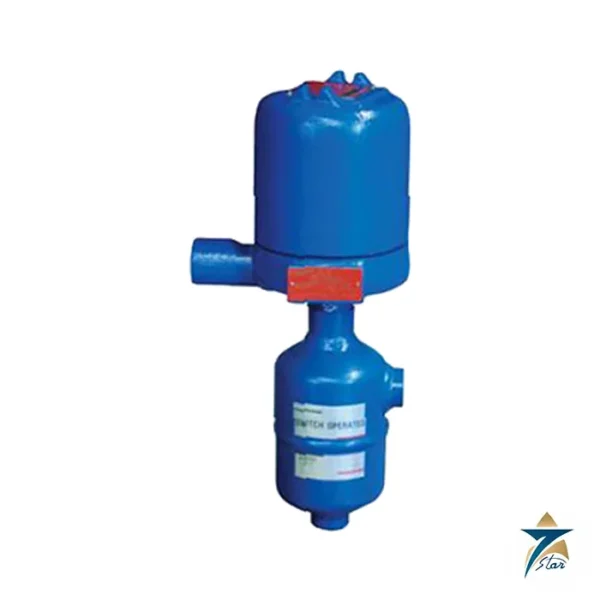
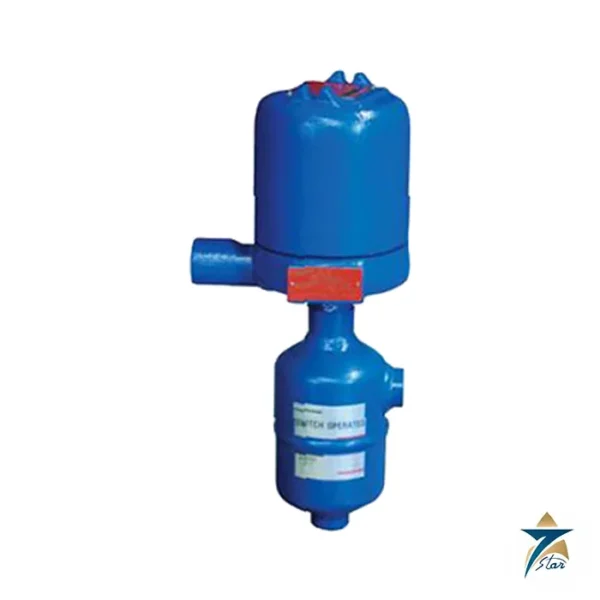
K-TEK PS45 is a pneumatic point-level switch that works without electricity and without bleeding gas. It clamps to the outside of a KM26 magnetic level gauge, an LS Series cage level switch or an external chamber, and a magnetic float inside that chamber switches a compressed air or gas signal as it passes. The K-TEK PS45 is the data sheet name for a magnetically actuated no-bleed switch, and it is requested wherever shutdown logic is pneumatic and a hazardous area rules out an electrical contact. Seven Star LLC is an independent supplier serving Oman and the GCC.
A pneumatic switch in plain terms
Think of the K-TEK PS45 as a three-port valve operated by a float. Port C is common, and ports A and B are the two outputs. When the float passes in one direction, the supply gas is routed from one output port to the other, and when the float passes the other way the routing reverses. Because the PS45 is not a pilot-operated device, a continuous gas supply is not required during normal operation, and the data sheet lists air consumption as 0.0 scfm. The cam, spindle and magnet assembly drives a precision Micropilot valve assembly, and the action is field reversible by swapping the tubing on ports A and B.
Advantages listed by the manufacturer
- Magnetic coupling, so there is no direct contact with the process fluid.
- No process piping or valves are required, and nothing needs to be drained before maintenance.
- Positive action: the output is either zero or full supply pressure, never an intermediate value.
- Vibration-resistant, corrosion-resistant stainless steel NEMA 4X housing.
- Mounting and adjustment with only a small screwdriver.
- Optional filter on the supply side of the switch.
K-TEK PS45 specification summary
| Parameter | Data sheet value |
|---|---|
| Medium | Filtered air or gas supply |
| Supply pressure | 1 to 100 psig (0.7 to 6.9 bar) |
| Flow rate | 10 scfm at 100 psig supply (0.3 scmm at 6.9 bar) |
| User connections | 1/8 in FNPT |
| Operating temperature | 0 to 180 degrees F (-18 to 82 degrees C) |
| Dead band | About plus or minus 0.5 in (1.2 cm) of float movement |
| Air consumption | 0.0 scfm |
| Housing | NEMA 4X stainless steel |
| Approvals | GOST Russia |
Selecting the K-TEK PS45 order code
The code is PS45 / a / b / c / d. Field a is L or H and fixes how the factory supplies the optional filter and vent fitting: L means air reaches the final control element when the float is below the switch, and H means air reaches it when the float is above the switch. Field b, F, supplies a filter on the input port. Field c, RD, is an optional rod mount that requires a KM26 with a switch mounting rod. Field d, INS, adds a thermal insulation pad that allows operation up to 450 degrees F (232 degrees C). Since the actual action is set by how the user connects ports A, B and C, the H or L choice only affects the way the filter and vent are fitted, and both can be changed in the field.
Applications of the PS45 on oil and gas equipment
The data sheet gives one example application: pneumatic operation of safety shutdown systems on oil and gas production equipment. Typical use in Oman and the GCC is a high-level or low-level trip on a separator, scrubber or surge vessel where the plant air or fuel gas that already operates the shutdown valves is routed through the PS45 and closes or opens a final control element. The same signal can drive an alarm horn or a pneumatic relay in remote wellhead and pipeline sites that do not have reliable power.
How PS45 differs from the electric K-TEK gauge switches
The MS41 and MS40 provide a 10 A electrical contact and the LMS100 a 1 A reed contact, all of which need wiring and an area approval for the housing. The PS45 delivers a gas pressure signal with a supply limit of 100 psig and a flow of 10 scfm at that pressure, so it is limited in temperature to 0 to 180 degrees F, where the electric switches reach minus 60 or minus 320 degrees F at the cold end. Its dead band of about plus or minus 0.5 in is also tighter than the 0.75 in of the electric versions, and the data sheet lists only GOST Russia under approvals.
Mounting the switch
Two small stainless steel variable clamps attach the PS45 to the KM26 chamber, so the housing can sit anywhere along the whole length of the float chamber and the trip point is infinitely adjustable. Loosening the clamps lets you move the housing to a new level. Two switches can be mounted so that they trip at the same point or at points separated by less than the length of a switch, and additional switches can be added at any time without new piping or valves.
Piping and maintenance
Use clean, dry, filtered instrument gas on port C and tube ports A and B as the application demands. If the supply is dirty, specify the optional filter. Because the switch never touches the process fluid and has no air consumption in the steady state, preventive maintenance is minimal. Check tubing joints for leaks, replace the filter element when it clogs and confirm the trip direction with a handheld magnet whenever the circuit is modified. When the switch is fitted to a hot chamber, add the insulation pad so the Micropilot valve stays inside its 180 degrees F limit, and keep vent openings clear of paint, ice and insects so the exhaust path of the output port is never blocked. Record the A and B port connections on the loop drawing, since the switch can be reversed in the field and the next technician must know which way it was piped.
Related items you may also need: ifm LMT102 Capacitive Point Level Sensor, G 1/2, IO-Link | Magnetrol Echotel 910 Ultrasonic Liquid Level Switch | VEGA VEGASWING 53 IO-Link Vibrating Level Switch with Tube | All K-TEK products.
Documents and quotation
The K-TEK PS45 datasheet is attached to this page. Send your RFQ with K-TEK PS45, the H or L action code, filter and rod mount options, insulation pad requirement and quantity, and we will quote for delivery in Oman and the GCC.
Datasheets & Documents
- Datasheet K-TEK PS45 Pneumatic Magnetic Level Gauge Switch Datasheet Download
Reviews (0)
How would you rate this product? Cancel reply
About brand
K-TEK is an American maker of level instrumentation, best known for the KM26 magnetic level gauge and for magnetostrictive level transmitters. The company was founded in 1975 and is based in Prairieville, Louisiana, a suburb of Baton Rouge. Its first product was the KM26, a gauge with extruded outlets and a float engineered for each application, and the range later grew to transmitters, level switches and other measurement methods. Since 2010 K-TEK has been part of ABB, and the current data sheets carry the line inside ABB Measurement and Analytics.
K-TEK company profile
| Founded | 1975, Prairieville, Louisiana, USA |
|---|---|
| Headquarters | Prairieville, Louisiana, USA |
| Ownership | Acquired by ABB in 2010; the line continues within ABB Measurement and Analytics |
| Core technology | Magnetic level gauges, magnetostrictive level transmitters, and magnetically coupled level switches |
| Typical applications | Oil and gas separators, refining, petrochemical, power generation, water and wastewater, chemical, pulp and paper, mining |
| Standards | SIL 2 and SIL 3 capable transmitters to IEC 61508; ATEX, IECEx, FM and CSA hazardous area approvals; ASME code fabrication and PED for gauges and chambers |
Milestones
- 1975: K-TEK is founded in Louisiana.
- KM26: The magnetic level gauge becomes the company's first product and its long-running flagship.
- 2007: The company acquires KAB Instruments of South Africa, adding non-contact ultrasonic level measurement.
- 2010: ABB announces the purchase and completes it in the summer, reporting more than 350,000 installations at the time.
- Today: Magnetostrictive transmitters, gauge switches and seal pots are published as Level products in ABB data sheets.
How K-TEK magnetic gauges and magnetostrictive transmitters work
Both technologies follow a float that carries a permanent magnet. In a magnetic level gauge the float rides inside a sealed chamber connected to the vessel, and a magnetically coupled indicator or a clamp-on switch outside the chamber follows it, so nothing penetrates the process boundary. A magnetostrictive transmitter adds electronics: a current pulse travels along a wire in a sensor tube, its magnetic field meets the float magnet, and a torsional wave returns to a sensing element. The electronics measure the time of flight and convert it to a level signal, with accuracy quoted at 0.01 percent of full scale or 1.27 mm on the LMT100. Because the measurement tracks the float position, foam, vapour and emulsion layers do not disturb it, and a second float can report interface level. Tip: order the float for the exact specific gravity of the liquid.
Where these products are used in Oman and the GCC
Separators and knock-out drums on oil and gas facilities, refinery cage chambers, condensate and drip leg service, fuel storage, feedwater heaters and boiler drums, and chemical dosing tanks all use float-based gauges, switches and transmitters. The sealed construction suits heat, dust and coastal humidity, and clamp-on switches and transmitters can be added to an existing gauge during a turnaround without opening the vessel, which keeps plant downtime short.
K-TEK models we list
| Family | Examples |
|---|---|
| Magnetostrictive level transmitters | LMT100, AT200 |
| Electric magnetic level gauge switches | MS41, MS40, LMS100 |
| Pneumatic level switches | PS45 |
| Seal pots and barrier fluid tanks | ST95 |
Ordering K-TEK instruments: what we need
Seven Star LLC is an independent supplier serving Oman and the GCC. For a K-TEK instrument, send the model and the complete order code from the nameplate or data sheet, because probe length, float number, mounting, approval and cable entry are all part of the code. For a replacement, add the tag, the vessel or chamber drawing, the specific gravity of the liquid, and the process pressure and temperature. State the quantity, and we will reply with availability and lead time.
Facts checked against company and ABB press releases of 2007 and 2010, ABB level product brochures and the manufacturer data sheets, November 2026.
Browse K-TEK products by category: Level Switches, Magnetic, Magnetostrictive & Displacer Level.
FAQ
Questions about the K-TEK PS45 Pneumatic Magnetic Level Gauge Switch,
Answers from our engineering team on installation, compatibility and integration.
01What supply pressure does K-TEK PS45 need?
The data sheet gives a filtered air or gas supply of 1 to 100 psig (0.7 to 6.9 bar), with a flow rate of 10 scfm at 100 psig and air consumption of 0.0 scfm in the steady state.
02How is the action of K-TEK PS45 reversed?
The switch is field reversible: the action depends on how the user connects ports A, B and C, so direct or reverse acting is chosen simply by changing the tubing at ports A and B.
03What temperature can K-TEK PS45 operate in?
Standard operating range is 0 to 180 degrees F (minus 18 to 82 degrees C). The INS insulation pad option allows operation up to 450 degrees F (232 degrees C).
04Which equipment can K-TEK PS45 be mounted on?
It is clamped to a KM26 magnetic level gauge, an LS Series cage level switch or an external chamber that holds a magnetic float, using two small stainless steel variable clamps.
05What do H and L mean in the K-TEK PS45 order code?
L means air reaches the final control element when the float is below the switch and H when it is above; the code determines how the optional filter and vent fitting are supplied.


Reviews
There are no reviews yet.