UP-2 analog valve positioner: balanced-force pneumatic and electro-pneumatic
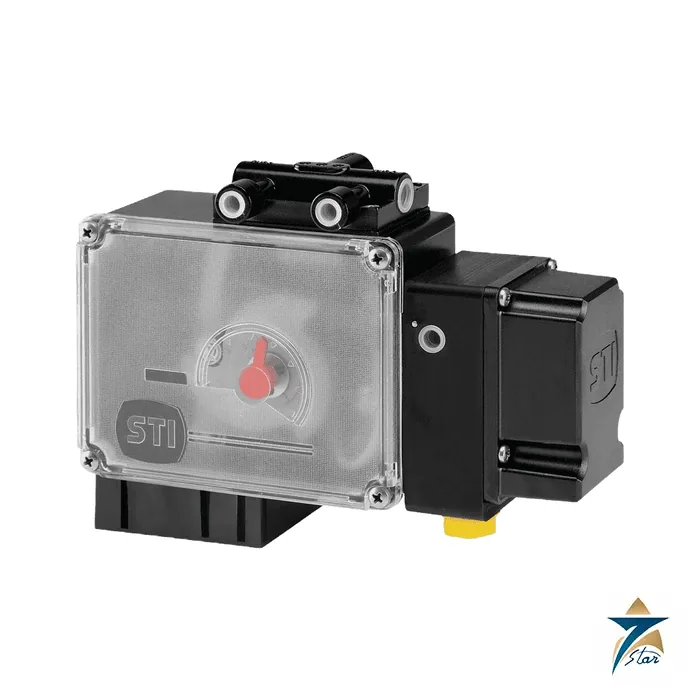
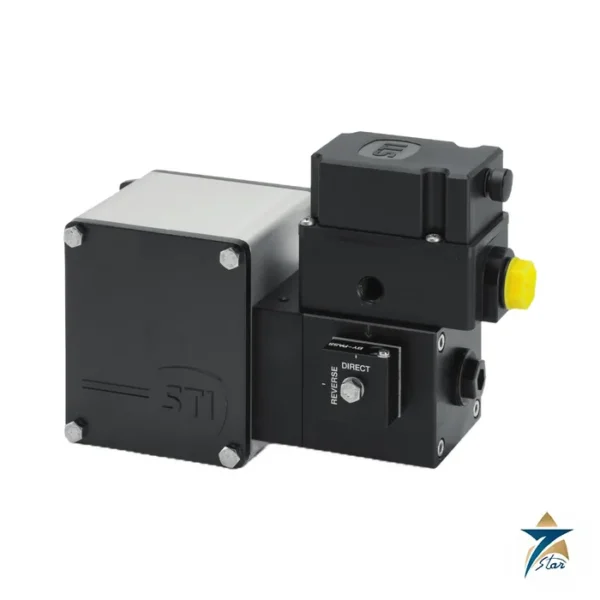
The IMI STI UP-2 is a heavy-duty analog valve positioner built on the balanced-forces principle. It is offered in a pneumatic version that accepts a 3-15 psi (0.2-1 bar) signal and an electro-pneumatic version that accepts 4-20 mA, and it distributes air to an actuator through an internal spool valve. It needs no microprocessor and no electrical supply in the pneumatic version, which is why it remains a common choice on rugged control valves. Seven Star LLC supplies the UP-2 in Oman and the GCC as an independent supplier in Muscat.
There are several construction variants under the UP-2 name. The UP-2/L is the lever version for linear actuators, the UP-2/R is the rotary version coupled to the shaft of a rotary actuator, and the connection size comes as ND 1/4″ or ND 1/2″. The positioner can be supplied with or without an integrated air-lock device (the AL model), with a lever or bare shaft, and in standard or NAMUR format.
UP-2 technical specifications
| Parameter |
Specification |
| Manufacturer / part number |
IMI STI (Process Automation) / UP-2 |
| Input signal |
3-15 psi (0.2-1 bar) pneumatic or 4-20 mA electro-pneumatic |
| Supply pressure |
2.5 bar minimum to 7 bar maximum; design pressure 10 bar |
| Housing |
Aluminium painted RAL 9005 black, polycarbonate cover |
| Enclosure rating |
IP65 |
| Operating temperature |
-20°C to +70°C; -40°C to +85°C available on request |
| Cv maximum |
ND 1/4″: 0.34 inlet and 0.34 outlet; ND 1/2″: 0.637 inlet and 0.79 outlet |
| Static air consumption |
ND 1/4″ 1.02 Nm³/h (0.6 SCFM); ND 1/2″ 1.3 Nm³/h (0.8 SCFM), at 400 kPa (60 psi); I/P converter adds 0.09 Nm³/h |
| Sensitivity |
0.15 % of full range (brochure); 0.2 % (UP-2/R manual) |
| Linearity |
1 % of full range with the linear cam |
| Hysteresis |
0.5 % of full stroke |
| Connections |
1/4″ or 1/2″ NPTF feed and output; 1/8″ NPTF pilot signal; 1/2″ NPTF electrical (I/P converter) |
| Weight |
UP-2 ND 1/4″ 3.9 kg; ND 1/2″ 4 kg; electro-pneumatic UP-2-EP 4.4 kg and 4.5 kg |
| Actuator types |
Single or double acting; linear (minimum 8 mm stroke) or rotary |
The brochure and the older UP-2/R and UP-2/L manuals report slightly different weights and some secondary figures, since they cover different production generations, so treat the brochure as the reference and confirm anything critical before ordering.
How the UP-2 positioner works
A pneumatic diaphragm turns the control signal into a force. A feedback spring, whose force depends on the actuator stem position through a cam, pushes the other way. The difference moves a spool valve, which feeds one actuator chamber and exhausts the other. As the actuator moves, the cam changes the spring force until it equals the diaphragm force and the spool returns to the balanced position. The final stem position is therefore a function of the signal and the cam profile. A signal or stroke deviation of about 2 % is enough to produce the maximum output pressure, which gives a stiff, fast response.
The cam is the key adjustment. The standard linear cam is available in different shapes for direct or reverse action and for angles up to 270° on the brochure data, with working angles stamped on the positioner. Special cam profiles are available on request, which allows equal-percentage or custom characterisation when the valve trim does not suit the process.
Zero, span, action reversal and bypass on the UP-2
Zero is set with a screw after setting the signal at its low value; span is adjusted by moving a pivot along a toothed lever, with a fine adjustment by changing the number of active turns of the feedback spring. Split-range operation and zero suppression are possible. The ND 1/4″ version can be supplied with a change-over plate that reverses the actuator action without re-piping, and a bypass valve between the two actuator connections allows the actuator to be moved manually for tests. The 1/2″ version uses a different manifold and does not carry the integrated bypass.
UP-2 compared with other IMI STI positioners
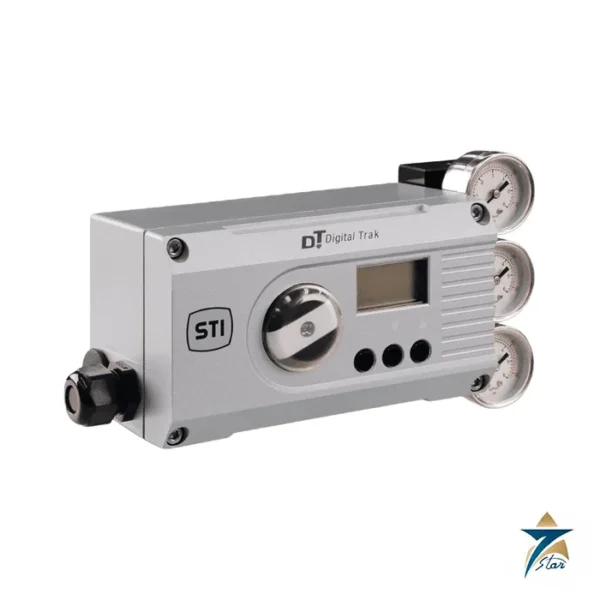
The UP-2 is the more powerful analogue in the range; the SA/CL and SR/CCK are other analog positioner families, while DigitalTrak DT, FasTrak and SHP are digital. An analogue positioner such as the UP-2 is preferred when the maintenance team is used to mechanical calibration, when the site has no HART tools or when simple robustness counts more than diagnostics. Choose a digital positioner such as the DigitalTrak DT when autotuning, a display and position feedback are needed.
Selection and ordering checklist for the UP-2
- Signal: pneumatic 3-15 psi or electro-pneumatic 4-20 mA.
- Actuator: linear (lever, UP-2/L) or rotary (UP-2/R) and the travel or angle.
- Port size: ND 1/4″ for standard actuators, ND 1/2″ for large, fast-stroking actuators.
- Single or double acting, and the required failure direction.
- Cam shape and angle, or a special profile.
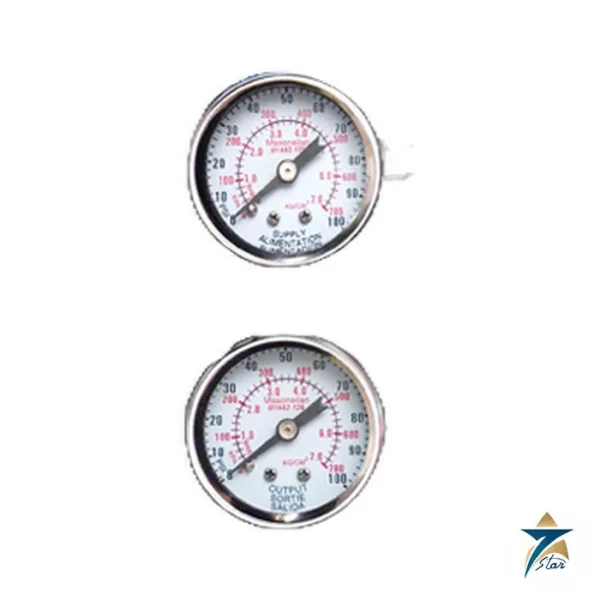
- Optional extras: air-lock device, change-over plate with bypass (1/4″), stainless steel spool valve, pressure gauges, NAMUR mounting.
- Hazardous area execution: the brochure lists intrinsically safe and explosion-proof ATEX versions for the electro-pneumatic model.
- Ambient temperature range, including any need for the extended -40°C to +85°C option.
Installation, calibration and maintenance
Clean the supply pipework thoroughly and supply dry instrument air to ISO 8573-1 with a filter of 5 µm or finer near the positioner. A shut-off valve helps servicing. A pressure reducer is only needed if the supply exceeds 10 bar. Avoid side loads between positioner and actuator, and allow a small clearance of 0.1 to 0.2 mm on a coupling joint; the cam torque takes up the gap. If the actuator oscillates, slow the response by fitting small orifices of about 0.6 to 1 mm in the actuator connections.
Typical troubleshooting follows a consistent pattern: friction on the valve or actuator, dirt on the spool valve, leaks on the signal diaphragm, or an undersized actuator. Cleaning the spool and checking the filter solves most of them. The manual provides disassembly instructions for the spool valve in each connection size, and a stainless steel spool valve is offered where corrosion is a concern.
Typical UP-2 applications in Oman and the GCC
Analogue positioners remain widespread in oil and gas, refining, chemical, power and metal plants. In the Gulf region they are often chosen on dusty, hot sites where simple pneumatic hardware is preferred. The painted aluminium body, polycarbonate cover and IP65 rating are suited to outdoor installation. The manufacturer mentions standard, sandstorm and copper-free ambient conditions, and low as well as high temperatures through the optional ranges.
Information to send with a UP-2 request
- Part name UP-2, the variant (UP-2/L or UP-2/R) and the quantity.
- Signal type and connection size.
- Actuator make, model, stroke or angle and action.
- Supply pressure and the quality of the instrument air.
- Options needed, such as air-lock, bypass plate, gauges or NAMUR.
- Hazardous area requirement and any special certificate.
Documents and quotation
The IMI STI product brochure for the UP-2 analog positioner is attached on this page, with the main specifications, options and dimensional drawing.
Send the part number and options to Seven Star LLC and we will confirm lead time and any further documents, such as the instruction manual, for your UP-2 configuration.
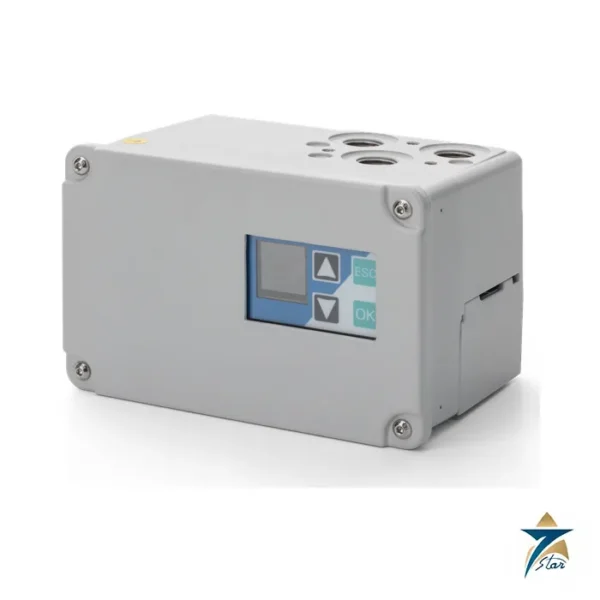
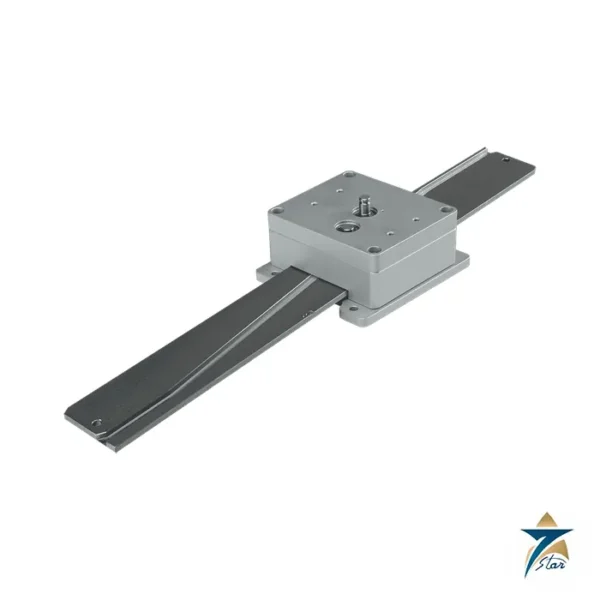
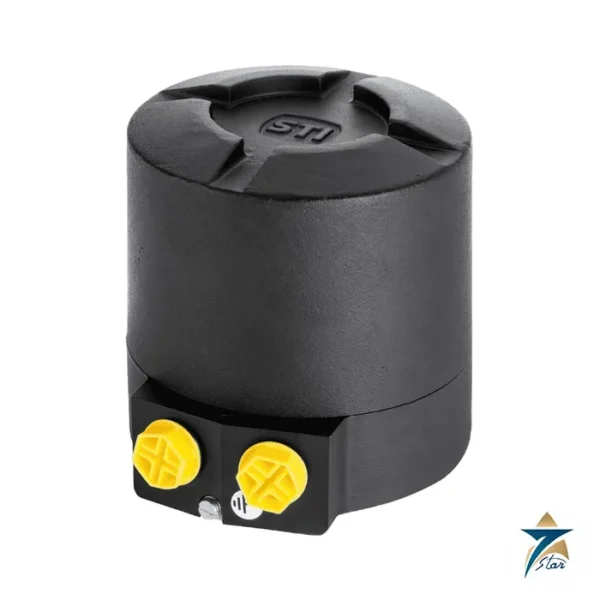
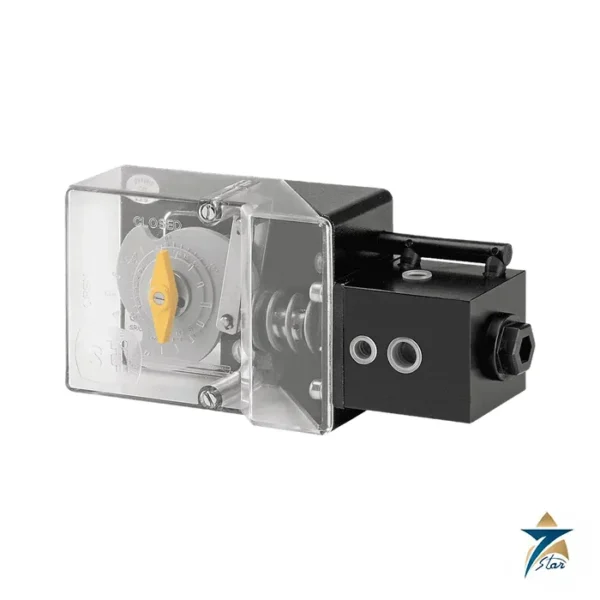
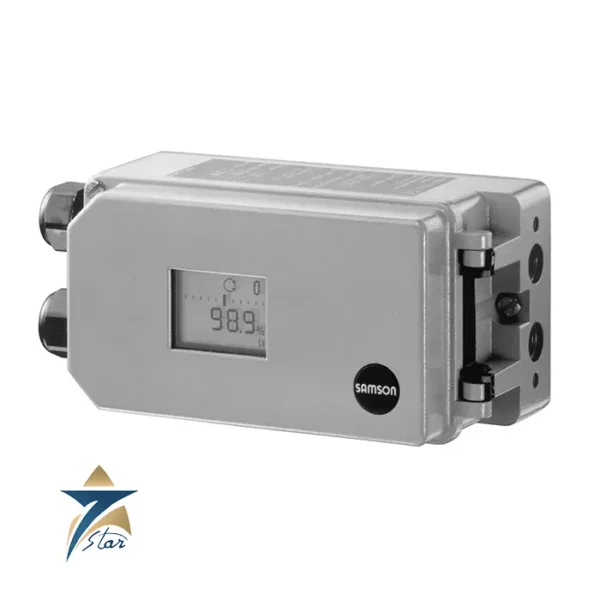
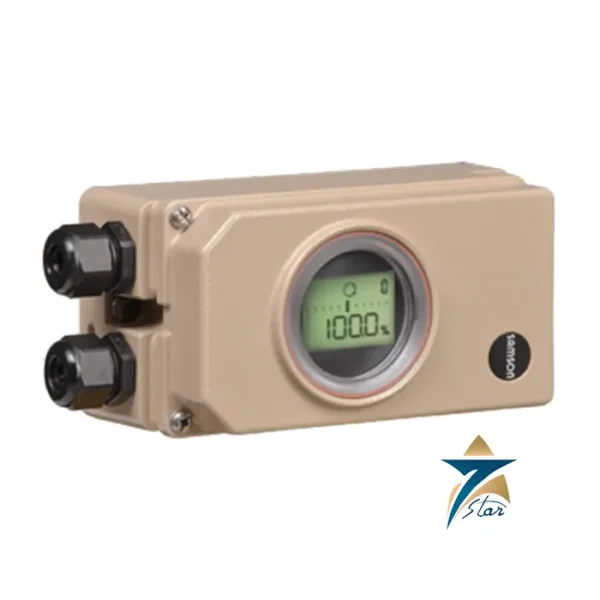
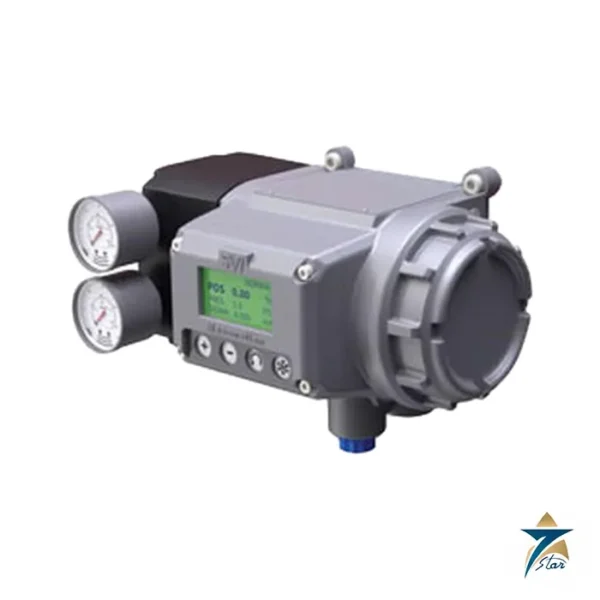
Other Models in the Sti Positioner Analog Range
Seven Star LLC supplies models from the Sti Positioner Analog range in Oman and the GCC. Compare the related models below and request a quote for the one that matches your application.





















Reviews
There are no reviews yet.