Brand:

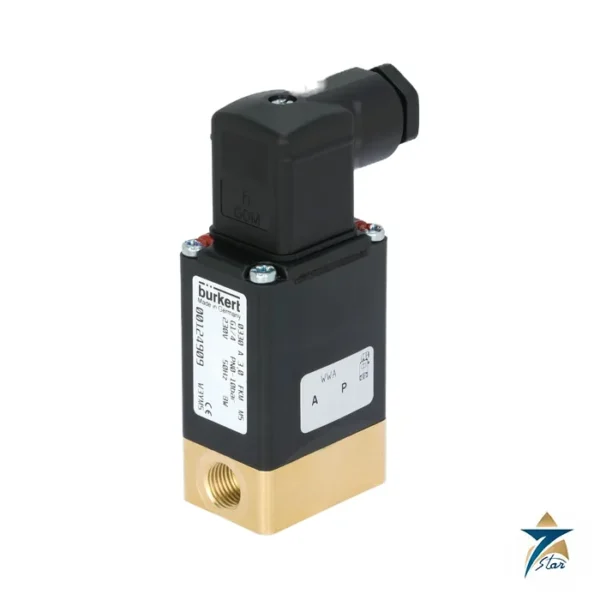
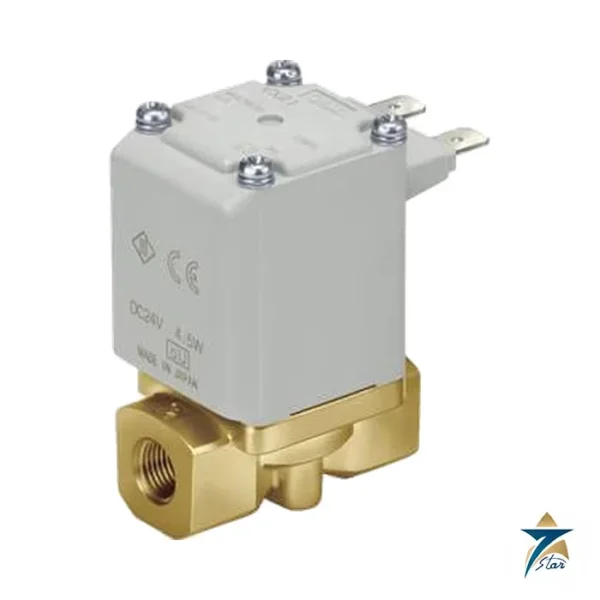
Bürkert 136878 Type 5470 4/2-Way Servo Solenoid Valve

Description

Overview

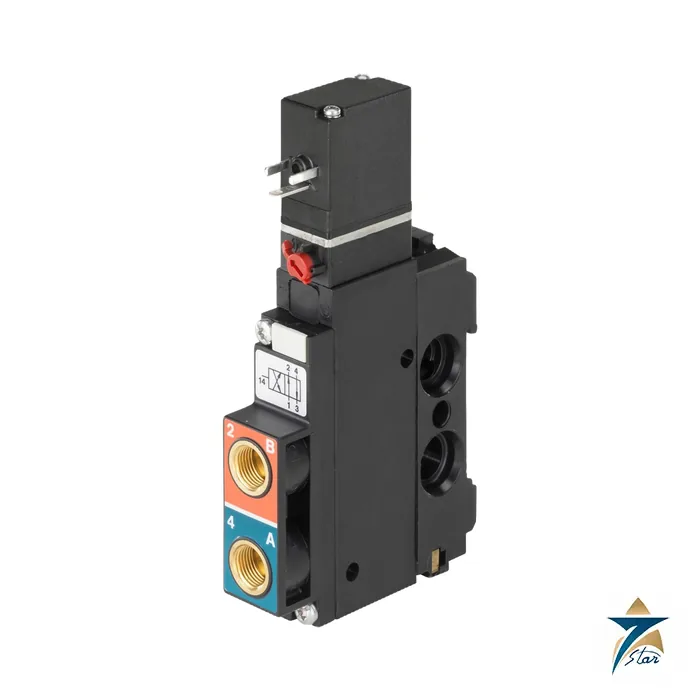
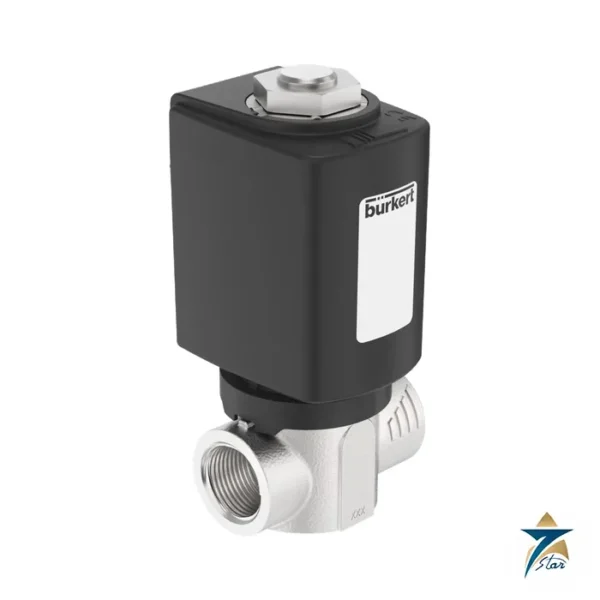
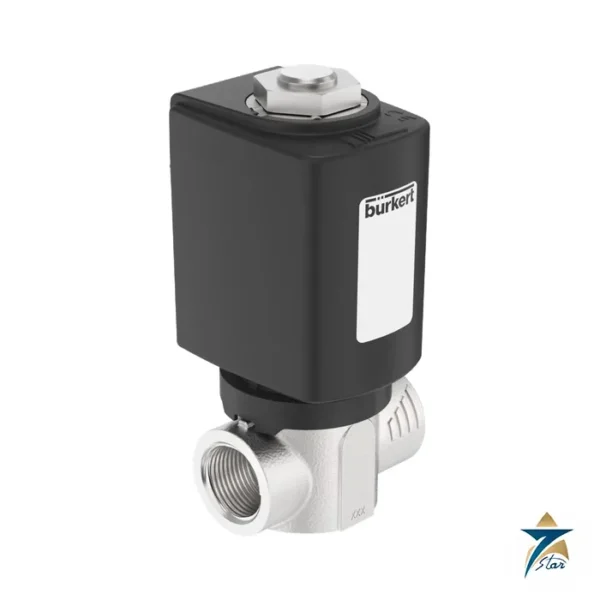
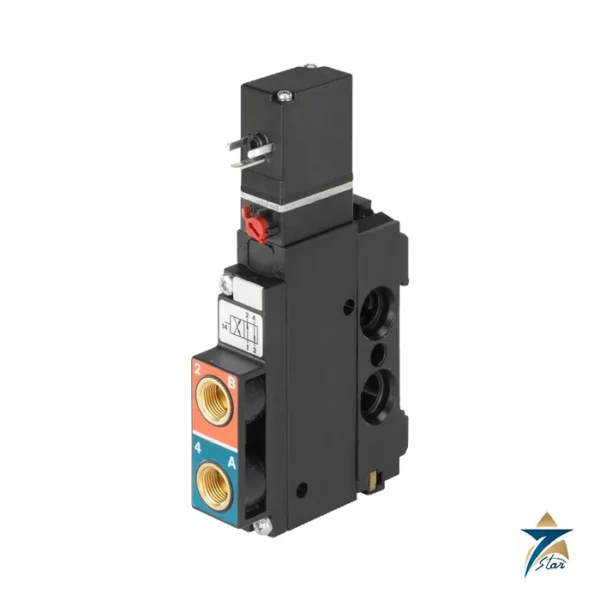
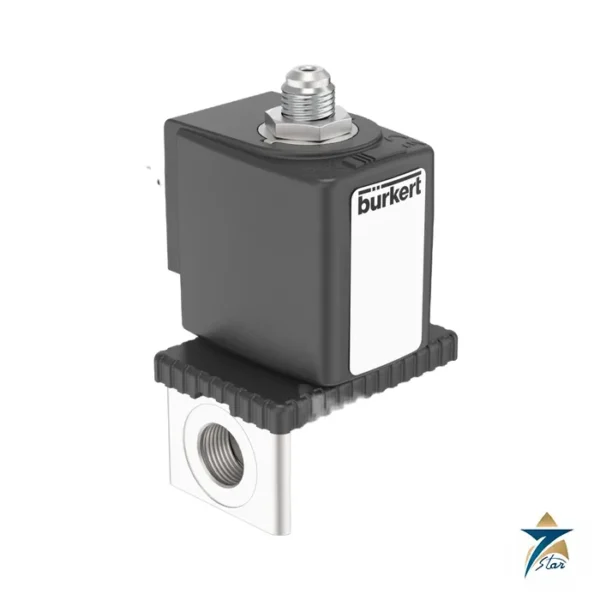
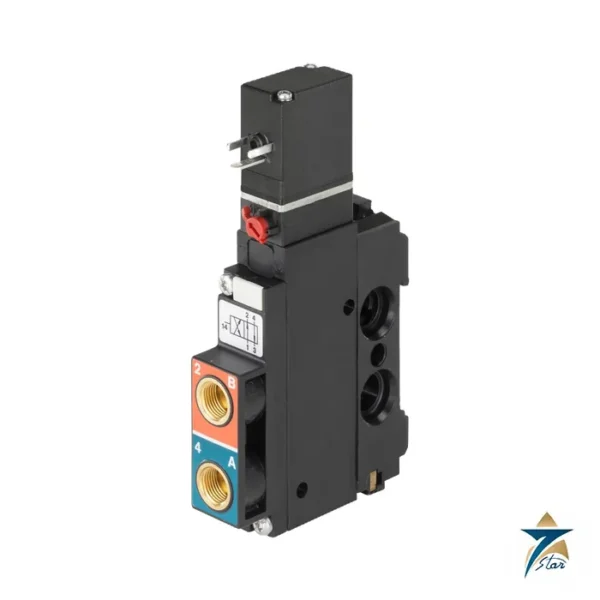
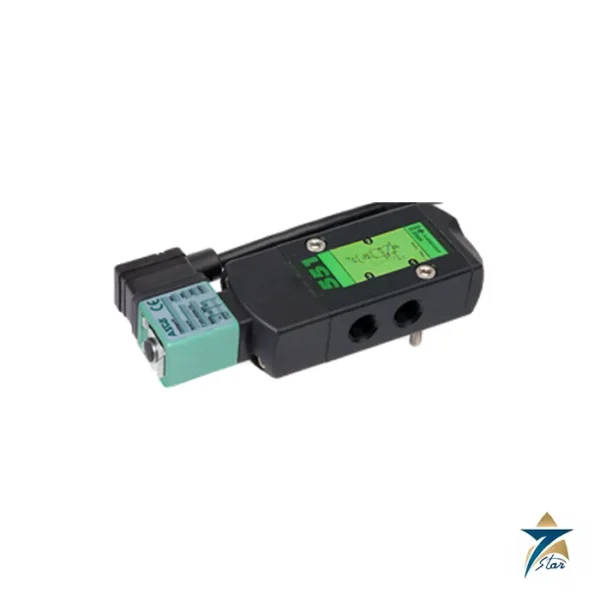
Double-acting cylinders need two working ports, and Bürkert 136878 supplies them in the smallest form. It is the 4/2-way servo-controlled valve (circuit function G) of the Bürkert Type 5470 pneumatic family, powered by a 24 V DC or universal coil, with lateral hose screw connections for 6/4 mm tube. One compressed air supply feeds port 1, ports 2 and 4 serve the cylinder, and exhaust leaves through port 3 and the flange channel. Seven Star LLC is an independent supplier serving Oman and the GCC.

Reading the 4/2 function of Bürkert 136878

In the de-energised state port 1 is connected to port 4 and port 2 is exhausted, and in the energised state the connections swap. The valve therefore reverses a double-acting cylinder with a single signal, and returns it when the signal ends. The effective coil power of this article is 2 W. The data sheet marks the 24 V version as DC or UC, meaning that a version with integrated rectifier, varistor and LED is available for alternating voltage under a separate ordering column.

Technical data for Bürkert 136878

Parameter Value
Circuit function G: 4/2-way, servo-controlled
Voltage and power 24 V DC/UC, 2 W effective coil power
Working ports 2 and 4 Hose screw connection, lateral, 6/4 mm (variant D)
Pressure range 2 to 10 bar overpressure
Orifice 4.0 mm
Flow QNn, air 300 l/min
Body and seal Polyamide body, NBR seal, Ultramid inner parts
Weight about 120 g
Medium Compressed air and neutral gases, 5 micron filtration
Medium temperature minus 10 to plus 50 degrees C
Ambient temperature minus 10 to plus 55 degrees C
Switching time DC Open 15 ms, close 12 ms
Duty cycle 100 percent
Voltage tolerance plus or minus 10 percent
Electrical Plug contacts form C, DIN EN 175301-803, for cable plug Type 2516
Protection IP65 with cable plug Type 2516

Selecting Bürkert 136878 instead of its siblings

Compared with 136881 the working ports use hose fittings for 6/4 mm tube rather than G⅛ threads, so the valve can be connected without any extra fittings in tubing-based machines. Compared with the 3/2-way articles 136872 and 136875, it gives you two controlled ports and so drives double-acting cylinders. Compared with the 220 to 240 V articles of the same chart, it is the low-voltage one at 24 V.

Where it is used

Typical tasks include reversing small double-acting cylinders on pick-and-place machines, operating pneumatic grippers, driving rotary actuators of valves via quarter-turn drives, and switching spring-less actuators that need pressure in both directions. In process plants, small 4/2 valves are often placed in instrument cabinets next to larger solenoid-operated pilot valves on remotely controlled isolation valves.

Electrical practice for low-power coils

Because the effective coil power is only 2 W at 24 V DC, a single PLC output channel can drive several valves in parallel, but the combined current must remain below the channel rating. Use a suppression diode or choose the universal UC coil, which already contains rectifier, varistor and LED. The plug contacts follow DIN EN 175301-803 form C, and the cable plug Type 2516 gives IP65, while the cheaper Type 2505 plug reaches only IP30. A voltage tolerance of plus or minus 10 percent means a 24 V supply should not droop below about 21.6 V at the farthest valve.

Why polyamide and NBR matter in humid sites

The body of the Type 5470 valve is moulded polyamide with Ultramid inner parts and an NBR seal. These materials keep the weight at about 120 g and give good resistance to oil-lubricated air, yet they dislike ozone, strong solvents and hot, wet air. On Gulf coastal plants where compressor aftercoolers are marginal, carry-over water can shorten life, so a refrigerant or desiccant dryer upstream is a worthwhile safeguard. The medium limit of minus 10 to plus 50 degrees C also deserves attention when valves are mounted in sun-exposed enclosures, where internal cabinet temperature can exceed the ambient limit of 55 degrees C.

Fault finding on small solenoid valves

If a valve does not switch, measure the voltage at the plug under load, since a long cable can drop several volts. Check the coil for continuity, listen for the click of the pilot, and confirm that the supply pressure is at least 2 bar. If the valve switches but leaks to exhaust, dirt or oil carry-over has probably lodged under the seat, and replacement is the practical remedy. A slow stroke on the cylinder often has nothing to do with the valve: look at tube length, exhaust throttles and silencers clogged with dust, which are common in desert sites.

Spare parts and ordering discipline

Pneumatic valves look similar, and a coil voltage or port variant that is wrong by one letter will not work. Keep the full article number on every drawing, parts list and stores label. When ordering, state the article, the quantity, and any accessory such as the cable plug that is not included in the scope of delivery. Order a small number of spares for critical machines, because lead time on imported valves can run to weeks. For consignment spares in remote sites, store them in sealed bags away from heat and sunlight so that the NBR seals age slowly.

Piping and set-up

Cut tube squarely and push it into the hose connection until it seats, then secure it as needed. Keep tube lengths to the cylinder short, since long tubes slow the stroke and add volume. If speed adjustment is needed, fit throttle valves in the exhaust path rather than in the supply path of the cylinder, so that air cushioning controls movement. Check that exhaust port 3 is open and unobstructed.

Hose connection details of Bürkert 136878

The lateral 6/4 mm hose screw connection accepts tube with 6 mm outer and 4 mm inner diameter, a common size for small cylinders and grippers. Use calibrated polyurethane or polyamide tube without kinks, avoid tight bends close to the connector, and cut the end square. Tube of 4 mm inner diameter limits flow on long runs, so keep the run to the cylinder under about two metres for fast cycles. Because the hose is screwed rather than pushed in, the connection resists pull-out in vibrating machinery.

Related items you may also need: Bürkert Type 6026 Direct-Acting 2/2-Way Plunger Solenoid Valve | Bürkert Type 8681 Control Head for Hygienic Process Valves | Danfoss 032F6226 EVRA 25 Solenoid Valve, Flanged, NC | All Bürkert products.

Documents and quotation

The Type 5470 data sheet containing Bürkert 136878 is attached, with circuit function diagrams and ordering tables. Please send an RFQ with the part number 136878, quantity and delivery location in Oman or the GCC.

Other Models in the 5470 Range

Seven Star LLC supplies models from the 5470 range in Oman and the GCC. Compare the related models below and request a quote for the one that matches your application.

ModelCategory
Bürkert 136872 Type 5470 3/2-Way Servo Solenoid Valve NCSolenoid ValvesView details
Bürkert 136875 Type 5470 3/2-Way NO Solenoid ValveSolenoid ValvesView details
Bürkert 136878 Type 5470 4/2-Way Servo Solenoid ValveSolenoid ValvesYou are viewing this model
Datasheets & Documents
  • PDF Datasheet Bürkert 136878 Type 5470 4/2-Way Servo Solenoid Valve Datasheet Download
Reviews (0)

Reviews

There are no reviews yet.

How would you rate this product?

It takes about 10 seconds — just tap a star. Your email is never published.

About brand

Bürkert is a German family-owned maker of fluid control systems, headquartered in Ingelfingen, Baden-Württemberg. Christian Bürkert founded the company in 1946, and it is known for solenoid valves, process and control valves, flow and analytical sensors, and mass flow controllers. Its products serve water treatment, hygienic processing, gas handling and laboratory applications.

Seven Star LLC lists Bürkert valves and valve automation devices and supplies Bürkert solenoid valves and spare parts to plants in Oman as an independent supplier.

Bürkert company profile

Founded 1946, by Christian Bürkert
Headquarters Ingelfingen, Germany
Ownership Family-owned
Product families Solenoid valves, angle seat process valves, positioners, flow meters, mass flow controllers

Bürkert types listed on this page

Two types are listed. Type 6026 is a direct-acting 2/2-way plunger solenoid valve, with a stainless steel bellows that separates the medium from the coil, and as a direct-acting valve it switches without needing a pressure difference. Type 8681 is the Bürkert control head that mounts on top of hygienic process valves to pilot the actuator and report valve position to the control system. Control heads of this kind are common in food, beverage and pharmaceutical plants in the GCC.

Ordering Bürkert valves: what we need

The type number alone is not enough. Send the identification number from the label, or else the type with orifice, port connection, body and seal material, coil voltage and frequency, circuit function and pressure range. For a Type 8681 control head add the communication variant and the make and model of the process valve it sits on.

Facts checked against Bürkert's published company history, October 2026.

FAQ

Questions about the Bürkert 136878 Type 5470 4/2-Way Servo Solenoid

Answers from our engineering team on installation, compatibility and integration.

01What function does Bürkert 136878 have?
It is circuit function G, a servo-controlled 4/2-way solenoid valve for double-acting cylinders in the Type 5470 family.
02What connections are on 136878?
The working ports 2 and 4 are lateral hose screw connections for 6/4 mm tube, listed as variant D in the ordering chart.
03What is the coil of Bürkert 136878?
It is a 24 V DC/UC coil with an effective power of 2 W; the UC version can be used on alternating voltage.
04What flow does 136878 give?
The family data gives an orifice of 4.0 mm and a QNn value for air of 300 l/min in a range from 2 to 10 bar.
05What is the difference between 136878 and 136881?
The functions match, but 136878 has lateral hose connections for 6/4 mm tube while 136881 has G 1/8 lateral threads.