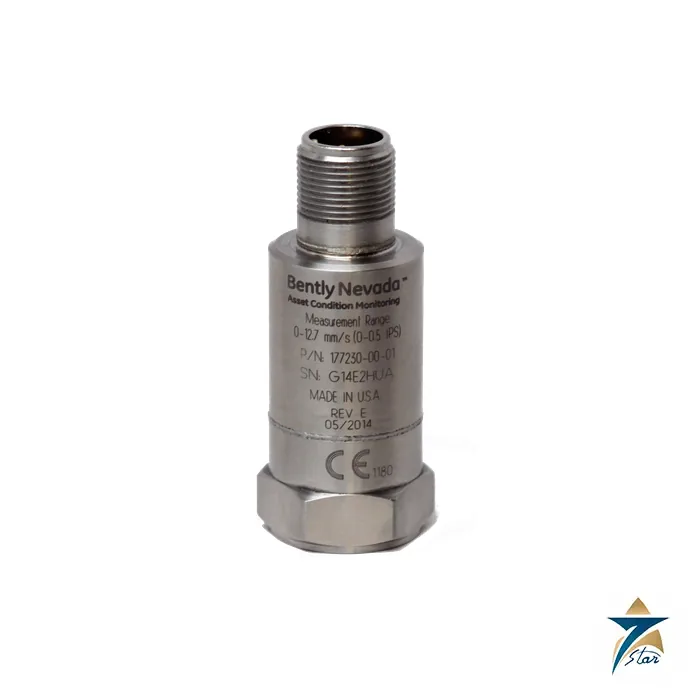
The Bently Nevada 177230 Seismic Transmitter is a simple, loop-powered vibration transmitter that connects directly to the analog inputs of a programmable logic controller, DCS or SCADA system. It turns casing vibration into an industry-standard 4-20 mA signal proportional to velocity, so plants can trend vibration and raise alarms in the control system they already operate, without installing a separate monitoring rack. Baker Hughes designed it to need no field configuration and few additional parts, which reduces training, maintenance and service cost while helping operators avoid unexpected machinery failures.
Seven Star LLC supplies the Bently Nevada 177230 to oil and gas, power, water and industrial customers in Oman and the GCC. Our engineers in Muscat help users select the right measurement range, frequency response and approvals option, and supply the matching armoured or unarmoured interconnect cables and stud adapters so that each Bently Nevada 177230 can be installed in one visit.
Measurement Principle
Inside the hermetically sealed stainless steel body a ceramic shear-mode accelerometer element senses casing acceleration. The electronics integrate this signal to velocity and convert the broadband level into the 4-20 mA loop current between pin A and pin B, where 4 mA represents zero vibration and 20 mA represents the selected full scale range. With the 10 Hz to 1 kHz frequency option the output is proportional to RMS velocity, and with the 3 Hz to 1 kHz option it is proportional to peak velocity, which helps on slower machines. Output settles within 2 percent of final value in less than 15 seconds after power up.
In addition to the loop current, the Bently Nevada 177230 provides an unbuffered dynamic acceleration signal on pin C, referenced to pin B, with a sensitivity of 100 mV/g and a frequency response of 2.5 Hz to 10 kHz. Maintenance staff can connect a portable data collector to this signal to examine spectra and waveforms when the trend in the control system rises, combining simple alarming with deeper diagnostic capability. The mounted resonant frequency is above 12 kHz and transverse sensitivity is below 5 percent.
Engineering Design of the Bently Nevada 177230
The transmitter body is 316L stainless steel, 25.4 mm in diameter and 66 mm high, weighing about 131 g, with a three-pin MIL-C-5015 connector, also in 316L stainless steel. It is hermetically sealed and rated to 100 percent relative humidity when not submerged, and it operates from -40 °C to +85 °C, which suits outdoor skids in hot, dusty and humid coastal environments. The base has a quarter-inch 28 UNF mounting hole, and M6, M8 and quarter-inch 28 UNF stud adapters are provided with each device; mounting torque is 4 to 7 N-m.
Electrically the device needs 12 to 30 V dc excitation with current limited to 40 mA, matching the internal loop supplies of typical PLC and DCS input cards. Isolation exceeds 10 to the 8th ohms with a breakdown voltage of 600 V rms. Baker Hughes stresses that pin B must stay isolated from ground, and that when a magnetic base is used the transmitter should be rolled onto the machine rather than snapped on, because the impact spike can damage the electronics.
Key Features
The Bently Nevada 177230 offers a straightforward route to continuous vibration monitoring.
Loop-powered 4-20 mA output proportional to RMS or peak velocity, ready for PLC, DCS and SCADA inputs.
Three full scale ranges: 12.7, 25.4 and 50.8 mm/s (0.5, 1.0 and 2.0 in/s).
Unbuffered 100 mV/g acceleration output for portable analysers and diagnostics.
No field configuration or adjustment, with built-in self-test.
Hermetically sealed 316L stainless steel case and connector for harsh environments.
Operating temperature from -40 °C to +85 °C.
Intrinsically safe Zone 0/1 and Zone 2 approvals under ATEX/IECEx, plus Class I Division 1 and 2.
Maritime classification approvals from DNV for ship, high-speed craft and offshore use.
Industrial Applications
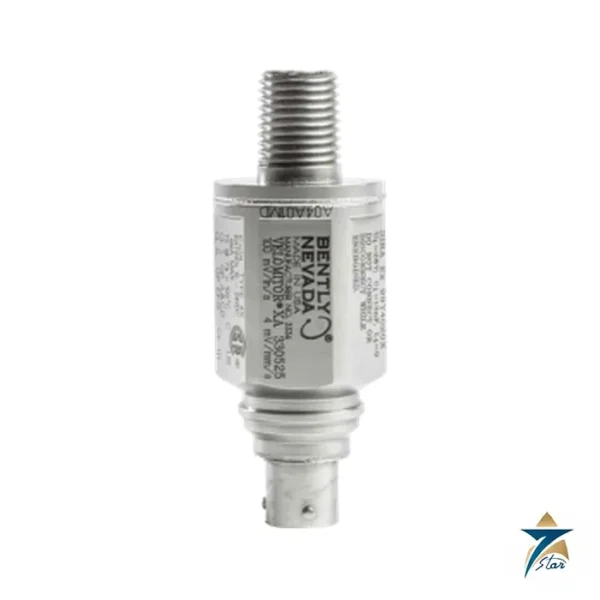
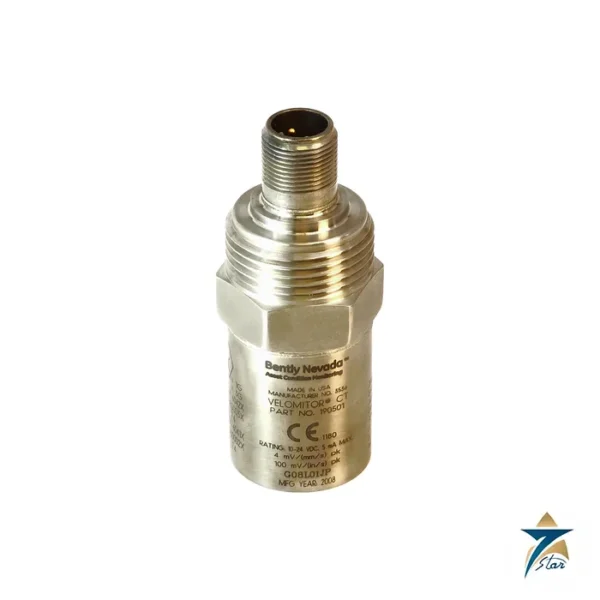
The Bently Nevada 177230 suits pumps, fans, blowers, cooling towers, motors and gearboxes where operators want vibration levels in the control system rather than in a separate monitoring rack, and where the sensor point count is small enough that a dedicated monitor would add cost without adding useful information. In Oman common uses include water injection and transfer pumps at oil field stations, cooling water and seawater pumps at power and desalination plants, air coolers and fans at gas plants, and conveyors and crushers in mining and cement plants. Where an older two-wire transmitter is installed, engineers often compare it with the Bently Nevada 990-04-70-01-00 2-wire vibration transmitter or a velocity sensor such as the Bently Nevada 330500 Velomitor.
Seven Star LLC supports these users with model selection and sourcing support from Muscat. For assets where cabling is difficult, we also supply wireless options such as the Ranger Pro wireless vibration sensor, helping customers in Oman and the GCC combine wired Bently Nevada 177230 transmitters and wireless sensors in one monitoring strategy.
Technical Specifications
The Bently Nevada 177230 data below is taken from Baker Hughes datasheet 177232; confirm values against the current revision before ordering.
Parameter
Specification
Model
Bently Nevada 177230-AA-BB-CC Seismic Transmitter
Output
4-20 mA current loop (pin A to pin B); 4 mA = 0 mm/s, 20 mA = full scale
Unbuffered, 100 mV/g (10.2 mV/m/s²) ±20%, 2.5 Hz to 10 kHz, 15 g peak
Sensing element
Ceramic, shear mode
Settling time
Less than 15 s to within 2% of final value
Operating temperature
-40 °C to +85 °C
Case and connector
316L stainless steel; 3-pin MIL-C-5015
Dimensions and weight
25.4 mm diameter, 66.0 mm height; 131 g typical
Mounting
1/4-28 UNF hole; M6, M8 and 1/4-28 stud adapters; torque 4 to 7 N-m
Hazardous area
Ex ia IIC T4 Ga (Zone 0/1); Ex nA IIC T4 Gc (Zone 2); Class I Div 1 and Div 2
Other approvals
EMC and RoHS directives; DNV maritime classification
177230 Part Numbers Decoded
The full ordering code is 177230-AA-BB-CC (datasheet 177232). AA is the measurement range, BB is the frequency response and CC is the approval option. Bently Nevada notes that only standard or common AA-BB-CC combinations are available, so confirm the full code before ordering.
Part number
Range (AA)
Frequency response (BB)
Approvals (CC)
177230-01-01-05
0 to 25.4 mm/s (0 to 1.0 in/s)
10 Hz to 1 kHz, rms
05: CSA/NRTL/C, ATEX/IECEx
177230-01-02-05
0 to 25.4 mm/s (0 to 1.0 in/s)
3 Hz to 1 kHz, peak
05: CSA/NRTL/C, ATEX/IECEx
177230-00-01-05
0 to 12.7 mm/s (0 to 0.5 in/s)
10 Hz to 1 kHz, rms
05: CSA/NRTL/C, ATEX/IECEx
177230-02-01-05
0 to 50.8 mm/s (0 to 2.0 in/s)
10 Hz to 1 kHz, rms
05: CSA/NRTL/C, ATEX/IECEx
Searches such as 177230-01-01 or 177230-02 are incomplete codes: the approval field is missing. Codes ending in -CN are country-specific variants that are not listed in the datasheet ordering table, so they should be matched to the nameplate of the installed unit.
177230 Interconnect Cables
The transmitter uses a 3-pin MIL-C-5015 connector. Bently Nevada lists two interconnect cables, both ordered by length in feet (minimum 3 ft, maximum 99 ft, in 1 ft steps):
Cable
Part number
Example
Standard lengths
Without armour
16925-AA
16925-25 = 25 ft (7.6 m)
10, 12, 15, 17, 20, 25, 30 and 99 ft
With armour
16710-AA
16710-20 = 20 ft (6.0 m)
08, 10, 12, 15, 17, 20, 30 and 99 ft
Send the full transmitter code, the cable type and the length you need, and we will quote the complete set.
How to Order
Send your formal RFQ for the Bently Nevada 177230 to Seven Star LLC with the full part number or the required range, frequency option, approvals and cable length. Our instrumentation division in Muscat will confirm the configuration, coordinate delivery across Oman and the GCC, and provide the Baker Hughes datasheet available for download on this page. Contact our engineering team for help applying the Bently Nevada 177230 to your machinery.
Bently Nevada 177230: Selection Notes
The 177230 is a Bently Nevada seismic transmitter that measures casing vibration and gives a 4–20 mA signal to a PLC or DCS. Its order code sets the full-scale range, filters and approvals.
Searches for this item often include other part numbers. Similar numbers can belong to different modules or versions, so we check the number on your label before quoting.
Send the full 177230 order code from your unit, and we confirm the match before quoting.
Bently Nevada is the American machinery protection and condition monitoring brand behind the 3500 rack, the 3300 XL proximity probe and the System 1 software. It was founded in 1961 in Minden, Nevada, and is today a Baker Hughes business.
Seven Star LLC is an independent supplier in Muscat. We list Bently Nevada monitors, I/O modules, probes, proximitors, velocity transducers and transmitters for rotating equipment in Oman and the GCC, and source them by full part number.
Bently Nevada company profile
Established
1961, Minden, Nevada, USA, by Donald E. Bently. The business started earlier as Bently Scientific in Berkeley, California (1956).
Known for
The first commercial eddy-current proximity transducers for measuring shaft vibration and position on high-speed turbomachinery
Ownership
Acquired by GE Energy in 2002; part of Baker Hughes since GE Oil & Gas combined with Baker Hughes in 2017
Rack generations
5000 series (from 1965), 3300 series (from 1988), 3500 series (from 1995), Orbit 60 (current platform)
Product families
Machinery protection racks, proximity probes and proximitors, Keyphasor sensors, velocity and acceleration transducers, 2-wire vibration transmitters, general-purpose monitors, portable analyzers, wireless sensors and System 1 condition monitoring software
Typical machines
Steam and gas turbines, centrifugal and reciprocating compressors, pumps, motors, generators, fans and gearboxes
Milestones
1956: Donald E. Bently starts Bently Scientific in Berkeley, California.
1961: The company moves to Minden, Nevada, as Bently Nevada.
1965: The 5000 series monitoring system is introduced.
1988: The 3300 series follows.
1995: The 3500 machinery protection system is launched.
2002 and 2017: GE Energy acquires Bently Nevada; it becomes part of Baker Hughes in 2017.
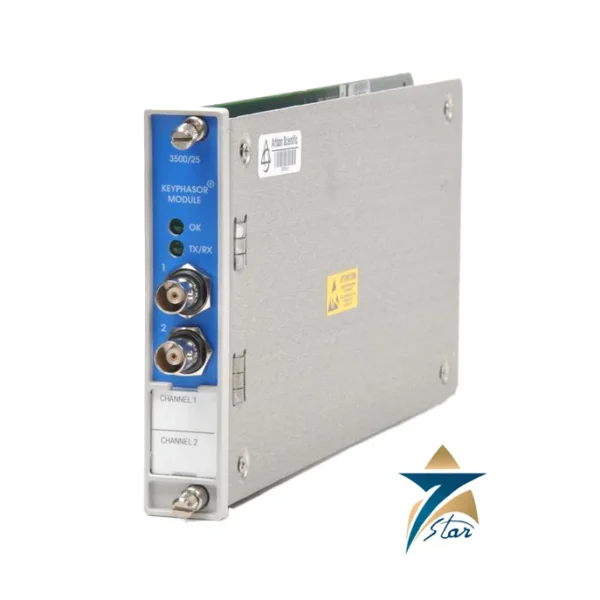
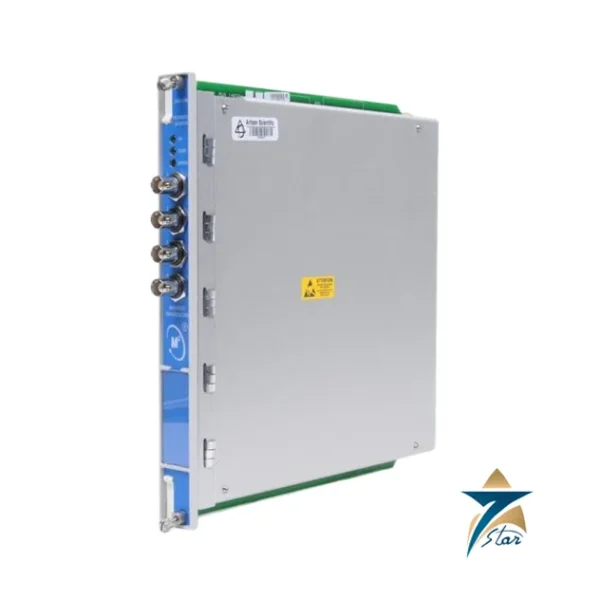
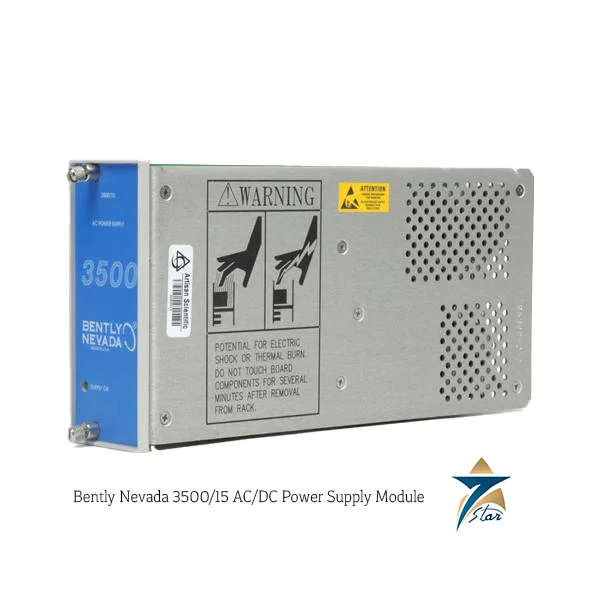
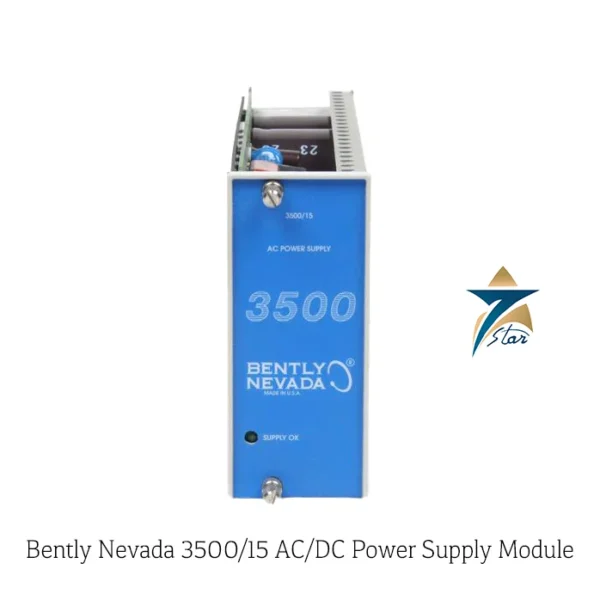
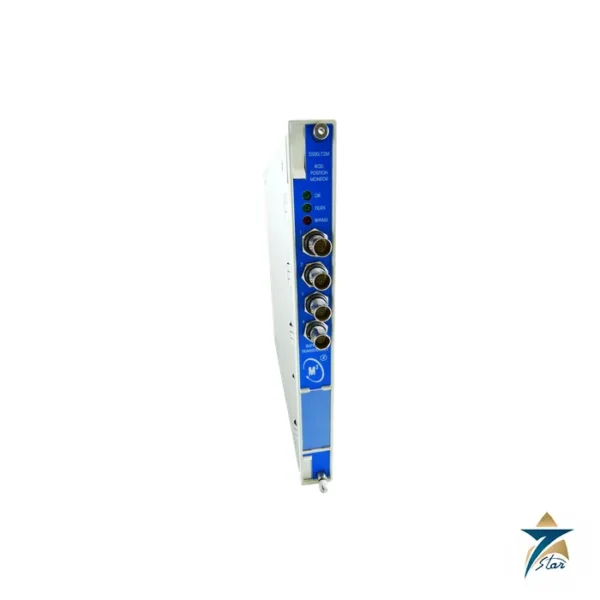
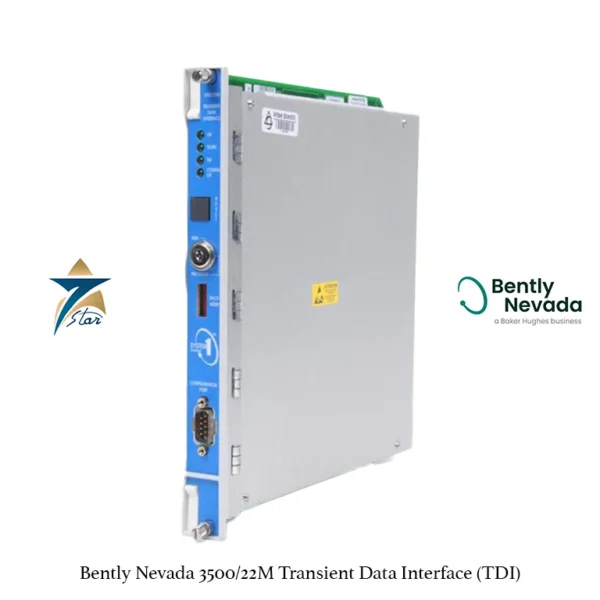
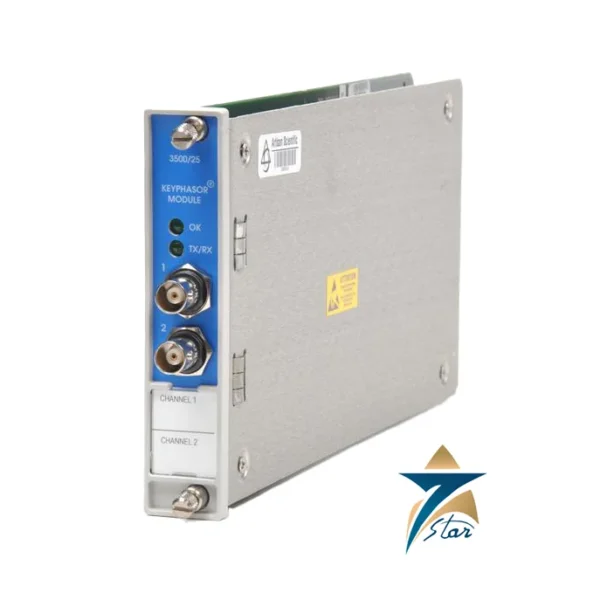
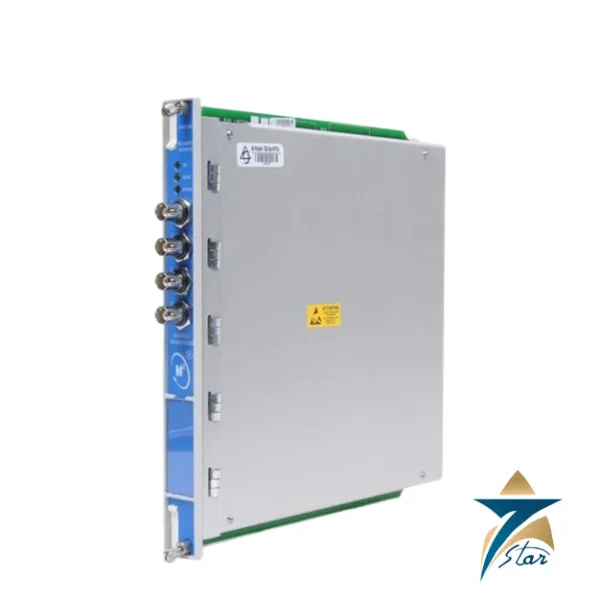
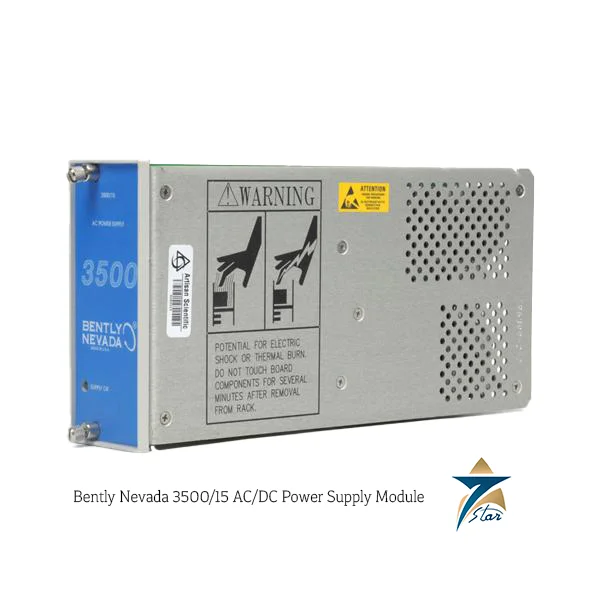
Continuous online protection with alarm and danger relays. Modules include the 3500/15 power supply, 3500/20 rack interface, 3500/25 Keyphasor, 3500/42M proximitor/seismic, 3500/50 tachometer, 3500/60 temperature, 3500/33 relay and 3500/92 communication gateway
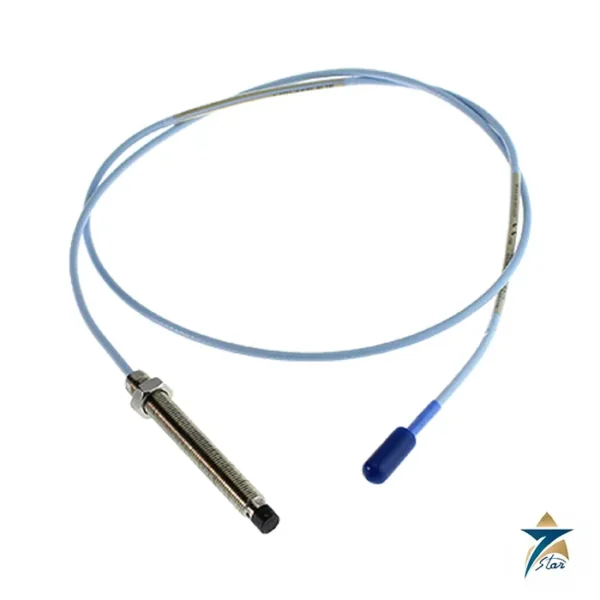
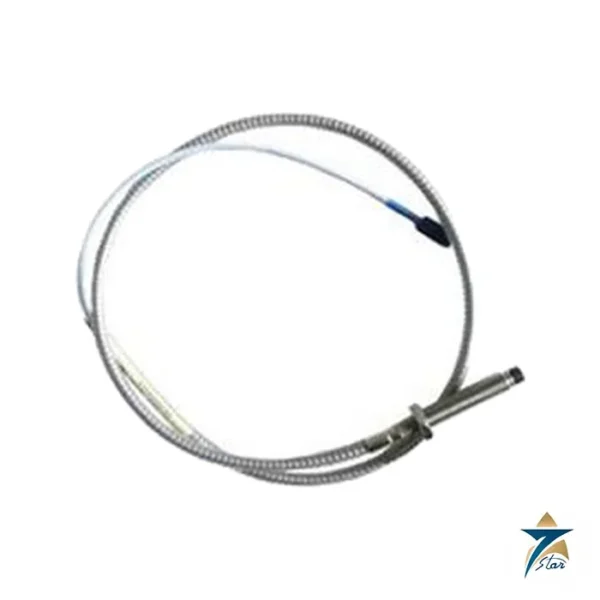
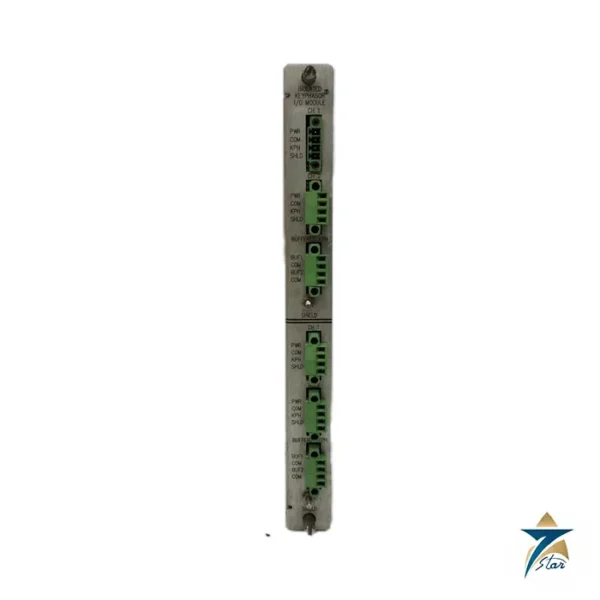
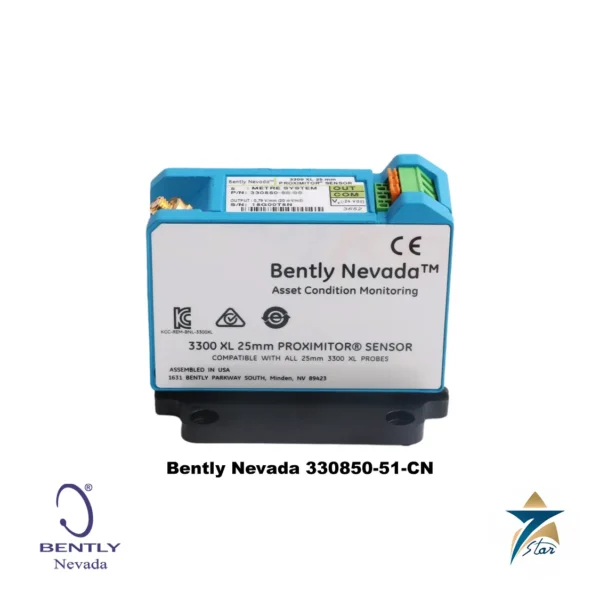
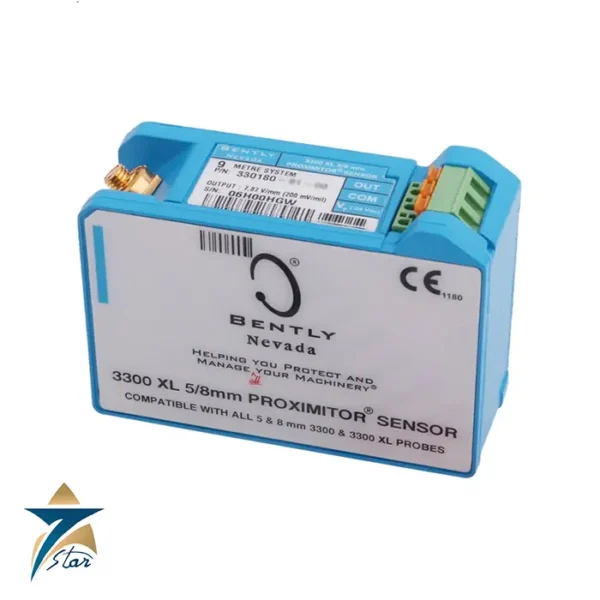
Probe, extension cable and proximitor sensor for radial vibration, thrust position and Keyphasor reference on fluid-film bearing machines; also 5 mm and 25 mm versions
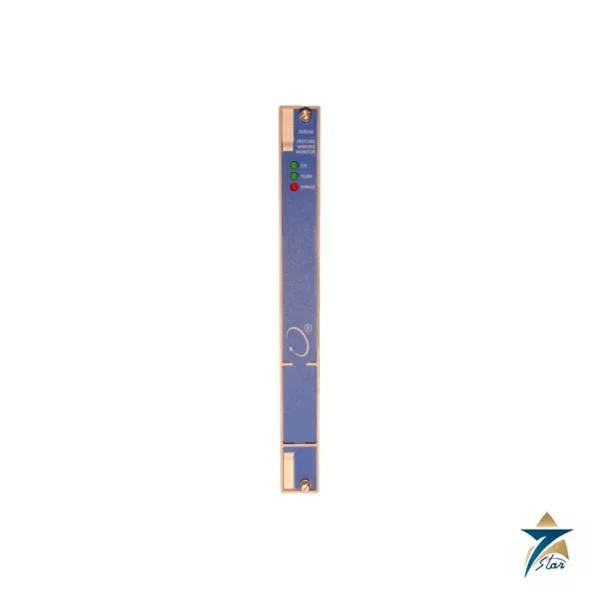
Protection for balance-of-plant pumps, fans and motors where a full 3500 rack is not justified
A proximity probe measures the gap to the shaft, so it sees shaft movement inside a fluid-film bearing directly. A velocity or acceleration sensor sits on the casing and suits rolling-element bearing machines. Critical turbomachinery usually carries two X-Y probes per bearing, two axial probes for thrust position and a Keyphasor probe for speed and phase.
Where Bently Nevada systems are used
In Oman and the GCC, Bently Nevada racks and probes protect gas turbines, compressors and steam turbines in gas processing, LNG, refining, petrochemical, power and desalination plants. Many installations are 3500 racks that have run for years, so most requests are for like-for-like module, probe, extension cable and proximitor replacements, plus upgrades to newer monitors.
Ordering and replacement: what we need
For probes and proximitors, send the full part number with all option digits (for example 330101-00-27-10-02-05). The digits set the probe length, cable length, connector and approvals, and the probe, cable and proximitor must match in total system length. For 3500 modules, send the module and I/O part numbers from the rack and say whether the I/O is internal or external termination, or barrier type. If a module is obsolete, we quote the replacement that Bently Nevada names and point out any configuration or firmware change.
Questions about the Bently Nevada 177230 Seismic Transmitter
Answers from our engineering team on installation, compatibility and integration.
01What does the Bently Nevada 177230 measure?
The Bently Nevada 177230 measures casing vibration with a ceramic shear accelerometer element and converts it to a 4-20 mA velocity signal proportional to broadband RMS or peak vibration, depending on the frequency option. It also provides an unbuffered acceleration signal at 100 mV/g for verification and analysis.
02Which measurement ranges can be ordered?
The order code 177230-AA-BB-CC offers full scale ranges of 0 to 12.7 mm/s, 0 to 25.4 mm/s and 0 to 50.8 mm/s (0.5, 1.0 and 2.0 in/s). The frequency option selects 10 Hz to 1 kHz with RMS output or 3 Hz to 1 kHz with peak output, and the approvals option covers multiple CSA/NRTL and ATEX/IECEx approvals.
03Can the transmitter connect directly to a PLC or DCS?
Yes. It is a loop-powered device designed for PLC, DCS and SCADA inputs, with an excitation range of 12 to 30 V dc and no field configuration. Baker Hughes notes that the signal common on pin B must stay isolated from ground, otherwise the 4-20 mA loop is shorted.
04Is the Bently Nevada 177230 suitable for hazardous areas?
The datasheet lists intrinsically safe Ex ia IIC T4 Ga approval for Zone 0/1 and Ex nA IIC T4 Gc for Zone 2 under ATEX/IECEx, plus Class I Division 1 and Division 2 approvals under cNRTLus, subject to the stated entity parameters and installation drawing.
05Does Seven Star LLC supply the Bently Nevada 177230 in Oman?
Yes. Seven Star LLC supplies the Bently Nevada 177230 Seismic Transmitter, interconnect cables and mounting adapters to customers in Oman and the GCC, and our Muscat engineers help confirm the measurement range, frequency option and approvals needed.

 Automation & Control
 Electrical & Power
 Fittings & Valves
 Sensors & Transmitters
 Emergency Power
 Analyzer Systems
 Metering Systems
 Fire & Gas Systems
 Motors, Pumps & Turbines
 Welding
 Portable Test & Measurement
 Compressor & Cooling
 Bearings & Power Transmission
 Filtration
 Safety & PPE
 Material Handling & Lifting Equipment
 Non-Destructive Testing (NDT)








Reviews
There are no reviews yet.