AEMC Instruments 6505 5 kV Digital Megohmmeter

Description

Overview

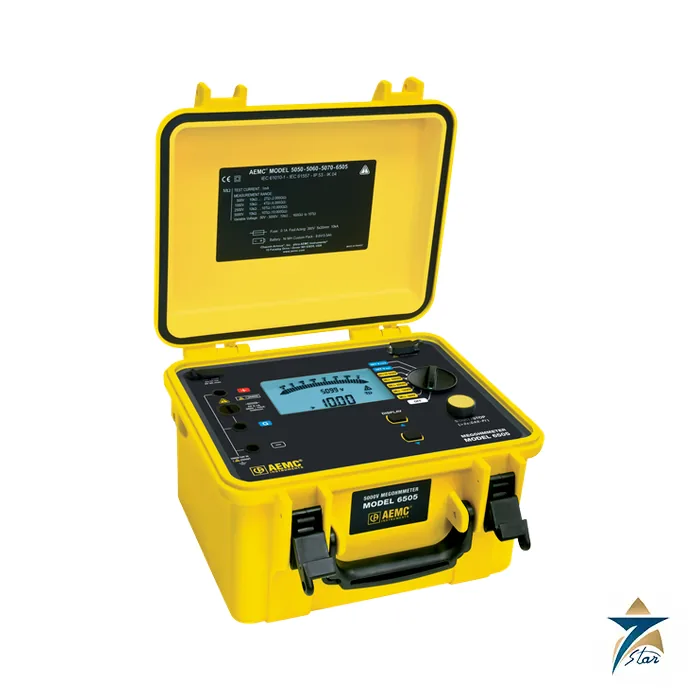
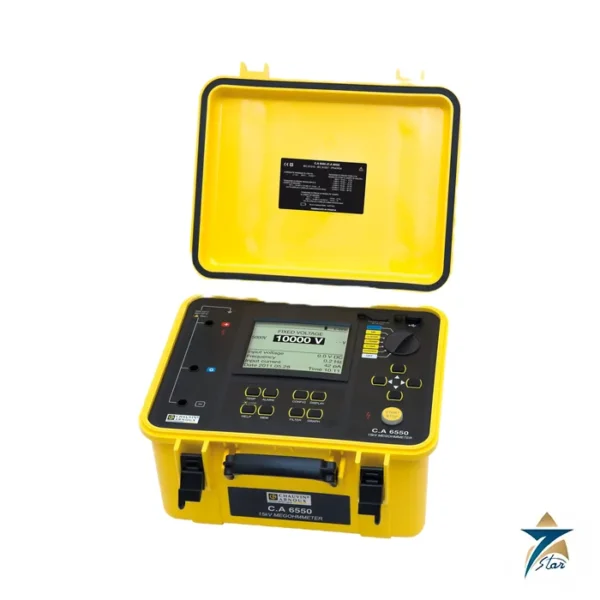
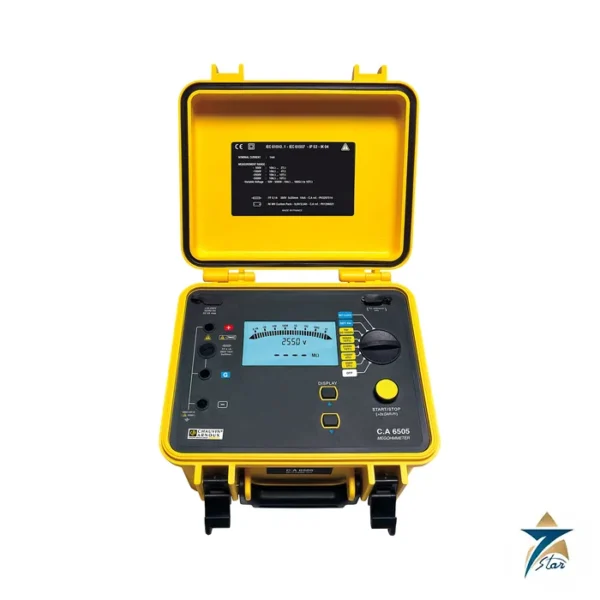
Not every insulation job needs a diagnostic suite. For crews who want a rugged hard-case instrument that tests cables, wiring and switchgear at the usual voltages without menus, the AEMC Instruments 6505 is the straightforward answer. Catalogued as Cat. #2130.18, it is a 5000 V digital megohmmeter with an analog bargraph, rotary selection of four fixed test voltages, automatic DAR and PI, a guard lead and a range that reaches 10 teraohm. It runs from the AC line or from its rechargeable Ni-MH battery.

Seven Star LLC is an independent supplier serving Oman and the GCC, and the 6505 is offered to contractors, maintenance teams and testing laboratories that value simplicity.

Key data for AEMC Instruments 6505

Item Datasheet entry
Catalogue number 2130.18
Maximum test voltage 5000 V
Fixed test voltages 500, 1000, 2500 and 5000 V
Variable test voltage 40 to 5000 V
Maximum resistance 10 teraohm, specific to test voltage
Typical accuracy 5 percent
Timer Elapsed test time only
PI and DAR Yes, automatic
Dielectric discharge Not available
Post-test capacitance Yes
Alarms Not available
Guard lead Yes
Data storage and PC reporting Not available
Display Backlit digital with bargraph
Power Ni-MH rechargeable battery and line power
Ingress rating IP53 with lid closed

The measurement category is printed on the instrument label and the cover of the data sheet; confirm it on the nameplate of the unit you receive before planning work near live installations.

Designed to remove set-up mistakes

The 6505 uses a rotary switch for the fixed voltages, so an operator at the end of a long day cannot enter a wrong value in a submenu. The large analog bargraph gives an immediate visual impression of insulation condition, rising steadily on a good object and hovering on a poor one, while the digital figure supplies the exact value. Test results are read from the screen and written in the job sheet, which is entirely adequate for pass-fail work against a contract limit.

The unit includes a guard terminal and a blue guard jumper lead. Using the guard diverts surface leakage across a dirty or damp terminal away from the measuring circuit, which is often the difference between a believable reading of several gigaohm and a misleading one on a cable end exposed to coastal humidity.

How 6505 differs from other 5000 V megohmmeter variants

Against the 5050 and 5060, the 6505 gives up the dielectric discharge test, the programmable alarms, the full timer and, in the case of the 5060, data storage with DataView. Its maximum test voltage is 5000 V, compared with 5100 V on the 5000-series, and its timer shows elapsed time only. In return it is the simplest of the three to operate. The recommended-use list in the data sheet is also shorter: cable terminations and splices, bus insulation, medium-voltage cables and low-voltage motors are marked as suitable, while instrument transformers and liquid or dry transformers are not.

Typical work in Oman and the GCC

  • Commissioning tests on low-voltage cables and new switchboard busbars in commercial towers and industrial estates.
  • Annual insulation checks of low-voltage motors on pumps, fans and compressors in water and utility plants.
  • Cable termination and splice verification before energising medium-voltage feeders.
  • Insulation records for contractors who must hand over a pass-fail sheet at the end of an installation.

Where a client asks for polarisation trends over many years or for the dielectric discharge result, move up to the 5060 instead.

Choosing the test voltage

As a general habit, the test voltage is matched to the rated voltage of the object: lower steps for low-voltage wiring and motors, higher steps for medium-voltage cables and bus sections. Starting at a lower step and moving up is sensible when the condition of an old cable is unknown, because a weak insulation can be damaged by too high a stress. The variable setting between 40 and 5000 V lets the operator choose an intermediate value when a project specification or a manufacturer’s maintenance manual asks for one. Record the voltage with every result, since a reading at 1000 V cannot be compared with one at 5000 V on the same cable.

What is in the box

The case carries an extra large classic tool bag, a set of three 10 ft colour-coded leads with clips in red, black and blue, one blue guard terminal jumper lead, a fuse, the rechargeable battery pack already installed, a power cord and the user manual. Longer lead sets and replacement fuses are listed in the accessory table for the megohmmeter range, so ask us if a job needs more cable than the bag provides.

Running a test

Isolate and lock out the circuit, verify it is dead, discharge any stored charge, connect the leads, choose the voltage, and start. Wait until the reading stabilises or the automatic PI and DAR sequence completes, note the elapsed time shown, and allow the instrument to discharge the circuit before removing a lead. Use 500 V on delicate wiring and step up to 5000 V only where the equipment rating allows it. The unit has integrated protections, including a discharge circuit for the object under test and internal fuse protection, but safe working procedure remains the operator’s responsibility.

Care and calibration

Keep leads free from cuts, recharge the Ni-MH pack before storage, and close the lid to preserve ingress protection. Periodic calibration keeps results traceable; the manufacturer asks that you consult the factory for NIST calibration pricing.

Ordering AEMC Instruments 6505

For the AEMC Instruments 6505, state if you want standard 10 ft leads or longer sets, and whether you also need a replacement fuse. We will cross-check the accessory list against the lead lengths you need on site.

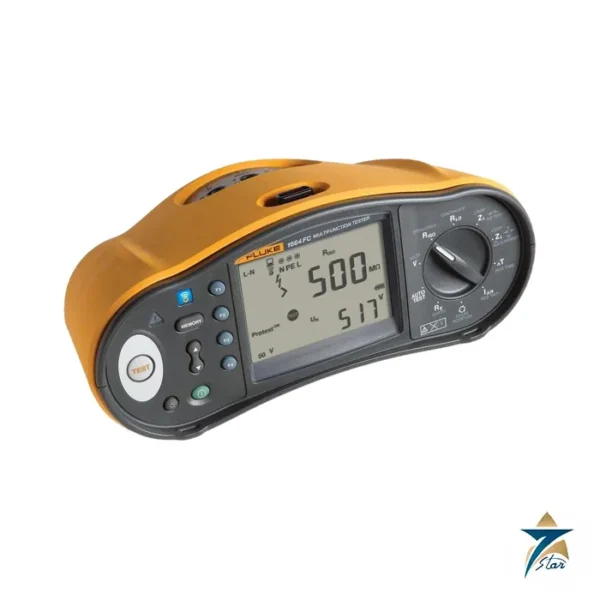
Related items you may also need: Fluke 1664 FC Multifunction Installation Tester | Fluke 2AC VoltAlert Non-Contact Voltage Tester | Fluke 289 True-RMS Industrial Logging Multimeter | All AEMC Instruments products.

Documents and quotation

The manufacturer’s data sheet for the AEMC Instruments 6505 is attached to this page. Send your RFQ to Seven Star LLC with part number 6505 (Cat. #2130.18) and the quantity, and we will reply with availability and delivery time to Oman and the GCC.

Datasheets & Documents
  • PDF Datasheet AEMC Instruments 6505 5 kV Digital Megohmmeter Datasheet Download
Reviews (0)

Reviews

There are no reviews yet.

How would you rate this product?

It takes about 10 seconds — just tap a star. Your email is never published.

About brand

AEMC Instruments is the American test and measurement brand best known for ground resistance testers, insulation (megohm) testers, micro-ohmmeters, clamp-on meters and power quality loggers. The company trades under the legal name Chauvin Arnoux, Inc. d.b.a. AEMC Instruments and belongs to the Chauvin Arnoux Group, which traces its roots to Paris in 1893, when Raphaël Chauvin and René Arnoux founded the business. AEMC Instruments itself dates from 1976, and its offices, manufacturing facility and NIST calibration laboratory are in Dover, New Hampshire.

AEMC Instruments company profile

Founded 1976 (AEMC Instruments); parent heritage Chauvin Arnoux founded in Paris in 1893
Headquarters 15 Faraday Drive, Dover, New Hampshire, USA
Ownership Part of the Chauvin Arnoux Group; operates as Chauvin Arnoux, Inc. d.b.a. AEMC Instruments
Core technology Electrical test and measurement: ground resistance and soil resistivity, insulation resistance, low-resistance (micro-ohm), current probes and clamp meters, power and energy analysis
Typical applications Substation and plant earthing checks, motor and cable insulation testing, switchgear contact resistance, load and power quality studies
Software and service Free DataView software for configuring instruments and building reports; NIST calibration, training seminars and webinars

Milestones

  • 1893: Chauvin Arnoux is founded in Paris by Raphaël Chauvin and René Arnoux; its inventions include the universal tester, a forerunner of the multimeter, and the current clamp.
  • 1976: AEMC Instruments is founded; the company is part of the Chauvin Arnoux Group.
  • 1977: The Chauvin Arnoux Group opens a subsidiary in the United States.
  • 1993: The group celebrates its centennial.
  • Today: AEMC designs, builds and calibrates instruments in Dover and offers custom OEM products and accredited training in ground testing and power quality.

How an AEMC fall-of-potential ground tester works

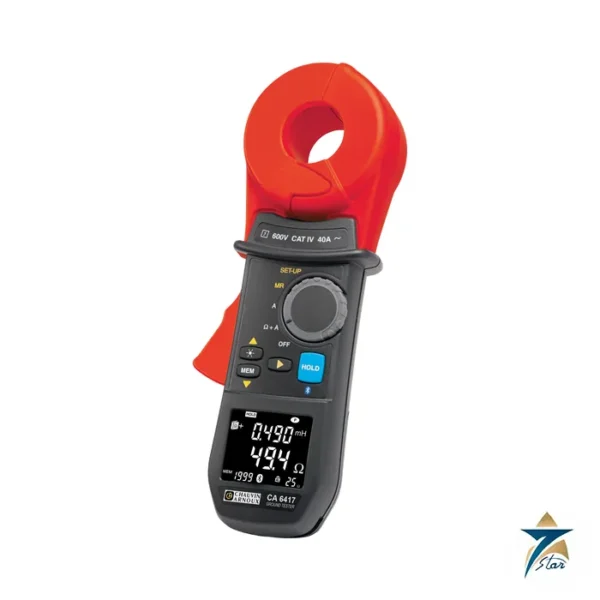
A ground resistance tester injects a known alternating current into the earth electrode under test and returns it through a remote auxiliary spike, then reads the voltage on a second probe placed between them. Resistance is the voltage divided by the current. Testers such as the 6472 run this at selectable frequencies and voltages so that stray earth currents do not corrupt the result, and the 4-pole method removes the lead resistance from the answer. When an electrode cannot be disconnected, clamp-on testers such as the 6417 induce a test current in the loop through the conductor and measure the current that returns, which gives loop resistance in seconds without any spikes. The choice between the two depends on whether a closed, parallel earth network exists. A practical selection tip: use fall-of-potential for new electrodes and acceptance tests, and clamp-on for quick periodic surveys on bonded systems.

Where AEMC Instruments products are used in Oman and the GCC

Earthing and insulation testing are routine across oil and gas facilities, power utilities, desalination and water plants, telecom towers and large commercial buildings. These instruments serve commissioning crews checking electrodes before energisation, motor shops trending insulation resistance, switchgear teams verifying joint resistance, and energy auditors logging loads on feeders in hot-climate buildings.

AEMC Instruments models we list

Family Examples
Ground resistance testers 6472, 6417
Micro-ohmmeters 6255
Megohmmeters (insulation testers) 5060, 6505
Power loggers and clamp meters PEL 113, 607

Ordering AEMC Instruments products: what we need

Send the model and, where the manufacturer uses them, the catalogue number, for example 2135.51 for the bare 6472 or 2135.53 for the kit with 300 ft leads. State the quantity and any leads, probes, sensors or carrying cases you need, since many accessories are listed separately. For replacement items, tell us which instrument they belong to so that we can match them to the manufacturer's accessory tables.

Facts checked against the AEMC Instruments website and corporate profile, the Chauvin Arnoux Group history page and current AEMC datasheets, November 2026.

FAQ

Questions about the AEMC Instruments 6505 5 kV Digital Megohmmeter

Answers from our engineering team on installation, compatibility and integration.

01What test voltages does the AEMC Instruments 6505 offer?
The 6505 provides fixed 500, 1000, 2500 and 5000 V steps selected with a rotary switch, and a variable range from 40 to 5000 V.
02Does the 6505 include PI and DAR tests?
Yes, the 6505 provides automatic PI and DAR, but its timer shows elapsed test time only and dielectric discharge and alarms are not available.
03How does the 6505 differ from the 5050 and 5060?
The 6505 tops out at 5000 V and has no dielectric discharge, alarms or data storage; the 5050 and 5060 go to 5100 V with those functions, and the 5060 adds DataView storage.
04What is included with the 6505 (Cat. #2130.18)?
The package has an extra large classic tool bag, three 10 ft colour-coded leads with clips, a blue guard jumper lead, a fuse, the battery pack, a power cord and the user manual.
05How is the 6505 powered and what ingress rating does it have?
It runs from a rechargeable Ni-MH battery or from line power and has IP53 ingress protection with the lid closed.