- Automation & ControlView all 3,125 products
- Automation Accessories
- AC Drives
- PLC & I/O Cards
- Industrial Communications
- Vibration Monitoring
- Isolator & Barrier
- Controllers & Data Acquisition
- Safety Switches & Guard Locking
- Encoders
- Motor Soft Starters
- CCTV & Security
- Pneumatic Cylinders
- HMI Displays
- Servo Drives
- Industrial Computers
- Machine Vision
- Automation Software
- Robotics
Brand: Bürkert
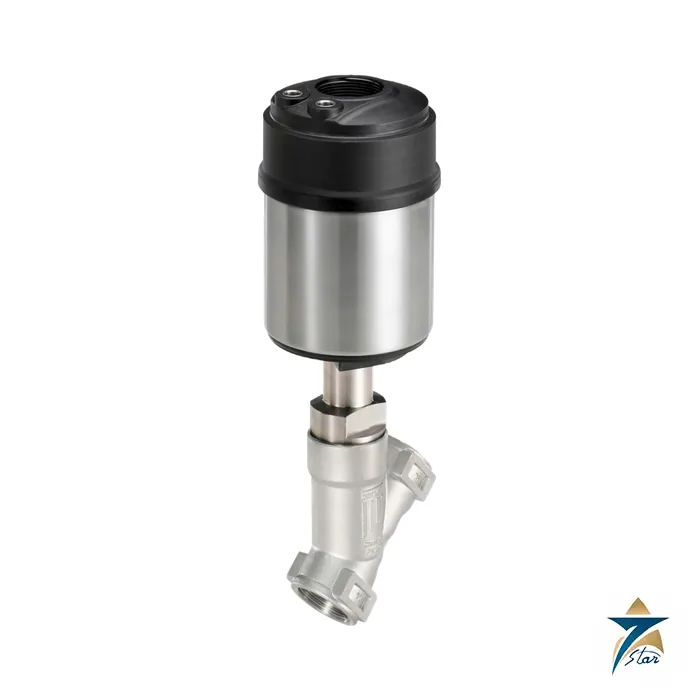
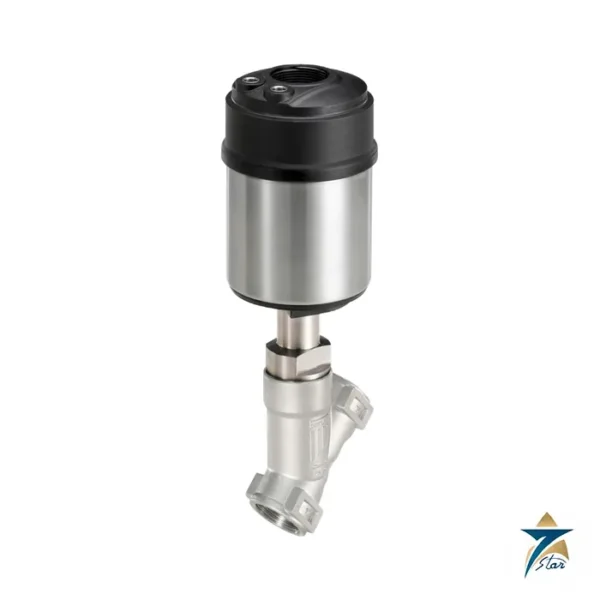
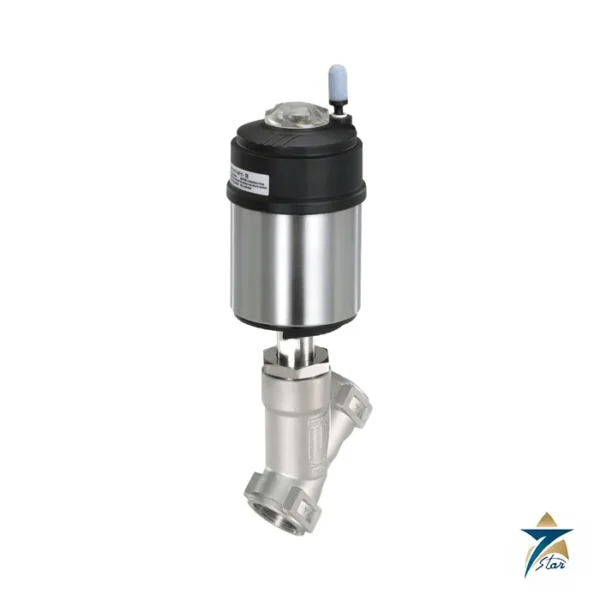
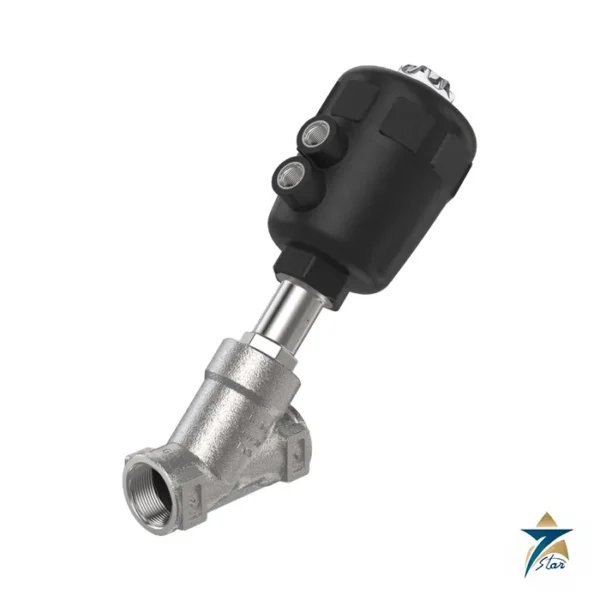
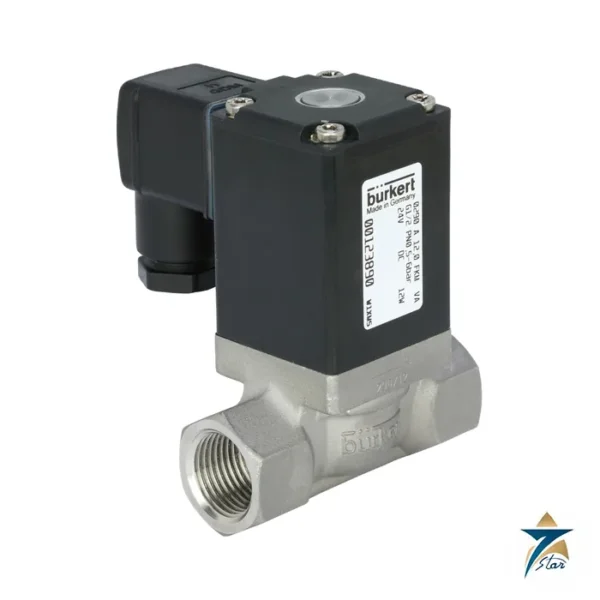
Bürkert 213715 Type 2300 Stainless Angle Seat Valve DN20 G3/4 PTFE
Description
Overview
The Bürkert 213715 steps up from the smallest angle seat valves to DN 20, which is the size at which many utility headers and process branches live. It is the threaded G3/4 stainless steel valve of Bürkert Type 2300 with a 70 mm pneumatic actuator, a PTFE seat and control function A, so it is normally closed and opens with pilot air. Seven Star LLC is an independent supplier serving Oman and the GCC.
Numbers that define this valve
DN 20, G3/4 and a 70 mm actuator give a KVS of 10 m3/h and a maximum operating pressure of 25 bar, which is the full PN 25 rating of the family. The PTFE seat gives leakage class VI. The same DN 20 valve exists with a 90 mm actuator for higher differential pressures, and with a stainless steel seat as 213766 for hot media or where a metal seat is preferred. The Bürkert 213715 thus pairs the mid-size actuator with the soft seat, a combination that delivers tight shut-off at full rated pressure.
Table of data for Bürkert 213715
| Item | Value |
|---|---|
| Article number | Bürkert 213715 |
| Nominal diameter | DN 20 |
| Port connection | G3/4 |
| Actuator size | 70 mm (M) |
| Max. operating pressure | 25 bar(g) |
| Seat seal | PTFE |
| Seat leakage class | VI |
| KVS value | 10 m3/h |
| Design | pneumatically operated 2/2-way angle seat control valve, ELEMENT series, modified equal percentage characteristic |
| Control function | A, normally closed by spring, opened by pilot air |
| Flow direction | flow to open, below the seat |
| Valve body | stainless steel CF3M with G (DIN ISO 228-1) internal thread |
| Actuator | stainless steel 1.4561 casing, PPS cover, FKM piston seal |
| Spindle seal | filled PTFE V-rings with spring compensation |
| Pilot pressure | 5.6 to 7 bar(g), air or neutral gas |
| Process media | steam, water, neutral gases, alcohols, oils, fuels, hydraulic fluids, salt solutions, alkalis, organic solvents, oxygen |
| Medium temperature | minus 40 to plus 230 degrees C depending on seat seal and limits chart |
| Maximum viscosity | 600 mm2/s |
| Nominal pressure | PN 25 (DIN EN 1333), Class 150 (DIN EN 1759) |
| Seat leakage standard | DIN EN 60534-4 |
How Bürkert 213715 differs from other Type 2300 variants
Compared with the DN 15 valve 213712, it doubles the KVS from 5 to 10 m3/h and lifts the pressure limit from 16 to 25 bar by using the larger 70 mm actuator. Compared with the DN 25 valve 213718, it has a lower KVS of 10 against 16 but a higher pressure limit of 25 against 12 bar on the same actuator size. If your line needs more flow, go up a size; if you need pressure margin, stay with DN 20.
Use cases
DN 20 angle seat valves serve as isolation on cooling water headers, steam to process heaters, solvent transfer, oil circuits and clean fluid lines. In Gulf industries they are common on boiler feed and condensate return, chilled water bypasses and fuel handling skids. Because the actuator is pneumatic and fully stainless, it is happy in hot, humid, salty air with condensing moisture, and no electrical equipment sits on the valve itself.
Mounting and pilot air
Screw the valve into the pipe with the flow arrow pointing below the seat, tighten on the body hexagon only, and support the pipe. Connect pilot air through the push-in fitting with dry, filtered air at 5.6 to 7 bar(g). Add a silencer or exhaust restrictor to adjust the closing speed and limit pressure surges in liquid lines. The spring closes the valve on air failure, which is the safe state for most isolation duties.
Control heads and positioners can be fitted on top to add feedback or modulating control.
Servicing
Service intervals depend on temperature, pressure and cycle rate. A rebuild kit usually includes the seat seal, spindle packing and body seal. Mark the installation date and number of cycles so that planned maintenance can be scheduled in advance of any failure.
Filtration guidance
A rule of thumb for small-seat valves is to filter the medium to a fineness at least as good as one fifth of the smallest passage in the valve, and often finer. For gas service, a five micrometre filter protects most miniature valves, and a coalescing stage removes oil aerosols from the compressor. For liquid service, a mesh strainer upstream of the valve is the minimum. Replace elements on a time basis and note the pressure drop across them, because a clogged filter starves downstream equipment and can lead engineers to open valves further than intended, which then causes other problems elsewhere.
Spare-part planning
Spare-part planning for valves works best when the plant keeps a list of installed article numbers and not just a list of types. Two valves of the same type may differ in orifice, seal material, voltage or port thread, and these differences are encoded in the number printed on the nameplate. During a shutdown walk-down, photograph each nameplate, record the number and the tag of the machine, and compare the list against the stock room. Criticality should drive stock levels: a valve whose failure stops a production line deserves a shelf spare, while a valve on a redundant branch may be ordered when needed. A short lead-time discussion with your supplier before the shutdown starts is almost always cheaper than expediting after a failure.
Quotation checklist
A complete enquiry shortens the quotation. Give the full article number, the quantity, the required delivery date and the destination. If you are replacing an installed valve, add the nameplate photograph and the tag number. Mention the supply voltage and connector type, because plugs and coils are often ordered separately. If the valve is for a project, add the project name and whether documentation such as the datasheet or a conformity statement is required with the shipment. Where an alternative number might serve, tell us whether you will accept it, so that a long lead-time item can be replaced by one that is easier to deliver.
Related items you may also need: Bürkert Type 8681 Control Head for Hygienic Process Valves | Bürkert Type 6026 Direct-Acting 2/2-Way Plunger Solenoid Valve | Hattersley Fig. M511 Cast Iron Flanged Gate Valve PN10 | All Bürkert products.
Points to confirm for the Bürkert 213715
- If the Bürkert 213715 is a like-for-like replacement, read the full code from the installed nameplate and compare it with this page.
- For each Bürkert 213715 request we confirm the exact code and lead time in writing.
- Dimensions, ratings and connection data for the Bürkert 213715 are in the datasheet attached to this page.
- The Bürkert 213715 belongs to our globe valves range and can be delivered to Muscat, Sohar, Duqm and other GCC locations.
- Plants that run the Bürkert 213715 on critical service often hold a spare unit in the store.
Documents and quotation
The Type 2300 datasheet is attached, including the threaded ordering chart that defines this article number. Send your RFQ with Bürkert 213715, the quantity and the delivery destination in Oman or the GCC.
Other Models in the 2300 Range
Seven Star LLC supplies models from the 2300 range in Oman and the GCC. Compare the related models below and request a quote for the one that matches your application.
| Model | Category | |
|---|---|---|
| Bürkert 213712 Type 2300 Stainless Angle Seat Valve DN15 G1/2 PTFE | Globe Valves | View details |
| Bürkert 213715 Type 2300 Stainless Angle Seat Valve DN20 G3/4 PTFE | Globe Valves | You are viewing this model |
Datasheets & Documents
- Datasheet Bürkert 213715 Type 2300 Stainless Angle Seat Valve DN20 G3/4 PTFE Datasheet Download
Reviews (0)
How would you rate this product? Cancel reply
About brand
Bürkert is a German family-owned maker of fluid control systems, headquartered in Ingelfingen, Baden-Württemberg. Christian Bürkert founded the company in 1946, and it is known for solenoid valves, process and control valves, flow and analytical sensors, and mass flow controllers. Its products serve water treatment, hygienic processing, gas handling and laboratory applications.
Seven Star LLC lists Bürkert valves and valve automation devices and supplies Bürkert solenoid valves and spare parts to plants in Oman as an independent supplier.
Bürkert company profile
| Founded | 1946, by Christian Bürkert |
|---|---|
| Headquarters | Ingelfingen, Germany |
| Ownership | Family-owned |
| Product families | Solenoid valves, angle seat process valves, positioners, flow meters, mass flow controllers |
Bürkert types listed on this page
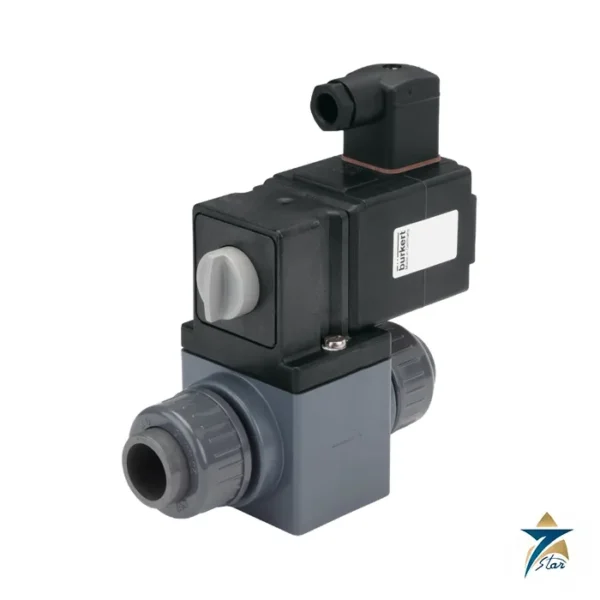
Two types are listed. Type 6026 is a direct-acting 2/2-way plunger solenoid valve, with a stainless steel bellows that separates the medium from the coil, and as a direct-acting valve it switches without needing a pressure difference. Type 8681 is the Bürkert control head that mounts on top of hygienic process valves to pilot the actuator and report valve position to the control system. Control heads of this kind are common in food, beverage and pharmaceutical plants in the GCC.
Ordering Bürkert valves: what we need
The type number alone is not enough. Send the identification number from the label, or else the type with orifice, port connection, body and seal material, coil voltage and frequency, circuit function and pressure range. For a Type 8681 control head add the communication variant and the make and model of the process valve it sits on.
Facts checked against Bürkert's published company history, October 2026.
Browse Bürkert products by category: Solenoid Valve, Control Valves.
FAQ
Questions about the Bürkert 213715 Type 2300 Stainless Angle Seat Valve
Answers from our engineering team on installation, compatibility and integration.
01What are the key data of the Bürkert 213715?
DN 20, G3/4, 70 mm actuator, PTFE seat, KVS 10 m3/h and a maximum operating pressure of 25 bar(g).
02Is the Bürkert 213715 normally closed?
Yes, it is control function A; spring force closes it and pilot air opens it.
03What seat leakage class does the 213715 reach?
With the PTFE seat it meets class VI of DIN EN 60534-4.
04Is there a metal-seat version of the 213715?
Yes, the stainless steel seat version of the same size is listed as 213766 with leakage class IV.
05What pilot pressure does the Bürkert 213715 need?
Pilot air of 5.6 to 7 bar(g), using air or neutral gas.


Reviews
There are no reviews yet.