Brand:

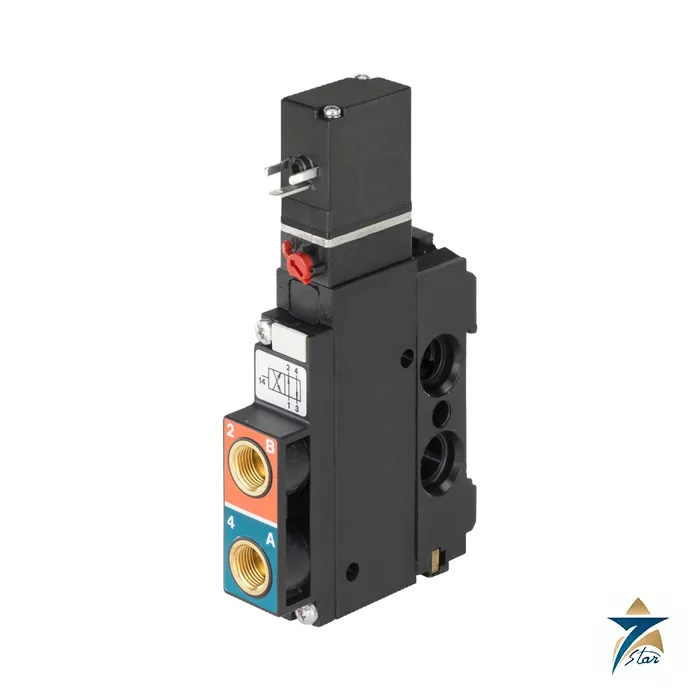
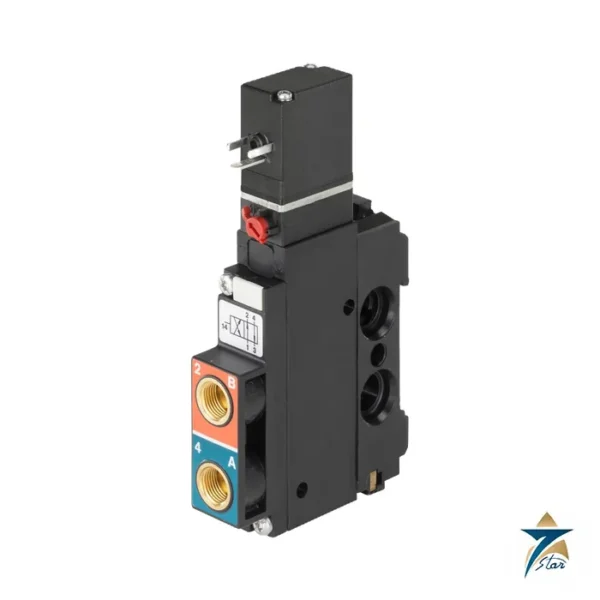
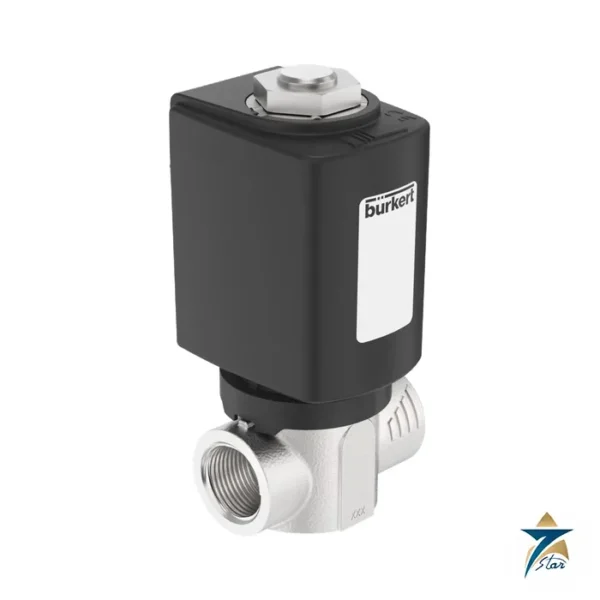
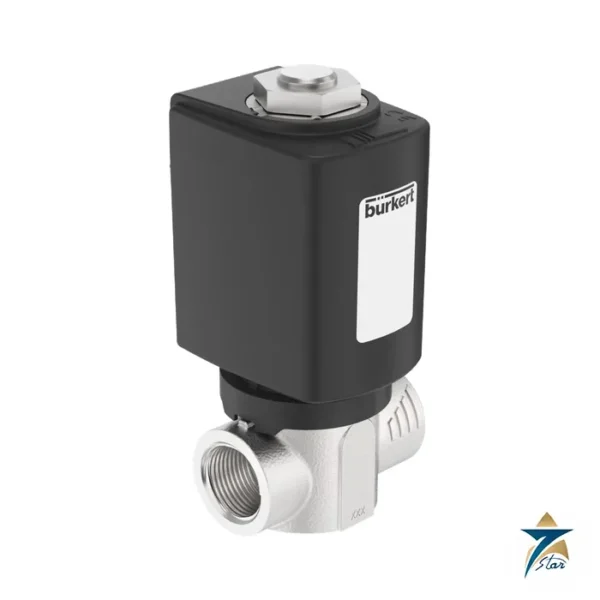
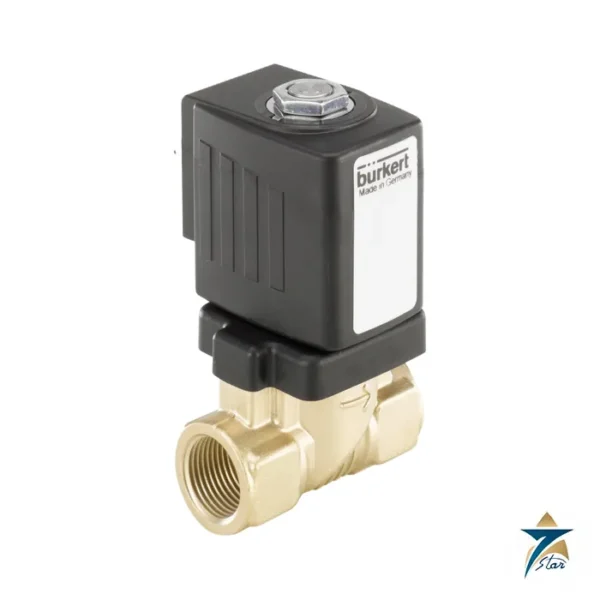
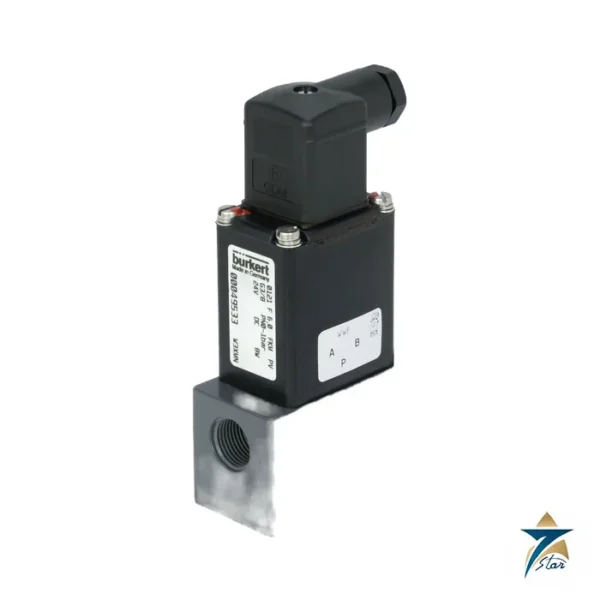
Bürkert 136875 Type 5470 3/2-Way NO Solenoid Valve

Description

Overview

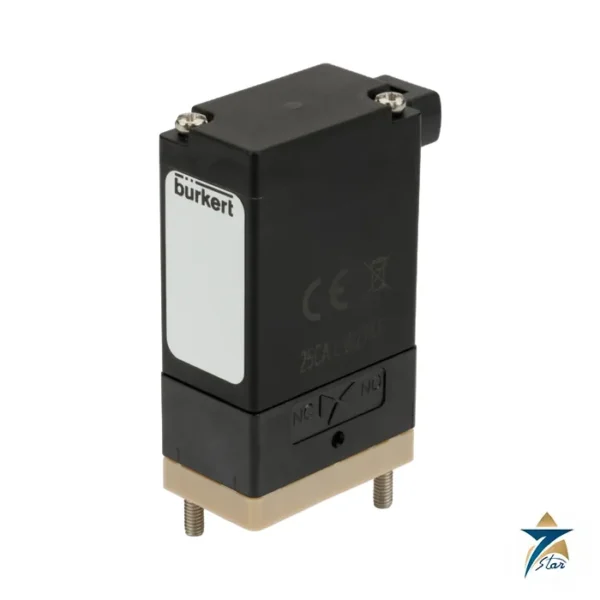
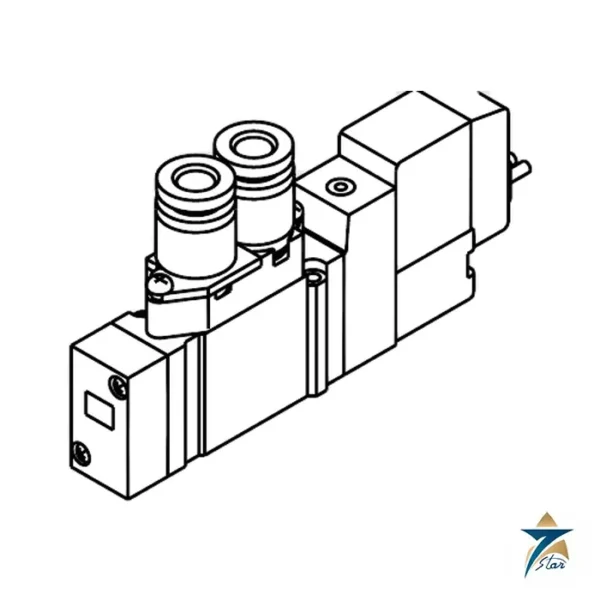
Some circuits must stay pressurised when the control signal disappears, and for those Bürkert 136875 is the matching tool. It is the normally open (circuit function D) 3/2-way servo valve of the Bürkert Type 5470 line, with a 24 V DC coil of 2 W and a 6 mm plug-in coupling at the bottom of the module, backed by a check valve in the flange. Applying voltage closes the path from port 1 to port 2 and vents it, which suits clamps, brakes and holding functions that are released electrically. Seven Star LLC is an independent supplier serving Oman and the GCC.

Normally open logic explained for Bürkert 136875

With the coil de-energised, supply port 1 feeds working port 2, so a connected cylinder or pilot line is pressurised. Energising the 24 V DC coil switches port 2 to exhaust through port 3. Many engineers use this logic on spring-loaded brakes and on pneumatic clamps that must hold during a power failure. It is the opposite of article 136872, where port 2 is vented at rest. Check that your safety analysis agrees with the failure state before choosing between them, since a normally open valve will pressurise the load on power loss.

Specification of Bürkert 136875

Parameter Value
Circuit function D: 3/2-way, servo-controlled, normally open
Voltage and power 24 V DC, 2 W effective coil power
Working port 2 Plug-in coupling 6 mm at bottom with check valve (variant C)
Pressure range 2 to 10 bar overpressure
Orifice 4.0 mm
Flow QNn, air 300 l/min
Body and seal Polyamide body, NBR seal, Ultramid inner parts
Weight about 120 g
Medium Compressed air and neutral gases, 5 micron filtration
Medium temperature minus 10 to plus 50 degrees C
Ambient temperature minus 10 to plus 55 degrees C
Switching time DC Open 15 ms, close 12 ms
Duty cycle 100 percent
Voltage tolerance plus or minus 10 percent
Electrical Plug contacts form C, DIN EN 175301-803, for cable plug Type 2516
Protection IP65 with cable plug Type 2516

Points that distinguish Bürkert 136875 within the chart

Where 136872 vents at rest, Bürkert 136875 pressurises at rest, and in the ordering chart the 220 to 240 V DC option for this function is marked as not available, so 24 V DC and 110 to 120 V DC are the offered voltages. The 4/2-way articles 136878 and 136881 offer two working ports and are better suited to double-acting cylinders. Everything else, such as orifice 4.0 mm, 300 l/min and the 2 to 10 bar range, remains unchanged.

Applications in Oman and GCC plants

Normally open pneumatic valves are less common than normally closed ones, but they appear on clamping devices in fabrication shops, on holding brakes of small hoists, on drain valves that must stay open, and on safety circuits where pressure is needed on failure. They are also used to keep a purge flowing through analysers or enclosures until a control signal turns it off.

Manifold and module flange practice

The module flange carries supply channels 1 and 3 through the whole valve row, so one compressed air connection and one exhaust connection serve every valve. Valves are added by extending the flange row, and each valve can be exchanged with two screws without disconnecting the tubes of its neighbours. Plan spare flange capacity during design, as adding a station later means shutting down and depressurising the whole row. Label each working port with the valve article number so that maintenance crews can reorder correctly.

Choosing between servo and direct-acting pneumatic valves

This valve is servo-controlled: the coil operates a small pilot that uses the supply pressure to move the main spool or seat. That is how a 2 W coil can pass 300 l/min, but the price is the minimum pressure of 2 bar quoted in the data sheet. If the application involves very low or fluctuating pressure, a direct-acting valve with a larger coil is the safer choice. For most plant air at 6 bar the servo design is efficient and quick, with 15 ms opening and 12 ms closing times on DC supply.

Fail-safe thinking with small pneumatic valves

Before choosing a valve function, list what each actuator should do on loss of power and on loss of air. A normally closed 3/2-way valve vents the load, which is the default for spring-return process actuators; a normally open one holds pressure, which suits holding clamps; a 4/2-way valve leaves the cylinder at its rest position determined by the port that is pressurised. The Type 5470 valves have no manual override in the chart rows quoted, so if the plant needs manual operation for commissioning, add a hand valve in series or provide a test mode in the control program. Record these decisions on the P and ID so that later modifications do not reverse them by accident.

For critical duties, never rely on a single valve to achieve a safe state: add redundancy or a certified safety function as the risk assessment demands, since these are general purpose automation valves.

Spare parts and ordering discipline

Pneumatic valves look similar, and a coil voltage or port variant that is wrong by one letter will not work. Keep the full article number on every drawing, parts list and stores label. When ordering, state the article, the quantity, and any accessory such as the cable plug that is not included in the scope of delivery. Order a small number of spares for critical machines, because lead time on imported valves can run to weeks. For consignment spares in remote sites, store them in sealed bags away from heat and sunlight so that the NBR seals age slowly.

Commissioning checks

Apply air first without the coil connected and confirm that the working port is pressurised, which proves the normally open function. Then connect the cable plug Type 2516 and verify that the port vents on energising. Record the response time against the 15 ms and 12 ms values given for DC operation, and check that the check valve in the flange stops back-flow from a shared exhaust line.

Related items you may also need: Bürkert Type 6026 Direct-Acting 2/2-Way Plunger Solenoid Valve | Bürkert Type 8681 Control Head for Hygienic Process Valves | Bray 630250-21427536 S63 Solenoid Valve 24 VDC Dual Coil | All Bürkert products.

Checklist before ordering the Bürkert 136875

  • Before ordering the Bürkert 136875, compare the nameplate of the unit being replaced with the code shown on this page, character by character.
  • Our team confirms the Bürkert 136875 code and lead time in writing before any order is placed.
  • The datasheet attached to this page is the reference for the Bürkert 136875 dimensions, ratings and connections.
  • The Bürkert 136875 is listed in our solenoid valves range and ships to sites across Oman and the GCC.

Documents and quotation

The Type 5470 data sheet covering Bürkert 136875 is attached, including circuit symbols, dimensions and ordering tables. Send your RFQ with part number Bürkert 136875, the quantity and your delivery point in Oman or the GCC.

Other Models in the 5470 Range

Seven Star LLC supplies models from the 5470 range in Oman and the GCC. Compare the related models below and request a quote for the one that matches your application.

ModelCategory
Bürkert 136872 Type 5470 3/2-Way Servo Solenoid Valve NCSolenoid ValvesView details
Bürkert 136875 Type 5470 3/2-Way NO Solenoid ValveSolenoid ValvesYou are viewing this model
Datasheets & Documents
  • PDF Datasheet Bürkert 136875 Type 5470 3/2-Way NO Solenoid Valve Datasheet Download
Reviews (0)

Reviews

There are no reviews yet.

How would you rate this product?

It takes about 10 seconds — just tap a star. Your email is never published.

About brand

Bürkert is a German family-owned maker of fluid control systems, headquartered in Ingelfingen, Baden-Württemberg. Christian Bürkert founded the company in 1946, and it is known for solenoid valves, process and control valves, flow and analytical sensors, and mass flow controllers. Its products serve water treatment, hygienic processing, gas handling and laboratory applications.

Seven Star LLC lists Bürkert valves and valve automation devices and supplies Bürkert solenoid valves and spare parts to plants in Oman as an independent supplier.

Bürkert company profile

Founded 1946, by Christian Bürkert
Headquarters Ingelfingen, Germany
Ownership Family-owned
Product families Solenoid valves, angle seat process valves, positioners, flow meters, mass flow controllers

Bürkert types listed on this page

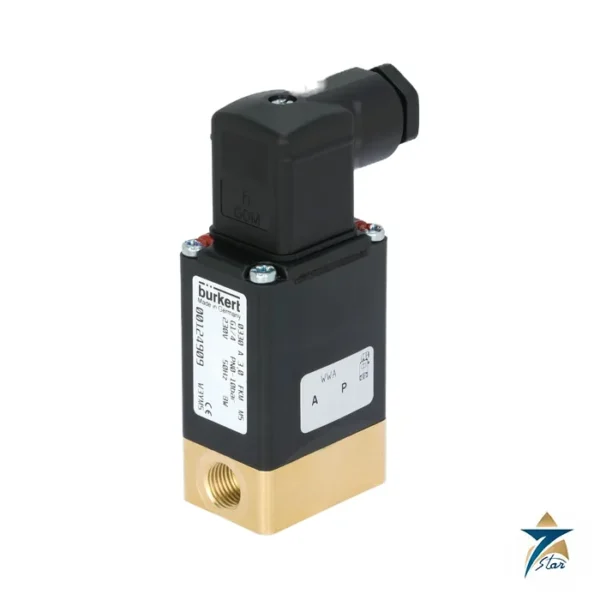
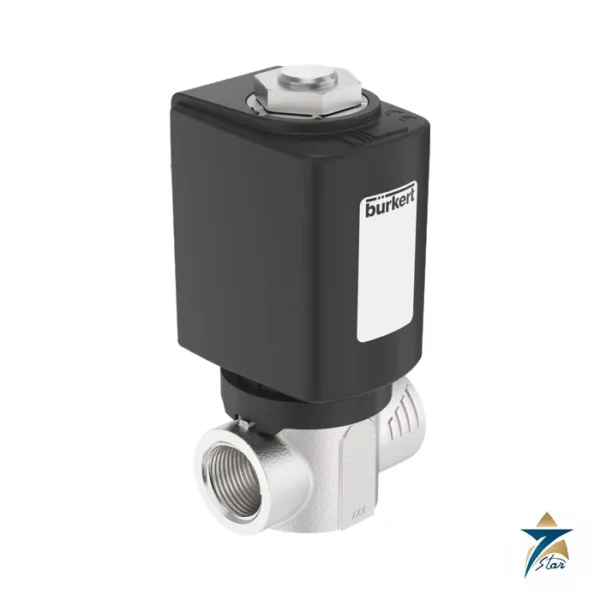
Two types are listed. Type 6026 is a direct-acting 2/2-way plunger solenoid valve, with a stainless steel bellows that separates the medium from the coil, and as a direct-acting valve it switches without needing a pressure difference. Type 8681 is the Bürkert control head that mounts on top of hygienic process valves to pilot the actuator and report valve position to the control system. Control heads of this kind are common in food, beverage and pharmaceutical plants in the GCC.

Ordering Bürkert valves: what we need

The type number alone is not enough. Send the identification number from the label, or else the type with orifice, port connection, body and seal material, coil voltage and frequency, circuit function and pressure range. For a Type 8681 control head add the communication variant and the make and model of the process valve it sits on.

Facts checked against Bürkert's published company history, October 2026.

FAQ

Questions about the Bürkert 136875 Type 5470 3/2-Way NO Solenoid Valve

Answers from our engineering team on installation, compatibility and integration.

01Is Bürkert 136875 normally open?
Yes. It is circuit function D, a servo-controlled 3/2-way valve that supplies port 2 from port 1 until the coil is energised.
02What voltage does 136875 use?
This article is the 24 V DC version with an effective coil power of 2 W; other voltages carry other article numbers.
03Which port style has Bürkert 136875?
It has a plug-in coupling for 6 mm tube at the bottom of the module, labelled variant C, with a check valve in the module flange.
04What pressure range does 136875 cover?
The Type 5470 chart lists an overpressure range of 2 to 10 bar with an orifice of 4.0 mm and QNn of 300 l/min.
05What is the difference between 136875 and 136872?
Both have the same port and coil, but 136875 is normally open while 136872 is normally closed.