Brand:

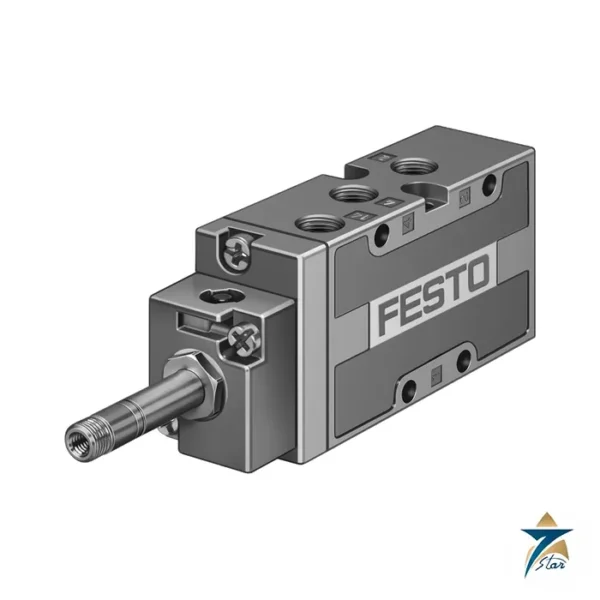
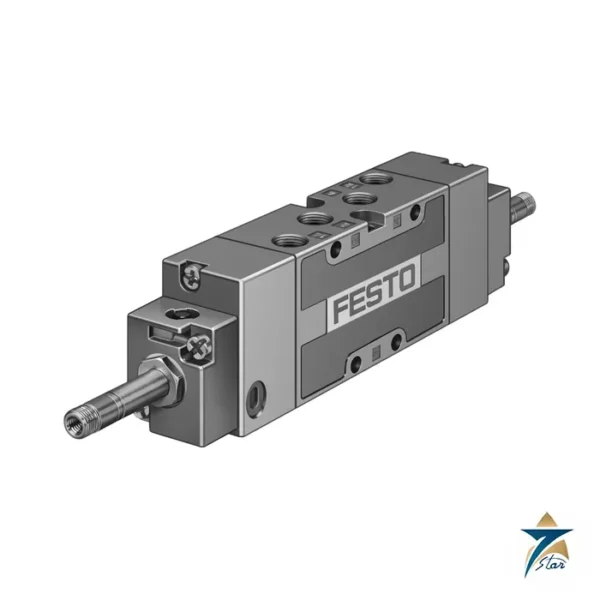
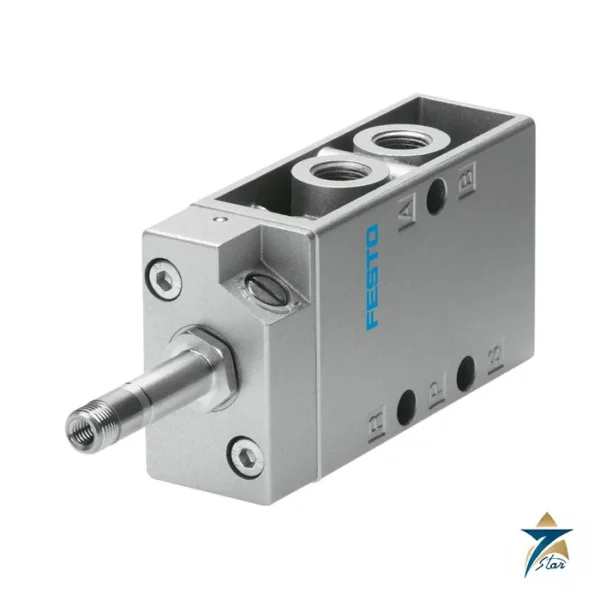
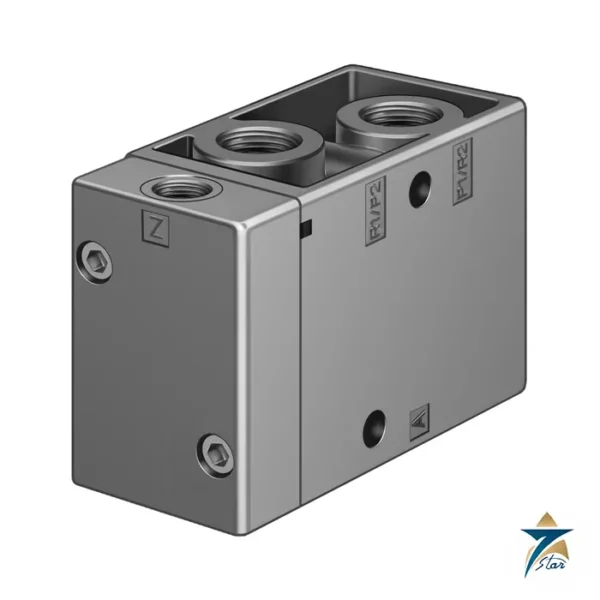
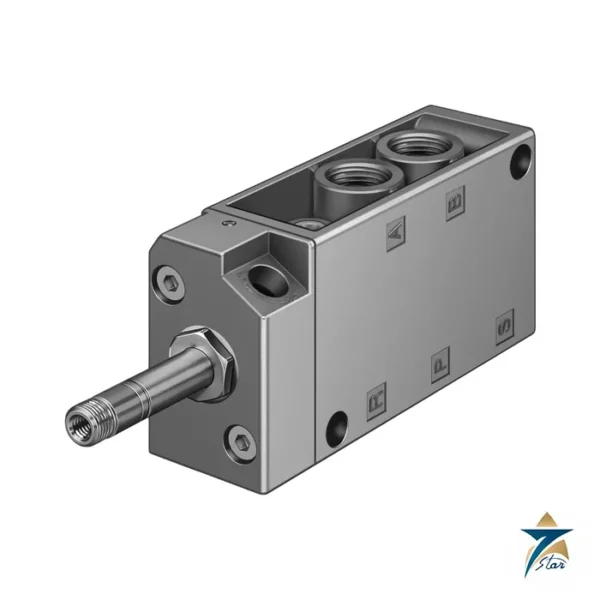
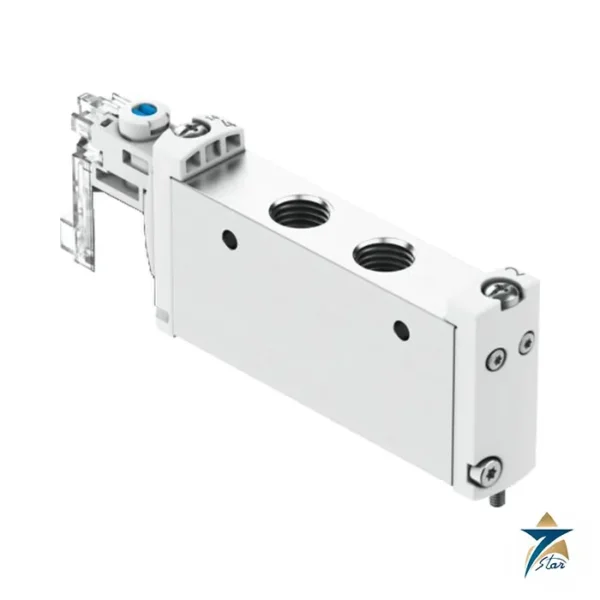
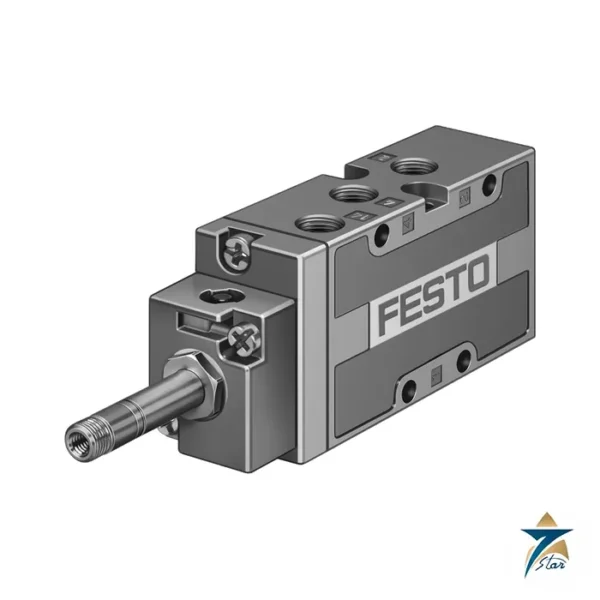
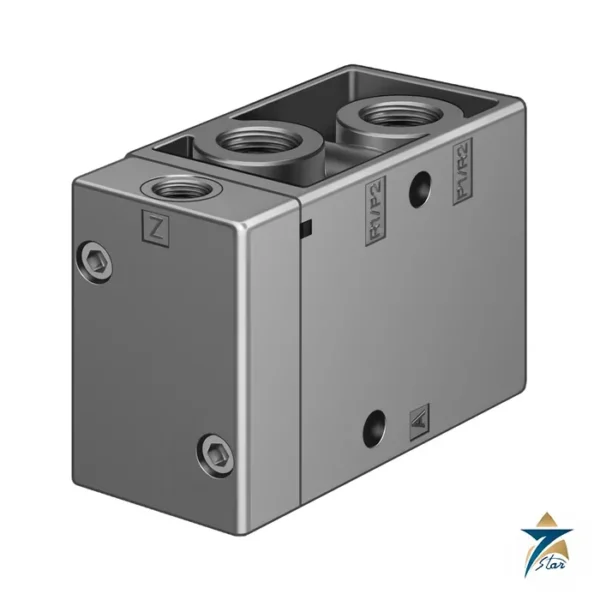
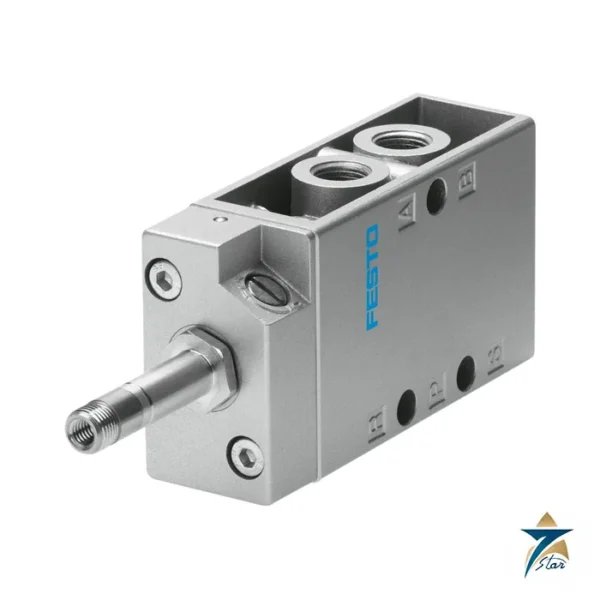
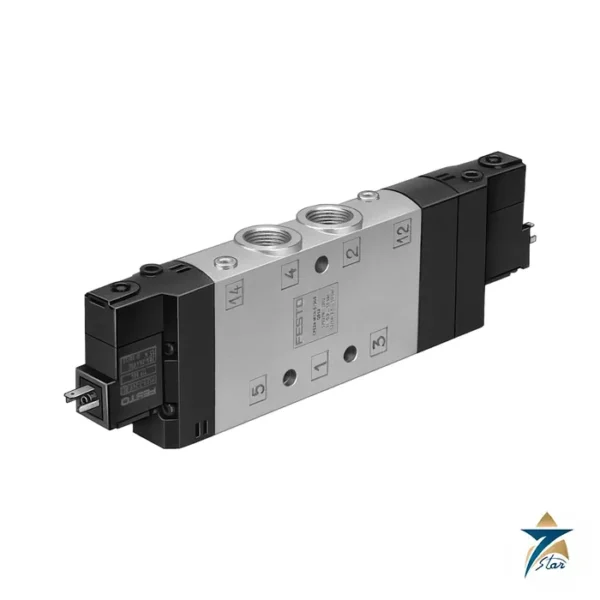
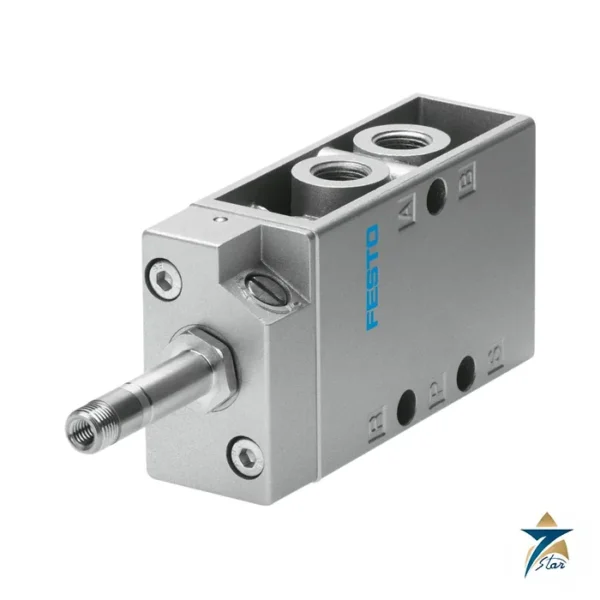
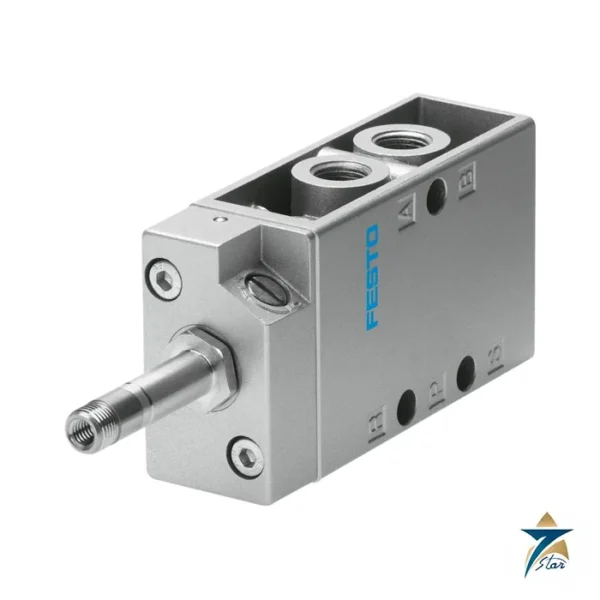
Festo VL-5/3E-3/8-B Pneumatic 5/3 Valve G3/8

Description

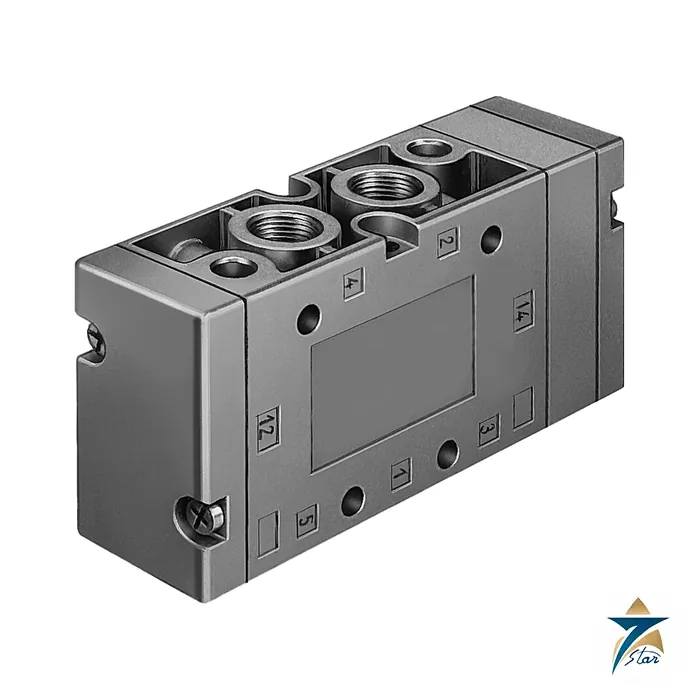
VL-5/3E-3/8-B: a pneumatically piloted 5/3 mid-position valve

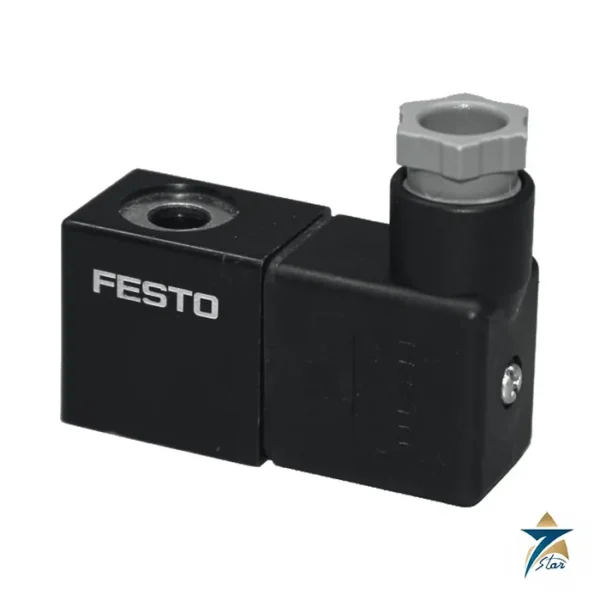
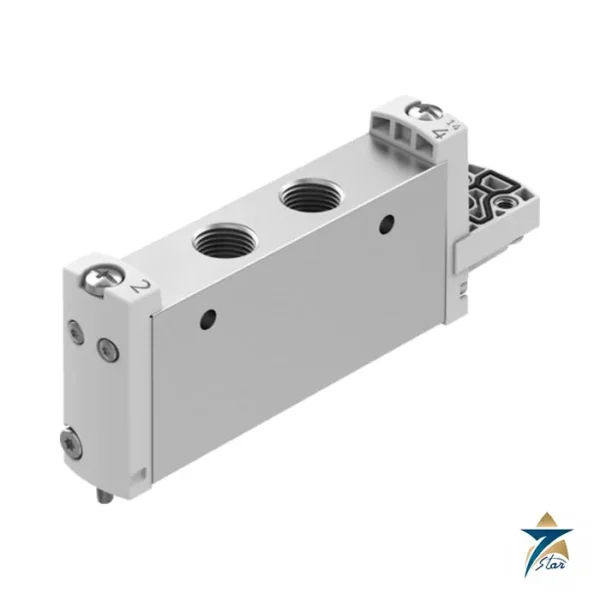
Not every Festo valve in a plant carries a coil. The VL-5/3E-3/8-B, order number 14949, is a pneumatically actuated 5/3 valve in the VL range, and its job is to take a pilot air signal from somewhere else, perhaps from a small solenoid valve or a manual pilot station, and use it to direct a much larger flow of air. Its centre position is of the exhausted type, so when neither pilot port is pressurised the spring-centred spool connects the working ports to exhaust and a cylinder connected to it becomes free to move.

It is a long-established building block that stays in demand because it contains no electronics and can be placed away from the control cabinet, with only air tubing running back to the pilot source.

Reading the VL-5/3E-3/8-B data sheet

Parameter Value
Part number 14949
Valve function 5/3 exhausted (mid-position vents the working ports)
Type of actuation Pneumatic
Construction width 40 mm
Nominal size 12 mm
Grid dimension 41 mm
Standard nominal flow rate (DIN 1343) 2200 l/min
Pneumatic ports 1 to 5 G3/8
Pilot air ports 12 and 14 G1/8
Operating pressure -0.09 to 1 MPa (-0.9 to 10 bar)
Pilot pressure 0.3 to 1 MPa (3 to 10 bar)
Piloting Direct, external pilot air supply
Design Piston gate valve
Reset Mechanical spring
Flow direction Reversible
Max. switching frequency 3 Hz
Switching time on / off / reversal 7 ms / 28 ms / 83 ms
Manual override None
Media / ambient temperature -10 to 60 degrees C
Storage temperature -40 to 60 degrees C
Corrosion class CRC 1
Mounting On PR rail or through-hole
Housing / seals Die-cast aluminium / NBR
Weight 680 g

Note that the flow direction is reversible, which allows the valve to be piped with a pressurised line on any side when the application demands it, and that the working pressure range extends to a slight vacuum, minus 0.09 MPa.

Behaviour of the exhausted mid-position

In an exhausted 5/3 function, both working ports 2 and 4 are relieved to exhaust in the centre position. Consequently a double-acting cylinder piped to ports 2 and 4 loses its pressure on both sides when the valve is unpiloted, which suits clamps that must be pushed by hand during set-up, hoists that must be locked by a separate brake, and conveyors that should coast to a stop. The mechanical spring brings the spool back to the centre once both pilot signals disappear; the data sheet gives 83 ms for reversal, 7 ms for switching on and 28 ms for switching off, so allow time in the sequence before a second command.

Valve selection around VL-5/3E-3/8-B

  • Choose VL-5/3E-3/8-B when you need a pilot-operated 5/3 valve with G3/8 ports and 2200 l/min.
  • Pilot air must be supplied externally at 3 to 10 bar to ports 12 and 14, which are G1/8.
  • The maximum switching frequency is 3 Hz, so it is meant for positioning, clamping and lifting, not for high-speed cycling.
  • Because the valve has no manual override, plan a pilot-side hand valve if technicians need to move the cylinder during maintenance.

Where Gulf plants use VL-5/3E-3/8-B

Older production lines in dairy, beverage and plastics plants across Oman and the Emirates still run banks of pilot-operated 5/3 valves for lifting stations and pallet gates. In utilities, they appear on air-operated valves for chemical dosing skids. Cement and mining equipment can use them where the pilot signal is generated centrally and only air lines run into the dusty area. The valve is rated for ambient temperatures of -10 to 60 degrees C, which covers most indoor plant rooms, though outdoor use in direct summer sun should be shaded.

How VL-5/3E-3/8-B compares with other VL valves

Siblings in the VL line differ by function and thread: 5/2 variants with a spring or air return, other 5/3 centre positions such as closed, and smaller or larger port threads including G3/8 and G3/4. The 3/8 body described here has a 40 mm width and 12 mm nominal size. A 3/4 body, as an example of the larger class, has more flow but also a larger footprint, so check the grid dimension of 41 mm for this version before replacing a valve on an existing manifold rail.

Installation and commissioning

Fasten the valve on a PR rail or with through-holes. Connect the main supply to port 1, working lines to ports 2 and 4, and silencers to 3 and 5. Pilot lines go to G1/8 ports 12 and 14; the pilot medium is compressed air to ISO 8573-1:2010 class 7:4:4, the same as the main supply. Check that the pilot pressure is at least 3 bar before the first start, otherwise the spool may not complete its stroke. Test each direction with the pilot source while the cylinder is unloaded, and then confirm that the cylinder is free to move by hand in the centre position, which proves the exhaust ducts of VL-5/3E-3/8-B are open.

Maintenance and replacement

Inspect for leaks at the pilot ports and exhaust ports. If the valve is slow to centre, look for contamination at the spring chamber, then compare the actual reversal time with the 83 ms listed above. Keep the corrosion class in mind: class 1 means low corrosion stress, so use protected housings in coastal sites where salt fog is present. The VL-5/3E-3/8-B should be replaced as a complete unit.

Documents and quotation

The data sheet for VL-5/3E-3/8-B is attached as a PDF. Please send an RFQ with the part number VL-5/3E-3/8-B and the number of valves you need. Seven Star LLC is an independent supplier serving Oman and the GCC and is not affiliated with the manufacturer.

What to Include in Your Festo VL-5/3E-3/8-B Enquiry

An accurate quotation for the Festo VL-5/3E-3/8-B depends on a few details. Please share the complete part number, any suffix codes for options or approvals, the operating conditions at the installation point, and whether certificates of conformity or test reports must ship with the goods. It also helps to know whether the unit is for planned maintenance, a shutdown or an urgent breakdown, because that decides how it is sourced and shipped. With this information our team can check compatibility with your existing solenoid valves and reply with availability and a realistic delivery estimate.

Datasheets & Documents
  • PDF Datasheet Festo VL-5/3E-3/8-B Pneumatic 5/3 Valve G3/8 Datasheet Download
Reviews (0)

Reviews

There are no reviews yet.

How would you rate this product?

It takes about 10 seconds — just tap a star. Your email is never published.

About brand

Festo is a German maker of pneumatic and electric automation technology, founded in 1925 in Esslingen am Neckar by Albert Fezer and Gottlieb Stoll; the name comes from their surnames. It first made woodworking machines and power tools before moving into pneumatics in the 1950s. Festo is family-owned and still headquartered in Esslingen.

Seven Star LLC sources and supplies Festo cylinders, valves and valve terminals for machine maintenance and projects in Oman and the GCC.

Festo company profile

Founded 1925, Esslingen am Neckar, Germany
Founders Albert Fezer and Gottlieb Stoll
Name From FEzer and STOll
Headquarters Esslingen am Neckar
Ownership Family-owned
Product families DSBC and ADN pneumatic cylinders, VUVG and VTUG solenoid valves and valve terminals, MS series air preparation units, CPX-AP remote I/O, EMMT servo motors and CMMT servo drives, electric axes and grippers

Milestones

  • 1925: Fezer and Stoll found the company in Esslingen.
  • 1950s: Festo begins making pneumatic components.

Festo products listed

Two items show the two halves of a pneumatic circuit. The VTUG is a valve terminal: a manifold that carries a row of directional valves with common air supply and a shared electrical connection. The DSBC-32-100-PPVA-N3 is an ISO standard cylinder. Its type code reads as 32 mm piston diameter and 100 mm stroke, with adjustable end-position cushioning and a piston magnet for position sensing.

Festo products we list

Family Examples
Automation Accessories KMP3-9P-08-5 Connecting Cable, KMPYE-AIF-1-GS-GD-2 Cable
Pneumatic Cylinders ADN-100-30-A-P-A Compact Cylinder
Valve Actuators DSBC-32-100-PPVA-N3 ISO Cylinder
Pressure Instrumentation VPEV-1/8 Pressure Switch
Solenoid Valves VTUG Valve Terminal

Ordering Festo parts: what we need

Festo parts carry both a type code and a numeric part number on the label. Send both when you can; the part number is the shortest route to an exact match. For a cylinder give the full type code as on the listed DSBC example, plus mounting parts and proximity switches if required. For a VTUG valve terminal send the configuration code or a label photo: number of valve positions, valve functions, coil voltage and the electrical connection type all vary from one terminal to the next.

Facts checked against Festo's corporate history pages, October 2026.

FAQ

Questions about the Festo VL-5/3E-3/8-B Pneumatic 5/3 Valve G3/8

Answers from our engineering team on installation, compatibility and integration.

01What does the E in Festo VL-5/3E-3/8-B stand for?
The data sheet describes the valve function as 5/3 exhausted, meaning the centre position relieves the working ports to exhaust.
02How is Festo VL-5/3E-3/8-B actuated?
It is pneumatically actuated by external pilot air of 3 to 10 bar applied to the G1/8 pilot ports 12 and 14, and it returns by mechanical spring.
03What flow and port thread does VL-5/3E-3/8-B have?
Standard nominal flow is 2200 l/min with a 12 mm nominal size, and ports 1 to 5 are G3/8.
04Can VL-5/3E-3/8-B be operated manually?
The data sheet lists manual override as none, so a separate pilot hand valve is needed when manual control is required.
05What are the temperature limits of VL-5/3E-3/8-B?
Media and ambient temperature range from -10 to 60 degrees C, and the storage temperature is -40 to 60 degrees C.