Moore Industries STZ/PRG/4-20MA/12-30DC [LH2NS] SIL Transmitter

Description

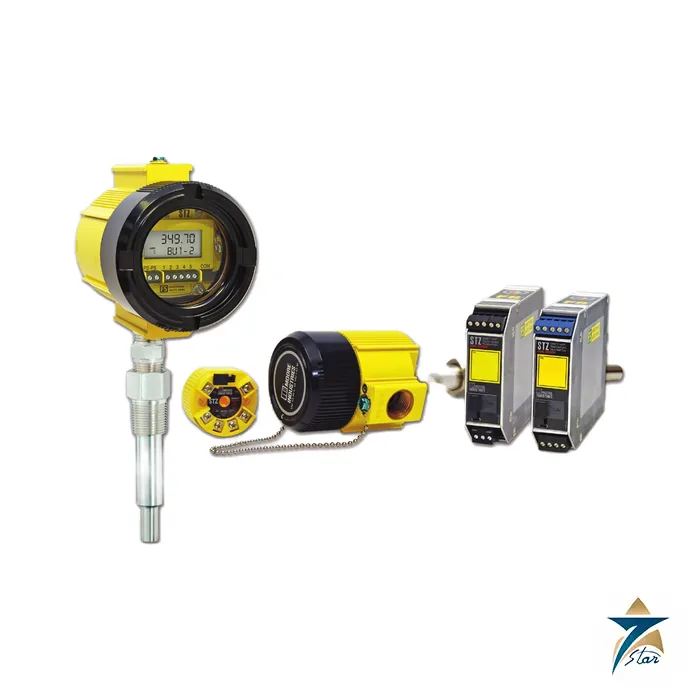
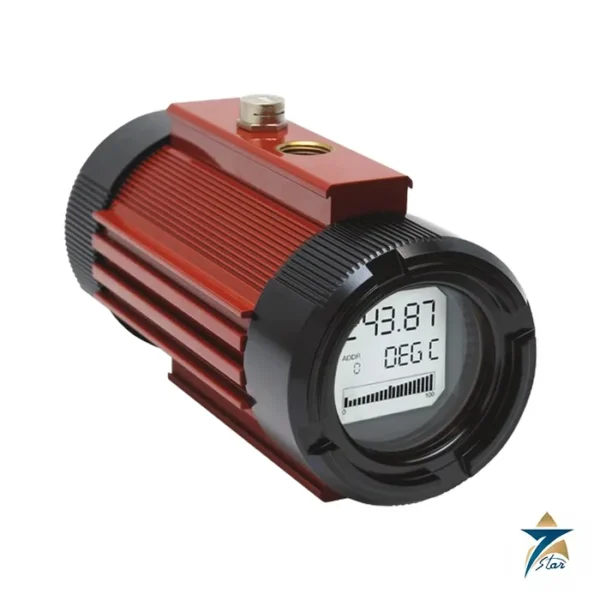
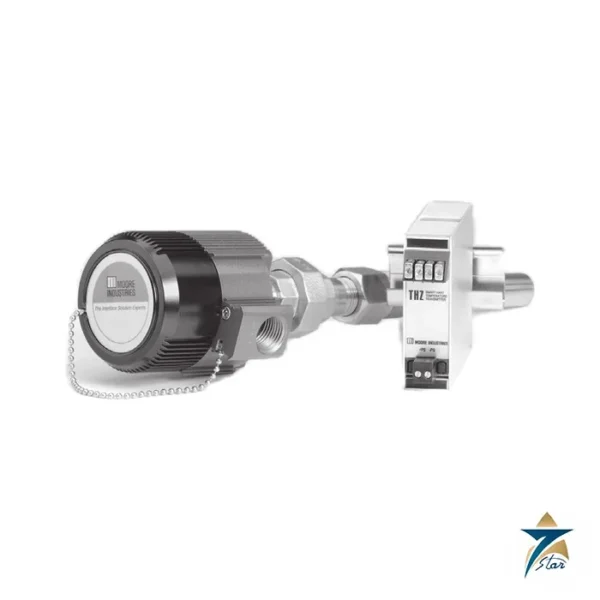
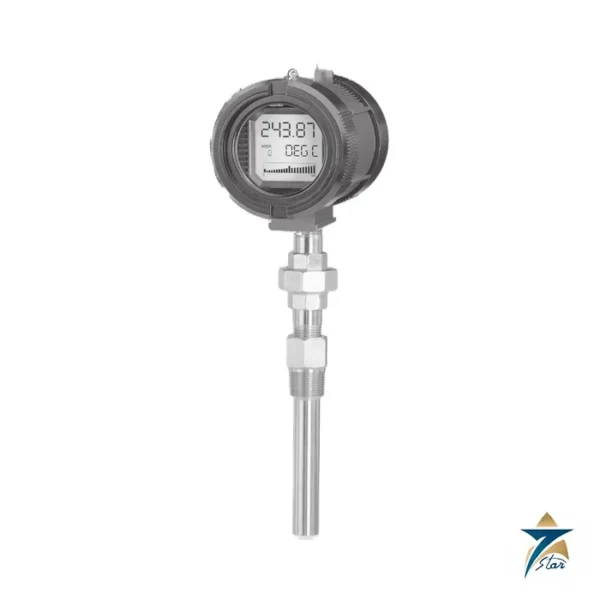
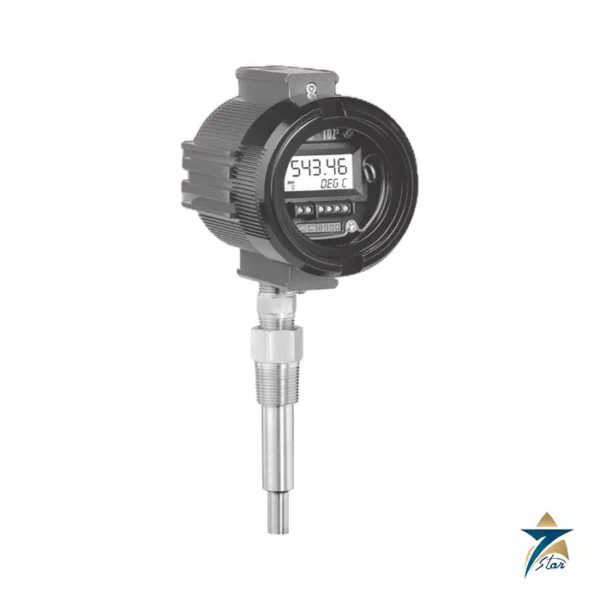
Moore Industries STZ/PRG/4-20MA/12-30DC [LH2NS]: SIL-capable temperature transmitter for a field head

Moore Industries STZ/PRG/4-20MA/12-30DC [LH2NS] belongs to the FS Functional Safety Series. It is a dual-input Smart HART transmitter that exida certified to IEC 61508:2010, with systematic integrity up to SIL 3 and random integrity up to SIL 2. In practice that means a single STZ can be used in a Safety Instrumented System up to SIL 2, and two in a redundant arrangement, such as 1oo2 or 2oo3, reach SIL 3.

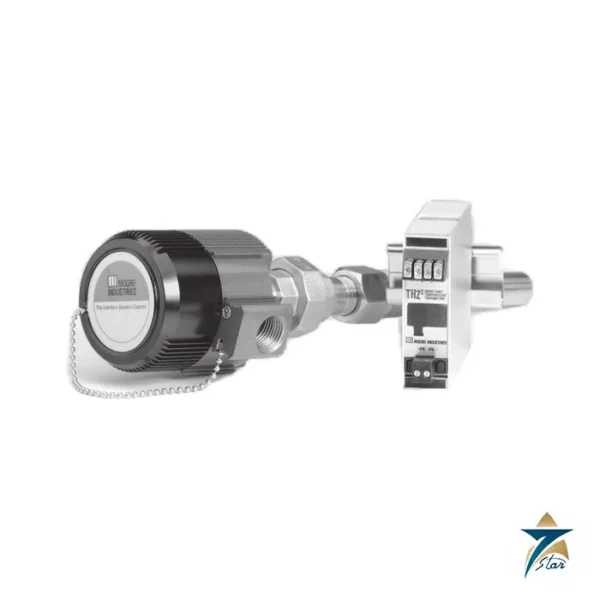
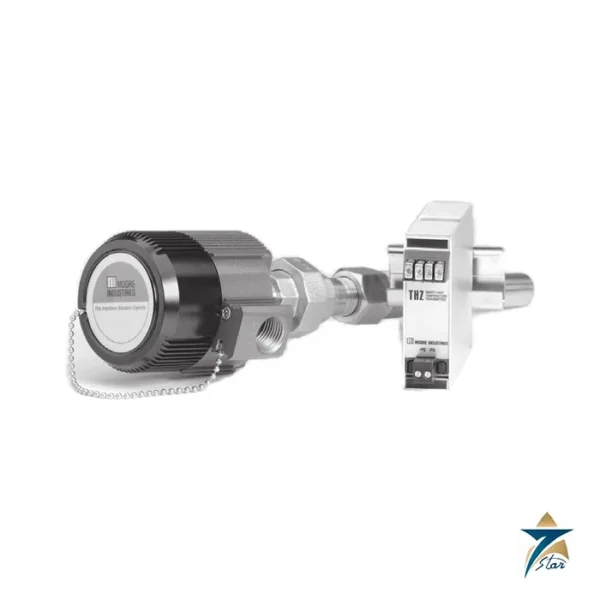
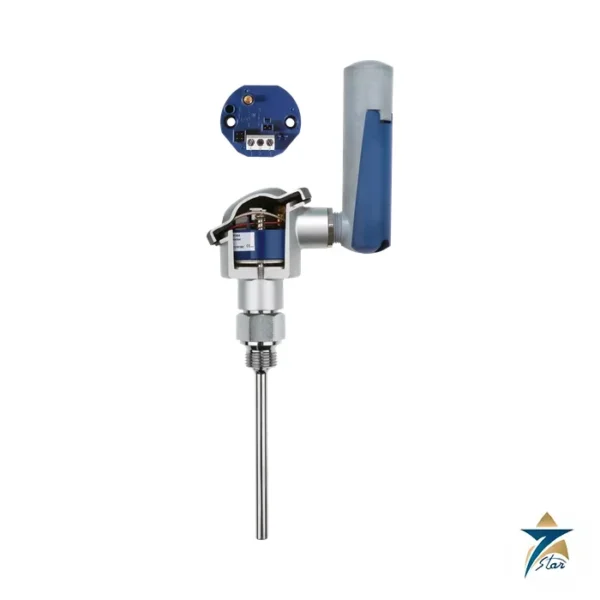
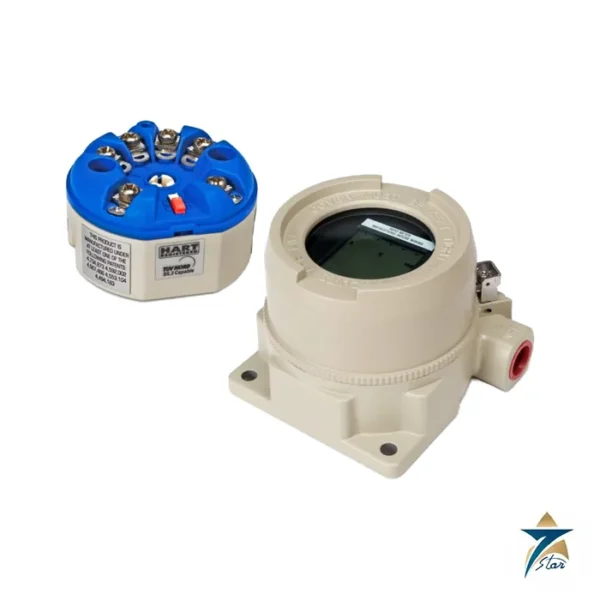
This particular code fits the STZ hockey-puck module in an LH2 explosion-proof head, with the 12-30DC supply selection that is used for intrinsically safe loops. Compared with the plain THZ3, the visible difference is the safety documentation and the HART access control that locks the device against accidental changes.

Because the LH2 head is a pressure-retaining flameproof enclosure, the safety instrument can stay at the sensor, where measurement is fastest and where no long signal cable adds noise. The transmitter then sends the 4-20 mA signal to the safety logic solver, which is where the trip decision is taken.

Safety-oriented features of STZ/PRG/4-20MA/12-30DC [LH2NS]

  • Comprehensive FMEDA data from exida, available on request, for the safety practitioner who must show suitability for a specific Safety Instrumented Function.
  • HART access control: communication can be set to Read Only or Off while the transmitter performs its safety function.
  • Dual sensor input with backup and failover, average, differential and low or high select modes.
  • Device intelligence, including sensor drift and corrosion detection and smart range alarms.
  • HART 7 with dynamic variable mapping, plus a DTM for PACTware and other FDT hosts.

The analog output remains a conventional 4-20 mA loop, so the transmitter connects to a logic solver input in the usual way.

STZ/PRG/4-20MA/12-30DC [LH2NS] specification table

These figures are from the STZ datasheet.

Parameter Value for STZ/PRG/4-20MA/12-30DC [LH2NS]
Model code STZ/PRG/4-20MA/12-30DC [LH2NS]
Unit STZ Functional Safety dual input Smart HART temperature transmitter (FS Series)
Safety integrity exida certified to IEC 61508:2010: systematic capability to SIL 3, random integrity to SIL 2; single use up to SIL 2, redundant (1oo2, 2oo3) up to SIL 3
Input PRG: single or dual input; 14 RTD types, 9 thermocouple types (J, K, E, T, R, S, B, N, C), 0 to 4000 ohm, -50 to 1000 mV, potentiometer
Output 4-20 mA scalable; HART 7 with exception-based reporting; addresses 0 to 63
Supply 12-30 V DC intrinsically safe selection
Housing LH2NS: explosion-proof connection head, two entries (1/2-inch NPT cable and process), metal cover
HART access control Read Only or Off modes to prevent reconfiguration during the safety function
Output accuracy 3 microamps (0.019% of the 4-20 mA span)
Isolation 500 Vrms input to output; 1350 Vac one-minute test
Step response 460 ms single input, 650 ms dual input, typical
Weight 644 g (22.9 oz) for HPP in LH2
Damping 0 to 60 seconds
Fail response Namur 43; upscale 23.6 mA, downscale 3.6 mA, preset or hold-last
Safety data exida certified FMEDA data available on request
Ambient -40 to +85 C

How STZ/PRG/4-20MA/12-30DC [LH2NS] differs from THZ3 and other STZ variants

A THZ3/PRG/4-20MA/12-30DC [LH2NS] shares the electrical specifications but has no functional safety certificate. The STZ adds the exida certification, FMEDA data and HART access control. Among STZ codes the LH2NS head suits sensor-top mounting, the DIN module with -AIS suits cabinets, and the BH enclosure carries a display.

The weight of the HPP module in LH2 is 644 g, the same as for the THZ3. Choosing the STZ rather than THZ3 is a decision about documentation and lifecycle management of a safety function, not about measurement range.

Where STZ/PRG/4-20MA/12-30DC [LH2NS] is used

Safety loops for high-temperature trips on furnaces, reactor over-temperature protection, compressor bearing temperature trips and cooling system failure detection are the classic uses. A dual-input STZ provides a built-in comparison between two sensors which strengthens the diagnostic coverage.

In Omani oil, gas and power facilities, SIL-rated instruments appear in emergency shutdown systems; the STZ is a field head option for temperature points in those systems.

Selection guidance for STZ/PRG/4-20MA/12-30DC [LH2NS]

Start from the SIL target in your safety requirements specification and from the proof-test interval; request the FMEDA report to verify the failure rates. For intrinsically safe loops pick 12-30DC as here; the 12-42DC choice is for general use.

If your project needs ATEX or ANZEx marks on the head, specify the E or A suffix on LH2NS; this code has none, so say so explicitly.

Do not forget the paperwork: a SIL loop depends on the whole chain from the sensor to the final element. Collect the sensor data, the thermowell details, the cable parameters, the FMEDA report and the proof-test procedure into one file, and list the transmitter code STZ/PRG/4-20MA/12-30DC [LH2NS] exactly as it is installed.

Commissioning STZ/PRG/4-20MA/12-30DC [LH2NS]

Install the head at the sensor, wire the sensors and the loop, and power up. Configure the input, ranges, dual-input rule and failure values using a HART tool, then verify the loop with the logic solver. Finally, switch HART access control to Read Only or Off and record the configuration as the as-built safety setting.

Keep the validated configuration under change control, since any alteration affects the safety function.

Proof testing and maintenance

Follow the proof-test procedure in your safety manual, using the FMEDA data to set the interval. A typical test injects a known sensor simulation, checks the loop current, and confirms the diagnostic reaction. Inspect the head cover, seals and terminals at the same time.

After the test, restore HART access control to its protective setting.

Supply of STZ/PRG/4-20MA/12-30DC [LH2NS]

Please quote STZ/PRG/4-20MA/12-30DC [LH2NS] fully in an enquiry and mention whether the FMEDA report is needed.

Seven Star LLC is an independent supplier serving Oman and the wider GCC and is not affiliated with the manufacturer; all names and part numbers are used only to identify the product being requested.

Documents and quotation

We can include the datasheet for Moore Industries STZ/PRG/4-20MA/12-30DC [LH2NS] in our quotation. Send an RFQ with part number, quantity and delivery location.

Datasheets & Documents
  • PDF Datasheet Moore Industries STZ/PRG/4-20MA/12-30DC [LH2NS] SIL Transmitter Datasheet Download
Reviews (0)

Reviews

There are no reviews yet.

How would you rate this product?

It takes about 10 seconds — just tap a star. Your email is never published.

About brand

Moore Industries is an American manufacturer of signal interface instruments, founded in 1968 by engineer Leonard W. Moore in North Hills, California. Its first product was the SCT signal converter, built in a friend's workshop. The company has been at its North Hills headquarters since 1974 and still designs and builds its products there, known for rugged aluminium housings.

Seven Star LLC, an independent supplier in Oman, lists Moore Industries temperature transmitters, limit alarm trips, isolators and a PID backup controller, and sources units and replacements by full model number.

Moore Industries company profile

Founded 1968, North Hills, California, USA, by Leonard W. Moore
Headquarters North Hills, California, since 1974
Ownership Privately owned (Moore Industries-International, Inc.)
First product SCT signal converter
Product families Signal isolators and converters (ECT, SCT), temperature transmitters (TRY, THZ), alarm trip units (SPA), miniMOORE multichannel signal conditioners, HART interfaces, SIL-rated safety logic solvers (STA)

Milestones

  • 1968: Leonard W. Moore founds the company and builds the first SCT signal converter.
  • 1974: The company moves into its North Hills headquarters.
  • 2009: miniMOORE wins a Control Engineering Engineers' Choice Award.

Moore Industries product families on this page

The manufacturer's catalog is arranged by function, and many of the items listed here map onto it directly:

  • Temperature transmitters: the TRX, and the STZ functional safety dual input smart HART transmitter
  • Alarm trips: the SPA2 programmable limit alarm trip, including an SPA2 with HLPRG input and four relay outputs
  • Signal isolators, repeaters and converters: the SIX
  • PID controllers and backup stations: the 535 in 1/4 DIN format

Other catalog groups include temperature assemblies and sensors, I/P and P/I converters, remote I/O, HART gateways and interfaces, indicators, and fieldbus device couplers.

Where Moore Industries instruments are used

These are control room and marshalling cabinet devices, plus field-mounted transmitters. Typical jobs are isolating a 4-20 mA loop between two systems, converting a thermocouple or RTD signal for a DCS input, adding an independent high or low trip next to the control system, and keeping a control loop running on a backup station when the main controller is out of service. Process plants in oil and gas, chemicals and power across the GCC use them for exactly these tasks.

Moore Industries products we list

Family Examples
Controllers & Data Acquisition Moore 535-21120BD000 | Industrial PID Ba…, SPA2 Programmable Limit Alarm Trip, Moore-SPA2HL Associated IS Programmable…
Isolator & Barrier HIM Smart HART Loop Interface and Monitor, SIX Signal Isolator, SLA SIL 2/3 Safety Logic Solver and Alarm
Temperature Instrumentation STZ Functional Safety Dual Input Smart H…, TRX Temperature Transmitter
Industrial Communications HES HART to Ethernet Gateway
Valve Positioners IPT2 Current-to-Pressure I/P Transmitter

Ordering Moore Industries instruments: what we need

Moore Industries model numbers are built from fields separated by slashes: unit, input, output, power and options, followed by the housing code in brackets. Every field matters. Send the complete string from the label, the serial number, and for programmable units the input type and range you want set. State any hazardous area or functional safety requirement, because approved versions are ordered with their own option codes.

Facts checked against trade press obituaries of Leonard W. Moore (Control Engineering, Control Global), October 2026.

FAQ

Questions about the Moore Industries STZ/PRG/4-20MA/12-30DC [LH2NS] SIL

Answers from our engineering team on installation, compatibility and integration.

01What SIL rating does the STZ have?
It is exida certified to IEC 61508:2010 for systematic integrity up to SIL 3 and random integrity up to SIL 2.
02Can one STZ be used alone in a SIL 3 loop?
No. The datasheet approves a single STZ up to SIL 2 and a redundant architecture such as 1oo2 or 2oo3 up to SIL 3.
03What does HART access control do?
It lets the user set HART communication to Read Only or Off to prevent unauthorized or accidental reconfiguration during the safety function.
04Is FMEDA data available?
Yes, exida certified FMEDA data is available on request.
05What does 12-30DC indicate?
The intrinsically safe supply selection for the transmitter.