Brand:

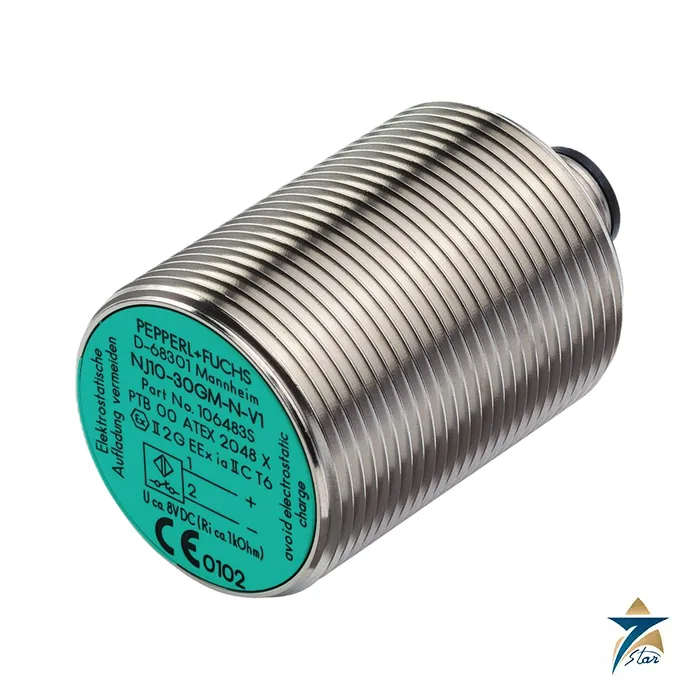
Pepperl+Fuchs NJ10-30GM-N-V1 M30 NAMUR Sensor with M12 Plug

Description

Why the plug matters on the NJ10-30GM-N-V1

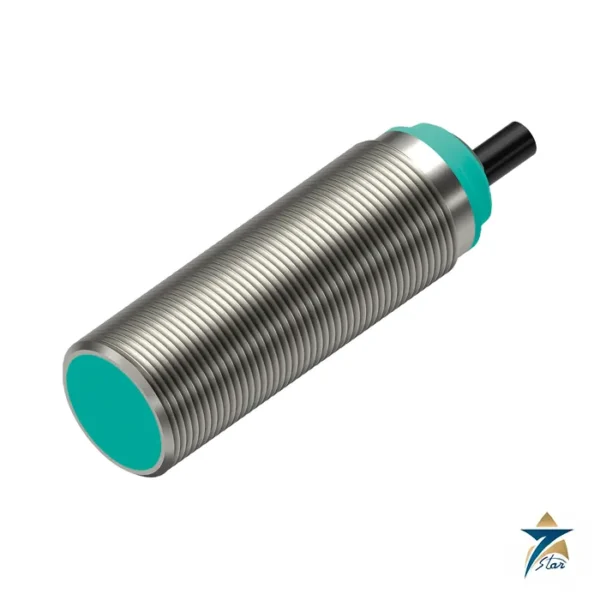
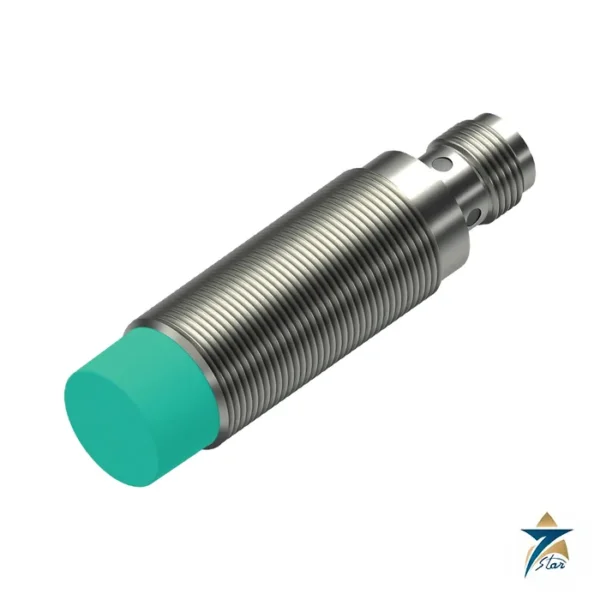
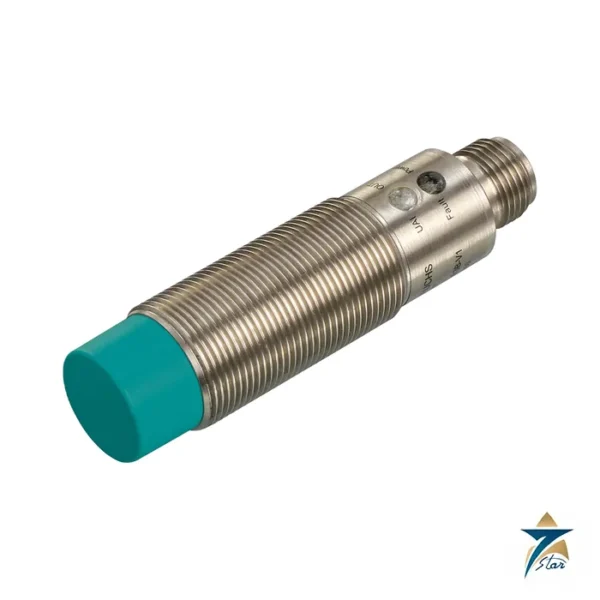
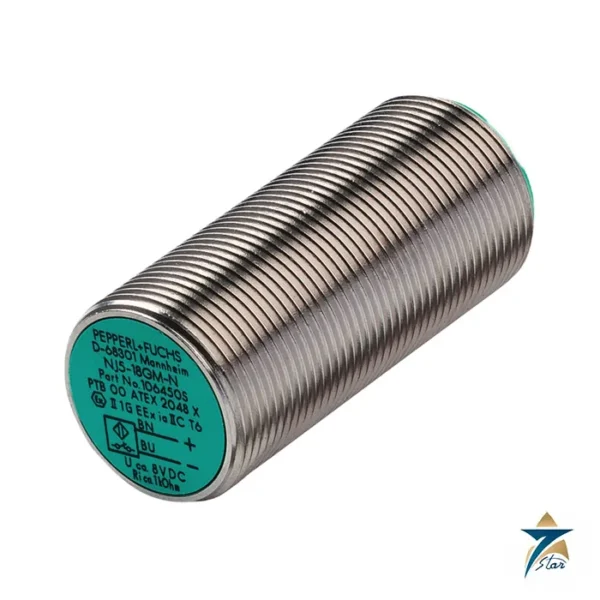
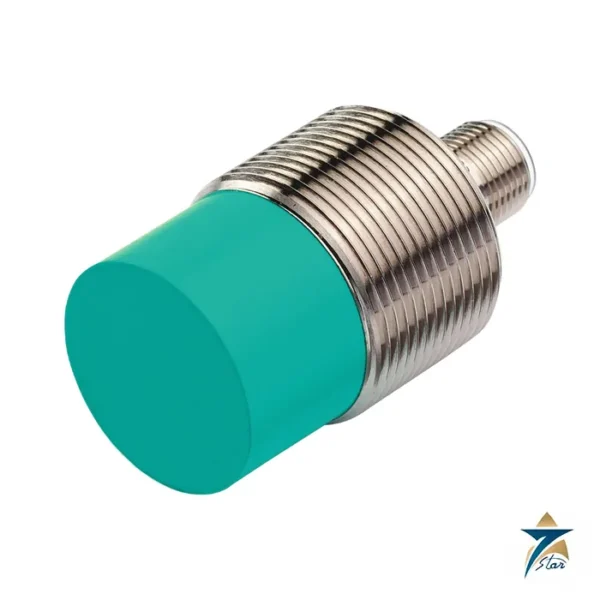
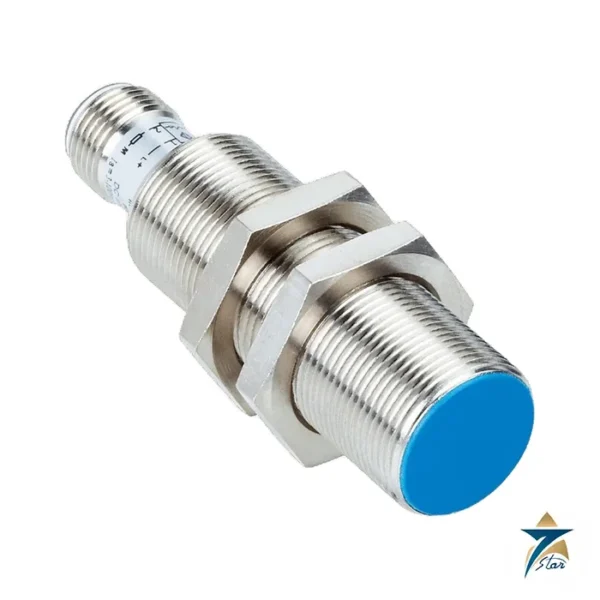
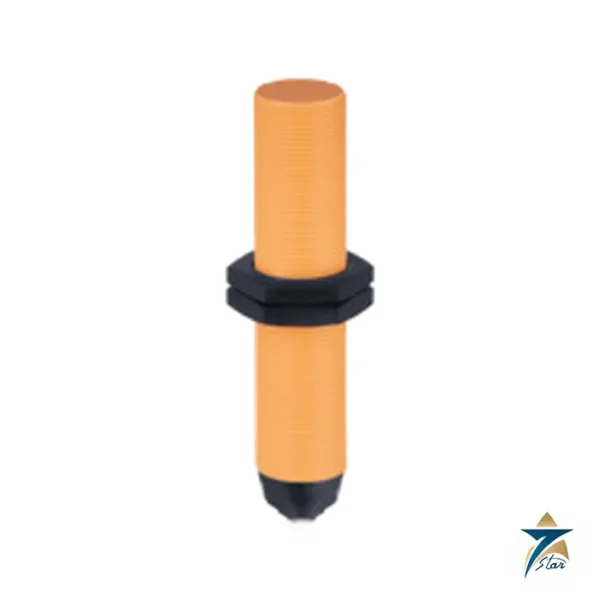
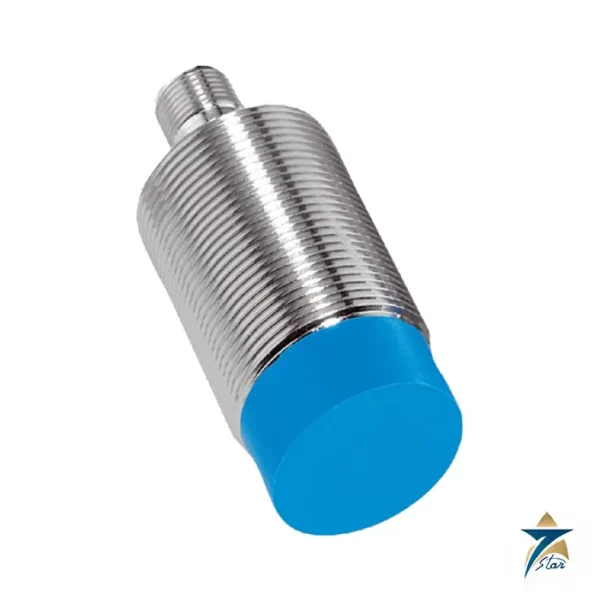
The Pepperl+Fuchs NJ10-30GM-N-V1 keeps the 10 mm flush range and M30 x 1.5 stainless barrel of its cable sibling, but ends in an M12 x 1 4-pin connector plug. Maintenance teams value this because a damaged sensor can be unscrewed and replaced without touching the field wiring.

Its datasheet lists the usual NAMUR values: assured operating distance 0 to 8.1 mm, nominal voltage 8.2 V with approximately 1 kOhm internal resistance, switching frequency up to 300 Hz, and current of 3 mA or more free versus 1 mA or less when the plate is detected. Hysteresis is 1 to 10 percent, typically 5 percent.

NJ10-30GM-N-V1 specification table

Parameter Value
Part number NJ10-30GM-N-V1
Switching function Normally closed (NC)
Output type NAMUR, 2-wire
Rated operating distance 10 mm flush
Assured operating distance 0 to 8.1 mm
Reduction factors rAl 0.4, rCu 0.3, r304 0.85
Nominal voltage 8.2 V, Ri approx. 1 kOhm
Switching frequency 0 to 300 Hz
Hysteresis 1 to 10 percent, typically 5 percent
Current free / detected 3 mA or more / 1 mA or less
Ambient temperature -25 to 100 degrees C
Connection Connector plug M12 x 1, 4 pins
Pin 1 / pin 2 L+ / L-
Wire colours BN (brown) pin 1, BU (blue) pin 2
Housing / face Stainless steel 1.4305 / AISI 303, PBT
Protection IP65 / IP66
Thread M30 x 1.5
Standards EN 60947-5-6 NAMUR, IEC 60947-5-2

Certifications cited for NJ10-30GM-N-V1

The datasheet lists IECEx PTB 11.0037X (Ga, Gb, Da, Mb) and ATEX PTB 00 ATEX 2048 X (Ga, Gb, Da). Additional entries are EAC TR CU 012/2011, FM control drawing 116-0165, UL files E87056 and E501628 with control drawing 116-0452, cCSAus general purpose, CCC, NEPSI GYJ16.1393X and marine approval DNVGL TAA00001A5.

For a project in Oman, your design contractor should decide which certificate matters; the sensor itself must always be installed as the instruction manuals describe.

Typical places to fit the NJ10-30GM-N-V1

Large valve actuators on pipeline stations, crusher guards, overhead crane limits and cooling-tower gate stems all suit a 10 mm NAMUR sensor with a replaceable plug. In oil and gas terminals the plug allows loop checks to be repeated quickly during inspection; in utilities it helps when a sensor is hit by moving maintenance equipment.

How NJ10-30GM-N-V1 differs from other variants

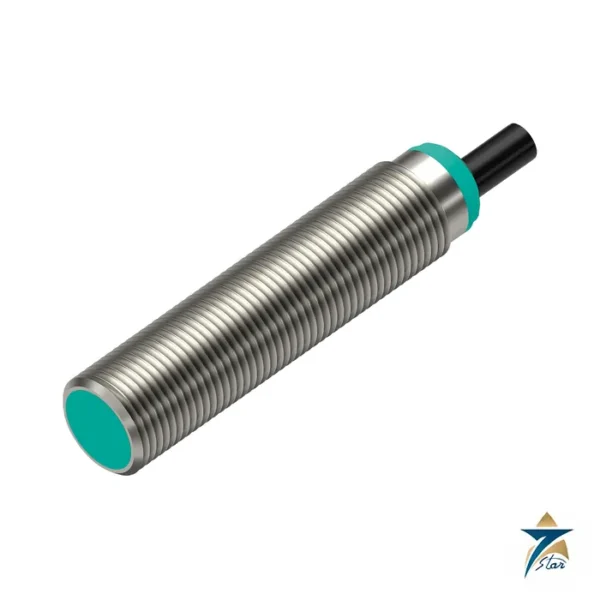
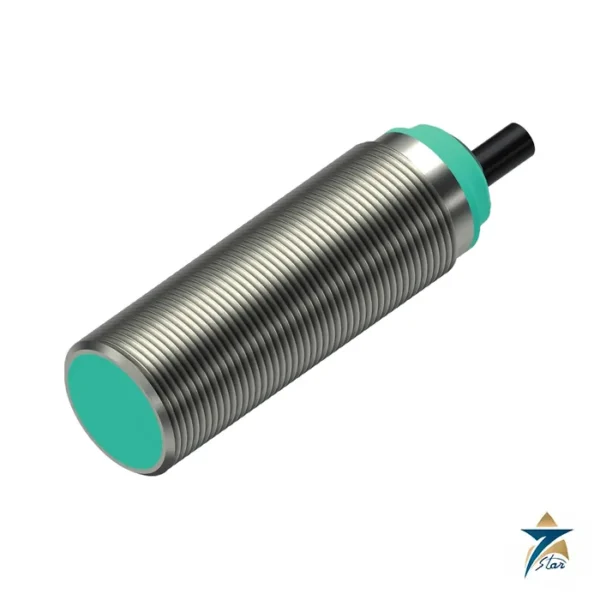
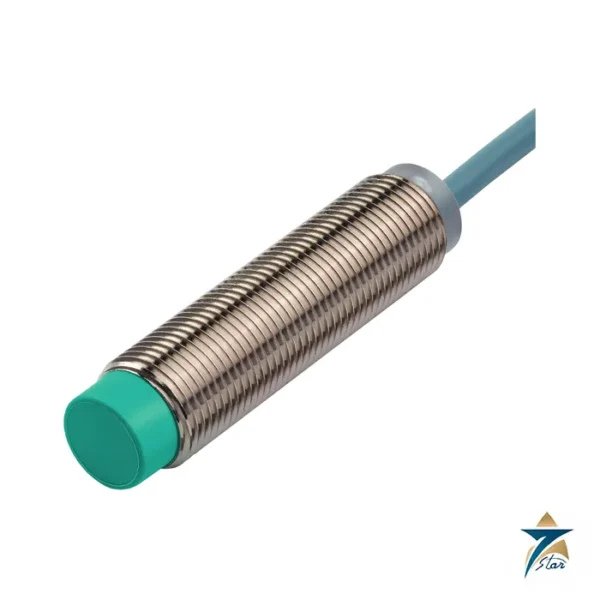
  • Against NJ10-30GM-N: M12 plug instead of a 2 m cable, IP65 / IP66 instead of IP66 / IP67, and 1 to 10 percent hysteresis instead of a fixed 3 percent.
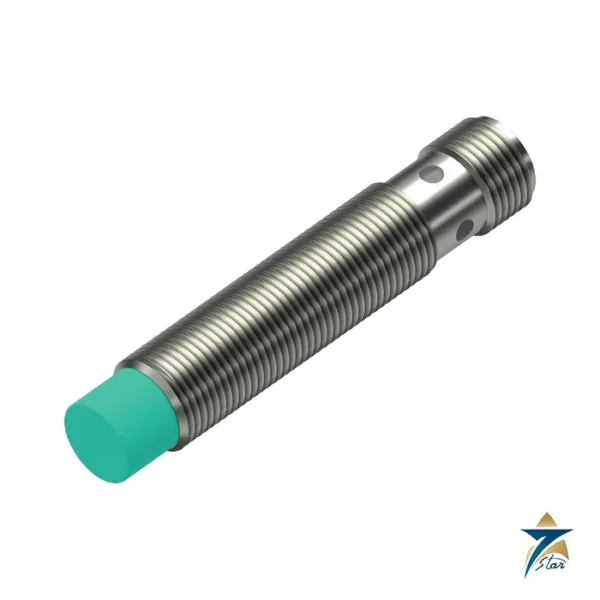
  • Against NCB5-18GM40-N0-V1: 10 mm instead of 5 mm range, 300 Hz instead of 400 Hz, and M30 instead of M18 thread.

Choosing cordsets and amplifiers

The datasheet lists the V1-G-N-2M-PUR female M12 straight A-coded 2-pin cordset with PUR cable, blue, NAMUR, as an accessory. Use a barrier channel rated for 8.2 V NAMUR sensors and keep the total cable capacitance and inductance within the associated apparatus limits.

Commissioning checklist for NJ10-30GM-N-V1

Thread the barrel into its bracket, tighten both nuts, and set a gap near 4 mm. Hand tighten the M12 coupling, then verify that moving the target changes the amplifier output. Record the gap and cordset length for future replacement.

Handling and replacement

Inspect the O-ring of the M12 plug for dryness and the nut thread for corrosion. IP65 / IP66 is slightly lower than the cable version, so avoid continuous immersion. Replace the sensor if the plug pins are bent.

A practical replacement scenario for the NJ10-30GM-N-V1

A conveyor head station in a cement plant uses an M30 sensor to count steel buckets. The sensor face is hit by loose material twice a year. With the cable version, the electrician would have to open a junction box, lift the conductors and re-terminate them. With the NJ10-30GM-N-V1, he unscrews the M12 plug, swaps the barrel and screws the plug back, usually within a couple of minutes. The same advantage applies on offshore skids in the Gulf, where opening an enclosure in wind and salt spray is slow.

Because the pin assignment is fixed at L+ on pin 1 and L- on pin 2, a replacement cannot reverse the loop unless the cordset itself was wired wrongly. Brown is L+ and blue is L- according to the datasheet colour table, which makes a quick continuity check straightforward.

Reading the 5 to 25 V operating range

The datasheet gives a nominal voltage of 8.2 V, produced by the barrier or amplifier. The sensor is specified for an operating voltage of 5 to 25 V in the NJ10-30GM-N datasheet, but the output current thresholds are defined at the nominal value. For that reason, never supply the sensor from a bare 24 V source; always use a NAMUR-rated amplifier or barrier, because the output current thresholds only apply at the NAMUR nominal voltage.

Protection rating comparison

The plug version carries IP65 / IP66 whereas the cable sibling is rated IP66 / IP67. The difference reflects the connector joint. In a washdown zone, make sure the coupling is fully seated and consider a protective boot. Where temporary immersion is possible, prefer the cable version. Ambient temperature remains -25 to 100 degrees C for both, and both use the same stainless steel 1.4305 barrel with a PBT sensing face, so the corrosion behaviour of the metal body is identical. Only the electrical termination changes, which is the point of choosing this variant.

Ordering notes

Please quote the complete NJ10-30GM-N-V1 designation. Seven Star LLC is an independent supplier serving Oman and the GCC and is not affiliated with the manufacturer.

Documents and quotation

The datasheet for the NJ10-30GM-N-V1 can be sent with the quotation. Send an RFQ with part number NJ10-30GM-N-V1, quantity and delivery point.

Datasheets & Documents
  • PDF Datasheet Pepperl+Fuchs NJ10-30GM-N-V1 M30 NAMUR Sensor with M12 Plug Datasheet Download
Reviews (0)

Reviews

There are no reviews yet.

How would you rate this product?

It takes about 10 seconds — just tap a star. Your email is never published.

About brand

Pepperl+Fuchs is a German manufacturer of industrial sensors and explosion protection equipment, founded in 1945 in Mannheim by Walter Pepperl and Ludwig Fuchs as a radio repair shop. Defective transformers led them into manufacturing, and the company developed its first proximity switch in the late 1950s. Pepperl+Fuchs is headquartered in Mannheim and is a pioneer of intrinsically safe electrical equipment for hazardous areas.

Seven Star LLC lists Pepperl+Fuchs sensors, isolated barriers, power supplies and hazardous-area mobile devices, and supplies them to instrument and automation teams in Oman by exact model designation.

Pepperl+Fuchs company profile

Founded 1945, Mannheim-Sandhofen, Germany, by Walter Pepperl and Ludwig Fuchs
Headquarters Mannheim, Germany
Ownership Privately owned (Pepperl+Fuchs SE)
Origins Radio repair workshop that began making replacement transformers
Product families Inductive, capacitive, ultrasonic and photoelectric sensors, rotary encoders, R2000 LiDAR scanners, KFD and HiC isolated barriers, Zener barriers, remote I/O, purge and pressurization systems, Ex-rated enclosures

Milestones

  • 1945: Walter Pepperl and Ludwig Fuchs open their radio repair shop in Mannheim.
  • 1958: The first proximity switch is developed (some company sources say 1959).

Pepperl+Fuchs product families on this page

On the interface side there are two systems. The K-System mounts on DIN rail and is represented here by the KFD2-UT2-Ex2 universal temperature converter. The H-System plugs into termination boards and is represented by the HiD2030 SMART transmitter power supply with HART. The PS1000-A6-24.20 is a 24 VDC, 20 A power supply for cabinets. Sensors listed include the NJ2-12GK-SN NAMUR inductive sensor, the R101 retro-reflective photoelectric sensor and the R2000 2-D LiDAR scanner. For field staff there are the Tab-Ex 05 DZ1 tablet for Zone 1/21 areas and the Smart-Ex 03 DZ2 smartphone for Zone 2/22 and Division 2 areas.

Where Pepperl+Fuchs equipment is used

Isolated barriers sit between field instruments in Zone 0 or Zone 1 and the DCS or safety system in refineries, gas plants and chemical works. NAMUR sensors report valve position and machine states in classified areas. Photoelectric sensors and LiDAR scanners work in conveying, packaging, warehousing and vehicle guidance. Ex-rated tablets and phones are carried on operator rounds and maintenance jobs.

Pepperl+Fuchs products we list

Family Examples
Isolator & Barrier HiD2030 SMART Transmitter Power Supply w…, KFD2-SR2-Ex2.W K-System Isolated Switch…, KFD2-UT2-Ex2 Universal Temperature Conve…
Industrial Computers Tab-Ex 05 DZ1 WWAN Hazardous Area Tablet, Smart-Ex® 03 DZ2 smartphone for Zone 2/2…
Inductive Proximity Sensors NJ2-12GK-SN NAMUR Inductive Sensor
Power Modules PS1000-A6-24.20 Power Supply 24 VDC 20 A
Photoelectric Sensors R101 Retro-Reflective Photoelectric Sensor
Laser Distance, LiDAR & Radar Sensors R2000 2-D LiDAR Laser Scanner

Ordering Pepperl+Fuchs parts: what we need

Send the complete model designation as printed on the device, including every suffix; a single letter can change the supply voltage or the output type. Add the part number if the label shows one. For barriers, tell us the field device and signal type, the number of channels and whether the safety loop needs a SIL-assessed module. For mobile devices, state the zone or division and the regional radio version.

Facts checked against Pepperl+Fuchs's own chronicle pages, October 2026.

FAQ

Questions about the Pepperl+Fuchs NJ10-30GM-N-V1 M30 NAMUR Sensor with

Answers from our engineering team on installation, compatibility and integration.

01What connection does the NJ10-30GM-N-V1 use?
An M12 x 1 connector plug with 4 pins; pin 1 is L+ and pin 2 is L-.
02What is its sensing distance?
10 mm rated, 0 to 8.1 mm assured, flush installation.
03What hysteresis does it have?
1 to 10 percent, typically 5 percent, according to the datasheet.
04Which cordset is listed as an accessory?
V1-G-N-2M-PUR, a female M12 straight 2-pin NAMUR cordset with blue PUR cable.
05How do I request a price?
Send an RFQ to Seven Star LLC with NJ10-30GM-N-V1 and the quantity.