IMI STI CMV enclosed pneumatic actuator: what it is
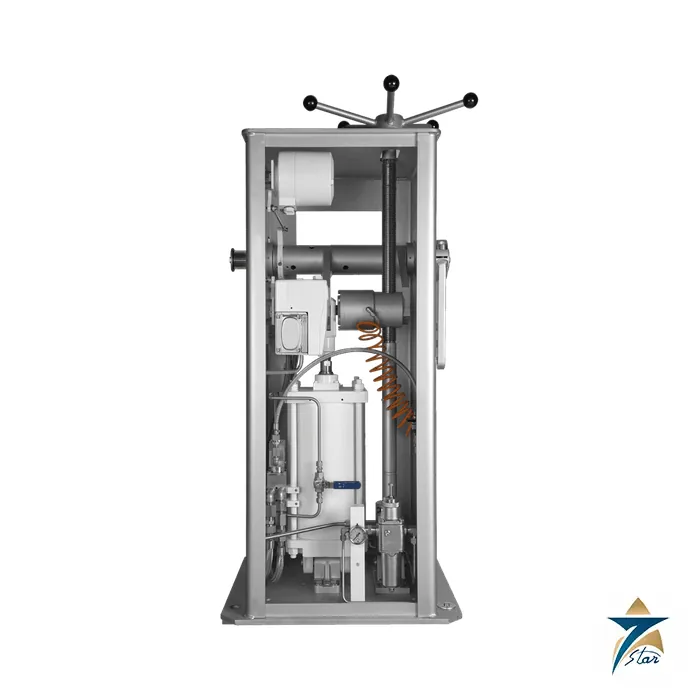
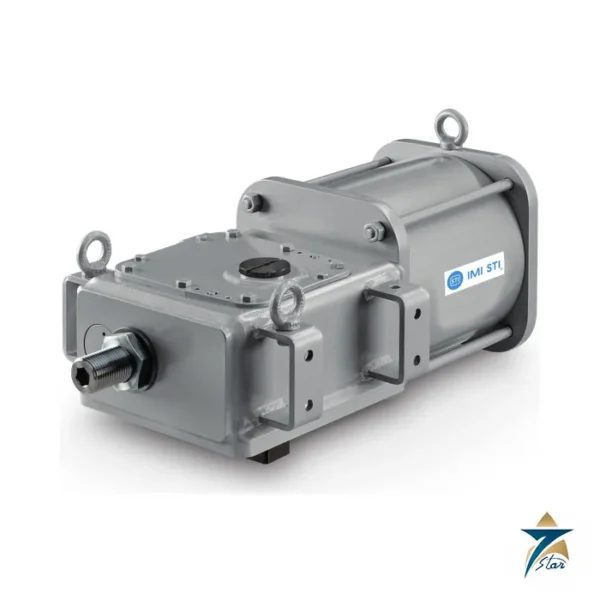
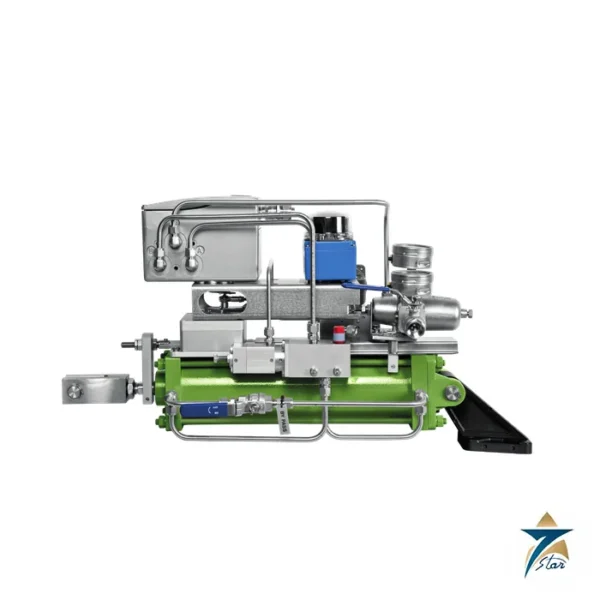
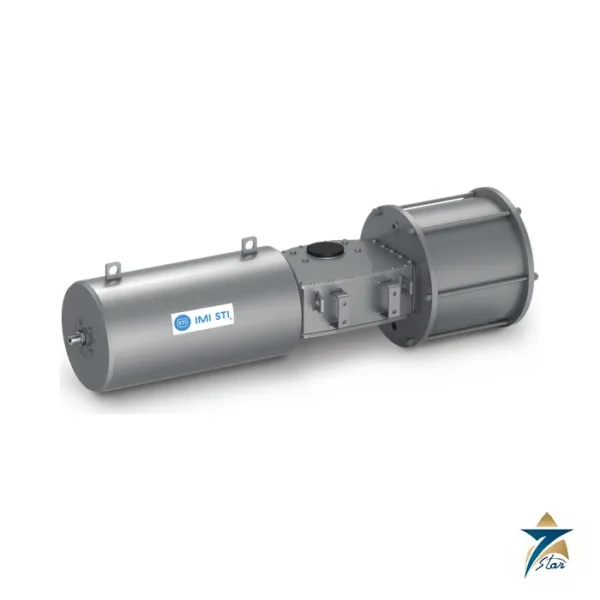
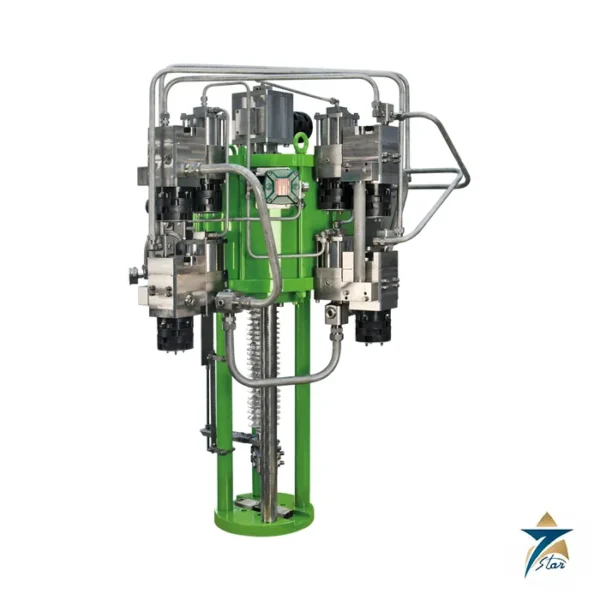
The IMI STI CMV is a large, enclosed pneumatic control-drive actuator with an integrated manual override. A linear pneumatic cylinder, a lever mechanism and the override are all built inside a carbon steel housing that doubles as the bearing frame, so the whole unit is a self-supporting drive rather than a cylinder bolted to a bracket. It is intended for final elements that need high torque and a rotary movement, such as dampers or hydraulic converters.
CMV is the series name; the size within it is the CMV-1, CMV-2, CMV-3 or CMV-4 type plus a cylinder diameter and stroke combination, as shown in the torque table below. Seven Star LLC, an independent supplier in Muscat, supplies the CMV in Oman and the GCC against your torque and travel data.
CMV technical specifications
| Parameter |
Specification |
| Manufacturer / part number |
IMI STI / CMV |
| Type |
Enclosed pneumatic control-drive actuator with manual override |
| Housing and bearing frame |
Carbon steel |
| Lever |
Carbon steel external lever; 70° operating angle; orientation variable on splined shaft |
| Lever shaft |
Alloy steel 38 NiCrMo4, heat treated |
| Shaft support |
Bearing bronze on CMV-2 to CMV-4; spherical joints on CMV-1 |
| Operating pressure |
Pneumatic version from 7 barg up to 10 barg; special version on request |
| Air supply |
Dry instrument air to ISO 8573-1 |
| Temperature |
-20 to 70 °C standard; lower or higher on request |
| Tubing and fittings |
Brass fittings and copper tubing; stainless steel 316 optional |
| Standard paint |
RAL 7030 grey |
| Manual override |
Pneumatic by-pass function using an external lever, with manual control screw and lock |
CMV torque by size
The brochure gives torque in daNm at a 0.50 MPa supply pressure and either a 70° or 90° operating angle of the final element. Each size has a minimum and maximum value for each angle. The 200/200 size is limited to a 0.44 MPa maximum supply.
| Size group |
Cylinder / stroke (mm) |
Min 70° (daNm) |
Min 90° (daNm) |
Max 70° (daNm) |
Max 90° (daNm) |
| Group 1 |
125/250 |
101 |
72 |
124 |
101 |
| Group 1 |
160/200 |
134 |
94 |
164 |
133 |
| Group 1 |
200/200 |
188 |
132 |
230 |
187 |
| Group 2 |
160/300 |
201 |
141 |
246 |
200 |
| Group 2 |
200/300 |
317 |
224 |
389 |
316 |
| Group 2 |
260/300 |
540 |
380 |
662 |
538 |
| Group 3 |
260/400 |
720 |
507 |
882 |
717 |
| Group 3 |
330/400 |
1179 |
830 |
1444 |
1174 |
| Group 4 |
390/450 |
1909 |
1316 |
2337 |
1881 |
| Group 4 |
420/450 |
2193 |
1531 |
2678 |
2171 |
Larger cylinders up to 520 mm are also part of the series; the manufacturer page lists cylinder diameters from 125 to 520 mm and a maximum stroke of 450 mm. Confirm the exact size against the full datasheet.
How the CMV drive works
Inside the housing the CMV uses a linear actuator from the IMI STI SC range. Air pressure moves the piston, the piston rod pushes the lever, and the lever turns a splined output shaft through an operating angle of 70°. The final element, for instance a damper, is then coupled to that shaft. Because the shaft is splined, the lever can be re-indexed to the orientation the installation needs.
The cylinder has a built-in permanent lubrication system, patented by the manufacturer. A grease-filled annular cavity inside the piston sits between a sealing ring and a sliding ring, so metal does not rub on metal even when side loads act on the rod. The practical result is smooth movement with dry instrument air and no routine lubrication of the moving parts.
Manual override and safety options for CMV
The override is standard. It lets an operator take over the drive with an external lever and a manual control screw, and a lock holds the position. Engagement can be automatic or made through a dedicated switch. An optional Balancing Security Sensor device, available only on the CMV, lets the drive return from manual to modulating mode automatically, but only when the incoming control signal matches the position at which the actuator is mechanically locked. This prevents a sudden jump when control is handed back.
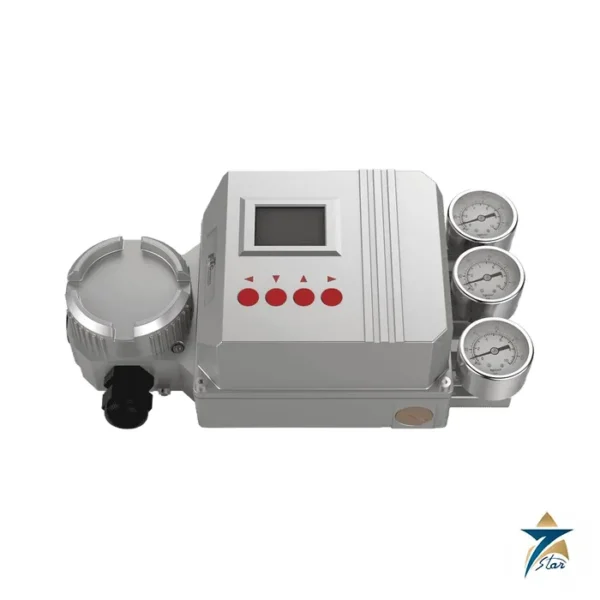
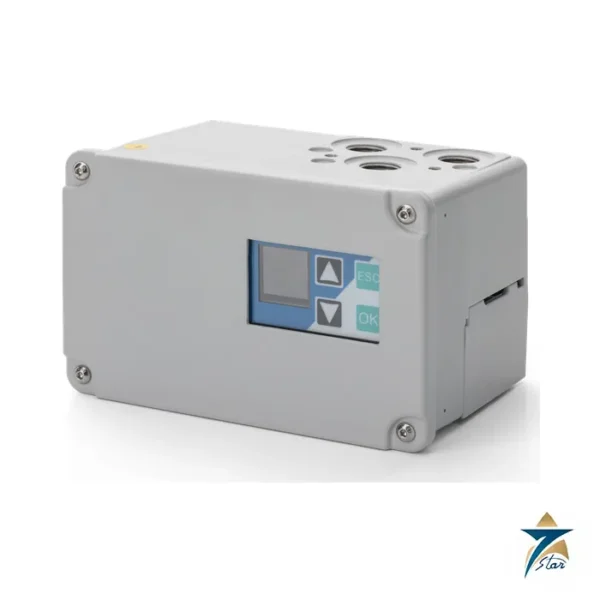
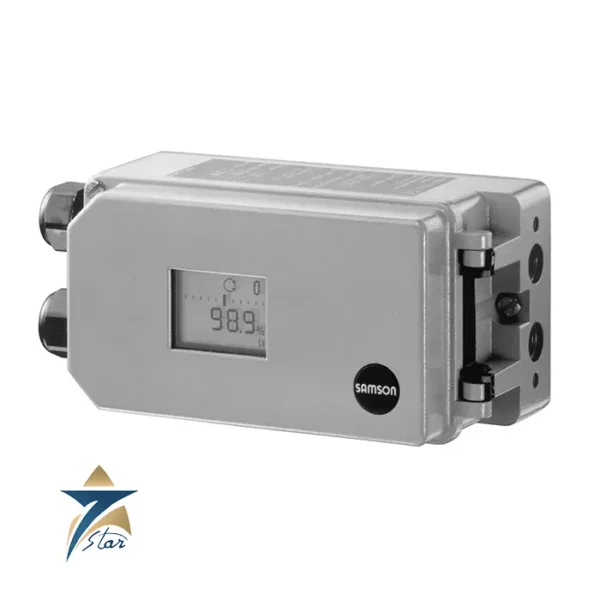
An air-lock device can be fitted on pneumatic actuators when they must be isolated from the positioner or electro-pneumatic converter if supply pressure falls below a set safety point. The manufacturer suggests its FT positioners for this drive and also shows its FasTrak and SHP smart positioners as options.
Selection and ordering checklist for CMV
- Required torque at your supply pressure and at your final-element angle (70° or 90°).
- Required stroke of the final element, to choose cylinder and stroke from the table.
- Available air pressure between 7 and 10 barg and air quality to ISO 8573-1.
- Positioner type and the mounting space on the internal panel.
- Need for the Balancing Security Sensor device or an air-lock device.
- Ambient temperature range if outside -20 to 70 °C.
- Tubing material: copper and brass as standard, or stainless steel 316.
- Certification needed for the site; the manufacturer page lists PED, ATEX and IP66, so ask us to confirm the marking for the exact unit.
Installation and maintenance of the CMV
The housing carries its own support, so the foundation must be able to take the reaction forces of the lever. Align the lever with the damper arm to avoid side loading, set the orientation on the splined shaft, and check the mechanical position indicator against the final element position before connecting the air. Accessories mount on a separate internal panel, and large removal panels give access without dismantling the drive.
Maintenance is mostly external: clean, dry instrument air, tight fittings, an intact paint finish and an operator test of the manual override at intervals suited to your plant. The manufacturer states that the built-in lubrication means no maintenance of the moving parts is required even after years of continuous service.
Typical applications in Oman and the GCC
The brochure names power stations, steel plants, petrochemical plants and desert areas as target environments. In Oman and the GCC that translates into boiler and heat-recovery steam generator dampers, flue-gas and air-handling dampers, cement and steel lines, and process plants where heat, dust and humidity wear down ordinary actuators. The enclosed housing keeps dust off the lever mechanism and the manual override remains usable if the instrument air is lost.
Information to send with your CMV enquiry
- Final element type, damper size and required torque.
- Operating angle (70° or 90°) and travel direction on air failure.
- Supply pressure and actuator stroke time requirement.
- Positioner, limit switch and solenoid accessories wanted.
- Ambient conditions and hazardous area classification.
- Quantity and delivery location.
Documents and quotation
A manufacturer brochure for the CMV is attached on this page, including the torque table and feature list. An instruction manual exists for this drive; ask us if you need it before installation.
Send the part number CMV with your torque and stroke data and Seven Star LLC will prepare a quotation for Oman and the GCC.






















Reviews
There are no reviews yet.