All-position low-hydrogen electrode for 490 MPa steel
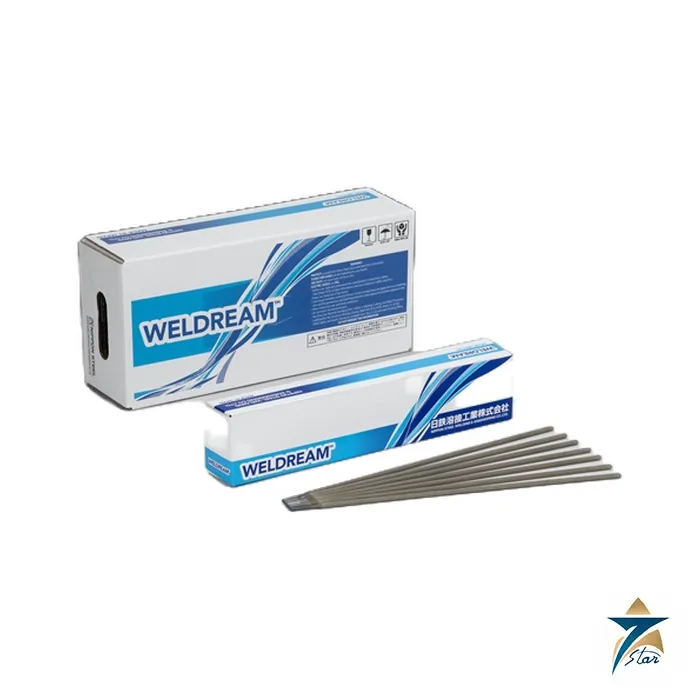
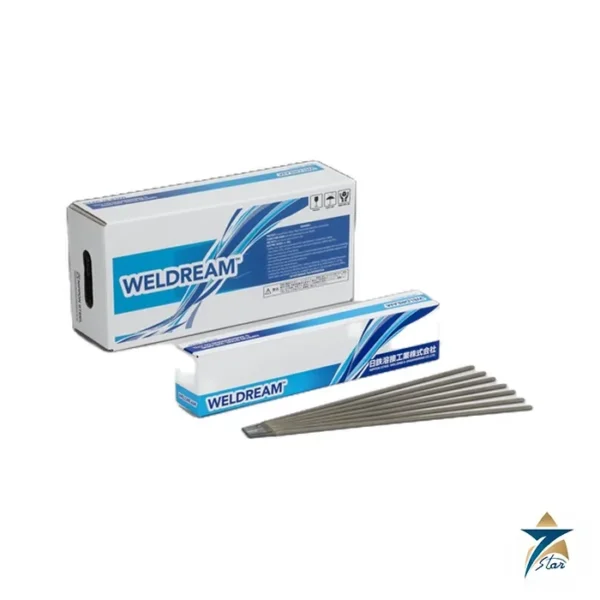
The Nippon Steel L-55 is a low-hydrogen covered electrode classified JIS Z 3211 E4916-U and AWS A5.1 E7016. It welds in all positions, and Nippon Steel Welding & Engineering highlights excellent crack resistance, mechanical properties and X-ray quality, with vertical and overhead welding described as very easy.
The electrode is intended for 490 MPa high tensile strength steel in ships, structures, bridges and pressure vessels.
Technical specifications
| Parameter |
Specification |
| Manufacturer / product |
Nippon Steel Welding & Engineering / L-55 |
| Process |
SMAW |
| AWS classification |
A5.1 E7016 |
| JIS classification |
Z 3211 E4916-U |
| Coating |
Low hydrogen |
| Current |
AC or DC (+) |
| Typical weld metal, % |
C 0.07, Si 0.62, Mn 1.18, P 0.011, S 0.008 |
| Typical mechanical properties |
YS 480 MPa, TS 550 MPa, El. 30%, Charpy 160 J at -30 °C |
| Diameter × length |
2.6 × 300, 3.2 × 400, 4.0 × 450, 5.0 × 450, 6.0 × 450, 8.0 × 450 mm |
| Current, flat / horizontal fillet / horizontal |
2.6 mm 60–110 A; 3.2 mm 70–140 A; 4.0 mm 120–190 A; 5.0 mm 190–240 A; 6.0 mm 250–300 A; 8.0 mm 340–390 A |
| Current, vertical-up / overhead |
2.6 mm 60–90 A; 3.2 mm 60–130 A; 4.0 mm 90–150 A; 5.0 mm 130–170 A |
| Identification colour |
End light green, secondary yellow |
| Redrying |
300–350 °C for 60 minutes before use |
E7016 versus E7018
An E7016 electrode has a low-hydrogen coating without the iron powder of an E7018. The result is a smaller, more controllable pool that many welders prefer for vertical-up and overhead passes and for root runs, at the cost of a lower deposition rate. L-55 also runs on AC, which helps where only transformer sets are available or arc blow is a problem on DC.
The 6.0 and 8.0 mm sizes are for flat and horizontal work only; positional currents are published up to 5.0 mm.
Usage guidelines
The handbook gives three rules. Redry electrodes at 300–350 °C for 60 minutes before use. Apply the backstep method at arc start to prevent blowholes and pits, and keep the arc as short as possible while welding. Remove all water, rust and oil from the groove to avoid cracks and porosity. Preheat and interpass temperature follow from the steel, thickness and restraint in your procedure.
Because diffusible hydrogen is the main cause of cold cracking in high tensile steel, the redrying step matters as much as the electrode itself. After redrying, keep electrodes in a holding oven or heated quiver and return any exposed for long periods to the oven. Choose 3.2 or 4.0 mm for most positional work, and the large 6.0 and 8.0 mm sizes for high-deposition flat and horizontal fillets on thick plate.
Documents and quotation
The official product page link is given below. Browse our Welding Electrodes category for related consumables.
For a quotation, send the diameter, quantity, packaging and any classification society or mill certificate requirement.
Nippon Steel L-55 classification and typical properties
| Item |
Manufacturer data |
| JIS |
Z 3211 E4916-U |
| AWS |
A5.1 E7016 |
| Coating |
Low-hydrogen |
| Positions |
All positions |
| Polarity |
AC or DC |
| Weld metal chemistry (%) |
C 0.07, Si 0.62, Mn 1.18 |
| Mechanical properties |
YS 480 MPa, TS 550 MPa, El 30%, CVN 160 J at −30 °C |
| Colour code |
End: light green; secondary: yellow |
Sizes and flat-position currents
| Diameter (mm) |
Current (A) |
| 2.6 |
60–110 |
| 3.2 |
70–140 |
| 4.0 |
120–190 |
| 5.0 |
190–240 |
| 6.0 |
250–300 |
| 8.0 |
340–390 |
How the L-55 low-hydrogen electrode works
The coating of L-55 is based on lime and fluorspar rather than cellulose or rutile, so it releases very little hydrogen into the arc. Low hydrogen in the weld metal reduces the risk of cold cracking in the heat-affected zone, which matters on thick sections, restrained joints and higher-strength steels. The basic slag also refines the weld metal and lowers impurity levels, giving the high impact toughness shown at −30 °C. Because an E7016 coating contains potassium, the electrode runs on AC as well as DC, which is useful on sites that only have AC transformers.
Selection and procedure guide for L-55
- Use L-55 for mild steel and 490 MPa class steel in ships, structures, bridges and pressure vessels, as listed by Nippon Steel.
- Choose 2.6 and 3.2 mm for root and positional passes; 4.0 to 8.0 mm for flat fill and capping passes on thick plate.
- Use the backstep method at arc start to avoid porosity at the start of the bead.
- Keep a short arc throughout to maintain the low-hydrogen protection.
- Apply preheat according to the steel grade, thickness and WPS.
Storage and redrying
- Redry the electrodes at 300–350 °C for 60 minutes before use, as stated by the manufacturer.
- After redrying, keep them in a heated holding oven or quiver on site.
- Do not use electrodes with damaged or wet coating.
- In humid coastal conditions, limit the time electrodes stay outside the quiver.
Typical L-55 applications in Oman and the GCC
Shipyards, structural steel fabricators, bridge contractors, pressure vessel makers and plant maintenance teams in Oman and the GCC rely on E7016 low-hydrogen electrodes for critical joints. L-55 suits structural connections, vessel nozzles, crane and lifting equipment repair and any job where impact toughness at low temperature and low hydrogen are specified.
E7016 or E7018: which to choose?
E7016 and E7018 are both low-hydrogen types. E7018 contains iron powder for higher deposition, while E7016 has no iron powder in the coating and is often preferred for smooth positional welding and root runs. Confirm the class required by your WPS before ordering.
Why source from Seven Star LLC
Seven Star LLC supplies welding electrodes to fabricators and contractors across Oman and the GCC. Tell us the diameter and quantity to request a quote; our team can help confirm the correct ordering code.
Practical welding tips for L-55
Strike the arc slightly ahead of the start point and move back over it, so the first molten metal is remelted and any porosity is removed. Keep the electrode angle steady and avoid long arcs, which let air into the arc and increase porosity and hydrogen. On vertical-up passes, use a small weave and pause at the sides to fill the edges. Remove the slag completely between passes and inspect each layer before continuing. Record redrying times and oven temperatures for traceability on code work.

Reviews
There are no reviews yet.