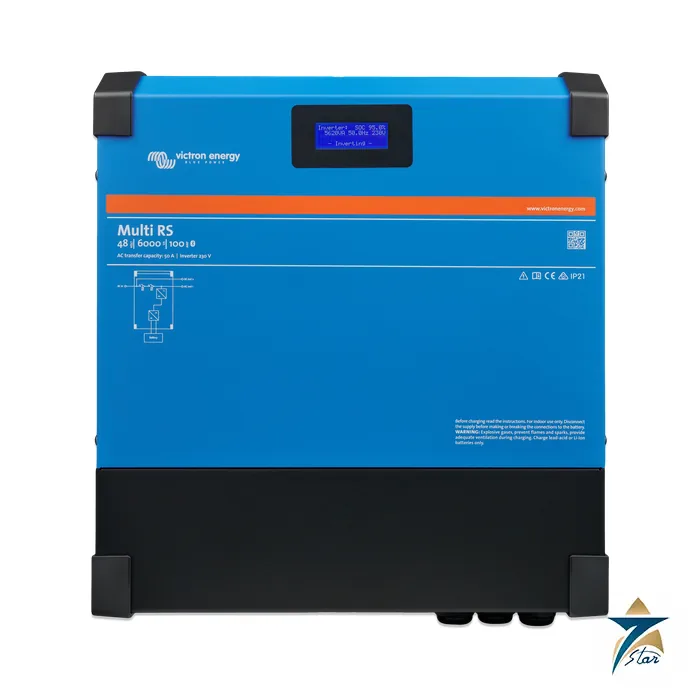
The Victron Multi RS 48/6000/100 is a 48 V inverter and charger with a 6 kVA rating, a 50 A transfer switch and a 100 A battery charger designation in its name. It is built for backup and off-grid systems that need to invert battery power, charge from grid or generator and switch between sources in one steel unit, and it is the non-solar Multi RS model: Victron lists solar versions with built-in MPPT separately.
Backup, off-grid and generator-assist in a single 48 V unit
The Multi RS works in three operating modes described in the datasheet: backup mode during a grid outage, off-grid mode without a grid connection and generator mode, where it controls the generator to minimise run-hours and supplies extra power from the battery when the load exceeds the generator capacity. PowerControl lets you set a maximum grid or generator current, and PowerAssist adds battery power when the source is too small for a peak.
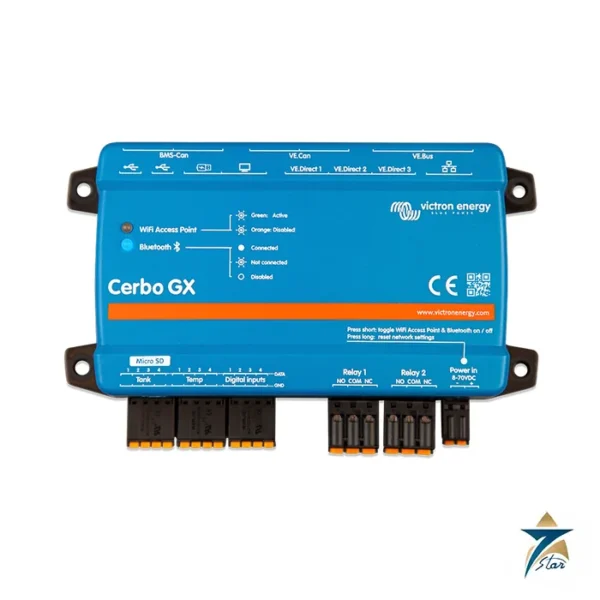
A display shows battery, inverter and solar values, and the same data can be read over Bluetooth with the VictronConnect app. Communication is by VE.Can to a GX device such as the Cerbo GX for monitoring, an energy meter and remote firmware updates, and by VE.Direct to a GlobalLink 520. Photovoltaic capacity can be added through optional solar chargers (DC-coupled) or PV inverters on the AC output (AC-coupled).
Technical specifications
| Parameter |
Specification |
| Model |
Multi RS 48/6000/100 |
| PowerControl and PowerAssist |
Yes |
| Transfer switch / max AC input and pass-through current |
50 A |
| DC input voltage range |
38 to 62 V (start-up 41 V; over-voltage disconnect 65.5 V) |
| AC output |
230 VAC plus or minus 2 percent, 50 Hz plus or minus 0.1 percent (adjustable to 240 V and 60 Hz); maximum continuous inverter current 25 A AC |
| Continuous output power |
4600 W at 46 VDC rising to 5200 W at 52 VDC at 25 degrees C; 4500 W at 40 degrees C; 3000 W at 65 degrees C |
| Peak power |
9 kW for 3 s; 7 kW for 4 min (cold unit) |
| Efficiency |
96.5 percent at 1 kW load; 94 percent at 5 kW load |
| Zero load power |
20 W |
| Charger |
Charge voltage range 36 to 60 V; default absorption 57.6 V, float 55.2 V; maximum charge current from AC 88 A at 57.6 VDC and 230 V input |
| AC input |
230 VAC, 187 to 265 V, 45 to 65 Hz |
| General |
Second output (AC-out-2), programmable relay, 2 programmable analog/digital ports, remote on-off, VE.Direct, VE.Can and Bluetooth; 3-phase with one unit per phase, parallel not supported |
| Operating temperature |
-40 to +65 degrees C, fan assisted; humidity up to 95 percent non-condensing; earthing systems TN and TT only |
| Enclosure |
Steel, blue RAL 5012, IP21, protective class I; 462 x 425 x 127 mm; 11.2 kg |
| Connections |
M8 battery bolts; 230 VAC screw terminals 10 mm2 (6 AWG) |
| Standards |
EN-IEC 60335-1, 60335-2-29, EN-IEC 62109-1, 62109-2, IEC 62040, IEC 62477; EMC EN 55014 and IEC 61000 series |
What to confirm before ordering
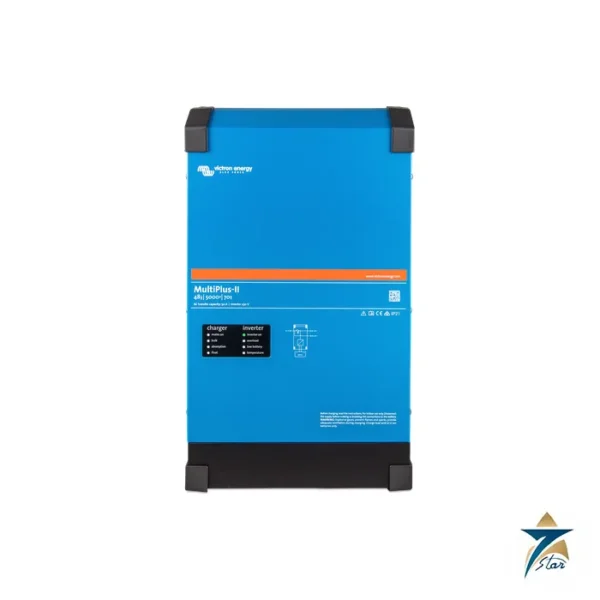
Check that the battery is a 48 V system with a charge profile within 36 to 60 V, that the AC source is TN or TT earthed and that the loads fit the 4600 to 5200 W continuous rating at the expected ambient temperature, which matters in hot plant rooms. Parallel operation is not supported; a three-phase system needs one unit per phase. Connection to a GX device must use VE.Can, and the datasheet says the Multi RS is not compatible with VE.Smart Networks. For the older, widely used 5 kVA product see the Victron MultiPlus-II 48/5000/70-50, and see solar power for the other Victron inverters and chargers.
Key features at a glance
- Three operating modes in one unit: backup, off-grid and generator support, selected in configuration rather than by buying different hardware.
- PowerControl: caps the current drawn from a weak grid connection or small generator so the source breaker does not trip.
- PowerAssist: tops up from the battery during peaks, allowing a smaller generator to serve loads with short high demands such as pump or compressor starts.
- 50 A transfer switch: passes source power through to the loads and changes over to inverter output when the source fails.
- Integrated monitoring: on-board display, Bluetooth with VictronConnect, and VE.Can to a GX device for remote access.
Designing the battery bank
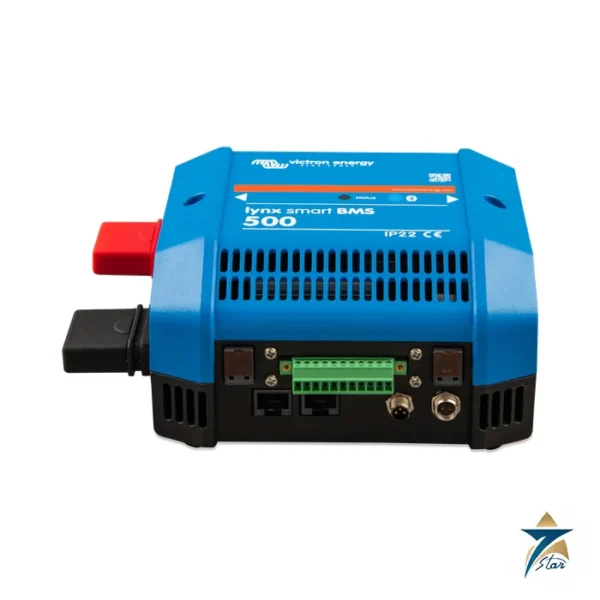
The Multi RS accepts a DC input of 38 to 62 V, which matches nominal 48 V lithium and lead-acid banks. Continuous output rises with battery voltage, from 4600 W at 46 VDC to 5200 W at 52 VDC, so a bank that holds its voltage well under load will deliver more usable power. Battery cables, fuses and the DC disconnect must be rated for the inverter’s highest DC current, which is substantial at 48 V when the unit runs near full output. For lithium batteries, use a battery with a compatible BMS and connect it through the GX device so charge parameters are controlled by the battery.
Sizing the battery capacity
Work out the energy needed during the longest expected outage or off-grid period, then divide by the usable depth of discharge of the chosen chemistry. Allow a margin for inverter losses, battery ageing and future load growth. Undersized banks shorten battery life and cause the inverter to shut down on low voltage before the outage ends.
Adding solar
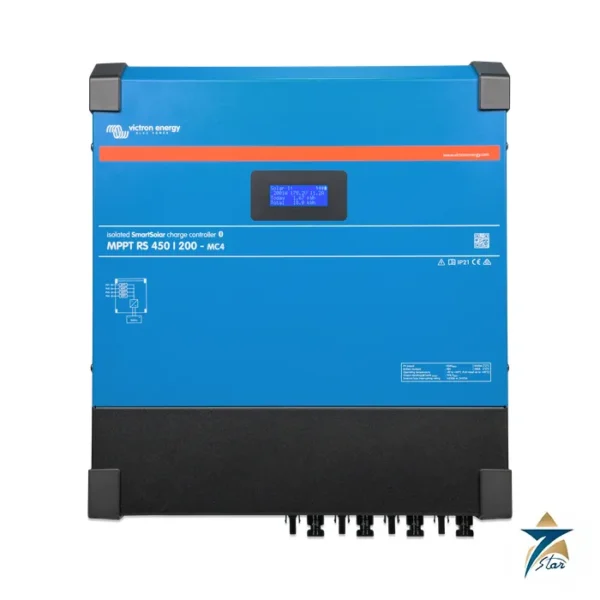
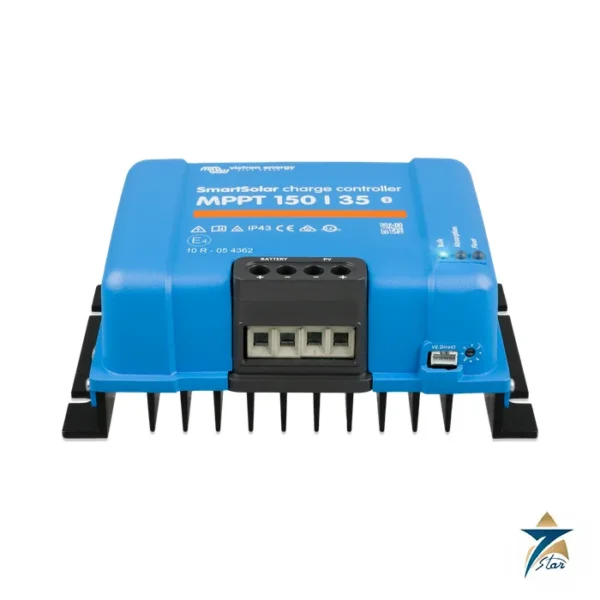
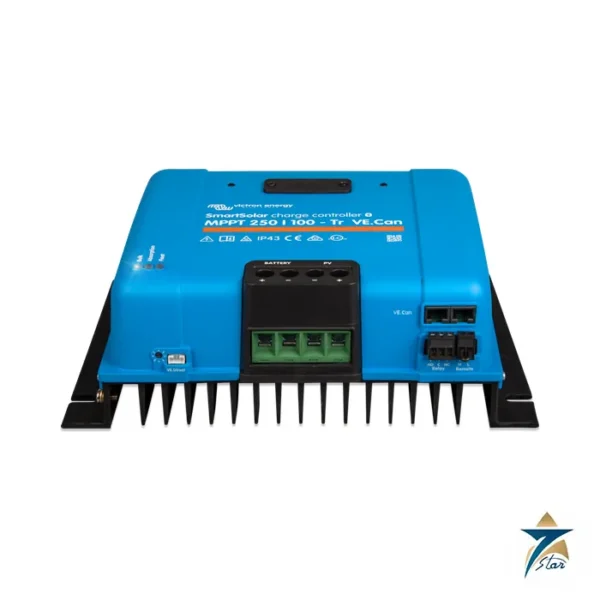
This is the non-MPPT model, so photovoltaic capacity is added externally. A DC-coupled design uses Victron solar charge controllers feeding the battery; an AC-coupled design places a grid-tie PV inverter on the Multi RS AC output. Each has its own wiring and control considerations, and the AC-coupled limits in the Victron documentation should be respected so the battery cannot be overcharged.
Installation and environment
Mount the unit on a non-flammable wall in a ventilated, dry location, with the clearances shown in the manual. Inverter output falls as ambient temperature rises, which matters in Oman and the Gulf where equipment rooms, containers and rooftop enclosures can be very hot in summer. Locate the inverter and batteries in a shaded, cooled space where possible, and keep air paths free from dust and sand. Coastal installations should be protected from salt-laden air.
Typical uses in the region
Common projects include backup power for telecom and security equipment, farm and villa systems at the edge of the grid, remote monitoring stations and hybrid systems that reduce diesel generator running hours at remote sites.
Information for your RFQ
- Model Multi RS 48/6000/100 and quantity.
- Battery type and capacity, existing or to be supplied.
- Whether a GX device, energy meter, solar chargers or cables are also required.
- Grid or generator size and the load profile.
- Site location and delivery timeline.
Documents and quotation
The Victron Multi RS datasheet is attached to this page; the Victron product page also lists a dimension drawing and safety certificates. Seven Star LLC is an independent supplier in Muscat. Send the exact model name, the system voltage and the battery type, and we will quote against Victron data.





Reviews
There are no reviews yet.