Samson 2488 pressure-independent control valve (PICV) with electric actuator
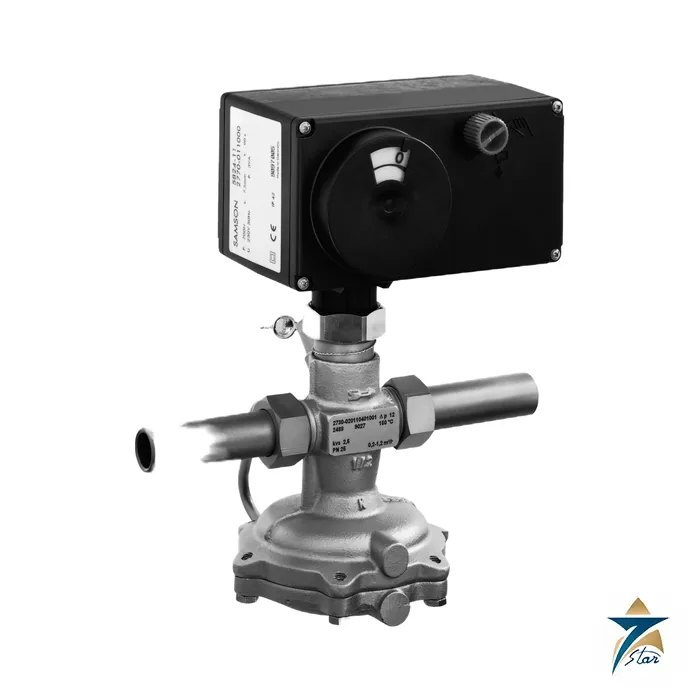
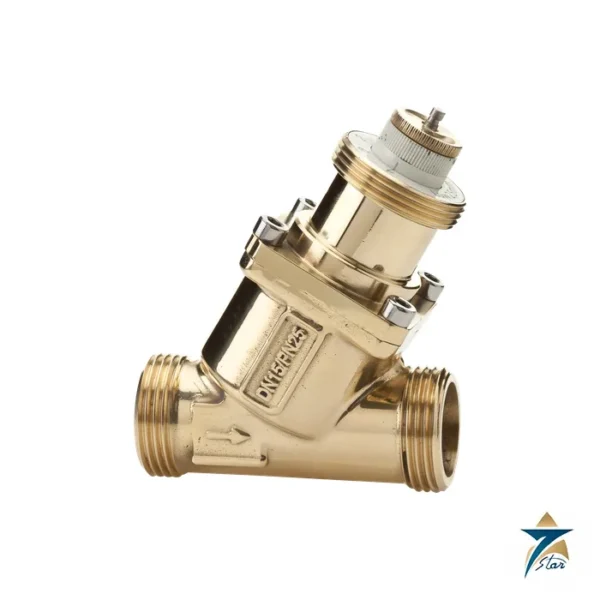
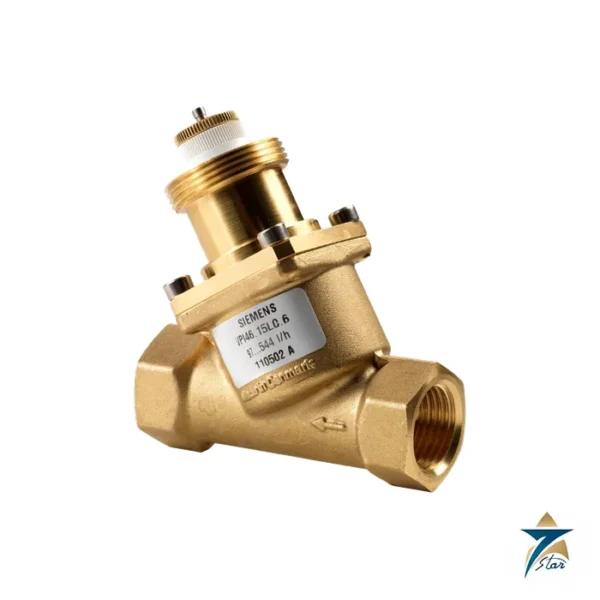
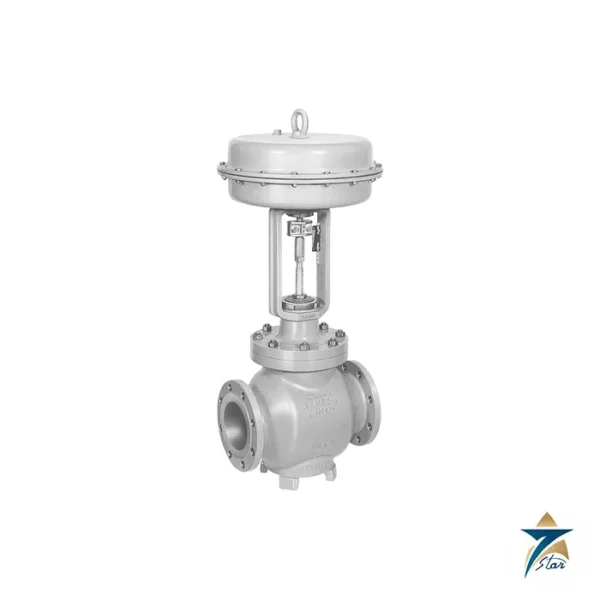
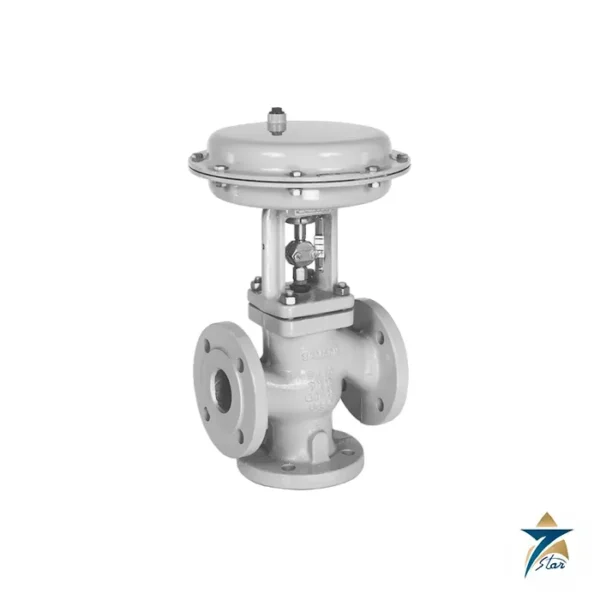
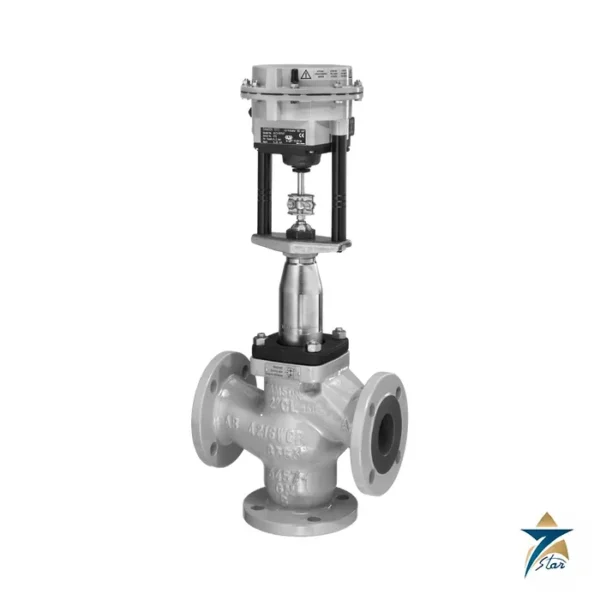
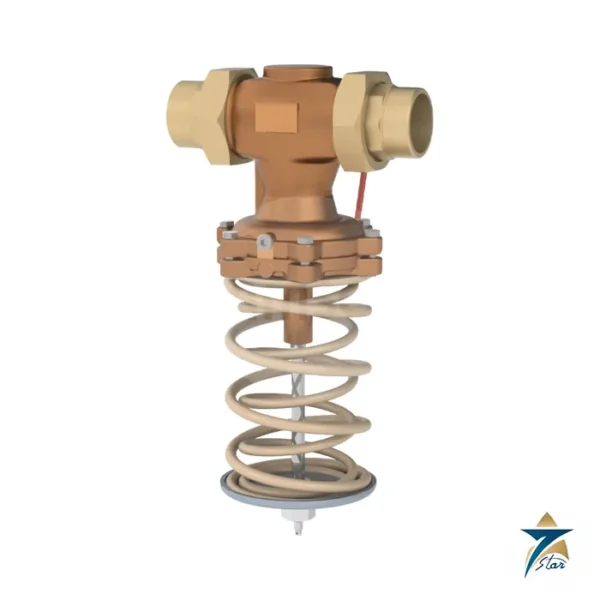
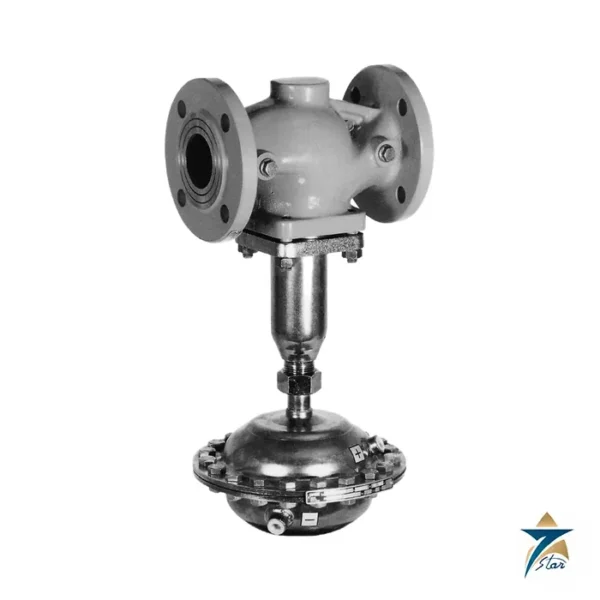
The Samson 2488 is a pressure-independent control valve for flow rate and temperature control in district heating and larger heating or cooling networks. It combines a red brass or ductile iron valve, a diaphragm actuator and an adjustable orifice (restriction). A maximum flow is set mechanically at the orifice, and an electric actuator on the orifice reduces flow below that maximum whenever the control signal asks for it. Because a diaphragm keeps the pressure drop across the restriction constant, flow follows the setting regardless of changes in network differential pressure. Seven Star LLC supplies the Samson 2488 in Oman and the GCC as an independent supplier based in Muscat.
The valves cover DN 15 to DN 50 at PN 16 and PN 25, flow set points from 0.03 to 15 m³/h, treated water up to 150 °C and non-flammable gases up to 80 °C. The related Type 2489 adds a thermostat connection for emergency temperature control.
Decoding the Samson 2488 and 2489 designation
- 2488 – flow regulator (PICV): maximum flow limiting plus electric control of flow.
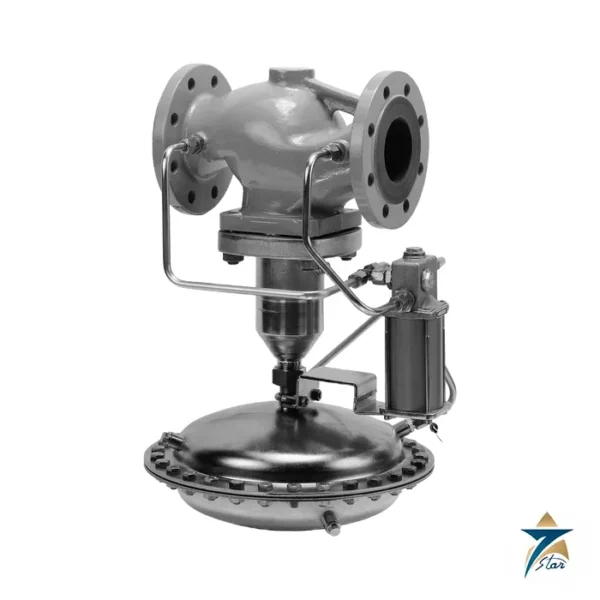
- 2489 – the same regulator with an additional connection for a Type 2430 control thermostat (or a Type 2403 safety temperature monitor).
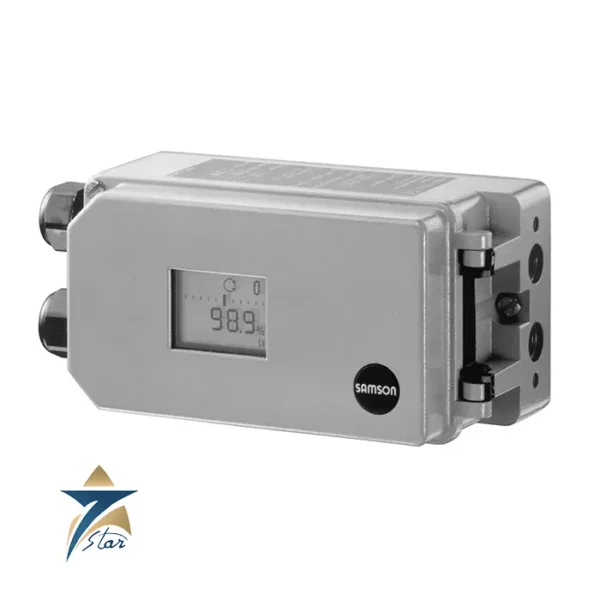
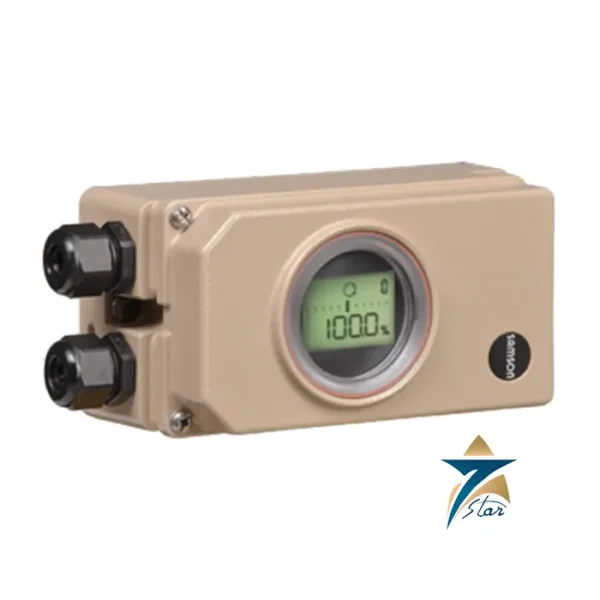
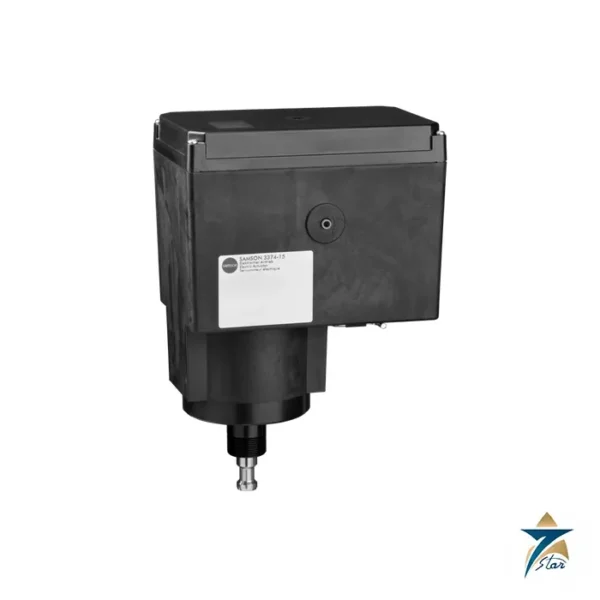
- /5827-N, /5827-A, /5724, /5725, /5857, /5757 – the electric actuator fitted on the orifice, as in the ordering text (for example 2488/5827-N). The -A and 5725 types carry a fail-safe spring.
Samson 2488 technical specifications
| Parameter |
Specification |
| Manufacturer / part number |
Samson Type 2488 flow regulator / pressure-independent control valve (with Type 2489 variant) |
| Nominal size |
DN 15, 20, 25, 32, 40, 50 |
| Pressure rating |
PN 16 and PN 25 (DN 32 to 50: PN 25) |
| Medium and temperature |
Liquids up to 130 °C (PN 16) or 150 °C (PN 25, with intermediate insulating piece); air and non-flammable gases up to 80 °C |
| Flow set point range |
0.03 to 15 m³/h depending on size and restriction differential pressure |
| Max. differential pressure |
10 bar (PN 16) or 20 bar for DN 15–25; 16 bar for DN 32–50 |
| Leakage class |
≤0.05 % of KVS for most DN 15–25 sizes; ≤0.01 % for KVS 1.0 and for DN 32–50 (IEC 60534-4) |
| Valve body |
Red brass CC499K; spheroidal graphite iron EN-GJS-400-18-LT as flanged body in DN 32–50 |
| Seat, plug |
Seat stainless steel 1.4305; brass plug with EPDM soft seat |
| Diaphragm, seals |
EPDM with fabric reinforcement |
| Restriction |
Brass, free of dezincification |
| Connections |
Welding ends with connection nuts (standard); threaded ends, screwed-on flanges or flanged body (DN 32–50) as special versions |
| Electric actuators |
Type 5827-N / -A, TROVIS 5724, 5725, 5757 and Type 5857; 230 V or 24 V supply; IP 42 to IP 54 |
KVS values and flow set point ranges for the 2488
KVS coefficients of the valve with screwed ends are 0.4 and 1.0 (special versions), 2.5, 4.0, 6.3 and 8.0 for DN 15, 20 and 25, and 12.5, 16 and 20 for DN 32, 40 and 50; flanged bodies offer 12.5, 20 and 25. The typical flow set point ranges for water at 0.2 bar differential pressure at the restriction are listed below.
| KVS |
Flow set point range in m³/h (water) |
| 0.4 |
0.03 to 0.2 |
| 1.0 |
0.12 to 0.64 |
| 2.5 |
0.2 to 1.2 |
| 4.0 |
0.6 to 1.3 |
| 6.3 |
0.8 to 2.3 |
| 8.0 |
0.8 to 3.5 |
| 12.5 |
2 to 5.8 |
| 16 |
3 to 9.1 |
| 20 |
4 to 14.1 |
Higher flows, up to 15 m³/h, are available with a higher restriction differential pressure. When flows are pushed above the stated range, the data sheet warns that noise can increase even without cavitation.
How the 2488 keeps flow independent of pressure
Water flows through the orifice and the valve in the direction of the arrow. The flow creates a pressure difference across the orifice, which is carried through a control line and a hole in the plug to the operating diaphragm. The diaphragm moves the plug until the plug spring force and the diaphragm force balance, which holds that difference constant. A fixed orifice setting then gives a fixed flow rate. The maximum is set at the adjuster or set point screw (lead-sealed in DN 32 to 50). If the plant needs less, the electric actuator closes the orifice proportionally.
The result is a valve authority of one, which means temperature controllers working with outdoor compensation are not disturbed by network pressure changes. The minimum differential pressure across the valve is the restriction pressure plus the valve loss, (V/KVS) squared, in the units given in the data sheet.
Dimensions and weights of the 2488
| Size |
Length L |
L1 with welding ends |
Weight 2488, approx. |
| DN 15 |
65 mm |
210 mm |
3.0 kg |
| DN 20 |
70 mm |
234 mm |
3.1 kg |
| DN 25 |
75 mm |
244 mm |
3.2 kg |
| DN 32 |
100 mm |
268 mm |
4.4 kg |
| DN 40 |
110 mm |
294 mm |
6.9 kg |
| DN 50 |
130 mm |
330 mm |
7.4 kg |
The 2489 is about 0.8 to 1.0 kg heavier for the thermostat parts. Height of the valve alone is 85 mm (DN 15–25), 105 mm (DN 32–40) or 140 mm (DN 50), and the electric actuator adds height; insulation needs an intermediate piece that adds 80 mm.
Where the 2488 fits and related Samson parts
The 2488 is normally placed in the return line of a heat exchanger station, with a strainer upstream (0.5 mm mesh for DN 15 to 25, 0.75 mm for DN 32 to 50). For plants that need emergency temperature control if the electric controller fails, choose the Type 2489 with a Type 2430 thermostat (set point ranges from 0 to 150 °C). Other Samson regulators in this lane are the Type 44-2 reducing valve for liquids and the Type 2406 for gas blanketing.
Selection and ordering checklist for the 2488
- Maximum flow in m³/h and the available differential pressure; check the minimum pressure drop across the valve.
- PN rating, temperature and medium, plus intermediate insulating piece when the water is above 130 °C.
- Choice of electric actuator: with or without fail-safe action, voltage and control signal; versions tested to DIN EN 14597 for temperature safeguarding exist with specific actuators such as the 5827-A and 5725.
- Body type and connection: welding ends, threaded ends, screwed-on flanges or flanged body.
- Thermostat (Type 2430) or safety temperature monitor (Type 2403) if using the 2489.
- Strainer, accessories and any special version.
Installation, commissioning and maintenance of the 2488
Valves in DN 32 to 50 must go into horizontal lines; DN 15 to 25 may also be installed vertically. In horizontal lines the electric actuator must sit above the valve body. Retract the actuator stem before assembly and observe the maximum ambient temperature, and use an insulating piece when the valve is insulated, leaving the actuator uninsulated. Flush the line before fitting and keep the strainer clean, because debris in the orifice affects the accuracy of the flow setting.
Commission by setting the maximum flow at the adjuster and then checking operation with the actuator. Periodic service covers inspecting the diaphragm and seat, and checking the actuator travel (6 mm in DN 15 to 25 and 12 mm in DN 32 to 50).
Typical applications in Oman and the GCC
In the region, PICVs of this kind are used in district cooling energy transfer stations, building chilled water and hot water circuits, heat exchangers and fan coil loops, where network pressure varies as buildings come online. Dust and humidity make the enclosed diaphragm actuator and brass body practical, and an electric actuator allows integration with building management or an outdoor-compensated controller.
Information to send with an RFQ for the 2488
- Design flow and differential pressure, medium and temperature
- Nominal size, PN class and connection
- Actuator voltage, signal, fail-safe requirement
- Thermostat option (2489) and set point range
- Project tag number and delivery location
Documents and quotation
A Samson datasheet covering the Type 2488 and 2489 is attached on this page, including the full ordering text.
Send your hydraulic data and Seven Star LLC will quote the Samson 2488 with a matching actuator for delivery in Oman and the GCC.




















Reviews
There are no reviews yet.