Flowserve DHTW and UHTW balanced cartridge seals
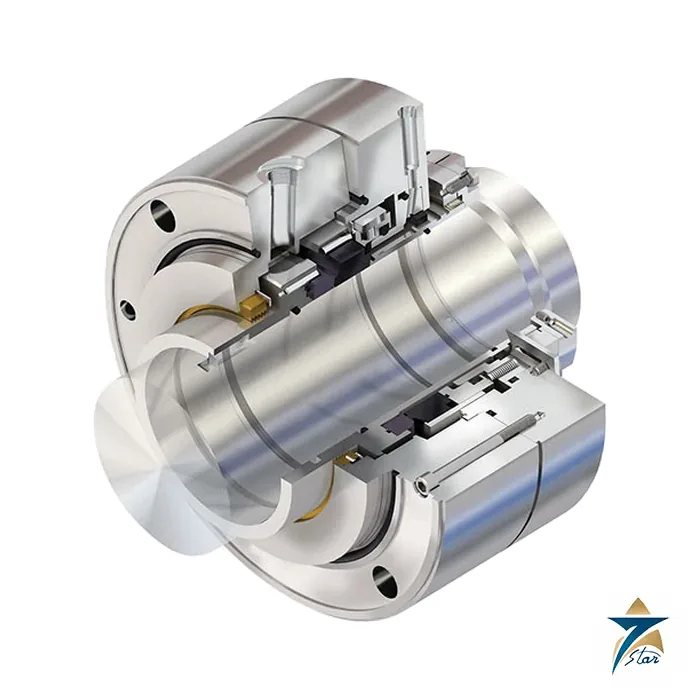
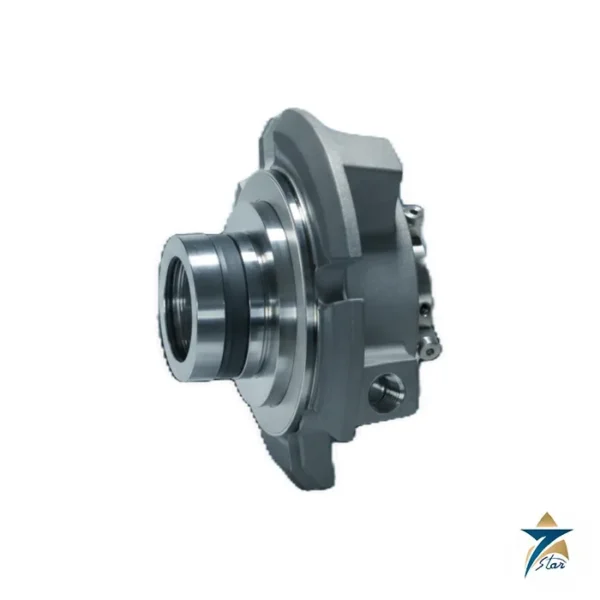
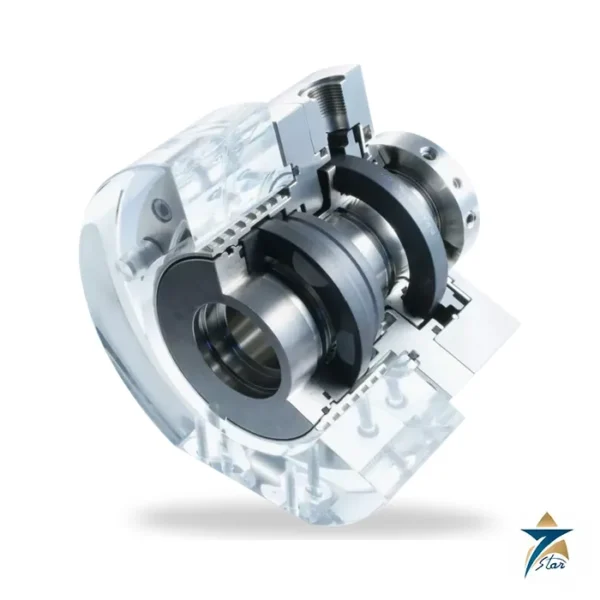
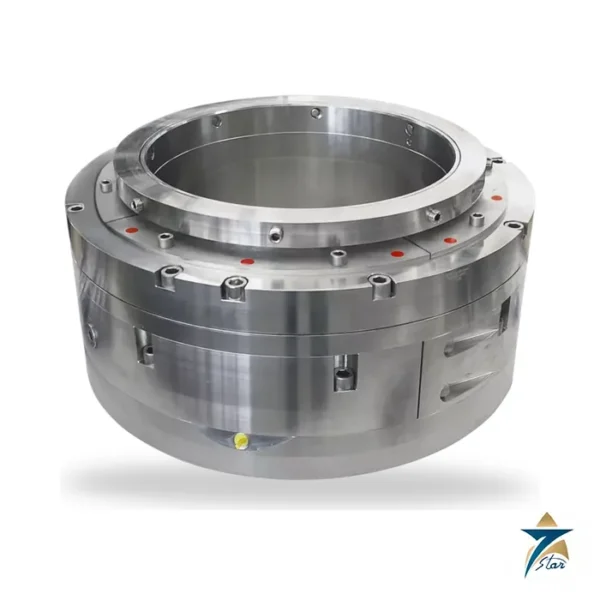
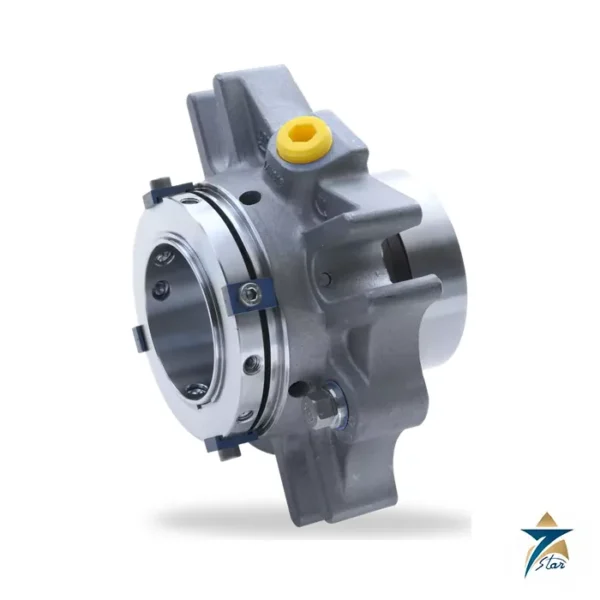
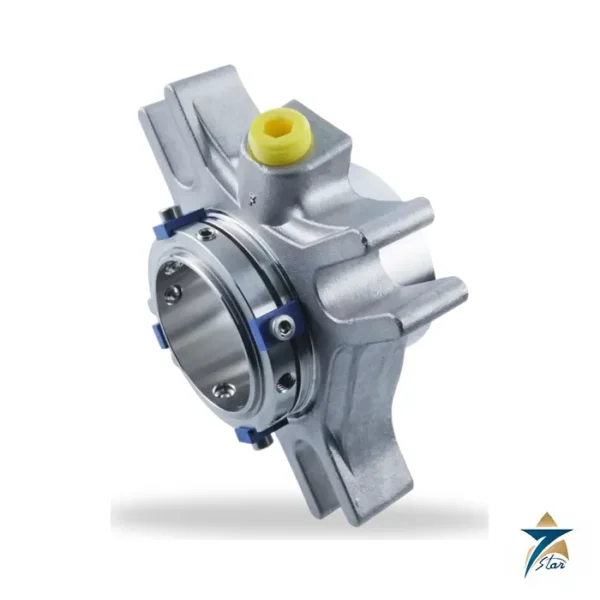
The Flowserve DHTW and its sister model UHTW are custom-engineered mechanical seals for high-energy, critical pumping duties. Both are balanced, flexible-stator cartridge seals offered in single or dual configurations, and the datasheet names boiler feed, boiler circulation, oil-field injection and pipeline services as typical uses. The seals are listed for pressures to 207 bar, temperatures to 371 °C and speeds to 76 m/s.
Because each seal is configured for a specific application, this page describes the DHTW/UHTW range rather than a single ordering code. Seven Star LLC is an independent supplier in Muscat and supports Flowserve seal enquiries in Oman and the GCC, including seals for the high-pressure barrel pumps used in the region.
DHTW and UHTW technical specifications
| Parameter |
Specification |
| Manufacturer / part number |
Flowserve / DHTW and UHTW |
| Seal type |
Balanced, flexible-stator cartridge seal, single or dual |
| Pressure |
Up to 207 bar (3,000 psi) |
| Temperature |
-40 to 371 °C (700 °F) |
| Shaft speed |
Up to 76 m/s (250 fps) |
| Shaft size |
25.4 to 228.6 mm (1.000 to 9.000 inch) |
| Metal components |
Stainless steel |
| Rotating face |
Silicon carbide or tungsten carbide |
| Stationary face |
Carbon or silicon carbide |
| Gaskets |
Fluoroelastomer, perfluoroelastomer, EPDM or nitrile |
| Drive |
T-drive with multiple drive pins engaged in the faces; split ring or shrink disc high-pressure drives available |
| Special options |
Anti-electro-corrosion package; Precision Face Topography; GSLW containment seal |
How the DHTW and UHTW seals work
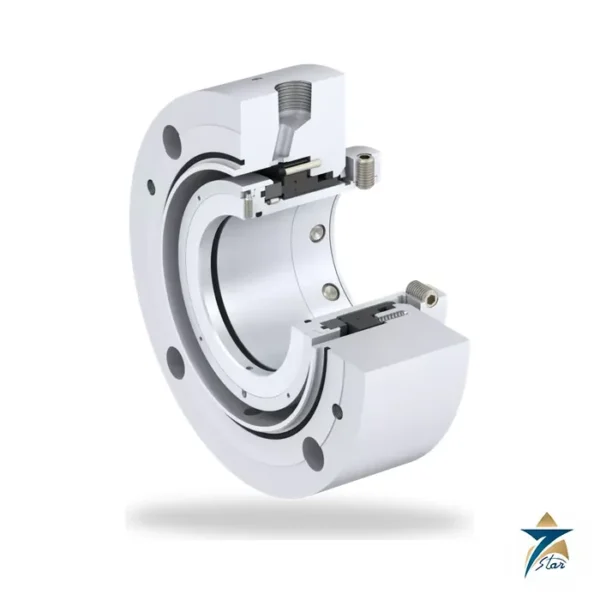
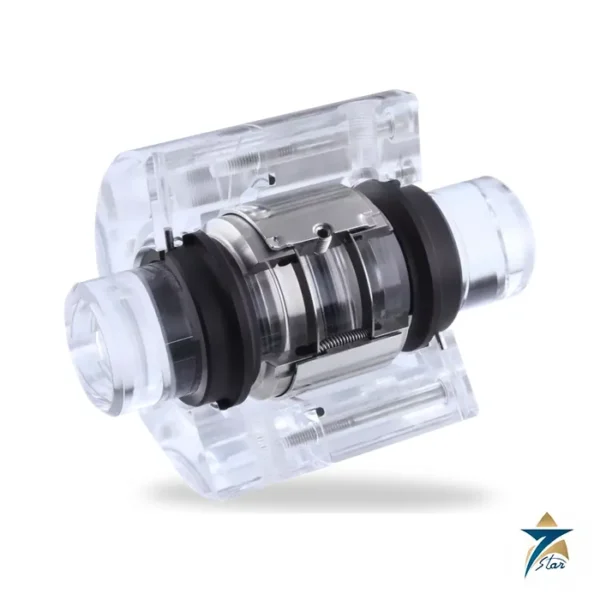
Both seals hold a thin fluid film between a rotating and a stationary face. The balance ratio, which decides how much closing force the faces see, is set behind the stationary face in a flexible-stator design. The manufacturer explains that this arrangement helps manage thermal effects and equipment dynamics, and that the face geometry is optimised with finite element analysis to give zero net deflection under pressure, temperature and centrifugal loads.
The key difference is the pumping feature. In the DHTW, a pumping geometry around the rotating face moves fluid through a seal cooler at high flow rates, so plans 23, 52 and 53 work at all speeds including slow roll and hot standby. In dual seals the DHTW circulates enough barrier fluid to meet cooling needs. The UHTW omits this feature and is used where circulation is provided otherwise.
A T-drive with multiple pins deeply engaged in the faces lowers stress on the face material and resists damage from vibration and from high start-up torque, for example with viscous fluids.
Where DHTW and UHTW fit with pumps and auxiliary systems
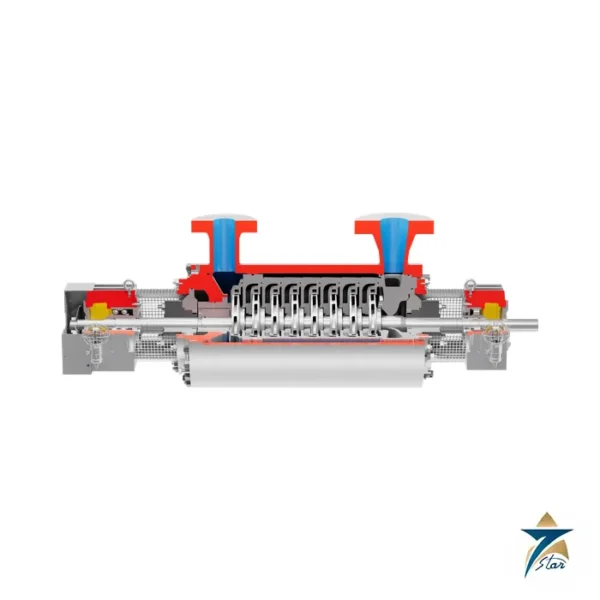
These seals belong to the high-end of the Flowserve seal range and are intended for pumps such as boiler feed and circulation pumps, injection pumps and pipeline pumps, including high-pressure barrel pumps like the WIK. The seal works together with a support system: a seal cooler such as the Flowserve 682 cooler, a reservoir for plan 52 or 53 and instrumentation. Atmospheric bushings or a GSL containment seal can be added to restrict leakage and give an access point for seal condition monitoring. A lighter-duty hot-water option from the same manufacturer is the QBU pusher seal, which is limited to moderate pressure.
DHTW and UHTW selection and ordering checklist
- Pump make and model, shaft diameter and seal chamber dimensions
- Single or dual arrangement; face-to-back or face-to-face
- Process fluid, including phase behavior near flashing or supercritical conditions
- Seal chamber pressure, temperature, speed and viscosity
- Face and elastomer materials suited to the fluid
- Piping plan (23, 52, 53) and available barrier fluid system
- Need for the anti-electro-corrosion package on low-conductivity water
- Containment option: atmospheric bushing or GSLW / GSL seal
- Drive type: standard, split ring or shrink disc
- Applicable standard and required documentation
Installation, commissioning and maintenance
Cartridge seals are delivered pre-assembled with setting devices, which lowers the chance of assembly error. Check shaft runout, shaft end play, seal chamber face squareness and bore concentricity before fitting, and keep the setting clips in place until the gland is tightened. Piping plan lines should be flushed and vented before start-up so that the faces never run dry.
On hot services follow the heat-up procedure of the pump to avoid thermal shock to the seal faces. Monitor the barrier or flush system, seal cooler temperatures and any leakage indications. Typical spares are stationary and rotating face sets, elastomers, springs and the drive hardware; when a pump is overhauled the whole cartridge is often replaced by a rebuilt spare to shorten downtime.
Typical DHTW and UHTW applications in Oman and the GCC
In Oman and the GCC, the natural applications are boiler feed and circulation pumps in power and desalination plants, water injection pumps in oil fields and pipeline pumps on export lines. Plants with ultra-pure feed water can use the anti-electro-corrosion package, while gas processing and CO2 handling duties use the dual UHTW/GSLW arrangement. High ambient temperatures and cooling-water limits in the region make a pumping feature and good seal cooler design especially valuable.
DHTW and UHTW configurations
| Configuration |
Features |
Typical use |
| Single DHTW |
Isolation bushing inboard, fixed throttle bushing outboard; plan 23 with seal cooler |
Boiler feed and circulation pumps |
| Dual DHTW/DHTW face-to-back |
Pumping ring circulates barrier fluid |
High-pressure boiler circulation pumps |
| Dual DHTW/DHTW face-to-face |
Redundant sealing with zero process emissions |
Heavy-duty services needing no process leakage |
| Dual UHTW/GSLW face-to-back |
Non-contacting GSLW containment seal, Precision Face Topography |
Flashing and supercritical fluids: CO2, ethane, ethylene, LPG |
Information to send with a DHTW RFQ
- Pump data sheet or seal chamber drawing and shaft diameter
- Process and barrier fluid, temperature, pressure and speed
- Required arrangement and piping plan
- Existing seal nameplate or serial number if replacing
- Standard, material and emission requirements
Documents and quotation
A datasheet for the DHTW and UHTW series is attached on this page. Send the pump details and operating conditions and we will review the seal configuration and arrange a quotation.
Seven Star LLC is an independent supplier and does not claim any official status with the manufacturer.
























Reviews
There are no reviews yet.