Bray Series 70 Hazardous Location 120 VAC electric actuator
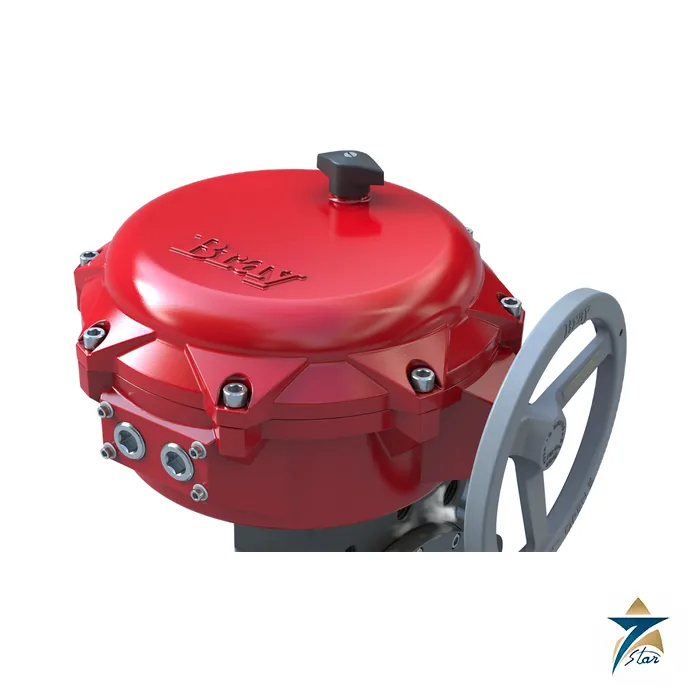
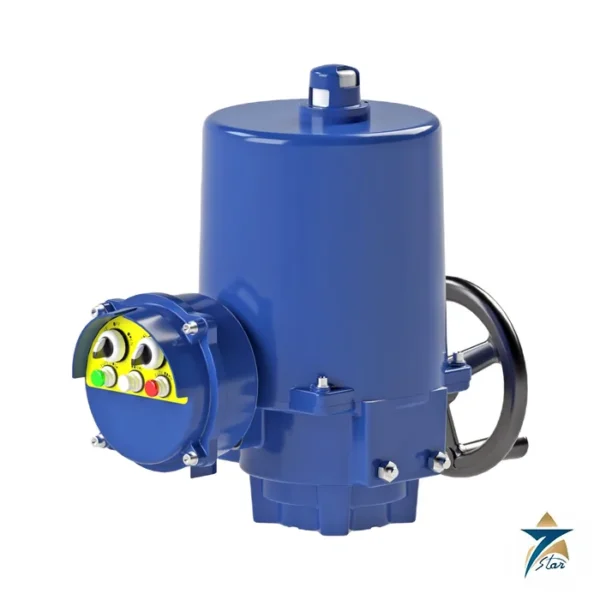
The Bray Series 70 Hazardous is a quarter-turn electric actuator for valves installed in classified areas. It is the explosion-proof version of the Series 70 family: a compact, low-profile actuator with an enclosure certified for Class I Division 1 and 2 groups C and D and Class II Division 1 and 2 groups E, F and G, supplied at 120 VAC single phase. Output torque ranges from 800 to 2,000 in-lb (90 to 226 Nm) and it mounts on ISO 5211 flanges, so it fits butterfly valves and ball valves directly. Seven Star LLC supplies Bray actuators and controls in Oman and the GCC as an independent supplier in Muscat.
Series 70 Hazardous technical specifications
| Parameter |
Specification |
| Manufacturer / part number |
Bray / Series 70 Hazardous Location electric actuator |
| Output torque |
800 to 2,000 in-lb (90 to 226 Nm) |
| Power supply and input |
120 VAC, single phase; 120 VAC input signal |
| Motor |
Single phase, reversible, permanent split capacitor induction motor |
| Enclosure rating |
Class I Div 1 and 2 groups C, D; Class II Div 1 and 2 groups E, F, G |
| Certification |
UL approved (USA and Canadian standard) for hazardous location, 120 V only |
| Ambient temperature |
-20°F to 150°F (-29°C to 65°C) |
| Mounting |
ISO 5211, direct to the valve flange without brackets or couplings |
| Limit switches |
2 standard, up to 5 SPDT maximum |
| Travel |
Adjustable up to 90°; field-adjustable stainless travel stops |
| Manual override |
Pull-to-engage handwheel with motor power cutout |
| Communication protocols |
None (on/off control) |
| Valve compatibility |
Quarter-turn valves for hazardous locations |
Power center and control center design
Bray built the Series 70 Hazardous so that the control center and the power center are separate. The power center is in the actuator base and contains the motor, gear train, capacitor, output drive and heater. These parts are designed to need no customer service, and the layout keeps the actuator profile low. The wiring, limit switches and optional accessories are reached through the cover, so a technician can adjust the switches and connect cables without touching the power train.
The output drive is a self-locking worm and worm gear, with the worm shaft driving the worm gear directly. A self-locking drive holds the valve where it is without a brake, which means the valve stays in position when power is lost and does not creep from line pressure on the disc. The motor has the built-in thermal overload protection described in the Series 70 recommended specification, and the heater, rated 5 W at 120 or 220 VAC in the general specification, helps prevent condensation inside the enclosure, which is useful in humid Gulf climates.
Manual override and mechanical travel stops
The manual override is a pull-and-turn handwheel. Pulling the handwheel engages the drive pin and the override shaft, and an automatic power cutout switch removes the motor power so the valve cannot be driven electrically while the handwheel is engaged. Pushing it in returns to power operation, and a ball detent holds the shaft in either position. No tools or levers are needed. Stainless steel travel stops outside the base limit rotation to 0° and 90° and can be readjusted without removing the cover, with lock nuts and O-ring seals holding them in place.
Series 70 Hazardous in an automated valve package
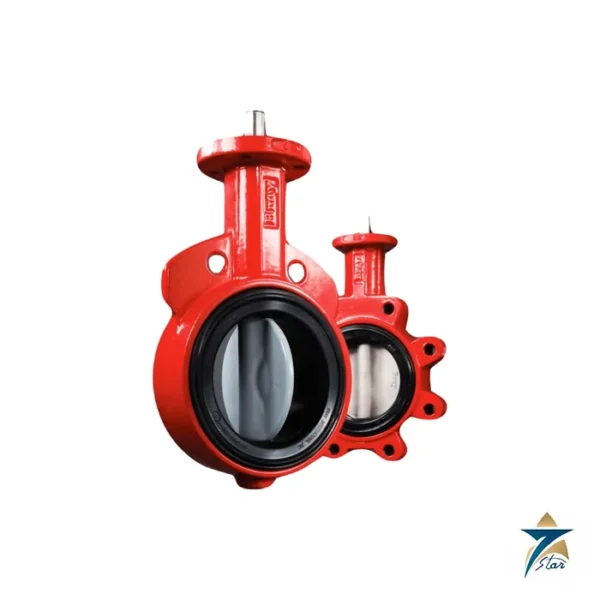
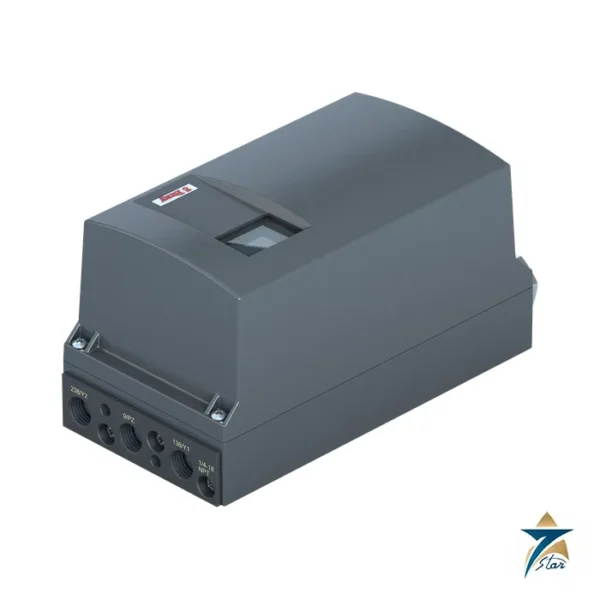
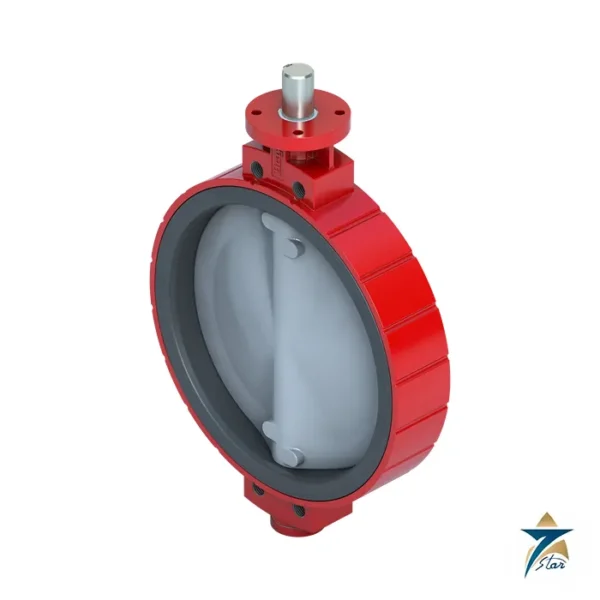
A typical package is a Bray butterfly valve (for example Series 30/31 or the 12 in. Series 43 shown on the product page photo) with the Series 70 Hazardous actuator mounted on the ISO 5211 flange. Bray also offers the Series 70 for general locations, the Series 76 electric actuator, the Series 92/93 pneumatic actuator and the Series 98 scotch yoke for larger torque. Where hazardous-area feedback is required, the Series 5C explosion-proof valve status monitor and Series 6A positioner address other functions, but the Series 70 Hazardous itself has no communication protocol and is an on/off device with limit switch feedback.
Selection and ordering checklist for Series 70 Hazardous
- Valve torque including safety margin, to choose the correct torque range inside 800 to 2,000 in-lb.
- Supply voltage: this version is 120 VAC only, so a 230 VAC site needs a transformer or a different actuator.
- Area classification: confirm the class, division and group against the site documents, as certification covers NEC classes and divisions, not necessarily IEC zones.
- Duty: general specification lists 25 percent intermittent and 100 percent continuous operation depending on version, so state the number of starts per hour.
- Switch quantity: two are standard; state additional switches for remote indication.
- Valve flange pattern and stem drive.
Installation and commissioning of the hazardous actuator
Install the actuator on the valve with the valve in the correct position, tighten the flange bolts, then wire through conduit entries sealed to suit the hazardous-area standard. Use approved conduit seals and fittings, since the enclosure certification is valid only with the correct installation. Set the travel stops, then set the limit switch cams, and check direction before driving a line valve. Operate the handwheel to confirm the power cutout works. Never open the cover while the circuit is live in a classified area.
For maintenance, check the cover seal and the cover bolts, keep a record of switch settings, check heater operation and keep spare limit switches and a capacitor in stores if the valve is critical.
Applications of the Series 70 Hazardous in Oman and the GCC
Oil and gas facilities, tank farms, gas compressor stations and chemical plants have areas where electrical equipment must be certified for gas or dust. A quarter-turn electric actuator is the convenient choice for remote valves with no instrument air, such as remote block valves on pipelines, tank farm isolation and cooling water. Note the temperature limit of 150°F (65°C): actuators in direct sun in Gulf summers can exceed ambient temperature, so use a sun shield for outdoor valves. Certification here is to UL and CSA, so confirm acceptance with the plant’s classification scheme.
Information to send with a Series 70 Hazardous RFQ
- Valve type, size, torque at maximum differential pressure and flange pattern.
- Area classification and certification required.
- Supply voltage, duty and operating time.
- Number of limit switches and accessories.
Documents and quotation
The Bray Series 70 electric actuator recommended specification sheet is attached on this page, covering construction, switches, options and approvals of the Series 70 family.
Send the valve torque, supply and area classification and Seven Star LLC will confirm the right Series 70 version and quote supply to Oman and the GCC.


















Reviews
There are no reviews yet.