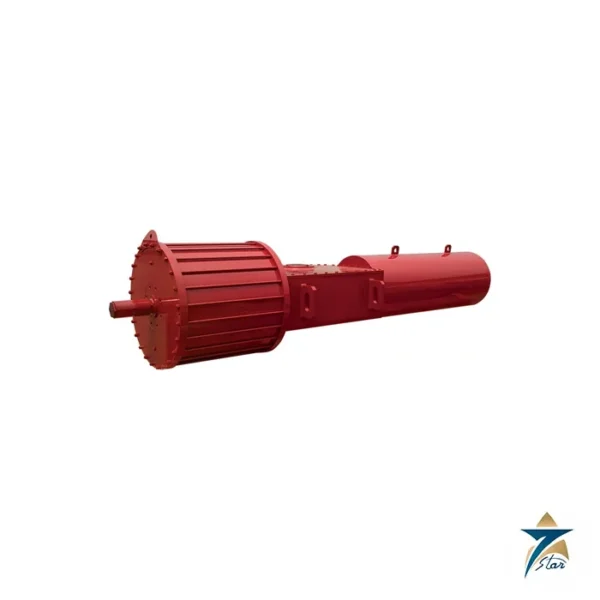
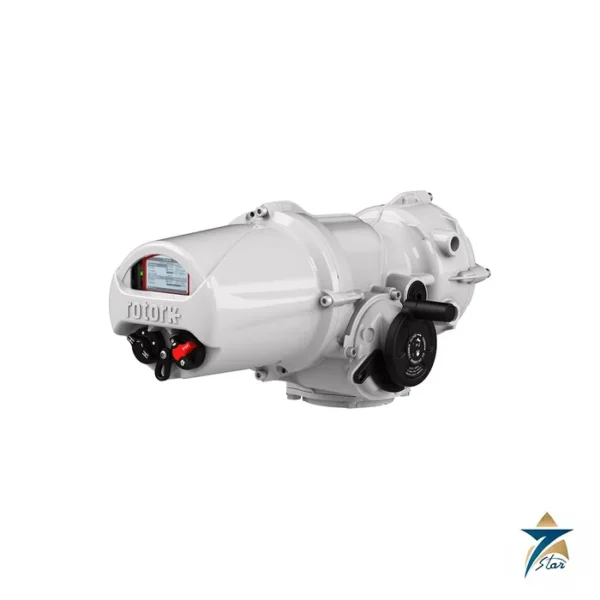
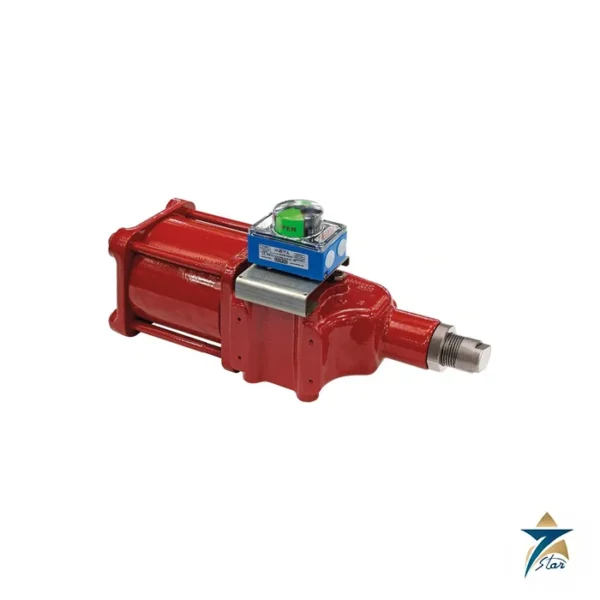
Rotork CQP compact helical pneumatic quarter-turn actuators, CQ Range
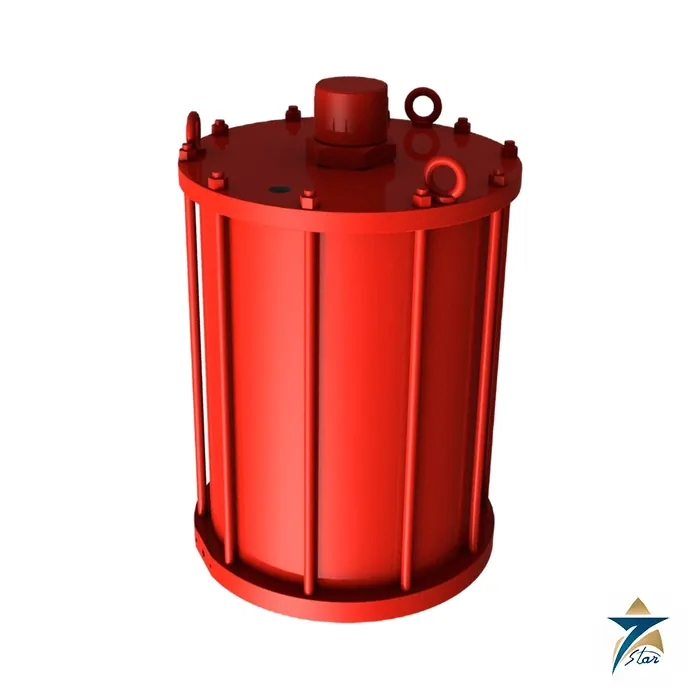
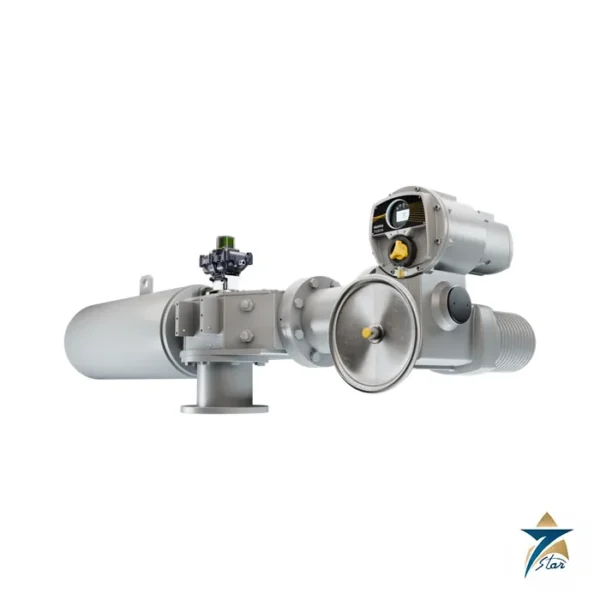
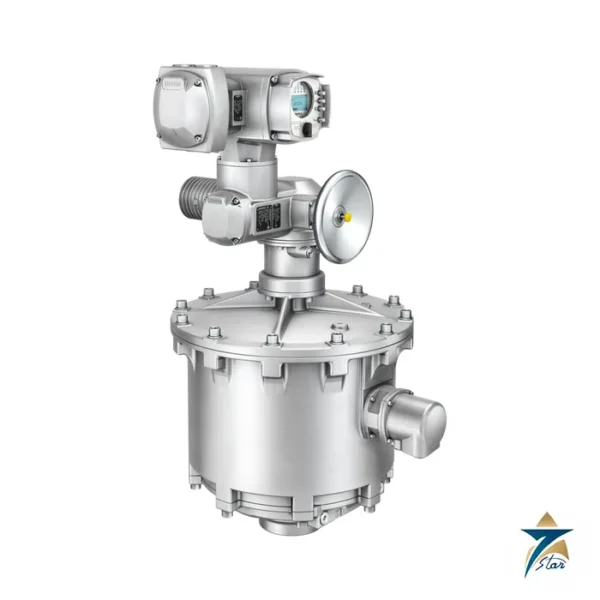
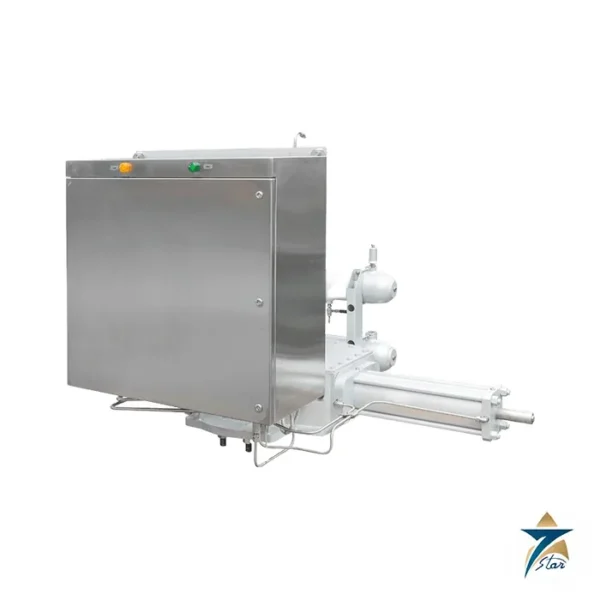
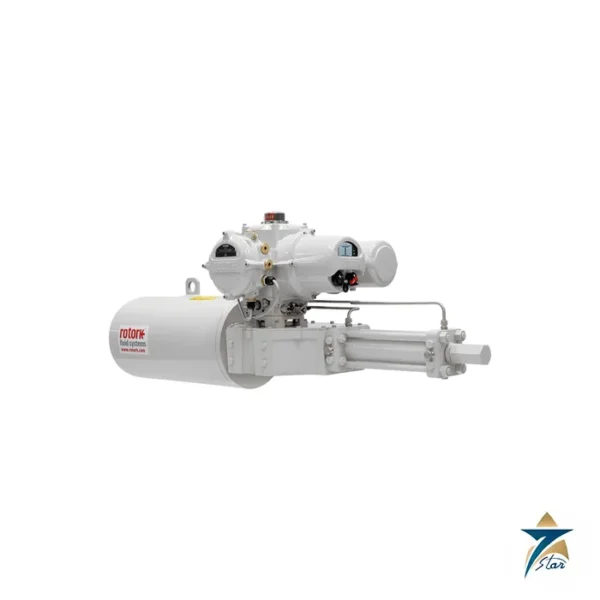
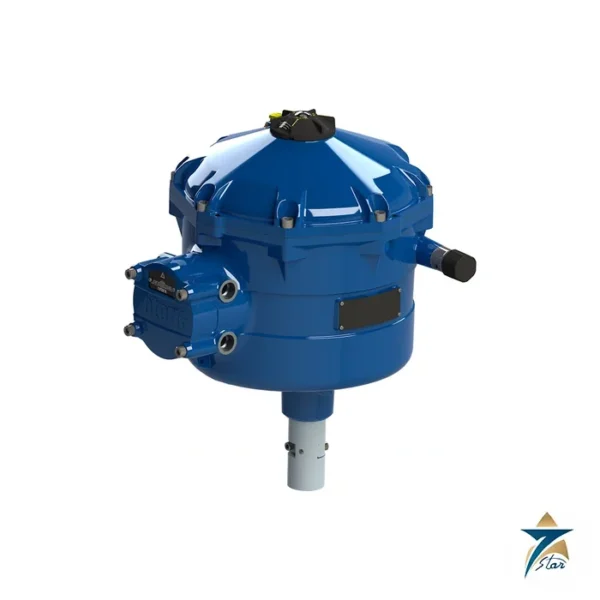
The Rotork CQ Range is a concentric, balanced actuator for quarter-turn valves in which a helical mechanism turns straight piston travel into 90 degrees of shaft rotation. The pneumatic version is the CQP, available in double-acting and spring-return form. It aims to deliver the torque level of a scotch-yoke actuator within a much smaller envelope, which matters on skids, pipe racks and packaged plant where space is tight. Seven Star LLC supplies CQP actuators in Oman and the GCC as an independent supplier in Muscat. This page uses the CQP model code to explain the range.
CQP specifications
| Parameter |
Specification |
| Manufacturer / part number |
Rotork / CQ Range, pneumatic CQP (hydraulic CQH exists in the same range) |
| Operating pressure, pneumatic |
Up to 7 bar (175 psi) |
| Standard torque output |
Up to 150,000 Nm (1.3 million lbf.in); larger and hydraulic designs on request |
| Temperature range |
Standard -30 to +100 °C; low -40 to +100 °C; extreme low -60 to +100 °C; up to 160 °C on request |
| Stroke adjustment |
Standard 0 to 5 degrees; rotation beyond 90 degrees available on request |
| Body sizes |
010, 020, 030, 040, 050, 060, 070, 080, 090, 100, 110, 120 |
| Cylinder size code |
300 to 980 (pneumatic) |
| Execution types |
Double-acting, spring-return fail close, spring-return fail open |
| Flange drilling |
F14 to F60 depending on body size |
| Maximum shaft size |
48 mm (size 010) up to 220 mm (sizes 110 and 120) |
| Certifications listed |
IP66M/68M, ATEX Directive, PED Directive, EAC conformity, ISO 9001:2008 management system, certified suitable for use at SIL3 |
Decoding a CQP model number
The brochure example is CQP-040-435 A/C 1-A-F25-072. Reading it left to right: CQ is the compact helical actuator, P is pneumatic supply, 040 is the body size, 435 is the cylinder size, A is the seal material, C is the execution (spring-return fail close), 1 is the spring or double-acting module, A is the assembly type, F25 is the flange drilling and 072 is the maximum shaft size in millimetres. Each field narrows a particular choice.
| Code field |
Options |
| Seals |
A = NBR (-30 to +100 °C); B = Viton (-20 to +100 °C); C = fluorosilicone (-40 to +100 °C); E = fluorosilicone (-60 to +100 °C) |
| Execution |
C = spring-return fail close; O = spring-return fail open; D = double-acting |
| Assembly |
A = external tie rods (sizes 010 to 090); B = threaded flange (010 to 090); C = internal tie rods (100 to 120) |
| Flange |
F14 (010); F16 (010 to 030); F25 (020 to 040); F30 (040 to 060); F35 (050 to 080); F40 (070 to 100); F48 (090 to 120); F60 (110, 120) |
How the helical mechanism works
A cylinder with vertical slots is fixed to the bottom flange and a second cylinder with helical slots is connected to the pneumatic piston. Cam follower bearings, made of aluminium bronze, ride in the helical slots. Air pressure moves the piston and helical cylinder linearly while keys prevent that cylinder from rotating; the bearings follow the helical path and turn the drive shaft through 90 degrees. The torque profile naturally rises and falls in the same way as the demand of popular quarter-turn valves, as it does on scotch-yoke units, and Rotork notes that the profile can be engineered for non-standard valve torque. Body components are carbon steel, and the pneumatic cylinder is internally electroless nickel plated.
CQ Range features and options
- Smallest footprint for a given torque; valve adaptation is normally within the actuator envelope.
- Fully enclosed concentric design with epoxy paint as standard for corrosive atmospheres.
- Closed-loop or clean-breath control circuit so ambient air does not enter the actuator.
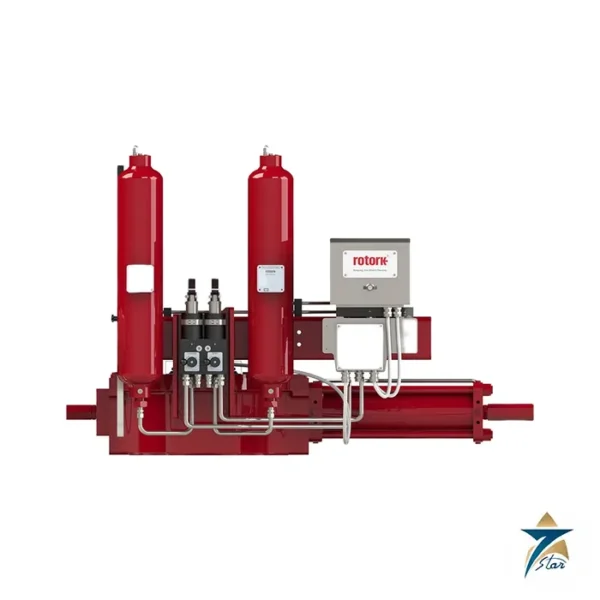
- Manual override on request, special paint specifications, and complete control packages for on-off, modulating or ESD service.
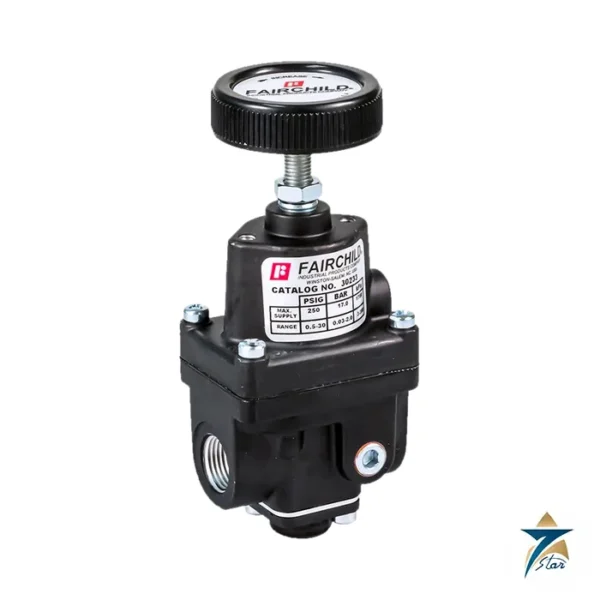
- Control panels with pneumatic and hydraulic manifolds, regulators and switch boxes mounted on the actuator or remotely.
Selecting a CQP actuator: ordering checklist
Collect the valve torque curve (seating, running and unseating), the minimum air supply pressure and the required fail action. Size the actuator with the spring torque at the end of stroke and the air torque at the lowest pressure both above the valve demand. Then decide the seal grade for temperature, the assembly type and the flange. For SIL-rated safety loops, ask that the proof-test and failure-rate data be provided with the quotation. Confirm shaft size against the valve stem and whether closed-loop breathing is needed in a corrosive or dusty site.
Installation and maintenance of CQP actuators
The concentric body distributes weight evenly, which eases handling and keeps side load on the valve low. Fit the adaptor and coupling, supply clean dry air to the control package and cycle the actuator against stop bolts, setting the stroke adjustment of 0 to 5 degrees at each end. The design has been made easy to dismantle: end flange, piston, cam follower bearings and the helical slot cylinder can be reached with standard tools. Spring cartridges store energy, so follow safe release procedures before disassembly. Spares worth stocking are the seal kit and the cam follower bearings.
CQ Range applications in Oman and the GCC
CQP units are used on large ball, plug and butterfly valves in confined locations: offshore and onshore oil and gas isolation and ESD valves, refinery and petrochemical process lines, water-intake butterfly valves and power-plant duties. In the Gulf the closed-loop breathing option and high-temperature seal grades help in coastal atmospheres and sun-exposed locations, while the SIL3 suitability statement supports emergency shutdown valve work.
Information to send with a CQP RFQ
- Valve type, size, class and complete torque data.
- Air supply pressure range and fail direction.
- Required stroke time, accessories and control package.
- Ambient temperature, hazardous-area and SIL requirements.
- Flange drilling, shaft or stem details, and quantity.
Documents and quotation
The Rotork CQ Range brochure is attached on this page, including the model number designation used above.
Send the valve data and air supply details and we will confirm the CQP selection and quote delivery to Oman and the GCC.




















Reviews
There are no reviews yet.