Rotork GT Range pneumatic rack and pinion actuators and what the range covers
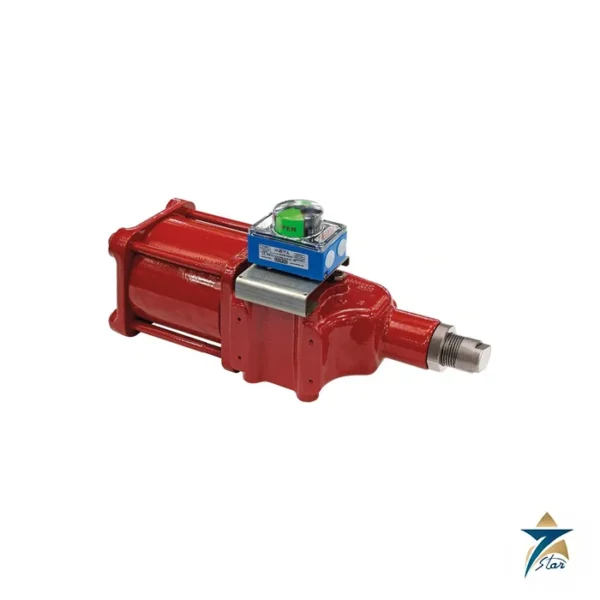
The Rotork GT Range is a family of pneumatic rack and pinion actuators for quarter-turn valves, offered in double-acting and spring-return forms across 21 body sizes from the small 33 and 34 up to the 302. Rotork describes it as proven over a service history of about thirty years in hundreds of thousands of installations. The design has an extruded anodised aluminium body, die-cast aluminium end caps and pistons, a nickel-plated carbon steel pinion and an anti-blowout arrangement, and the body of a spring-return unit can hold between 0 and 12 spring cartridges so that a single size can be tuned to different torque needs. A double-acting unit can be turned into a spring-return one in the field, and the other way round.
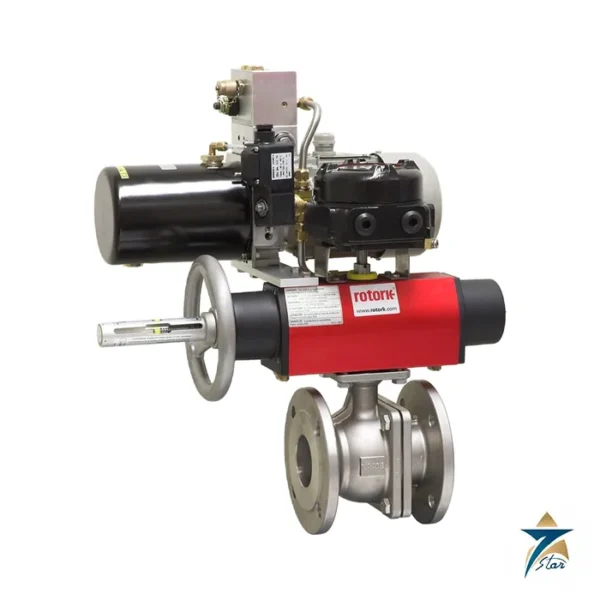
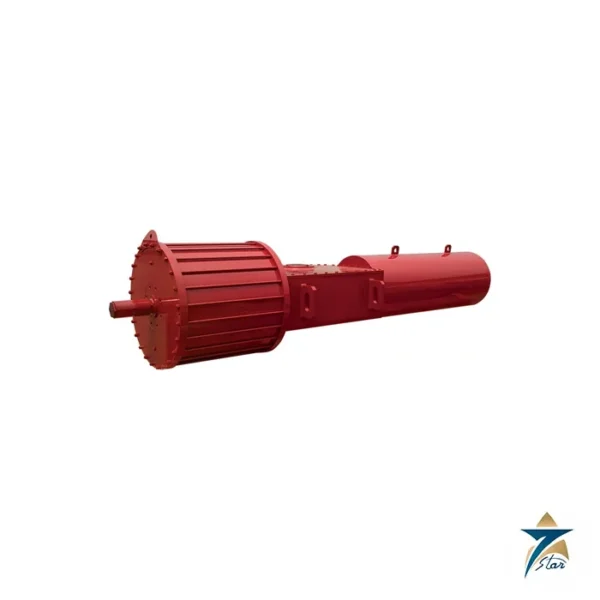
The GT Range is usually specified to automate ball, butterfly and plug valves on air or inert gas where a low-cost, reliable on/off or fail-safe actuator is needed. The interfaces follow ISO 5211 for the valve and VDI/VDE 3845 NAMUR for accessories, so solenoid valves, limit switch boxes and positioners can be mounted without adaptors. Larger or special duties can be handled by other Rotork families, which our site lists, such as the CP Compact Pneumatic actuator and the GP/GH scotch yoke actuators.
Technical specifications of the GT Range
| Parameter |
Specification |
| Manufacturer / part number |
Rotork / GT Range (double-acting GTA and spring-return series) |
| Type |
Pneumatic rack and pinion quarter-turn actuator |
| Body sizes |
33, 34, 43, 44, 52, 63, 75, 83, 92, 110, 118, 127, 143, 160, 190, 210, 253, 254, 255, 300, 302 |
| Torque output |
2.4 to 15,300 Nm (21 to 135,400 lbf.in) |
| Operating pressure |
2 to 10 bar (29 to 145 psi); filtered air to ISO 8573-1:2010 |
| Rotation |
90 degrees standard; 120, 180, 240 degrees or custom angle optional |
| Stroke adjustment |
Minus 5 to plus 5 degrees from the 90 degree position, single or dual travel stops |
| Temperature range |
Standard -50 to +70 °C (NBR, Delrin); -15 to +160 °C with Viton and IXEF; -54 to +70 °C with silicone and PTFE; -60 °C engineered on request |
| Materials |
Anodised aluminium body (316 stainless steel in limited sizes), nickel-plated carbon steel pinion, die-cast aluminium pistons and end caps |
| Mounting |
Valve ISO 5211 double square; accessories VDI/VDE 3845 NAMUR; air port G 1/8 (sizes 33 to 92) or G 1/4 (110 to 302) |
| Approvals and safety |
ATEX 2014/34/EU; IP66M per EN 60529; SIL 3 as a single device per IEC 61508 as stated in the brochure |
Torque depends on supply pressure: for example the size 110 double-acting unit delivers 289 Nm at 10 bar and the size 160 delivers 1,145 Nm at 10 bar, from the brochure torque tables.
How a GT Range actuator works
Compressed air acts on two opposed pistons, each carrying a rack. The racks drive a central pinion, and the pinion turns the valve shaft through 90 degrees. In a double-acting unit air moves the pistons both ways, so the supply decides the direction and failure of air supply leaves the valve where it is. In a spring-return unit, the cartridges push the pistons back when air is removed, so the valve moves to a fail-close or fail-open position. Fail direction is set by how the pistons and springs are assembled.
Travel stops fitted at each end let the open and closed positions be trimmed by about 5 degrees either side of the nominal 90 degrees, so a valve can be set to seat precisely. The anti-blowout ring prevents the pinion from being ejected under pressure. Optional temperature kits change the O-ring and guide materials, and surface treatments such as hard anodising, PTFE coating or powder coat improve resistance to corrosive atmospheres.
Sizing, torque and related Rotork actuators
The torque table in the brochure lists output for every size and supply pressure from 2 to 10 bar, for double-acting units, and spring torque for spring-return units. Selection is a balance of valve break torque, safety margin, available air pressure and fail direction. In sizing, remember that a spring-return actuator gives a different torque at the start and end of stroke, so check both ends against the valve torque curve.
The family is related to the stainless GTS Range for harsh or sanitary service and the GTE Range, a cost-efficient rack and pinion series with a different body design. For large-bore, high-torque valves, the GP/GH scotch yoke actuators already on our site are more suitable, and for compact units the CP series is an option.
Selection and ordering checklist for the GT Range
- Valve type, size, pressure class and the required breakaway and running torque.
- Double-acting or spring-return, and the fail direction.
- Supply air pressure at the actuator and air quality.
- Ambient temperature, including low- and high-temperature kits.
- Rotation angle, if different from 90 degrees, and stroke adjustment needs.
- Valve mounting interface, with ISO 5211 flange size and drive shape.
- Body finish and corrosion protection for the site environment.
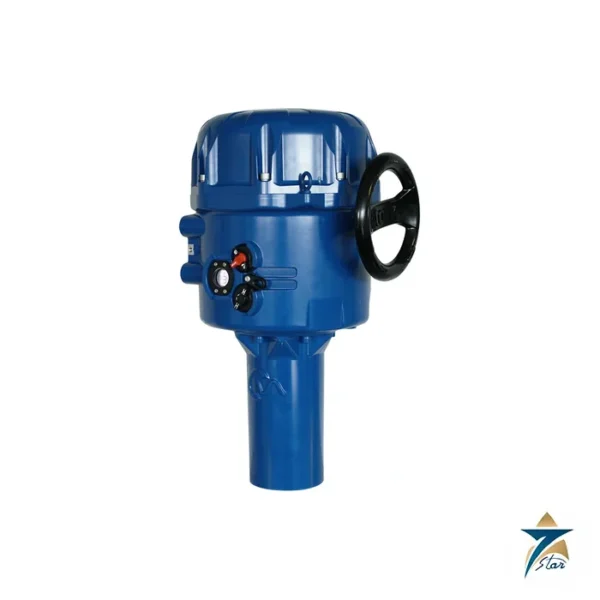
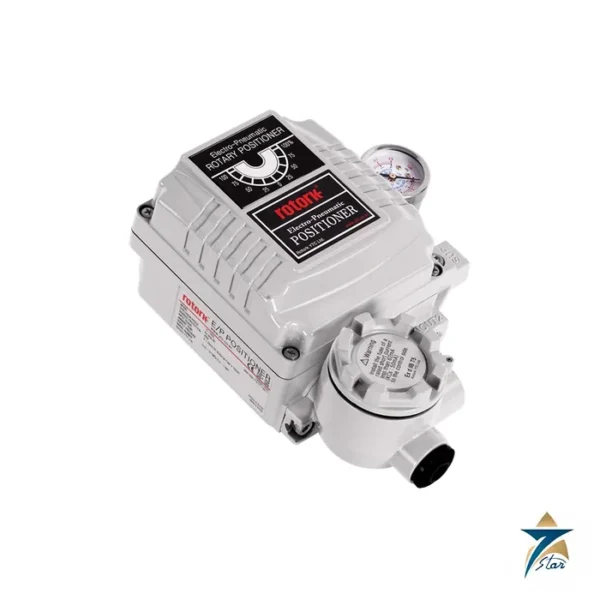
- Accessories: NAMUR solenoid, limit switches, positioner and manual override.
Installation, commissioning and maintenance
Mount the actuator on the valve with the right bracket and coupling, align the shaft and check that the valve strokes through the full travel by hand or at low pressure before applying full supply. Fit and pipe the NAMUR-mounted solenoid or positioner. Set the travel stops with the valve at both extremes, lock the nuts and confirm position indication matches the valve. Air supply must be clean and dry; moisture and particles are the main cause of early wear.
The GT Range is designed for minimum maintenance. Routine work is periodic cycling of rarely used valves, checking the air lines and breathers, and replacing O-rings and guide rings at a service kit interval based on duty. The installation and maintenance manual for the GT and GTS ranges covers disassembly and spring cartridge handling; take care with spring-return units, as the cartridges are under load.
Typical applications in Oman and the GCC
Rack and pinion actuators of this type are found on cooling-water and seawater butterfly valves, utility air and nitrogen headers, fire-water lines, chemical dosing and process skids across Gulf oil and gas, power and desalination sites. In hot and dusty conditions, specify the finish and seals for outdoor service and a suitable temperature kit. For fail-safe isolation on process lines, use spring-return units with a SIL-capable solenoid and a partial stroke arrangement. Coastal humidity is a reason to choose hard anodised or coated bodies, or the stainless GTS.
GT Range sizes and typical outputs at 10 bar double-acting
| Size |
Torque at 10 bar (Nm) |
| 33 / 34 |
11.5 |
| 43 / 44 |
23.1 |
| 52 |
39.0 |
| 63 |
57 |
| 75 |
100 |
| 83 |
144 |
| 92 |
199 |
| 110 |
289 |
| 118 |
429 |
| 127 |
574 |
| 143 |
930 |
| 160 |
1,145 |
Torque values are from the brochure double-acting table; consult Rotork data for sizes 190 to 302 and for spring-return output.
Information to send with an RFQ for the GT Range
- Valve make, type, size, class and torque data, with mounting flange size.
- Double-acting or spring-return, fail direction and supply pressure.
- Ambient temperature, area classification and any SIL requirement.
- Required accessories and cabling or piping interface.
- Quantity and schedule.
Documents and quotation
The Rotork GT Range brochure is attached on this page. Send the details above and the actuator model, and we will confirm availability and prepare a quotation for the GT Range in Oman and the GCC. Seven Star LLC is an independent supplier in Muscat.



















Reviews
There are no reviews yet.