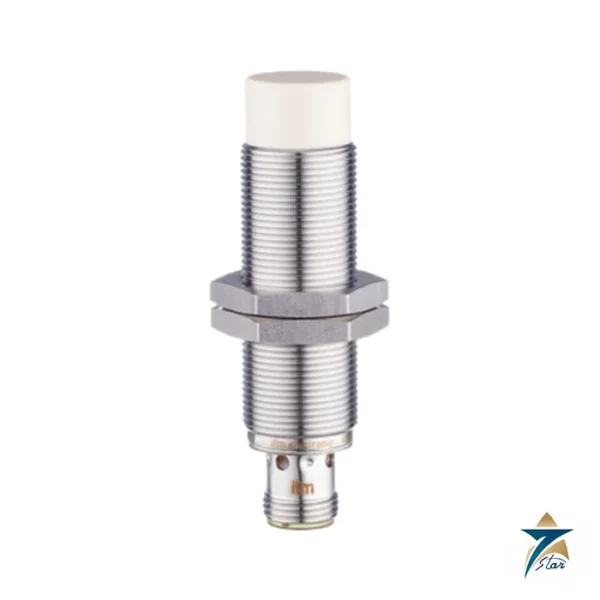
Brand:

Autonics PR12-4AO M12 AC 2-Wire Inductive Proximity Sensor

Description

Overview

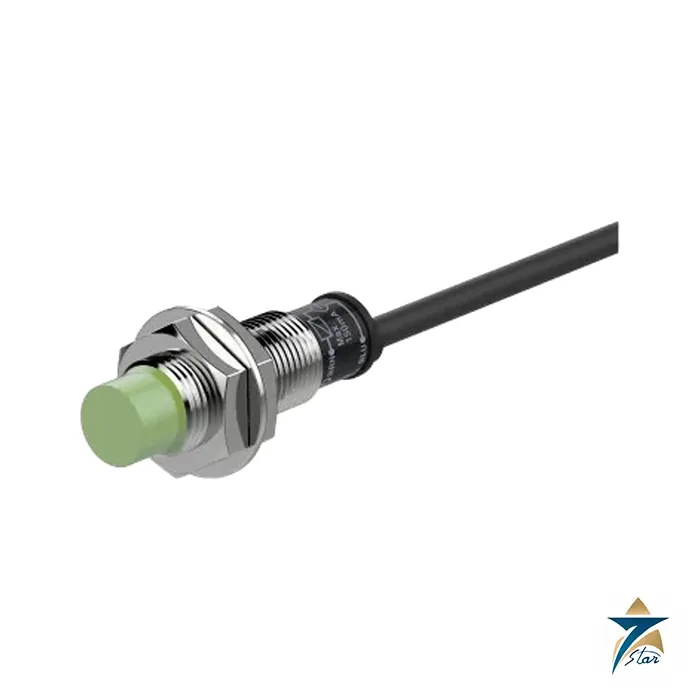
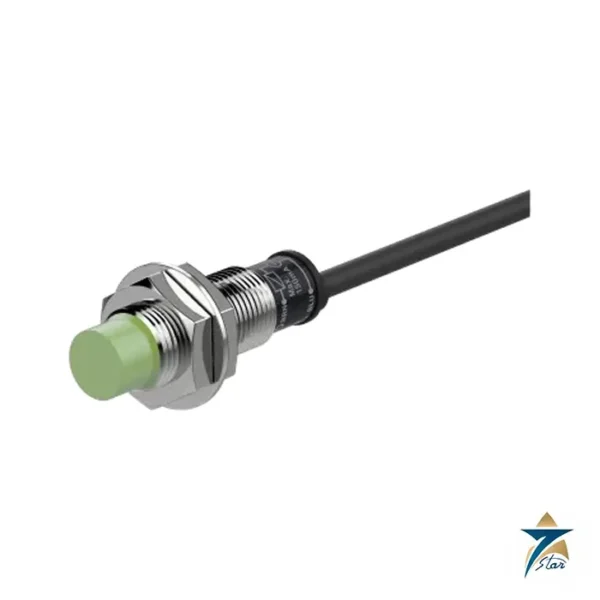
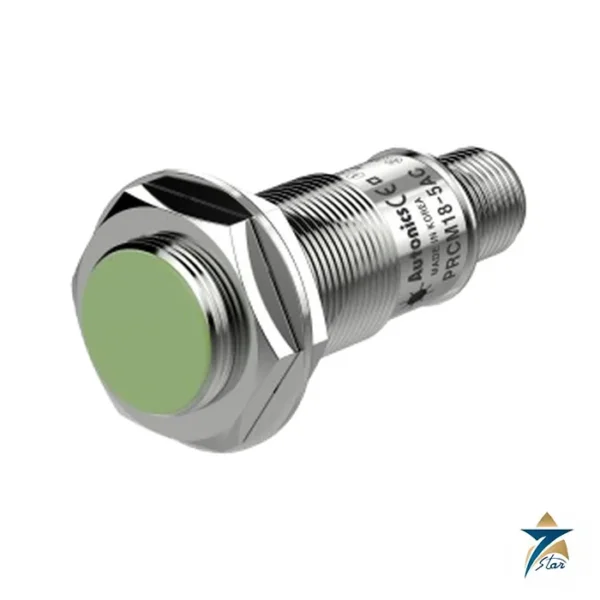
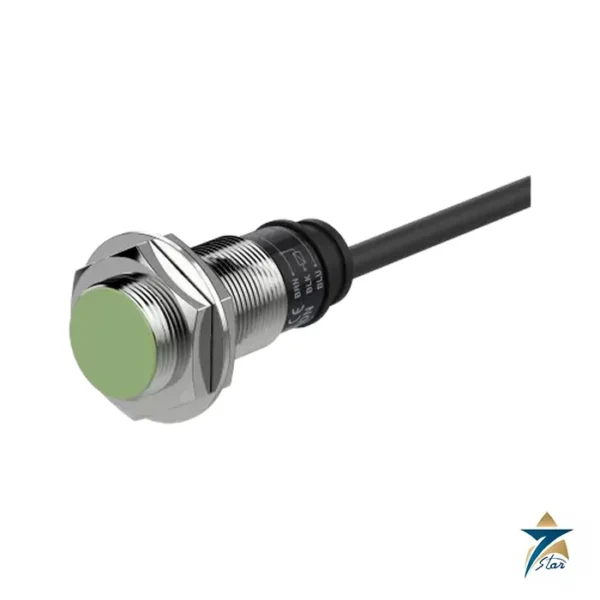
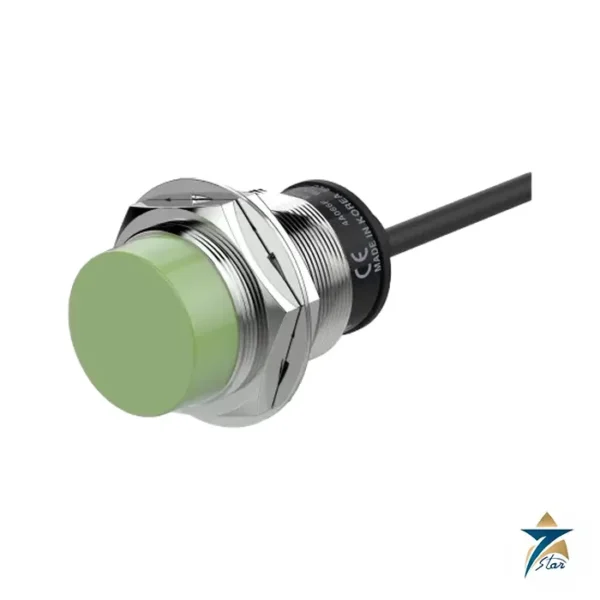
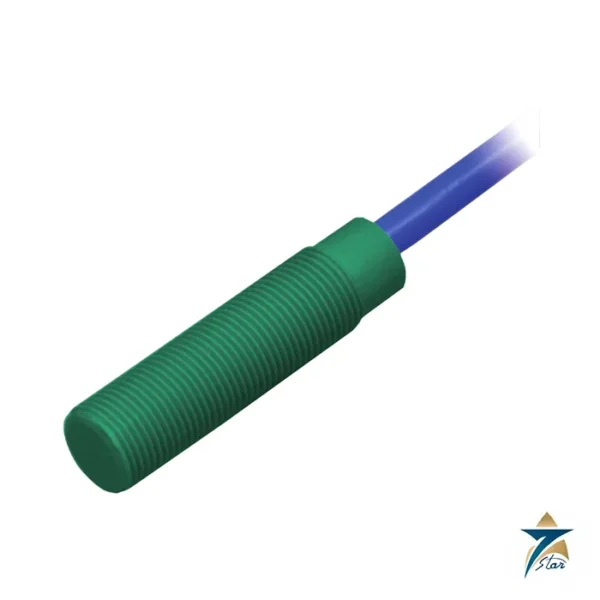
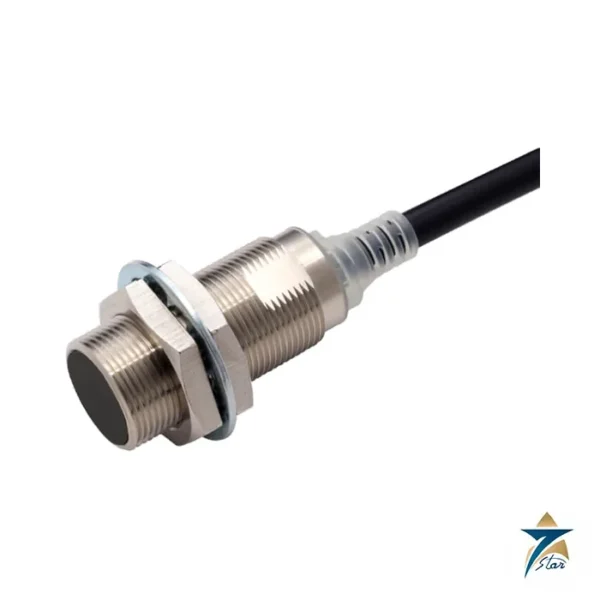
Small bore, mains voltage, simple wiring: the Autonics PR12-4AO combines these in a 12 mm cylindrical inductive proximity sensor. It runs from 100 to 240 V AC on two wires, has a non-flush head with a 4 mm rated sensing distance and a normally open output. Seven Star LLC is an independent supplier serving Oman and the GCC.

A 12 mm barrel fits the tight spaces of valve actuators, small slides and pneumatic cylinders, and an AC version removes the need for a DC power supply at remote junction boxes. The data here is drawn from the PR series AC 2-wire manual and describes this code only.

Specifications for Autonics PR12-4AO

Item Data
Diameter of sensing side 12 mm, non-flush
Rated sensing distance 4 mm
Setting distance 0 to 2.8 mm
Standard target Iron 12 x 12 x 1 mm
Supply 100 to 240 V AC 50/60 Hz, operating 85 to 264 V AC
Response frequency 20 Hz
Hysteresis 10 percent or less
Leakage current 2.5 mA or less
Switching current 5 to 150 mA
Residual voltage 10 V or less
Protection circuit Surge protection
Dielectric strength 2,500 V AC for one minute
Ambient temperature -25 to 70 C
Protection structure IP67
Cable 4 mm, 2-wire, 2 m, AWG 22
Weight About 72 g, about 84 g with packing

Why the current limit of PR12-4AO is lower

Compared with the M18 and M30 AC sensors the 12 mm body is thermally smaller, so its switching current range is 5 to 150 mA instead of 5 to 200 mA. This still covers most interposing relays and small contactors, but a larger contactor coil with a high inrush current should be driven through an interposing relay. Remember the lower limit too: below 5 mA the sensor may not stay powered.

The sensor has two wires, brown and blue, and the load can be wired on either side. The manual states that the load should be connected before the power is switched on.

Mounting the sensor

With the PR12-4AO you must leave a clear area in front of the non-flush head: 36 mm in diameter and 11 mm deep. Two sensors facing each other need at least 24 mm between them and, side by side, 36 mm. Tighten nuts with the supplied washer up to 6.37 N m at the front and 11.76 N m at the rear of the thread. Aim for a working gap of about 2.8 mm, which is 70 percent of the rated range, because targets that are not iron or are smaller than 12 mm square will switch at a shorter distance.

Do not pull the 4 mm cable with 30 N or more, and when you extend it use AWG 22 or thicker wire, not longer than 200 m in total.

How Autonics PR12-4AO compares with its relatives

The flush PR12-2AO senses only 2 mm but allows level mounting. The DC type PR12-4DN has the same 4 mm range but a 500 Hz response and a DC three-wire connection. The 18 mm PR18-8AO reaches 8 mm and weighs about 118 g, and the cable weight of this 12 mm unit is only about 72 g. If the 12 mm hole is fixed and you need AC, the PR12-4AO is the longest-reach choice.

Commissioning checklist

Before energising a circuit that contains the Autonics PR12-4AO, confirm that the load is connected, that the supply voltage is within 85 to 264 V AC and that the target is made of ferrous metal. Switch on, move the target slowly towards the face and note the distance at which the red operation indicator comes on; this is the real operating distance for your target, and it should be larger than your intended gap by at least 30 percent. Move the target away and note where the indicator goes out: the difference between the two points is the hysteresis, which is 10 percent of the sensing distance or less.

Record both distances on the commissioning sheet, along with the supply voltage and the load type. Such a record makes later fault finding far faster, because a sensor that has aged or a bracket that has shifted will show up as a change in these two numbers. Repeat the test after any maintenance that involves the bracket, and tighten the nuts again after the first week of vibration.

Typical uses

In Oman and across the GCC, small AC proximity sensors are common on actuated valves for position confirmation, on sliding covers of packaging machines, on door interlocks of control cabinets, and on the end stops of small positioning tables. Slow speed is no problem: the 20 Hz response is plenty for open-closed signals. Outdoors, shield the sensor from direct sun since the ambient limit is 70 C.

Why engineers keep Autonics PR12-4AO in spares

The Autonics PR12-4AO is the sort of part that is found on old machines which cannot be rewired economically. Having one on the shelf avoids a long shutdown for a small component, and its two-wire AC format means that it can replace several failed models of the same barrel size with only a change of the bracket position. Because the order code carries the sensing distance, the supply type and the output logic, a technician can match an old nameplate to the exact code with confidence.

Safety and care

Because the circuit carries mains voltage, isolate it before connecting or changing the sensor. The manual warns that working on a live unit may cause fire or electric shock. Clean only with a dry cloth. The sensor is not suitable for places with flammable gas, high humidity combined with condensation, or strong vibration beyond the tested level of 1 mm double amplitude at 10 to 55 Hz. For machines where an injury could result from a failed sensor, add a separate fail-safe protection.

Selection tips

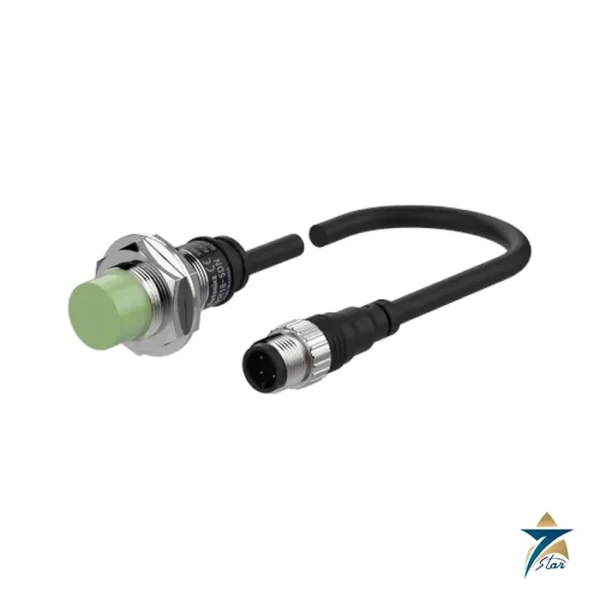
Confirm whether your control uses NO or NC logic: this code has the O suffix for normally open, and a normally closed unit has C. Check the leakage current of your load, since 2.5 mA is enough to keep some neon indicators and solid state input cards partially on. When the Autonics PR12-4AO is used with an electronic input, a bleeder resistor across the load often solves the problem. Accessories such as M12 connector cables for AC types, brackets and spatter covers are separate items.

Related items you may also need: Autonics PR18-8DN M18 Inductive Proximity Sensor 8 mm | Autonics E40S6-2500-6-L-5 Rotary Encoder Incremental | Omron E2E-S05S12-WC-B1 2M M5 Inductive Proximity Sensor | All Autonics products.

Documents and quotation

The AC 2-wire PR series manual is attached as a datasheet. Send your RFQ for PR12-4AO to Seven Star LLC with the quantity and the delivery location, and we will respond with lead time for Oman and the GCC. Please also mention whether you need the cable or connector version so that the correct code is quoted.

Other Models in the PR AC2 Range

Seven Star LLC supplies models from the PR AC2 range in Oman and the GCC. Compare the related models below and request a quote for the one that matches your application.

ModelCategory
Autonics PR18-8AO M18 AC 2-Wire Inductive Proximity SensorInductive Proximity SensorsView details
Autonics PR12-4AO M12 AC 2-Wire Inductive Proximity SensorInductive Proximity SensorsYou are viewing this model
Datasheets & Documents
  • PDF Datasheet Autonics PR12-4AO M12 AC 2-Wire Inductive Proximity Sensor Datasheet Download
Reviews (0)

Reviews

There are no reviews yet.

How would you rate this product?

It takes about 10 seconds — just tap a star. Your email is never published.

About brand

Autonics is a South Korean maker of sensors and controllers, founded in 1977 as a small engineering business making controllers for looms. It took the Autonics name in 1988 and opened a new corporate headquarters in Busan in 2014. Autonics makes proximity and photoelectric sensors, rotary encoders, temperature controllers, counters, timers and stepper motor systems, with factories in Busan and Yangsan.

Seven Star LLC lists the Autonics E40S6-2500-6-L-5 incremental rotary encoder and supplies Autonics sensors and control devices in Oman and the GCC.

Autonics company profile

Founded 1977, South Korea
Current name Autonics, since 1988
Headquarters Busan, South Korea
Factories Busan and Yangsan
Product families E40 and E50 rotary encoders, PR proximity sensors, BJ photoelectric sensors, TK temperature controllers

Milestones

  • 1977: The company is founded.
  • 1988: Renamed Autonics Corporation.
  • 2014: Opens its Busan headquarters.

Reading the Autonics E40S encoder code

E40S is the 40 mm diameter shaft-type incremental encoder, and the 6 that follows is the 6 mm shaft. 2500 is the resolution in pulses per revolution. The next 6 means six output signals: A, B and Z with their inverted signals. L is a line driver output and the final 5 is a 5 V DC supply. The same 40 mm body is made in hollow shaft form as the E40H and E40HB series.

Where Autonics encoders are used

Servo and spindle feedback, conveyor length measurement, packaging and printing machines.

Ordering Autonics encoders: what we need

Send the complete model string from the label. If it is worn off, give the body and shaft diameter, pulses per revolution, output type, supply voltage and cable or connector style.

Facts checked against Autonics corporate profiles, October 2026.

FAQ

Questions about the Autonics PR12-4AO M12 AC 2-Wire Inductive Proximity

Answers from our engineering team on installation, compatibility and integration.

01What is the sensing distance of Autonics PR12-4AO?
The rated sensing distance is 4 mm for a 12 x 12 x 1 mm iron plate, and the stable setting range is 0 to 2.8 mm.
02Why is the PR12-4AO current limited to 150 mA?
The 12 mm body is smaller, so the switching current is 5 to 150 mA, while the 18 mm and 30 mm AC sensors reach 200 mA.
03Is PR12-4AO a DC or AC sensor?
It is an AC two-wire sensor for 100 to 240 V AC, so it is wired in series with the load and needs no separate DC supply.
04How much clear space does PR12-4AO need?
As a non-flush type it needs a clear zone of 36 mm diameter and 11 mm depth, 24 mm face to face and 36 mm side by side.
05What is the response speed of PR12-4AO?
The response frequency is 20 Hz, suitable for open and closed position signals but not for fast pulse counting.