Brand:

Autonics BF5R-D1-N Dual Display Fiber Optic Amplifier

Description

Overview

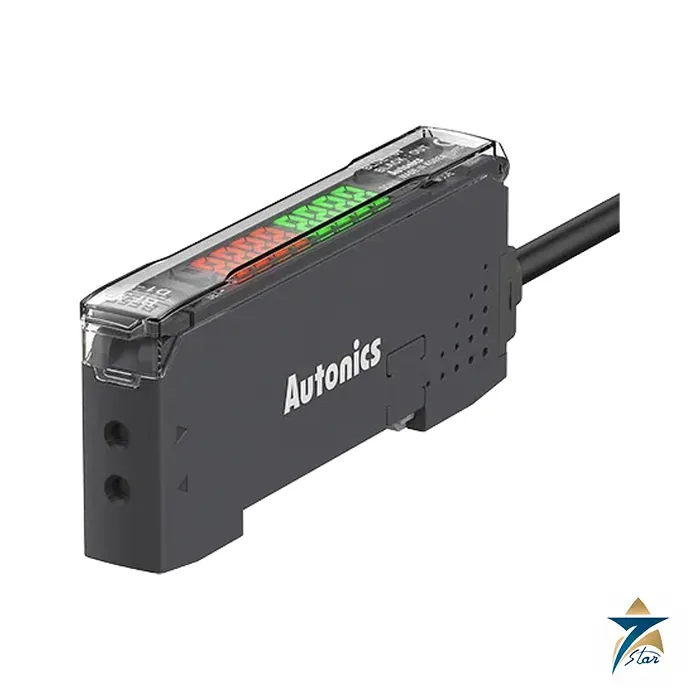
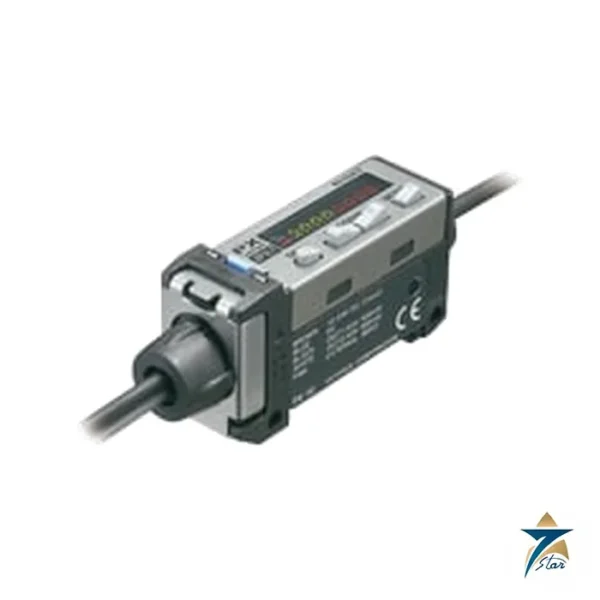
Fibre-optic sensing needs an amplifier, and Autonics BF5R-D1-N is the dual-display, NPN-output amplifier of the Autonics BF5 Series with a red LED light source. A fibre-optic sensor sends light through a thin fibre to a tiny sensing head, so it can detect very small parts or work in places where an ordinary photoelectric sensor would not fit; the amplifier holds the electronics and the display. The code reads as follows: R is the red LED, D is the dual display, 1 is the general type function set and N is an NPN open collector output. Seven Star LLC is an independent supplier serving Oman and the GCC.

The fibre units themselves are sold separately, so the amplifier is selected together with a through-beam or reflective fibre that suits the target size and distance.

Key features of Autonics BF5R-D1-N

  • Red LED light source, peak emission 660 nm, modulated against ambient light.
  • Dual display: the present value in red digits and the setting value in green digits, each four digits.
  • Three response modes: fast (150 microseconds), standard (500 microseconds) and long distance (4 ms).
  • Light ON or Dark ON operation and sensitivity setting by manual adjustment or by teaching.
  • Up to 31 amplifiers can be cascaded side by side, and mutual interference prevention is provided.
  • Light 20 g body (about 138 g with packaging), mounted on a DIN rail.

Technical data for Autonics BF5R-D1-N

Parameter Value
Model BF5R-D1-N
Light source Red LED, 660 nm, modulated
Display Dual, 7-segment 4-digit, PV red and SV green
Response time modes 150 microseconds / 500 microseconds / 4 ms
Operation mode Light ON, Dark ON
Power supply 12 to 24 V DC plus or minus 10 percent, ripple 10 percent or less
Current consumption 50 mA or less
Control output NPN open collector
Load current 100 mA or less
Residual voltage 1 V DC or less (NPN)
Max. cascading units 31
Ambient temperature minus 10 to plus 50 degrees C
Ambient humidity 35 to 85 percent RH
Protection IP40
Cable connector cable, 4 mm, 3-wire, 2 m
Material Case PBT, cover PC

How BF5R-D1-N differs from other BF5 variants

The BF5 family varies in three letters. Colour of the LED: R is red, G is green and B is blue; the green and blue sources suit colour marks and small, low-contrast targets. Display: D is dual display with a green setting value, S is a single display with red digits for both values. Output: N is NPN and P is PNP open collector. Autonics BF5R-D1-N therefore has PNP twin BF5R-D1-P, a single-display twin BF5R-S1-N, and green and blue siblings such as BF5G-D1-N and BF5B-D1-N.

Both display versions share the same teaching, group teaching and manual sensitivity functions, while the dual display adds the extra data bank mode, anti-saturation function and incident light level monitoring shown in the manual’s function map.

Applications

Fibre sensors paired with this amplifier are used for detecting small components on assembly lines, counting pills and caps in packaging, checking wafer and PCB presence, and detecting liquid level or edges through thin fibre probes in tight spots. In Oman and GCC factories they appear in bottling, electronics assembly and laboratory automation.

Selection and compatibility notes

Select the fibre unit first, since the amplifier alone cannot sense anything. Match the NPN output to the PLC input. Pick fast response mode for small, quick targets and long distance mode for weak signals. The IP40 rating is for protected indoor cabinets, and the unit should not be exposed to dust or water without an enclosure. Do not pull the cable of the fibre optic unit connected to the amplifier.

Settings, teaching and group functions

The manual’s function map shows how an operator works with the amplifier from the front keys. A short press of SET runs teaching sensitivity setting, a three-second press of SET starts group teaching for the cascaded amplifiers, and the left and right keys give manual sensitivity setting. Holding MODE for three seconds opens the program mode, five seconds opens the data bank mode, and seven seconds initialises the amplifier. The dual display model also offers an anti-saturation function and incident light level monitoring, which help when the received light is very strong at short range. In a cascaded group one amplifier acts as the master, and master instructions such as one-to-many copy, load all, save all and group teaching are passed to the slaves; if the side connector communication is unstable, the slave shows a communication error and the manual advises checking the cascaded amplifiers and the side connector hardware. An overcurrent error appears in RUN mode when the output is overloaded, and it is cleared by removing the overcurrent. Response time is selected by mode setting: FST, STD or LONG, equal to 150 microseconds, 500 microseconds and 4 ms.

A timer function can add an OFF delay of 10 ms or 40 ms to the output, which stretches very short pulses from small targets so that a slower PLC scan still sees them. These features make Autonics BF5R-D1-N suitable for production lines where several sensing points must be set up quickly and identically.

Installation and commissioning

Snap the amplifier on a 35 mm DIN rail, insert the fibre units into the sockets and lock them, and connect the three-wire cable. Where several amplifiers sit together, use the cascading connector so that settings can be copied. Set sensitivity with the teaching function on Autonics BF5R-D1-N, choose the response mode and confirm the operation indicator.

Maintenance

Clean the fibre ends with a soft dry cloth, check for bends or kinks, and re-teach after replacing a fibre or when dust accumulates.

Ordering notes for Autonics BF5R-D1-N

Quote BF5R-D1-N and the quantity, and tell us which fibre units you plan to use so we can discuss the full set.

Related items you may also need: Autonics E40S6-2500-6-L-5 Rotary Encoder Incremental | SICK WTB16P-24162120A00 W16 Background Suppression Sensor | Banner QS30ARXH2OQ5 Water Sensor Receiver, High Gain | All Autonics products.

Documents and quotation

The BF5 Series product manual is attached to this listing. To request pricing, send part number BF5R-D1-N, the quantity and your delivery location in Oman or the GCC through the RFQ form and we will confirm availability and lead time.

Datasheets & Documents
  • PDF Datasheet Autonics BF5R-D1-N Dual Display Fiber Optic Amplifier Datasheet Download
Reviews (0)

Reviews

There are no reviews yet.

How would you rate this product?

It takes about 10 seconds — just tap a star. Your email is never published.

About brand

Autonics is a South Korean maker of sensors and controllers, founded in 1977 as a small engineering business making controllers for looms. It took the Autonics name in 1988 and opened a new corporate headquarters in Busan in 2014. Autonics makes proximity and photoelectric sensors, rotary encoders, temperature controllers, counters, timers and stepper motor systems, with factories in Busan and Yangsan.

Seven Star LLC lists the Autonics E40S6-2500-6-L-5 incremental rotary encoder and supplies Autonics sensors and control devices in Oman and the GCC.

Autonics company profile

Founded 1977, South Korea
Current name Autonics, since 1988
Headquarters Busan, South Korea
Factories Busan and Yangsan
Product families E40 and E50 rotary encoders, PR proximity sensors, BJ photoelectric sensors, TK temperature controllers

Milestones

  • 1977: The company is founded.
  • 1988: Renamed Autonics Corporation.
  • 2014: Opens its Busan headquarters.

Reading the Autonics E40S encoder code

E40S is the 40 mm diameter shaft-type incremental encoder, and the 6 that follows is the 6 mm shaft. 2500 is the resolution in pulses per revolution. The next 6 means six output signals: A, B and Z with their inverted signals. L is a line driver output and the final 5 is a 5 V DC supply. The same 40 mm body is made in hollow shaft form as the E40H and E40HB series.

Where Autonics encoders are used

Servo and spindle feedback, conveyor length measurement, packaging and printing machines.

Ordering Autonics encoders: what we need

Send the complete model string from the label. If it is worn off, give the body and shaft diameter, pulses per revolution, output type, supply voltage and cable or connector style.

Facts checked against Autonics corporate profiles, October 2026.

FAQ

Questions about the Autonics BF5R-D1-N Dual Display Fiber Optic

Answers from our engineering team on installation, compatibility and integration.

01What does BF5R-D1-N mean?
BF5 fibre amplifier series, R red LED, D dual display, 1 general function type, N NPN open collector output.
02How many amplifiers can be cascaded?
The specification table gives a maximum of 31 cascaded units.
03What response times can be selected?
The amplifier offers fast 150 microseconds, standard 500 microseconds and long distance 4 ms modes.
04What supply voltage and current does it need?
12 to 24 V DC plus or minus 10 percent with current consumption of 50 mA or less.
05Are fibre units included?
No. Fibre optic units are sold separately and chosen according to target and distance.