PR-G51N: what this PR-G series sensor is and how its code reads
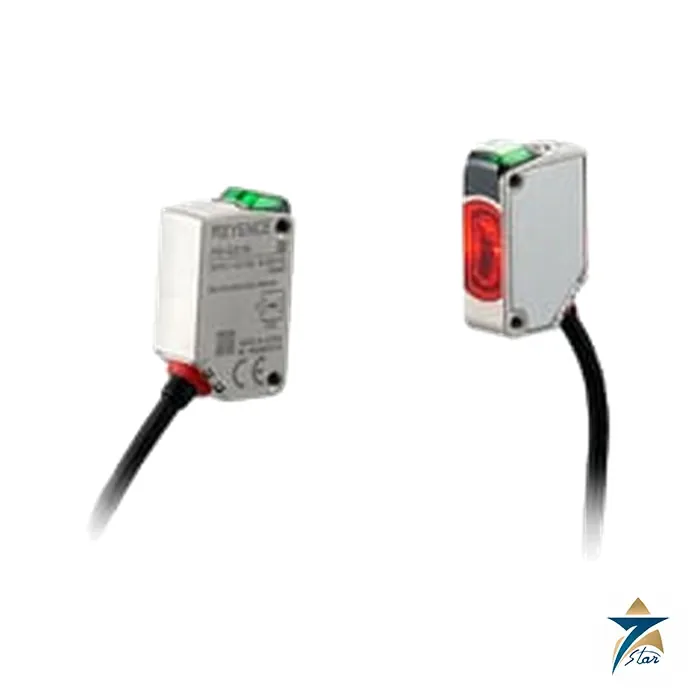
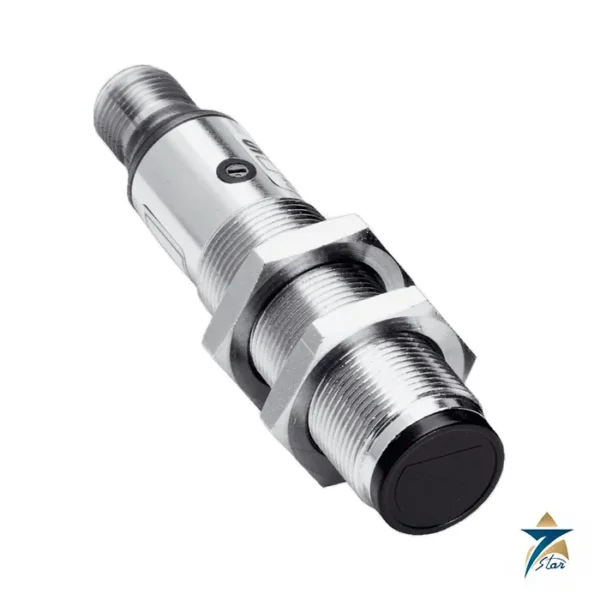
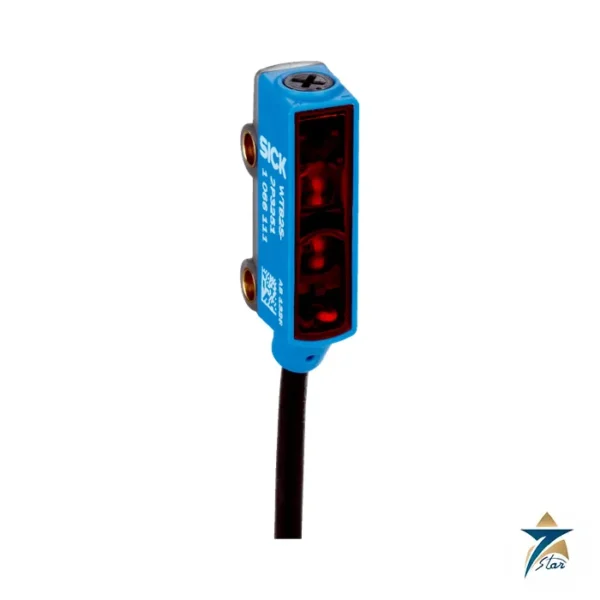
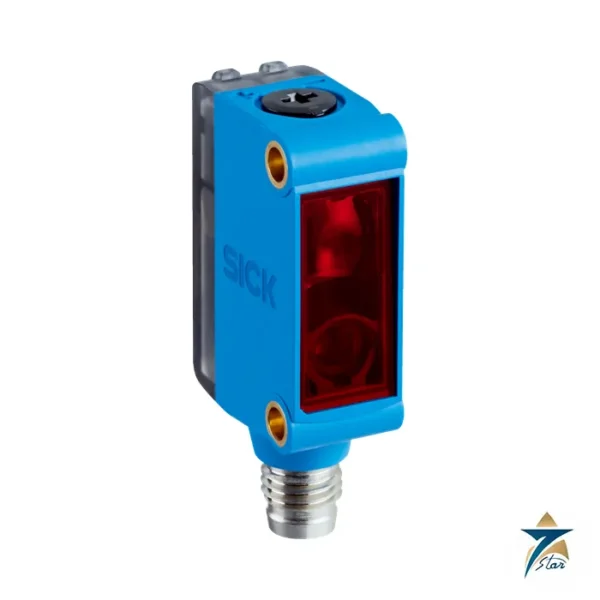
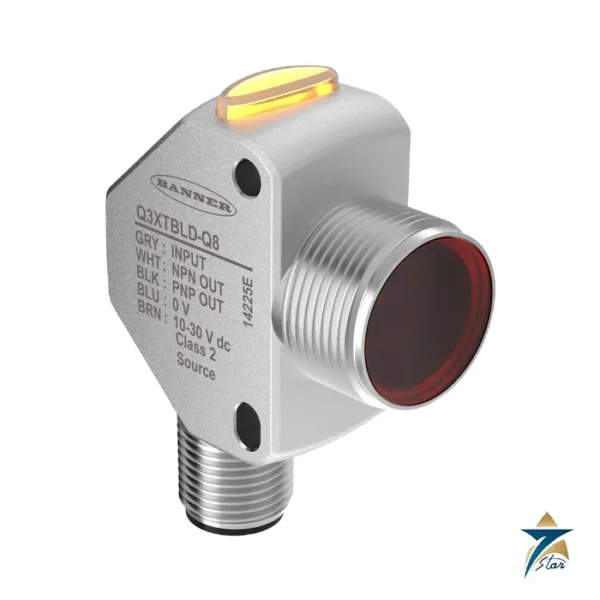
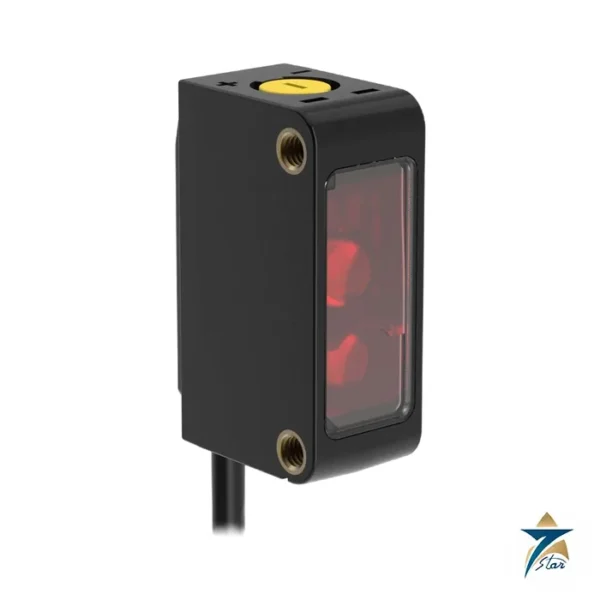
PR-G51N is a Keyence PR-G series product, listed by the maker as: Rectangular Thrubeam Cable Type 30 m. The PR-G series is a family of self-contained photoelectric sensors in a rectangular, stainless steel housing, built for wash-down and dusty areas where plastic-bodied sensors age quickly. The amplifier, light source and receiver sit in one body, so there is no separate controller to mount or wire. Seven Star LLC supplies PR-G51N in Oman and the GCC as an independent supplier in Muscat, not affiliated with the manufacturer.
The code breaks down as the PR-G series, the 51 rectangular thrubeam body, and the N suffix for NPN open-collector outputs. Keyence lists it as a rectangular thrubeam cable type with a 30 m detecting distance and a 2 m cable.
PR-G51N is the long-range member of the family. A pair of units (transmitter and receiver) covers up to 30 m, which is far more than reflective styles manage, so it is chosen for wide openings, long conveyors and gates where a beam must cross a large gap. The receiver offers a second output (Light-ON) in addition to the Dark-ON output, as the table shows.
PR-G51N technical specifications
| Parameter |
Specification |
| Manufacturer / part number |
Keyence / PR-G51N |
| Product description |
Rectangular Thrubeam Cable Type 30 m |
| Type |
Thrubeam |
| Shape |
Rectangular |
| Output |
NPN |
| Cable connection |
2 m cable |
| Detecting distance |
30 m |
| Number of control outputs |
2 (Dark-ON +Light ON) |
| Output operation |
Output 1: Dark-ON |
| Output 2 |
Light-ON |
| Response time |
1 ms |
| Sensitivity adjustment |
One-turn trimmer (230°) |
| Light source |
4 elements, Red LED (631 nm) |
| Indicator lamp |
Transmitter: power supply indicator (green) Receiver: output indicator (yellow), Stable operation indicator (green) |
| Control output |
NPN open collector 30 VDC or less, 100 mA or less Residual voltage: 1.2 V or less at less than 10 mA, 2 V or less at 10 to 100 mA |
| Stop emission input |
Non-voltage input Input time ON: 1 ms or more, OFF: 20 ms or more |
| Protection circuit |
Protection against reverse power connection, power supply surge, output overcurrent, output surge, and reverse output connection |
| Rating |
Power voltage: 10 to 30 VDC, including Ripple (P-P) 10 % |
| Power consumption |
Transmitter: 450 mW max. (15 mA max. at 24 V, 15 mA max. at 12 V) Receiver: 360 mW max. (12 mA max. at 24 V, 15 mA max. at 12 V) |
| Environmental resistance |
Enclosure rating: IP68 (IEC60529), IP69K (DIN40050-9), 4X, 6P, 13 (NEMA250) |
| Insulation resistance |
20 MΩ or more (500 VDC) |
| Ambient light |
Incandescent lamp: 5,000 lux or less, Sunlight: 20,000 lux or less |
| Ambient temperature |
-20 to +70 °C (No freezing) |
| Relative humidity |
35 to 85 % RH (No condensation) |
| Storage temperature |
-20 to +70 °C |
| Withstand voltage |
1,000 VAC, 50/60 Hz, 1 min |
| Vibration resistance |
10 to 55 Hz, Double amplitude 1.5 mm , 2 hours in each of the X, Y, and Z directions |
| Shock resistance |
1,000 m/s² , 6 times in each of the X, Y, and Z directions |
| Material |
Case: SUS 316L, Indicator cover: PES, 7-segment display cover/Lens cover: PMMA (scratch-resistant coating) M18 nut: Brass (Nickel plating), Lock washer: Steel (Chrome plating) |
| Weight |
Approx. 160 g |
Values in the table are taken from the maker’s model page for PR-G51N. Treat them as nominal and confirm the exact conditions in the instruction manual before final design.
How the sensing principle behind PR-G51N works
A self-contained photoelectric sensor emits a modulated red LED beam and watches how much of that light returns to its receiver. In thrubeam mode a transmitter and a receiver face each other and the object is detected when it interrupts the beam; in retro-reflective mode a single housing looks at a reflector and detects an object that blocks the return path. Modulation lets the electronics ignore steady ambient light, which is why the series can state both incandescent and sunlight immunity figures.
Detection is therefore a yes/no decision on received light against a threshold set with the trimmer. Because the electronics evaluate the signal margin, a contaminated lens shows up as a drift in the stable-operation indication long before the output starts failing, giving maintenance a chance to clean the lens during a planned stop.
Where PR-G51N fits: related PR-G series parts
In a plant these sensors typically feed PLC digital input cards through the NPN or PNP open-collector output, so the first compatibility check is the polarity your input module expects. They are usually mounted with M18 hardware or a small bracket on conveyors, filler outlets, door frames and tank platforms.
The PR-G series range includes the following part numbers, which are listed for cross-reference: PR-G51CBD, PR-G61CBD, PR-G41CBL, PR-G51N, PR-G61N, PR-G41N, PR-G51CN, PR-G51P, PR-G61P, PR-G51CP, PR-G61CP, PR-G41CP, PR-G51C3PD and PR-G61C3PD. Whether a particular combination is compatible should be confirmed from the maker’s documents. Closely related models from the same family that you may also want to compare include PR-G61P.
Selecting PR-G51N: ordering checklist
- Sensing mode: thrubeam needs two units and clear alignment, retro-reflective needs one unit plus a reflector.
- Output polarity: NPN versus PNP must match the PLC input module.
- Connection: pre-wired cable or M8 connector, and the cable length you need.
- Required sensing distance with margin for lens contamination.
- Washdown or chemical exposure, because housing material and sealing govern service life.
- Whether a second output or interference-prevention is needed when sensors sit close together.
For PR-G51N specifically, confirm the output type, the connection style and the rated distance shown in the table above against the real installation drawing before placing an order.
Installing and maintaining PR-G51N
Mount thrubeam pairs on rigid brackets so vibration cannot move the beam, align the units by watching the stable-operation indicator on the receiver, and tighten the M18 nuts only to the torque in the instruction manual so the stainless body is not distorted. Keep cable runs away from variable-speed drive output cables to prevent induced noise on the output line.
During maintenance wipe the lens with a soft cloth and a mild detergent, check that the cable gland is not chafed, and verify the output with a test target after any replacement. Keep one spare of each variant you use on the shelf, since the NPN and PNP versions are not interchangeable.
Typical applications of PR-G51N in Oman and the GCC
In Oman and the GCC these sensors are specified for bottling and packaging lines, dairy and food plants, desalination plant chemical dosing skids, and outdoor conveyors at ports and cement works. The combination of stainless steel construction and a high enclosure rating suits sites that see heavy hot-water washdown, salt-laden air and blowing sand. A red visible beam also makes alignment easy in the bright daylight typical of the region.
On wide conveyor lines and loading gates the 30 m reach lets one pair guard an entire opening. Extra heat, dust and humidity are normal in the region, so check the ambient temperature and enclosure rows in the table against the real mounting location, including direct sunlight on outdoor skids.
PR-G series models compared with PR-G51N
The table lists the PR-G series models in our current range with the maker’s own description, to help you see how PR-G51N differs from its neighbours.
| Model |
Maker description |
| PR-G51N |
Rectangular Thrubeam Cable Type 30 m |
| PR-G61P |
Square retro-reflective Cable Type 4.2m |
Information to send with your PR-G51N RFQ
- Exact part number: PR-G51N (and quantity, including any matching transmitter, receiver, reflector or head).
- Output polarity required by your PLC input card (NPN or PNP).
- Cable length or connector type and the mounting method.
- Ambient conditions: temperature, washdown, dust and direct sunlight.
- Project reference, delivery location in Oman or the GCC and required lead time.
- Any related items needed, such as brackets, cables, reflectors or a mating amplifier.
Documents and quotation
Send us the part number PR-G51N and we will confirm available documents, including the maker’s datasheet and instruction manual where we can provide them. Prices are quoted per request and are not shown on this page.
Seven Star LLC is an independent supplier in Muscat serving Oman and the GCC. We are not affiliated with the manufacturer, and we quote against your RFQ with delivery and lead time confirmed in the quotation.




















Reviews
There are no reviews yet.