Brand:

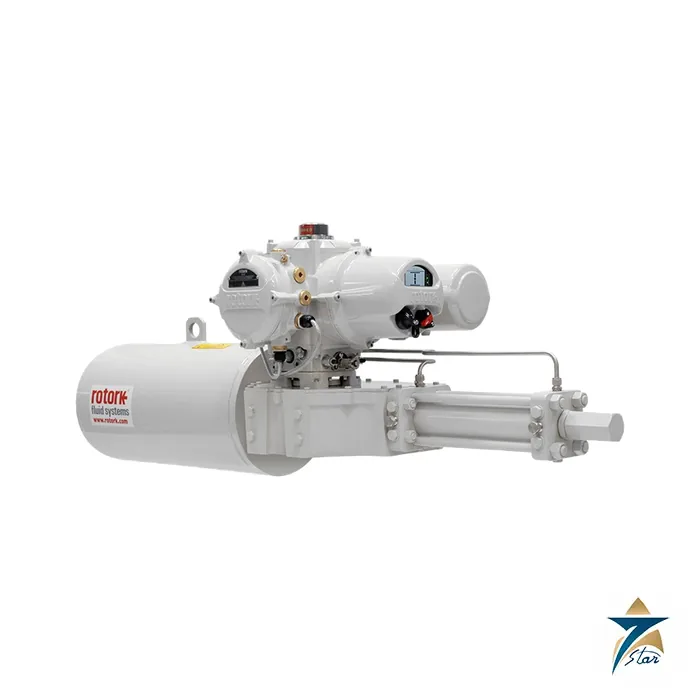
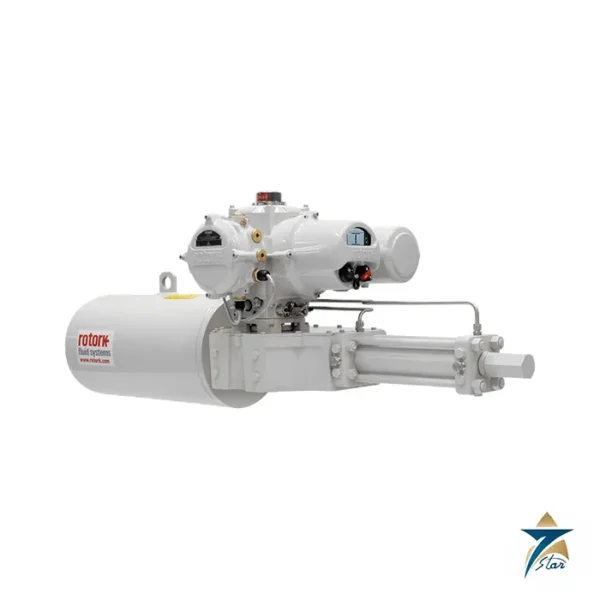
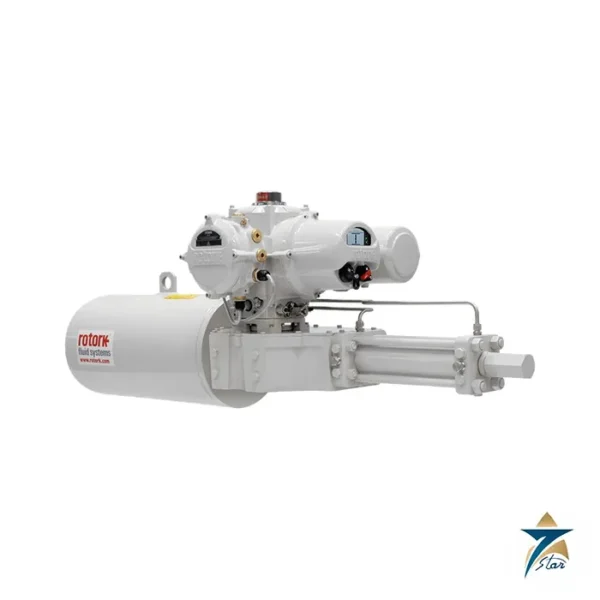
Rotork Skilmatic SI3-240-070/C2 Spring-Return Actuator

Description

Rotork SI3-240-070/C2 overview

Rotork Skilmatic SI3-240-070/C2 is the 240 size of the SI3 range, a step above the 120 size, with 1,275 Nm of spring-return torque in the fail-close direction and 1,407 Nm in the hydraulic direction. Larger torque requirements move to the GH-based sizes of the range. The SI3-240-070/C2 therefore serves valves up to this torque class, typically larger ball valves or high-performance butterfly valves on gas and water lines.

Datasheet values for SI3-240-070/C2

Hydraulic (open) torque 1,407 / 1,123.5 / 840 Nm (1,038 / 829 / 620 lbf.ft)
Spring (close) torque 1,275 / 1,019 / 763 Nm (940 / 752 / 563 lbf.ft)
Hydraulic stroke 39 s / 17 s / 12 s at 0.58 / 1.50 / 2.25 L/min
Spring stroke by option 0: 0.7 to 0.8 s; 1: 1.0 to 2.0 s; 2: 1.1 to 5.2 s; 3: 5.3 to 12 s; 4: 6.1 to 26 s; 6: 14 to 28 s; 7: 15 to 32 s; 8: 16 to 39 s; 9: 18 to 49 s
Design life 60,000 cycles (RH, all sizes)
Modulating duty 300 starts per hour at 75 percent duty below 40 C; 40 percent above 40 C
End stops Mechanical, plus or minus 5 degrees

Note the longer times: a bigger hydraulic cylinder needs more oil, so even the fastest pump setting takes 12 s. Plan your valve opening time accordingly, and check it against the process safety time and any surge limits in the pipeline.

Fitting the SI3-240-070/C2 to a large valve

Weight and torque both grow here, so lifting points, support brackets and stem-to-drive alignment deserve attention. The valve interface follows the RH range drawing PUB019-001, and the orientation choices are documented in PUB021-089. After mounting, use the Bluetooth tool to set the open and close limits, then perform a full stroke test to record the hydraulic pressure and the spring return time with the selected option.

Safety behaviour of SI3-240-070/C2

Three modes are offered: fail-safe on loss of ESD signal or power, on loss of ESD signal only, or on loss of power only, plus a stayput variant. The SI range is certified to IEC 61508:2010 as an element suitable for safety instrumented systems, SIL 2 capable without diagnostics and SIL 3 capable with diagnostics. The partial stroke test can be started from an opto-isolated input or locally, and results are reported through relays as active, pass or fail. If a stroke is interrupted by a brief loss of ESD, the datasheet describes how the actuator returns to the intended state when the signal is restored.

How SI3-240-070/C2 differs from other SI3 variants

Against the SI3-120-060/C3 the SI3-240-070/C2 gives about 1.6 times the spring torque (1,275 against 804 Nm) and doubles the spring-option range (up to 49 s against 27 s). Against the GH-based SI3-085S-050/C2D, with 2,373 Nm spring torque, it offers lower torque; the datasheet gives a design life of 50,000 cycles for GH-085 and GH-100 compared with 60,000 for all RH sizes. The SI3-030-035/C0 and SI3-060-045/C2 offer only 114 and 425 Nm.

Protection functions on SI3-240-070/C2

Overpressure and stall alarms, set from the Bluetooth tool, distinguish an obstruction in mid-travel from a valve stuck at its seat; torque hammer protection stops the controller pushing repeatedly against a blocked valve while a standing signal remains. Incorrect phase rotation on a three-phase supply is detected and the pump is protected, and motor over-temperature is sensed by two thermostats embedded in the end windings. These functions are listed in the datasheet for the whole SI range, so a technician familiar with one actuator can diagnose another quickly.

Record keeping for a valve of this size is worth the effort, so the SI3-240-070/C2 saves a history of 3,000 events together with its settings, and it does so in memory that survives a power cut. Engineers can pull the file over Bluetooth into Insight 2 and compare a fresh pressure profile with the one taken at commissioning; a rise in the pressure needed to move the valve is an early sign of seat or stem trouble. The actuator also counts starts, adds up motor running hours, remembers the hottest and coldest temperatures it has seen, and stores the date of the last service, all of which feed a planned maintenance schedule rather than a breakdown call-out at 3 a.m. during a summer peak in the Gulf. The same screens show whether the last partial stroke test passed or failed.

Electrical and communications options for SI3-240-070/C2

  • Standard: three opto-isolated control inputs, PST input, four configurable relays and one monitor relay.
  • Options: 4 to 20 mA or 0 to 10 VDC positioning (Folomatic), additional relay cards S5 to S12, 24 VDC auxiliary supply (24 plus or minus 10 percent, 1 A) to keep the display and bus alive during outages.
  • Networks: option cards for Pakscan, Modbus RTU, Profibus DP, Foundation Fieldbus, HART and DeviceNet; in a functional safety application a hardwired ESD input still takes priority over every network command.
  • Remote Hand Station flyer PUB021-400 is listed for remote operation of SI actuators.

Duty, temperature and protection

On-off or positioning duty is under 15 cycles per hour. Temperature range runs -10 to +70 C (mineral fluid) to -50 to +50 C (synthetic ester); the display works from -50 to +70 C. Alarms protect against incorrect phase rotation, lost phase, motor overheating (two embedded thermostats) and stalled valves, and the remote control supply is fuse protected. A manual override option exists. Seven Star LLC is an independent supplier serving Oman and the GCC and is not affiliated with the manufacturer.

Documents and quotation

The Skilmatic SI range datasheet is attached for SI3-240-070/C2. State SI3-240-070/C2, quantity, power supply, valve interface and certificate requirement when sending the RFQ.

Other Models in the Rotork Skilmatic Si3 Range

Seven Star LLC supplies models from the Rotork Skilmatic Si3 range in Oman and the GCC. Compare the related models below and request a quote for the one that matches your application.

ModelCategory
Rotork Skilmatic SI3-130S-080/C1D Spring-Return ActuatorPneumatic & Hydraulic ActuatorsView details
Rotork Skilmatic SI3-060-045/C2 Spring-Return ActuatorPneumatic & Hydraulic ActuatorsView details
Rotork Skilmatic SI3-240-070/C2 Spring-Return ActuatorPneumatic & Hydraulic ActuatorsYou are viewing this model
Rotork Skilmatic SI3-120-060/C3 Spring-Return ActuatorPneumatic & Hydraulic ActuatorsView details
Rotork Skilmatic SI3-085S-050/C2D Spring-Return ActuatorPneumatic & Hydraulic ActuatorsView details
Rotork Skilmatic SI3-030-035/C0 Spring-Return ActuatorPneumatic & Hydraulic ActuatorsView details
Datasheets & Documents
  • PDF Datasheet Rotork Skilmatic SI3-240-070/C2 Spring-Return Actuator Datasheet Download
Reviews (0)

Reviews

There are no reviews yet.

How would you rate this product?

It takes about 10 seconds — just tap a star. Your email is never published.

About brand

Rotork is a British flow control company best known for electric valve actuators. Jeremy Fry founded Rotork Engineering Company in Bath in 1957, the year its first actuator, the 100A, went on sale, and the group is still headquartered in Bath and listed on the London Stock Exchange. Today Rotork makes electric, pneumatic, hydraulic and electro-hydraulic actuators, gearboxes, precision regulators and valve positioners.

Seven Star LLC is an independent supplier listing Rotork actuators, Rotork Fairchild regulators, YTC positioners and spare parts for buyers in Oman and the GCC. Replacement units are matched from the actuator nameplate and wiring diagram number.

Rotork company profile

Origin Founded by Jeremy Fry in 1957 in Bath, England; first product the 100A valve actuator
Headquarters Brassmill Lane, Bath, United Kingdom
Ownership Rotork plc, a public company listed on the London Stock Exchange
Acquired brands Fairchild precision pneumatic controls (2011, Winston-Salem, USA), YTC valve positioners (Young Tech Co., Seoul, 2014), Mastergear gearboxes (2016)
Product families Intelligent electric actuators, control valve actuators, electro-hydraulic and fluid power actuators, gearboxes, precision regulators, positioners and network control systems

Milestones

  • 1957: Jeremy Fry founds Rotork in Bath, England; the first product is the 100A valve actuator.
  • 2011: Fairchild precision pneumatic controls (Winston-Salem, USA) is acquired.
  • 2014: YTC valve positioners (Young Tech Co., Seoul) is acquired.
  • 2016: Mastergear gearboxes is acquired.

Rotork actuators, regulators and positioners

Series Type Typical use
IQ3 Intelligent multi-turn electric actuator Gate and globe valves, penstocks and sluice gates; non-intrusive setup with a Bluetooth setting tool, double-sealed enclosure, data logging
IQT3 Intelligent part-turn electric actuator Ball, butterfly and plug valves and dampers, with the same setup and diagnostics as IQ3
CVA Precision control valve electric actuator Continuous modulating control of linear and part-turn control valves where instrument air is not available
CMA Compact modulating electric actuator Small control valves, chemical injection and metering pumps
Skilmatic SI3 Self-contained electro-hydraulic actuator Spring-return fail-safe and ESD duty with partial stroke testing, needing only an electrical supply
GP / GH Scotch yoke pneumatic (GP) and hydraulic (GH) actuators Large quarter-turn valves on pipelines and ESD service; spring-return or double-acting
CP Compact pneumatic quarter-turn actuator Smaller on-off ball and butterfly valves on plant air
Fairchild 10, 30, 55, 66, M11, 81 Precision pressure regulators Instrument air to positioners and actuators, test benches; Model 66 in stainless steel for corrosive and offshore sites
Fairchild 1000 No-bleed precision regulator Saves instrument air or gas where continuous bleed is not acceptable
Fairchild 10BP, 4000ABP Back pressure regulators Holding upstream pressure in process and test systems
YTC YT-1000, YT-3300 Valve positioners Electro-pneumatic (YT-1000) and smart HART (YT-3300) positioning of linear and rotary pneumatic actuators

Where Rotork equipment is used

Rotork actuators are common on oil and gas pipelines and terminals, refineries and gas plants, water and wastewater networks, desalination plants and power stations. Electric IQ actuators handle isolation valves on long pipelines and water mains, often networked over Rotork Pakscan, Modbus or another fieldbus. Skilmatic and scotch yoke actuators cover emergency shutdown valves, and Fairchild regulators and YTC positioners sit on pneumatic control valves throughout process plants.

Ordering Rotork actuators and spare parts: what we need

Send photos of the actuator nameplate with the model, serial number and wiring diagram number; the wiring diagram is usually inside the terminal cover. Rotork can identify the original build, including options and control interface, from the serial number. For a new application add the valve type and size, required torque or thrust, operating time, mounting flange (ISO 5210 or ISO 5211), power supply, control signal or network protocol, fail-safe requirement and hazardous-area marking. For regulators and positioners send the full model code and the pressure or signal ranges.

Facts checked against Rotork plc company information and product data, October 2026.

FAQ

Questions about the Rotork Skilmatic SI3-240-070/C2 Spring-Return

Answers from our engineering team on installation, compatibility and integration.

01What torque does the SI3-240-070/C2 give?
Spring (close) torque is 1,275 Nm (940 lbf.ft), and hydraulic (open) torque is 1,407 Nm (1,038 lbf.ft) in the first column of the datasheet.
02How long does the SI3-240-070/C2 take to open?
The fixed hydraulic times are 39 seconds at 0.58 L/min, 17 seconds at 1.50 L/min and 12 seconds at 2.25 L/min at 50 Hz.
03Can the SI3-240-070/C2 spring return be slowed down?
Yes. Apart from option 0 (0.7 to 0.8 s), the spring ranges extend up to 49 seconds on option 9, adjustable with an external flow control valve.
04What body does the SI3-240-070/C2 use?
It uses the largest RH-type quarter-turn body of the SI3 range, rated for 60,000 minimum cycles; larger torque sizes move to GH bodies.
05Is partial stroke testing available on the SI3-240-070/C2?
Yes. A dedicated opto-isolated PST input is standard and the pass, fail and active states can be signalled through the configurable relays.