Fine-prism reflector for laser and transparent-object detection
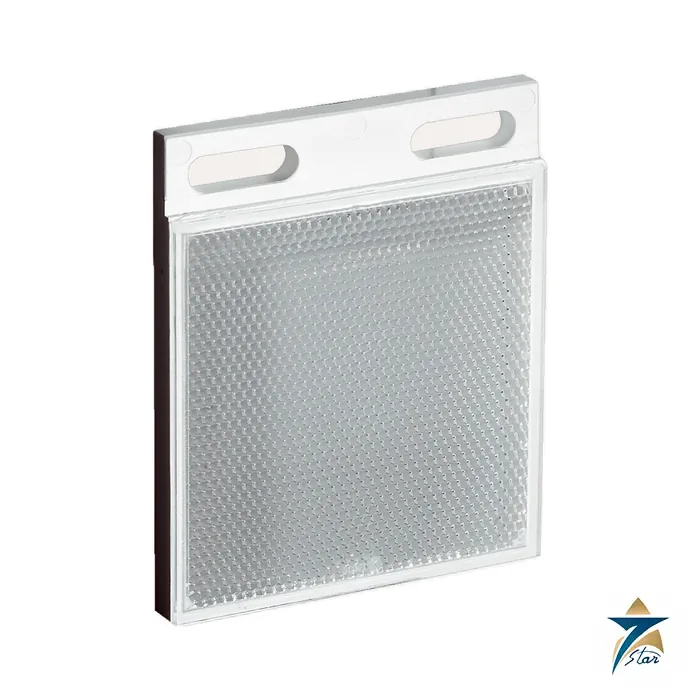
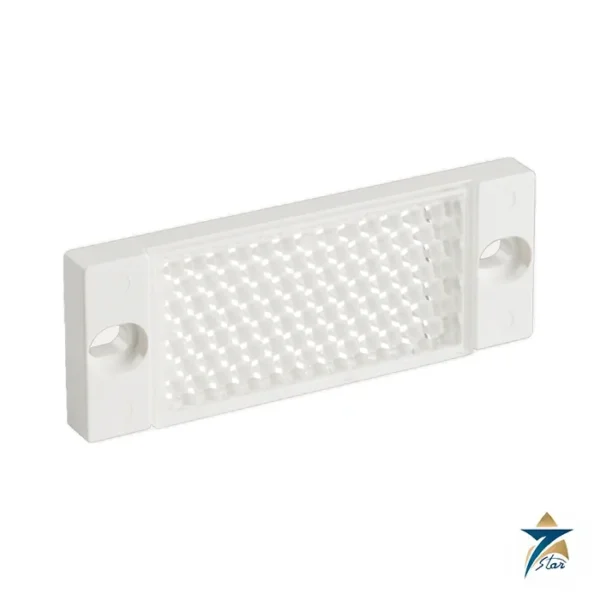
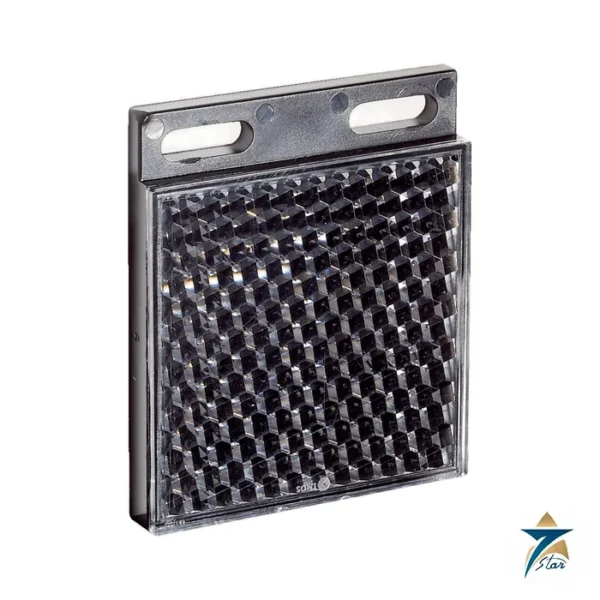
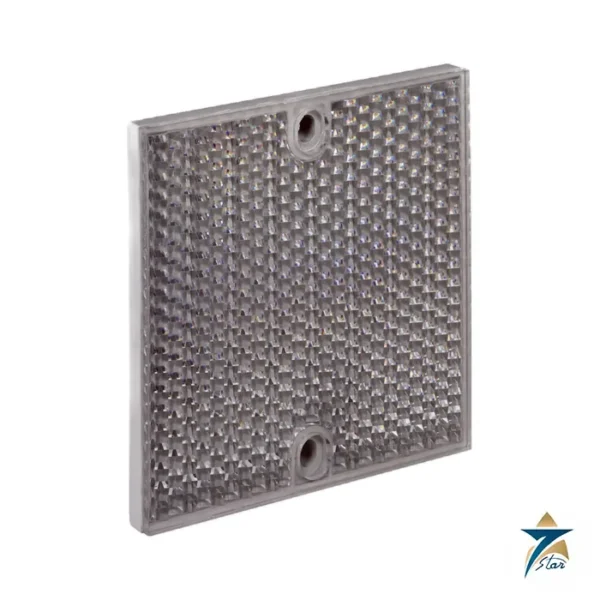
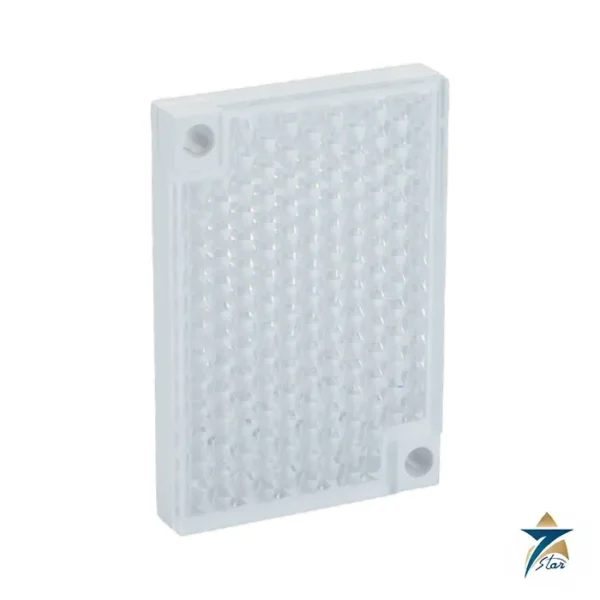
The SICK P250F (part no. 5308843) is a fine triple reflector with screw connection, described by SICK as suitable for laser sensors. The finer prism structure returns a tight laser spot more efficiently than a coarse standard reflector, so the P250F is the reflector that goes with long-range laser retro-reflective sensors. SICK also notes that it suits the detection of transparent objects with LED photoelectric sensors.
In the SICK VL18L-4P324 data sheet, a laser sensor with a range of up to 30 m, the P250F is the named reflector.
Technical specifications
| Parameter |
Specification |
| Manufacturer |
SICK |
| Type |
P250F |
| Part no. |
5308843 |
| Product segment |
Reflectors and optics |
| Product |
Reflectors |
| Product version |
Fine triple reflectors |
| Description |
Fine triple reflector, screw connection, suitable for laser sensors |
| Special applications |
Laser photoelectric sensors; detection of transparent objects with LED photoelectric sensors |
| Mounting system type |
Screw-on |
| Material |
PMMA/ABS |
| Dimensions (W x H x L) |
51.2 mm x 6.5 mm x 60.9 mm |
| Ambient operating temperature |
-30 °C … +65 °C |
| Conformity document |
RoHS manufacturer declaration |
Using the P250F with laser sensors
Laser spots are small, for example a 9 mm spot at 35 m in the VL18L-4P324 data sheet, and a coarse reflector can lose part of that beam between prisms. The fine structure of the P250F avoids this and is therefore the right part when the beam path is long or when the laser sensor has to detect small objects.
Align carefully: a laser beam is narrow, so a small tilt of the reflector shifts the return beam a long way at 30 m. Use the sensor teach or alignment aid, fix the reflector firmly and avoid mechanical stress on the plate, as the data sheet instructs. For cold-store use, acclimatise the reflector before mounting.
Spare-part planning is straightforward: the P250F is one fixed article, so stock one reflector per laser beam path and replace it whenever the prism face is scratched or hazed, since small damage affects a narrow laser beam more than a wide LED beam.
Ordering information
Order by type P250F, part no. 5308843. It is a different article from the standard P250 (5304812); the two differ in prism fineness and height. Laser sensors carry laser-class markings, so confirm requirements for your site and quote the sensor part number alongside the reflector.
Choosing the mounting position
A retro-reflective system works by sending light from the sensor to the reflector and back, so the reflector position defines the whole detection line. Before drilling holes, decide exactly where objects will cross the beam and check that nothing else, such as guard rails, cable trays or moving machine parts, can interrupt it. Mount the P250F on a rigid bracket or flat surface that does not vibrate with the conveyor or machine frame, because even small movement of the reflector is magnified over a long laser path.
Place the reflector roughly square to the beam, then use the sensor’s alignment aid to fine-tune it. Avoid positions where the reflector faces direct sunlight or strong lamps, and where it is close to shiny surfaces that could send light back to the sensor on their own. If the sensor has a polarising filter, this helps reject such reflections, but a careful layout is still the best protection against false signals.
Working with transparent objects
When the P250F is used with an LED sensor to detect bottles, films or clear packaging, the object only weakens the returned light instead of blocking it. In this case the switching threshold of the sensor becomes critical. Teach the sensor with the reflector clean and the beam unobstructed, then test with real products, including the clearest and thinnest ones, to confirm that each one produces a reliable switching change.
Commissioning and testing the beam
After alignment, check the signal reserve shown by the sensor at the actual working distance, and repeat the check with the machine running, since vibration and product movement can reduce it. Pass test objects through the beam at the speed and position the process uses, including the smallest object the system must detect. Record the final settings and mark the reflector bracket position so that it can be restored after maintenance work.
Where several beams run close together, make sure each sensor can only see its own reflector. Crossed beams between neighbouring sensors are a common cause of intermittent faults that are hard to trace once a line is in operation.
Cleaning and care in dusty and humid sites
Dust is the main enemy of a retro-reflective system in many plants in Oman, from cement and aggregates to logistics warehouses and food packaging halls. A thin film on the prism face reduces the returned light and eventually causes missed detections. Include the reflector in the routine cleaning plan, wipe it with a soft, clean cloth and a mild cleaner suitable for PMMA, and avoid solvents or abrasive pads that can damage the plastic surface.
In humid coastal areas or air-conditioned rooms next to hot outdoor zones, condensation can form on the reflector when temperatures change quickly. Position it away from cold air outlets and doors where possible, and check the beam again if detection becomes unreliable during seasonal changes in humidity.
Documents and quotation
Download the manufacturer data sheet for P250F (part no. 5308843) from this page; it is the source of every specification listed here. To request a price, send the type code and part number to Seven Star LLC, an independent supplier based in Muscat, together with the quantity and the site where the goods are needed. Please confirm before ordering that the version, connector and accessories (a matching sensor or fixing screws) match your drawings, because published data may change without notice. Related items can be found in automation accessories and in the SICK WTB4-3 miniature photoelectric sensor.













Reviews
There are no reviews yet.