Mid-size standard reflector, 40 x 60 mm
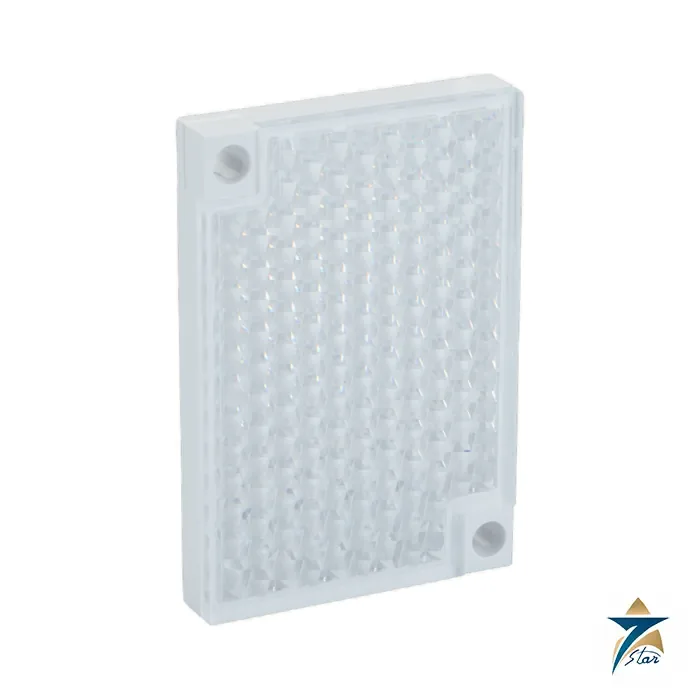
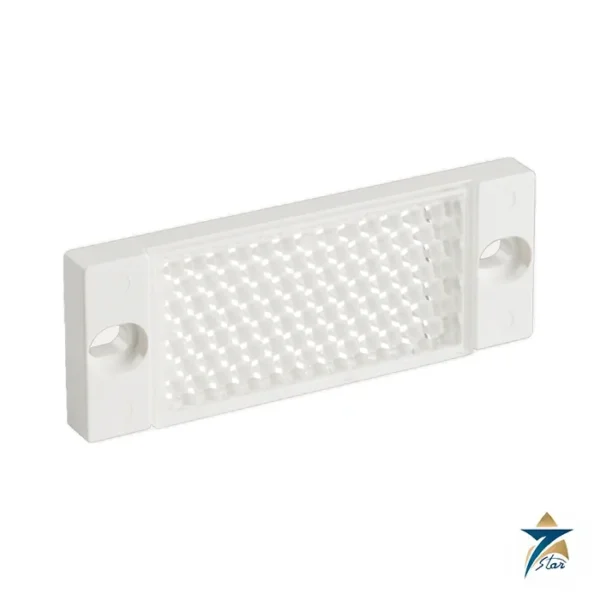
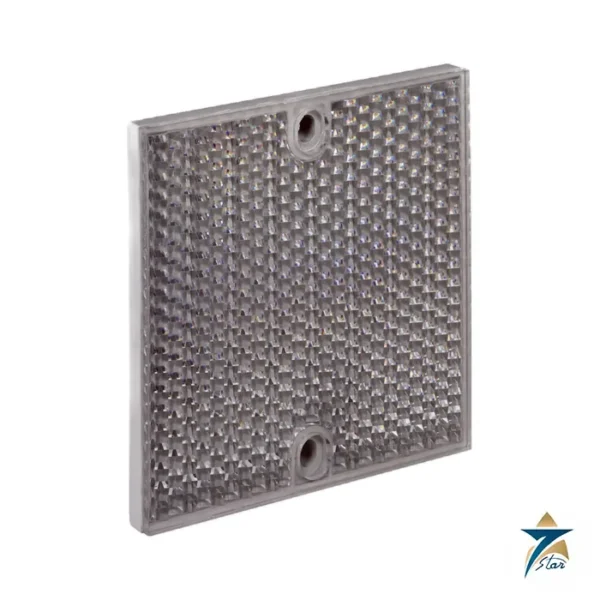
The SICK PL40A (part no. 1012720) is a mid-size rectangular reflector with screw-on mounting, listed by SICK among its standard reflectors. At 40 mm by 60 mm it sits between the slim PL30A and the large 84 mm PL80A, which makes it a practical compromise when a sensor beam of a few metres has to be returned from a fairly compact bracket.
Like every passive reflector, it has no connector and no supply. The sensor sends a light beam, the prisms send it back, and the sensor reports a switching event whenever something blocks the path.
Technical specifications
| Parameter |
Specification |
| Manufacturer |
SICK |
| Type |
PL40A |
| Part no. |
1012720 |
| Product segment |
Reflectors and optics |
| Product |
Reflectors |
| Product version |
Standard reflectors |
| Description |
Rectangular, screw connection |
| Mounting system type |
Screw-on |
| Material |
PMMA/ABS |
| Dimensions (W x H x L) |
40 mm x 8 mm x 60 mm |
| Ambient operating temperature |
-30 °C … +65 °C |
| Conformity document |
RoHS manufacturer declaration |
Placement and handling notes
Sensor data sheets quote the sensing range against a reference reflector, usually a PL80A or P250. If the PL40A replaces one of these, expect a shorter usable range because the reflective area is smaller. Use the working range printed for the specific sensor, keep a safety margin, and test on the machine before fixing the design.
The data sheet carries a handling note for cold-store use: acclimatise reflectors in the freezer area before mounting them, and fit them without heavy mechanical stress or tension on the housing. In practice this means seating the screws evenly, using washers where the supplied surface is not flat and avoiding bending the plastic plate when the frame is not perfectly square.
The 40 mm by 60 mm face is often used on cartoning and packaging machines where a sensor looks across a short gap of one to a few metres. At 8 mm high it protrudes very little from the mounting surface, so it rarely collides with passing product.
Ordering details and compatibility
PL40A is a single orderable article with part no. 1012720; no code suffixes need decoding. Further reflector versions are listed by SICK at www.sick.com/Reflectors. When you request a quotation, mention the sensor type it will work with, the beam distance and whether the sensor uses a polarising filter, since SICK matches reflector type to the sensor family.
How a prismatic reflector works
The PL40A uses a field of small corner-cube prisms moulded into the PMMA front. A corner cube returns light back towards its source almost regardless of the angle at which it arrives, within the limits of the prism geometry. This is why a retro-reflective sensor can be aligned with a reflector fairly easily: the reflector does not need to be exactly perpendicular to the beam, unlike a flat mirror. The ABS back provides the mechanical body and the screw fixing points, while the PMMA face provides the optical function.
Polarising sensors and shiny objects
Many retro-reflective sensors use a polarisation filter so that they are not deceived by shiny objects such as foil, metal cans or glossy cartons. Prismatic reflectors rotate the polarisation of the returned light, which a polarising sensor recognises as a valid reflector signal. Reflective tape or a mirror-like surface does not do this in the same way. For this reason, a polarising sensor should be paired with a prismatic reflector such as the PL40A, and the sensor data sheet should be checked to confirm which reflector types are approved.
Key features
- Mid-size reflective area of 40 x 60 mm for short to medium distances
- Low profile of 8 mm, so it does not obstruct passing product
- Screw-on fixing for a stable, vibration-resistant mount
- PMMA/ABS construction with an operating range of -30°C to +65°C
- Passive component: no wiring, no power and no configuration
Choosing the reflector size
The general rule is that a larger reflector returns more light and therefore allows a longer range or a greater reserve against contamination. A smaller reflector is easier to fit and is useful when the beam must detect small objects close to the reflector. The PL40A is a middle choice: smaller than the reference reflectors used in most sensor data sheets, larger than the slim types. Where the sensor’s range with the PL40A is not stated, test the installation and keep a margin so that dust or a slight misalignment does not cause false switching.
Installation and maintenance
- Mount on a rigid bracket so that machine vibration does not move the reflector out of the beam.
- Align the sensor first using its alignment indicator, then tighten the screws evenly.
- Clean the face with a soft, damp cloth; avoid solvents that can attack PMMA.
- Check periodically for scratches or cracks, which reduce the returned light.
Use in Oman and GCC conditions
Dust is the main enemy of retro-reflective systems in the region. A thin layer of sand or cement dust on the reflector face reduces the signal and can cause a sensor to report a beam break. Plan regular cleaning in dusty plants and choose a sensor with sufficient function reserve. The upper limit of +65°C covers most indoor installations, but reflectors mounted outdoors in direct summer sun should be shaded, because surface temperatures of dark structures can exceed the ambient air temperature by a large amount. In cold stores used for food distribution, follow SICK’s acclimatisation note described above.
Documents and quotation
Download the manufacturer data sheet for PL40A (part no. 1012720) from this page; it is the source of every specification listed here. To request a price, send the type code and part number to Seven Star LLC, an independent supplier based in Muscat, together with the quantity and the site where the goods are needed. Please confirm before ordering that the version, connector and accessories (a matching sensor or fixing screws) match your drawings, because published data may change without notice. Related items can be found in automation accessories and in the SICK WTB4-3 miniature photoelectric sensor.







Reviews
There are no reviews yet.