Flash point from 2 to 4 mL of sample
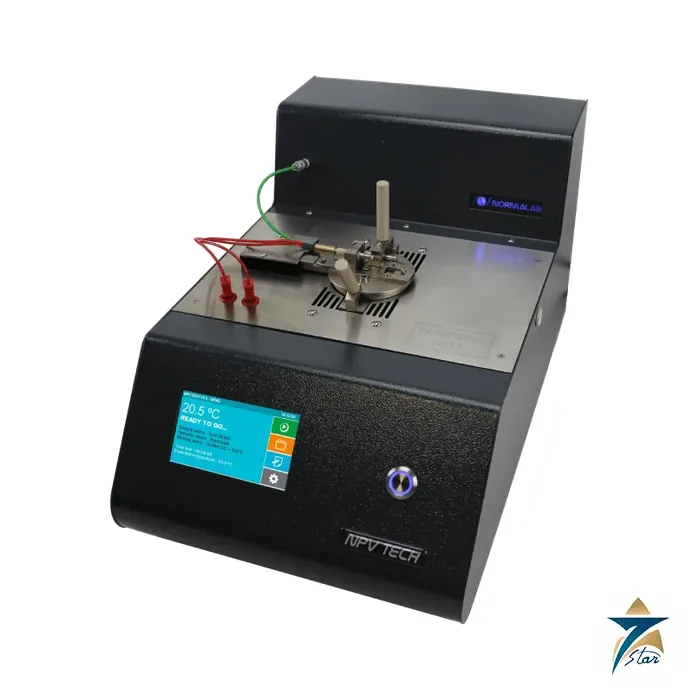
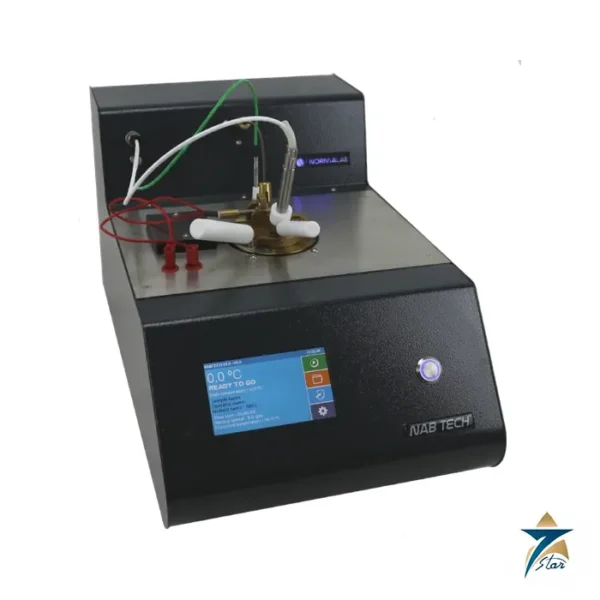
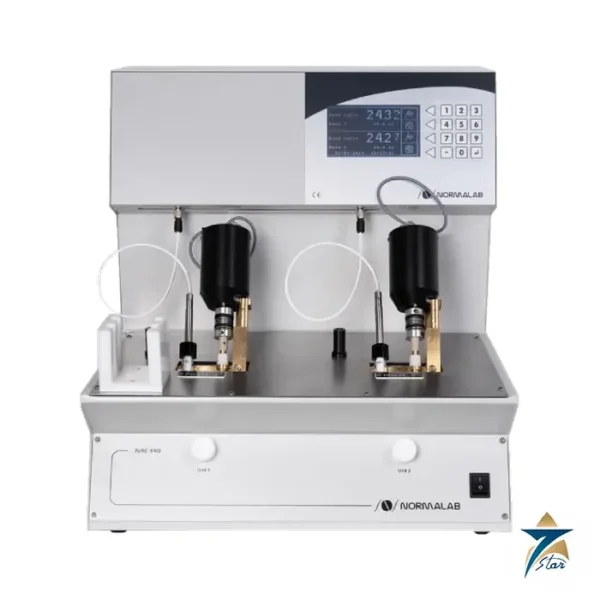
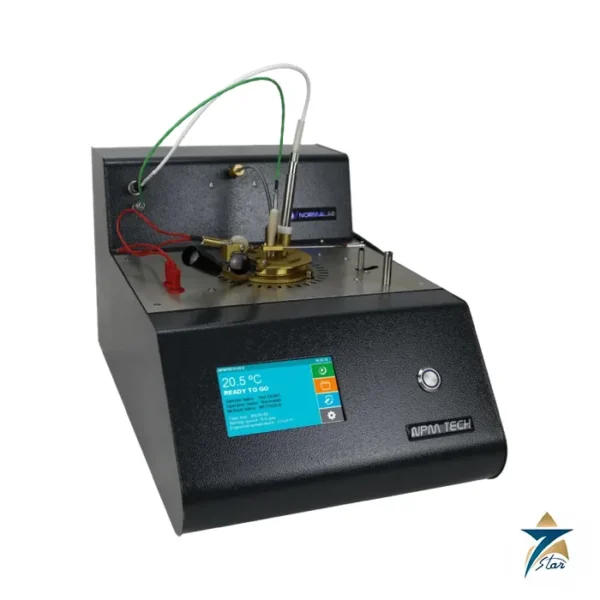
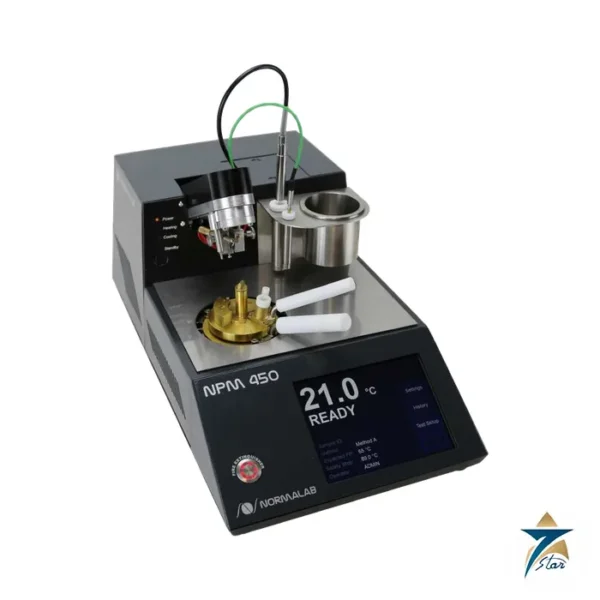
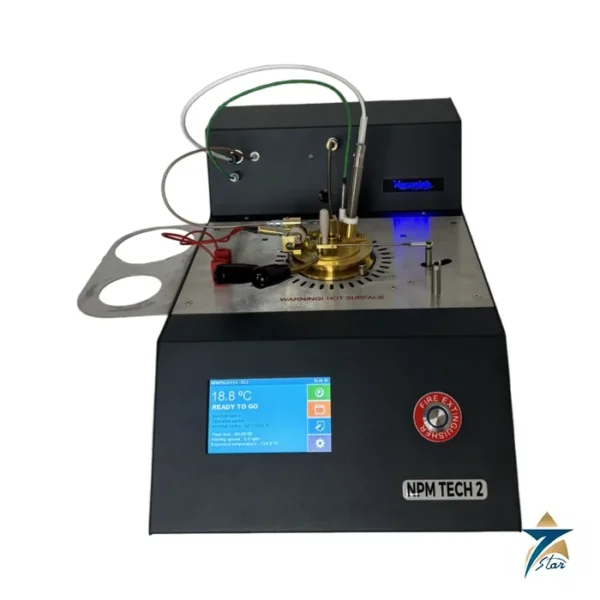
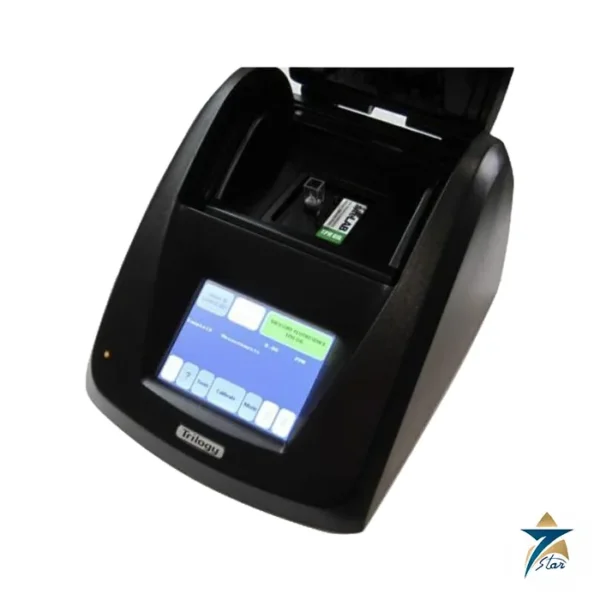
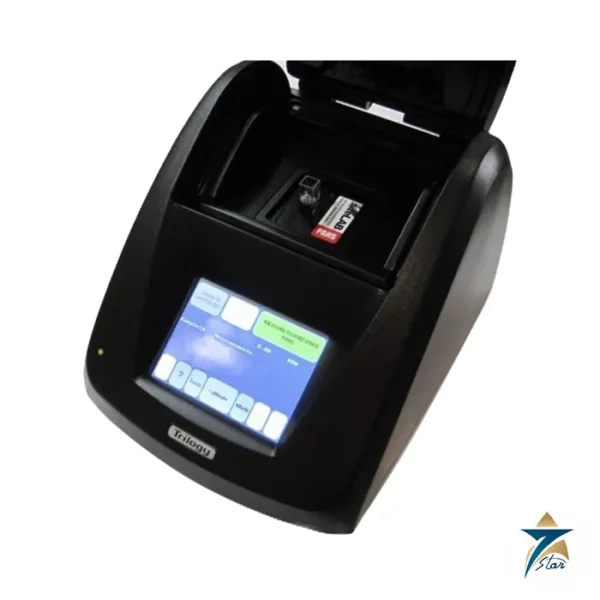
The Normalab NPV Tech is a small-scale closed-cup flash point tester. It tests only a few millilitres of sample (2 or 4 mL) between -30 and 300 °C, which makes it attractive when material is scarce, expensive or hazardous. A 4.3 inch resistive colour touch screen drives two predefined methods, Go/No Go and Ramp, and an adjustable electric ignitor (0 to 100 percent, no gas) is presented automatically with thermocouple detection that needs no calibration.
Technical specifications
| Parameter |
Specification |
| Manufacturer / model |
Normalab NPV Tech |
| Order number |
42000 |
| Temperature range |
-30 to 300 °C (cryostat needed below ambient) |
| Regulation accuracy |
0.2 °C |
| Temperature probe |
Pt 100, class A, with verification certificate |
| Sample volume |
2 or 4 mL |
| Methods |
Go/No Go and Ramp; ramp rates 1, 2 or 5 °C per minute |
| Detection and ignition |
Thermocouple; electrical ignitor with automatic presentation |
| Cooling |
High-efficiency ventilation, 5 to 10 minutes between two tests |
| Data |
Micro SD, last 20 results; 1 RS232C port; 2 micro USB for update |
| Overheating protection |
350 °C |
| Power |
230 V, 50/60 Hz, 4 A |
| Dimensions and weight |
280 x 440 x 250 mm; 11 kg |
Standards and applications
The brochure lists ASTM D3828, ISO 3679, ISO 9038 and IP 303 and related methods; the product page also names ASTM D3278 and D8174. The methods cover flash point of cosmetic and pharmaceutical products, with the Go/No Go procedure determining whether a product will or will not flash at a specified temperature, which is how transport classification limits are checked. Application areas named are cosmetics and perfumes, waste and environment, pharmaceutical, chemical, REACH, transportation class for hazardous goods, paints and varnishes, biodiesel, marine, lubricants and aviation.
The cup is coated against aggressive products, the removable tray with drain collects overflow or condensate, and the software has password access, simplified temperature calibration with up to five offsets and French/English menus. Safety adds a thermal fuse on the ignitor, a dedicated alarm for each error message, audible alarms and a visual indicator.
Scope of delivery and options
Delivered with a standard lid with ignitor and thermocouple, a power cable and a stylus. Options: a cryostat, an RS232 ticket printer (one compatible model) and protective aluminium sheets with a set-up tool kit.
Small-scale testers are chosen for three reasons: little sample is consumed, the cup heats and cools quickly so more tests fit into a shift, and the compact oven carries less fire load than a full-size cup. The brochure quotes 5 to 10 minutes between two tests thanks to the ventilation system. Because the Pt 100 probe is class A and delivered with a verification certificate, and the oven temperature can be calibrated against it, the laboratory can document traceability for accredited work. A protective aluminium sheet kit helps keep corrosive or sticky samples off the oven surfaces.
Installing the NPV Tech in the laboratory
Place the tester on a stable, non-combustible bench away from solvent storage, open flames and other heat sources. Flash point testing deliberately ignites vapour above a sample, so position the instrument under a fume hood or in a well-ventilated area where combustion products and solvent vapours are drawn away from the operator. Leave space around the unit for the ventilation system to work and for the tray to be removed for cleaning. Connect it to a properly earthed 230 V outlet that matches the rating on the specification table, and keep the bench area around it clear of paper, wipes and open sample containers.
If the laboratory will test below ambient temperature, plan the bench layout for the cryostat at the same time, including the hose route and drainage of condensate.
Commissioning and method set-up
At first start, set the menu language, create user passwords and enter the methods the laboratory will run, choosing Go/No Go or Ramp and the ramp rate called for by the standard. Check the temperature reading against the class A Pt 100 and its verification certificate, and record any offsets entered through the calibration function. Run a check sample or certified reference material with a known flash point to confirm that the instrument and the operator’s procedure give results within the repeatability of the chosen method before releasing it for routine work.
Operating in Gulf laboratory conditions
Many laboratories in Oman serve oil, fuel, marine and chemical customers, and site laboratories near refineries or ports can face high room temperatures, dust and humid air. Keep the room air-conditioned and stable: a warm room raises the starting temperature of the sample and can make low flash point products lose volatile components before testing. Store samples sealed and cool, and bring them to the temperature required by the method before opening. Dust settling in the cup area or on the touch screen should be removed regularly, and samples from hot field sites should not be loaded straight into the cup without conditioning.
Cleaning, verification and routine care
Clean the cup, lid and ignitor area after each test following the manufacturer’s instructions, using solvents compatible with the coated cup and avoiding abrasive tools that could damage the coating. Empty and clean the drain tray so residue cannot build up. Export or note results from the stored list before it is overwritten. Schedule periodic verification of the temperature measurement and repeat a reference sample check at intervals set by the quality system, keeping records for accredited work.
Selection checks before requesting a quotation
Before choosing this tester, list the standards your customers or regulators actually require and compare them with the methods named on this page. Consider the expected flash point range of your samples: products that flash below room temperature need the cryostat, while high flash point lubricants and heavy oils sit near the top of the range. Estimate how many tests are run per shift, since the short cycle between tests is one of the main reasons to choose a small-scale instrument. Finally, decide how results will be recorded, using the output options described in the manufacturer documentation, so the reporting workflow fits the laboratory information system.
Documents and quotation
The brochure is linked on this page. Seven Star LLC, an independent supplier in Muscat, lists the tester under liquid analytical systems. Confirm the sample volume procedure, the cryostat and the printer before ordering.






Reviews
There are no reviews yet.