A conductivity controller for continuous boiler blowdown (TDS control)
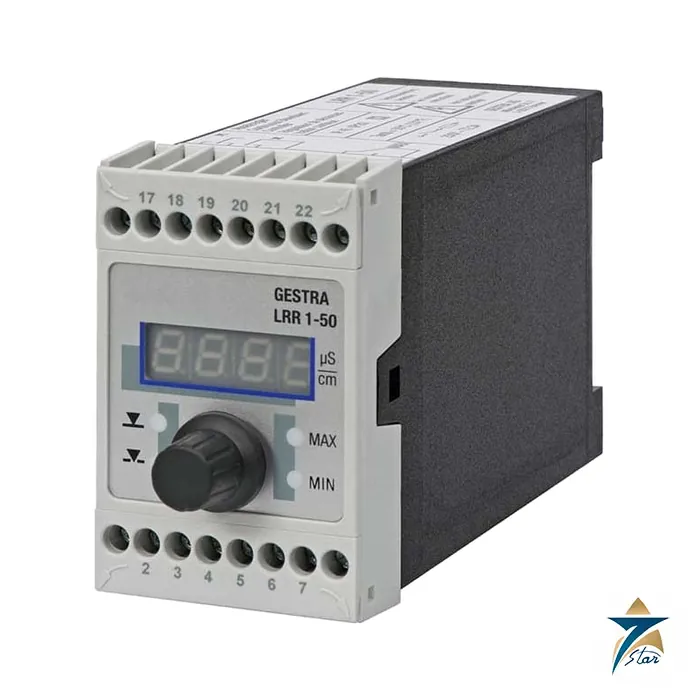
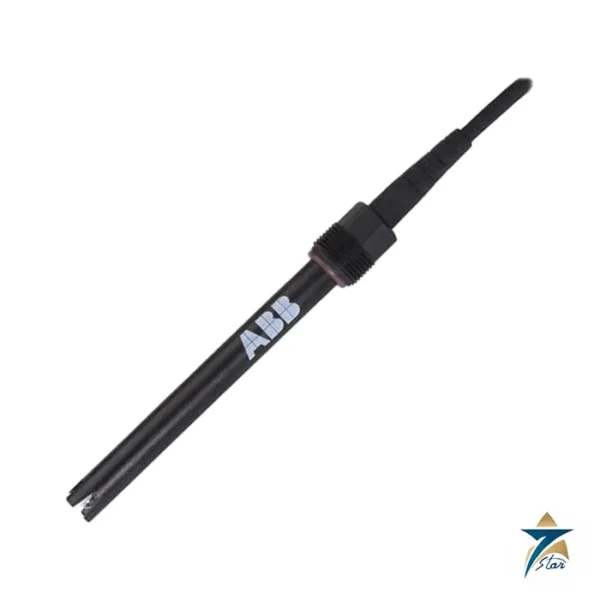
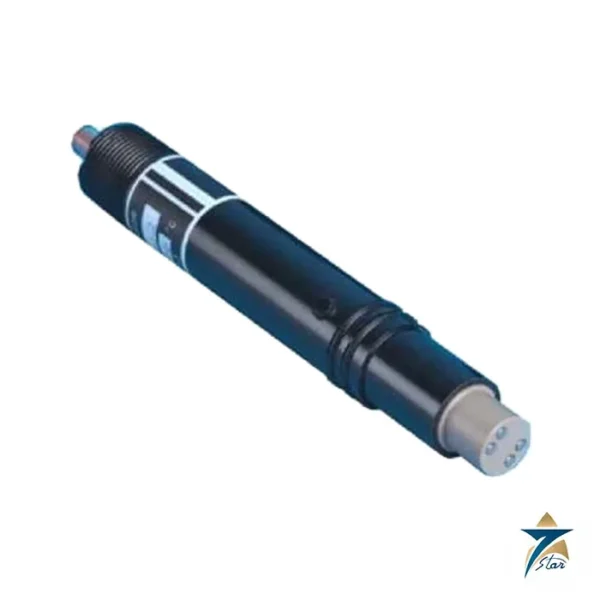
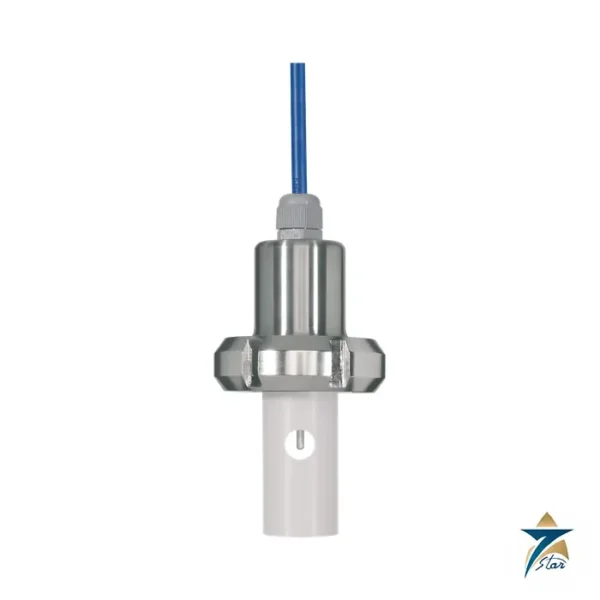
The GESTRA LRR 1-50 is a conductivity controller and limit switch that works with LRG 12-2, LRG 16-4, LRG 16-9, LRG 17-1 and LRG 19-1 conductivity electrodes, and is used in steam boilers, pressurised hot-water installations and condensate or feedwater tanks. It reads the electrical conductivity of the boiler water, which reflects the total dissolved solids (TDS) concentration, and opens or closes a continuous blowdown valve to keep TDS within the boiler maker limit. When the MAX limit is reached, a MAX alarm contact switches. Its sibling LRR 1-51 takes a 4-20 mA signal from LRGT 1.-.. conductivity transmitters instead of an electrode.
Excess TDS causes foaming and priming and carries solids into steam lines and superheaters, so continuous top blowdown needs a controller that regulates the valve from the measured conductivity, together with fresh make-up water.
Technical specifications
| Parameter |
Specification |
| Types |
LRR 1-50 (electrode input, with MAX alarm); LRR 1-51 (4-20 mA transmitter input) |
| Function |
Two-position controller: valve motored to OPEN at the setpoint, back to OPERATING below the setpoint minus hysteresis; valve closes when the boiler is shut down |
| Supply voltage; power |
24 V DC +/-20 %; 4 W; external 0.5 A semi-delay fuse |
| Measuring range |
1 to 10,000 uS/cm at 25 C, or 1 to 5,000 ppm at 25 C (1 uS/cm = 0.5 ppm) |
| Electrode input (LRR 1-50) |
LRG 1.-.. with cell constant 1 cm-1 (3 poles with screen) or LRG 16-9 with cell constant 0.5 cm-1 and integral Pt 100 (5 poles with screen) |
| Measuring voltage |
0.8 Vss, pulse duty factor 0.5, frequency 20-10,000 Hz |
| Correction; compensation |
Correction factor CF 0.05 to 5.000 in steps of 0.001; calibration function CAL; linear temperature compensation to 25 C with an adjustable coefficient (%/C) when LRG 16-9 is used |
| Transmitter input (LRR 1-51) |
4-20 mA for LRGT 16-1, 16-2, 16-3, 16-4, 17-1 and 17-3; measuring range start 0.0 to 100.0 uS/cm and end 20.0 to 12,000 uS/cm, adjustable |
| Outputs |
2 volt-free changeover contacts for valve OPEN / OPERATING / CLOSED and 1 for MAX alarm, 8 A at 250 V AC / 30 V DC, cos phi = 1; analogue 4-20 mA (actual value or manipulated variable Y), max. load 500 ohm |
| Reset hysteresis |
MAX limit: -3 % of the adjusted limit, fixed |
| Display and operation |
Four-digit green seven-segment LED; red MAX LED; 2 amber valve LEDs; rotary button with Test; 4-pole code switch; password protection |
| Protection; housing |
Housing IP 40, terminal strip IP 20, IP 65 with panel adaptor (stock code 441553); polycarbonate; clip for TH 35 rail |
| Ambient; weight |
0 to 55 C at power-on, -10 to 55 C in operation; approx. 0.2 kg |
Automatic purging can rinse the blowdown valve at set intervals so that it does not stick. Faults in the electrode, transmitter, wiring or settings are shown as error codes, a MAX alarm is raised and the valve is driven to its OPERATING position. As a limit switch the controller does not interlock automatically; if the installation requires an interlock, it must be provided in the follow-up circuit and meet EN 50156. The equipment must not be used in potentially explosive areas.
Choosing electrode, transmitter and cable
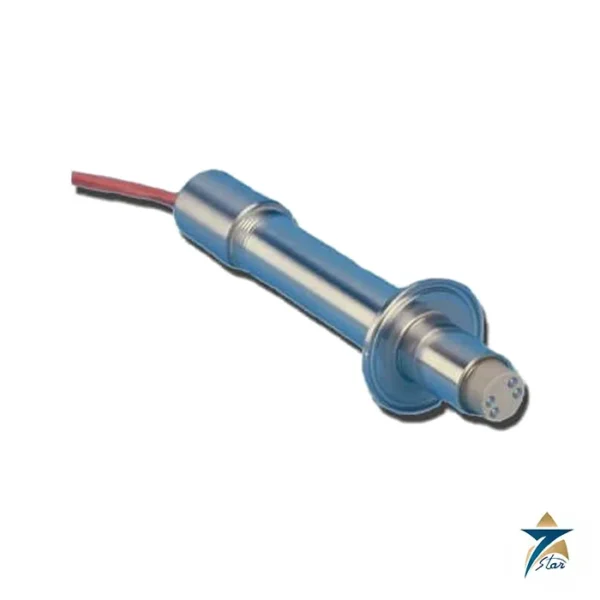
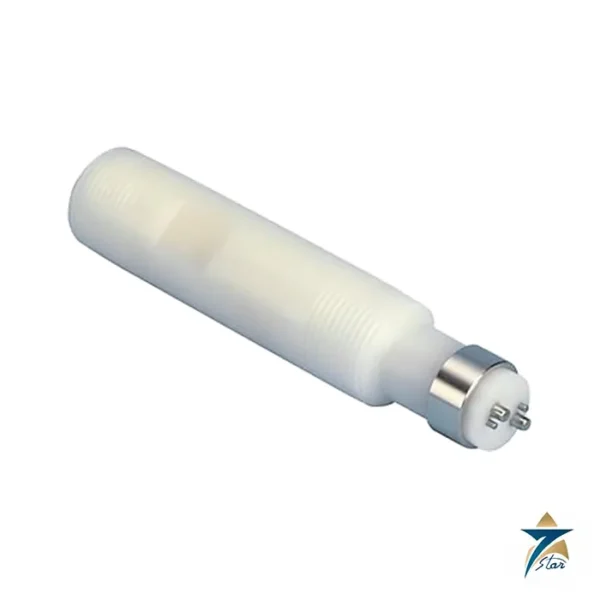
For a simple installation use an LRG electrode with the LRR 1-50; use LRG 16-9 where temperature compensation to 25 C is wanted. Where the boiler already has an LRGT conductivity transmitter, select the LRR 1-51. Keep the cable between electrode and controller to 30 m, or 10 m for conductivities from 1 to 10 uS/cm, and protect non-UV-resistant control cable with a duct outdoors. The controller works with the continuous blowdown valve of the boiler, whose operating position sets the blowdown rate.
A related conductivity sensor already listed is the GESTRA LRGT 16-1 conductivity transmitter; more liquid analysis products are under liquid analysis sensors.
Installing the LRR 1-50 in the boiler control panel
Mount the controller on the TH 35 rail inside a closed control cabinet, away from contactors and frequency converters that switch heavy loads, and route the electrode cable separately from mains and motor wiring. The screened electrode cable should have its screen terminated as shown in the GESTRA wiring diagram and kept continuous along the run. Before the first power-up, check that the 24 V DC supply is within tolerance and that the external semi-delay fuse is fitted, then confirm that the volt-free contacts are wired to the correct coils or inputs of the blowdown valve actuator and the alarm circuit.
Commissioning and calibration on site
Commissioning is best done with the boiler at normal working pressure and with a reliable reference measurement of the boiler water. Take a cooled sample, measure its conductivity with a calibrated laboratory or handheld instrument, and use the CAL function or correction factor so that the displayed value matches the reference. Then enter the setpoint, hysteresis and MAX limit agreed with the boiler maker and the water treatment specialist, and set the purging interval for the blowdown valve. Run the valve through OPEN, OPERATING and CLOSED from the controller and confirm that the actuator follows each command and that the MAX alarm reaches the control room or the boiler alarm panel.
Routine checks during operation
Compare the displayed conductivity with a manual sample at regular intervals set by the site water treatment programme; a drift between the two usually points to fouling or scale on the electrode, which should be inspected and cleaned during a planned boiler stop. Review any error codes, look at how often the MAX alarm has been raised, and check that the blowdown valve still moves freely after periods of low demand. Record setpoint changes so that operators and the water treatment contractor work from the same values.
Operating conditions in Oman and GCC boiler houses
Boiler houses in Oman and across the GCC can become very hot in summer, especially where the panel sits close to the boiler front or in a roof plant room without good ventilation. Because the controller is rated for an ambient of up to 55 °C in operation, place the cabinet where it is shaded and ventilated, and consider cabinet cooling where the room temperature approaches that limit. Fine dust and humid coastal air can enter enclosures that are left open, so keep cabinet doors closed and cable entries sealed. Make-up water from desalination or brackish sources varies in quality, so the setpoint and blowdown rate should be reviewed whenever the feedwater source or treatment chemistry changes.
Documents and quotation
The attached GESTRA data sheet 819211 covers LRR 1-50 and LRR 1-51 with a glossary on blowdown, temperature compensation and wiring. Send the electrode or transmitter model, the boiler TDS limit and the valve actuator type for a quotation, and confirm the variant before ordering.













Reviews
There are no reviews yet.