A conductive level switch for boiler feedwater control and MAX alarm
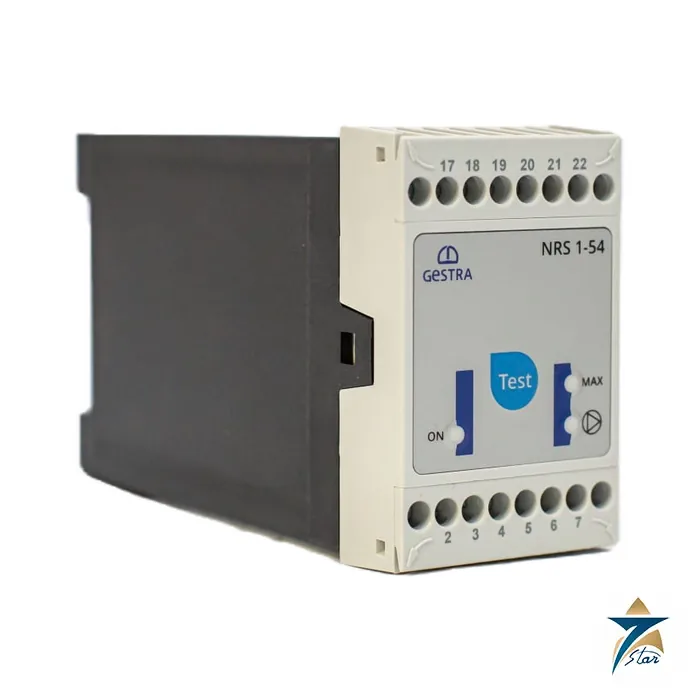
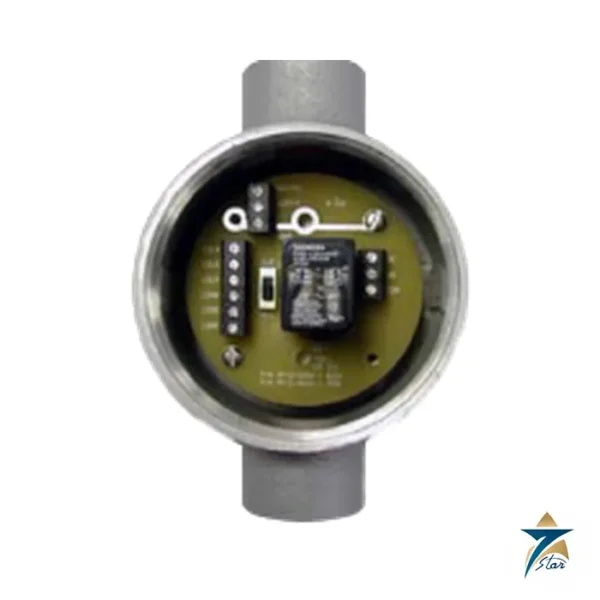
The GESTRA NRS 1-54 is a level switch from the SPECTORmodul line that works with NRG 16-.. level electrodes and ER 5.. electrodes as a water level controller in steam boilers and pressurised hot-water installations. It uses the conductive measuring principle, sensing whether electrode rods are exposed or immersed, and it switches the feedwater pump on or off while also indicating a MAX water level. Its sibling NRS 1-55 uses the same hardware with a run-dry (MIN) alarm for discharge control.
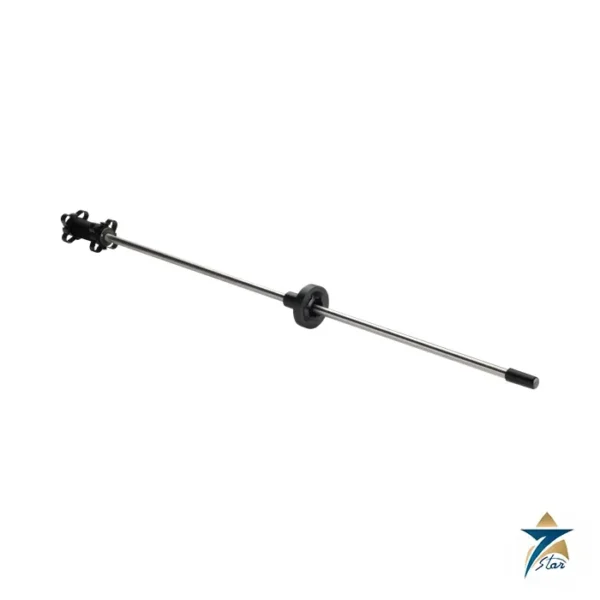
The switch is designed for different water conductivities and for connecting three electrode rods. The rod lengths set the switchpoints for pump control and for the MAX alarm.
Technical specifications
| Parameter |
Specification |
| Types |
NRS 1-54 (on-off level control with MAX alarm); NRS 1-55 (on-off level control with MIN / run-dry alarm) |
| Supply voltage; power |
24 V DC +/-20 %, 0.1 A; 2 VA; external 0.5 A semi-delay fuse |
| Compatible electrodes |
NRG 10-52, NRG 16-52, NRG 16-36, NRG 16-4 and ER 5.-1; two inputs, 4 poles with screen |
| Sensitivity (water conductivity at 25 C) |
>0.5 to <1000 uS/cm or >10 to <10 000 uS/cm, switch-selectable |
| Outputs |
2 volt-free changeover contacts, 8 A at 250 V AC / 30 V DC, cos phi = 1 |
| Delay |
De-energising delay 3 s for the MIN or MAX alarm |
| Controls and indicators |
Test pushbutton for MIN/MAX alarm simulation; 2 red/green LEDs for operating mode and alarm; green power LED; Pump LED; 4-pole code switch |
| Housing; mounting |
Polycarbonate base (black) and front (grey); detachable terminal strips; clip for TH 35 rail (EN 60715) |
| Protection |
Housing IP 40, terminal strip IP 20 (EN 60529); pollution degree 2 |
| Ambient temperature |
0 to 55 C at power-on; -10 to 55 C in operation |
| Transport and storage |
Transport -20 to +80 C (under 100 h); storage -20 to +70 C; 24 h defrost before commissioning |
| Humidity; weight |
Max. 95 % without condensation; approx. 0.2 kg |
| Cable to electrodes |
Screened multi-core, min. 0.5 mm2, for example LiYCY 3 x 0.5 mm2, max. 100 m |
The data sheet states that the equipment must not be used in potentially explosive atmospheres. The power supply must be electrically isolated and meet double or reinforced isolation requirements of EN 61010-1, EN 60730-1, EN 60950-1 or EN 62368-1. Provide an external slow-blow fuse (T 2.5 A or 1.0 A, 72 hours operation) for the output contacts, and RC suppressors for inductive loads.
Operation and wiring notes
The data sheet describes the NRS 1-54 as an on-off water level controller for fill control, with a MAX alarm. The NRS 1-55 is the discharge-control version with a MIN alarm. The Pump LED is illuminated when the level switch has switched the feedwater pump on. When the MIN or MAX electrode rod is exposed or submerged, the corresponding output contact switches over after the 3 second de-energising delay, and the MIN or MAX LED changes from green to red. The Test button simulates a MIN or MAX alarm, and the 4-pole code switch changes sensitivity and function.
The unit is clipped onto the support rail in the control cabinet and fed with 24 V DC through an external 0.5 A semi-delay fuse. For the output contacts, the sheet calls for an external slow-blow fuse of T 2.5 A or 1.0 A (72 hours operation) to prevent the contacts welding together. Electrode cables must be screened multi-core control cable, run separately from power cables. The wiring diagrams show a reference electrode or the vessel used as functional earth, and five-pole connectors for NRG 10-52 and NRG 16-52 electrodes.
Choosing electrodes and rod lengths
The switchpoints follow the lengths of the electrode rods, so the electrode must be specified with the vessel level geometry in mind. For fill control the NRS 1-54 can connect several level electrodes (NRG 1.-52, NRG 16-36 and ER 5..), with the pump ON/OFF points and the MAX alarm set by rod length. Use the conductivity switch that matches your boiler water; the two ranges are up to 1000 uS/cm and 10 to 10 000 uS/cm.
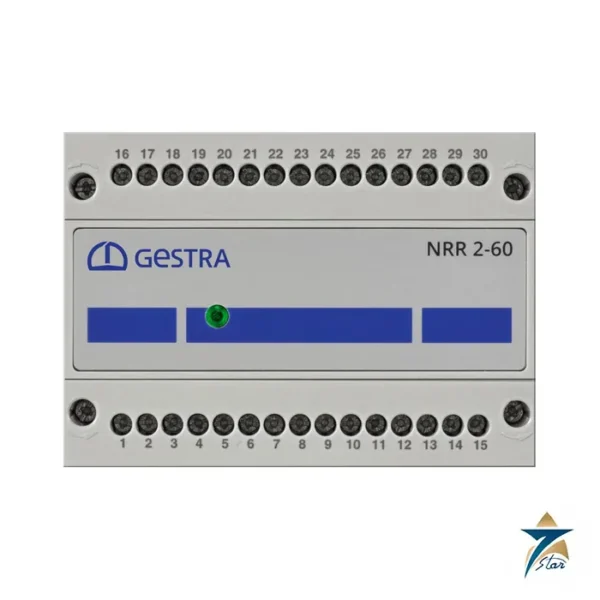
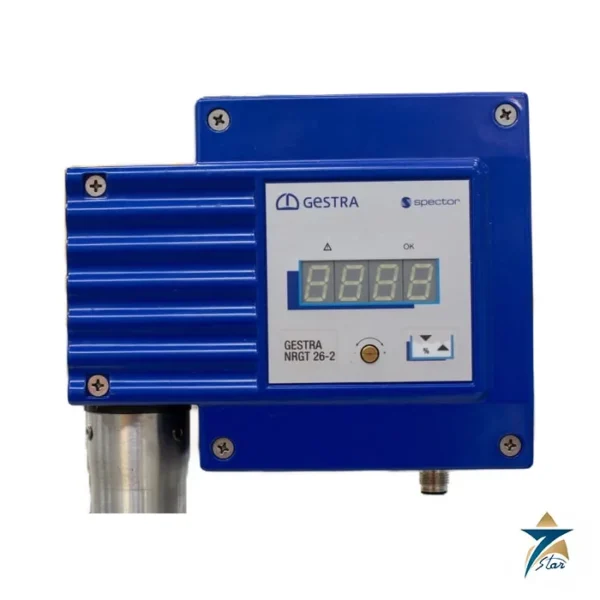
If the boiler needs proportional feedwater control with a CAN bus electrode, see the GESTRA NRGT 26-2 and the NRR 2-60 controller. More level products are under level instrumentation.
Documents and quotation
The attached GESTRA data sheet 819204 covers NRS 1-54 and NRS 1-55 with connection diagrams and the order specification. Send the boiler type, electrode model and conductivity range for a quotation, and confirm the variant (MAX or MIN alarm) and approvals before ordering.
The order and enquiry specification in the data sheet reads: GESTRA SPECTORmodule on-off level controller with high level alarm, output two volt-free change-over contacts for pump and MAX alarm, de-energising delay 3 seconds, supply voltage 24 V DC, 2 VA. For directives, standards and approvals, the data sheet refers to the manufacturer’s Declaration of Conformity and associated certificates.
How the GESTRA NRS 1-54 Controls Boiler Water Level
The conductive measuring principle uses the fact that boiler water conducts electricity while steam does not. Each electrode rod is insulated from the vessel except at its tip. When the water level covers a rod tip, a small measuring current flows from the rod through the water to the earthed vessel or reference; when the level falls and the tip is in steam, the current stops. The NRS 1-54 evaluates these signals and switches its output contacts accordingly.
In a typical arrangement with three rods of different lengths:
- Pump ON rod. When the level falls below this tip, the switch starts the feedwater pump.
- Pump OFF rod. When the rising level reaches this tip, the pump is stopped. The distance between the ON and OFF rods sets the switching band and therefore how often the pump cycles.
- MAX alarm rod. If the level continues to rise and reaches this shortest rod, the NRS 1-54 signals a high water alarm, which helps protect against water carry-over into the steam system.
Because the measuring signal is AC, electrolysis and polarisation at the rod tips are avoided, and the selectable sensitivity allows the switch to work with feedwater of very different conductivity.
NRS 1-54 Technical Data Summary
| Parameter |
Value |
| Function |
On-off level control with MAX alarm |
| Measuring principle |
Conductive |
| Supply |
24 V DC ±20 %, 2 VA, external 0.5 A semi-delay fuse |
| Electrodes |
NRG 10-52, NRG 16-52, NRG 16-36, NRG 16-4, ER 5.-1 |
| Sensitivity ranges |
>0.5 to <1000 µS/cm or >10 to <10,000 µS/cm at 25 °C (switchable) |
| Outputs |
Two volt-free change-over contacts, 8 A 250 V AC / 30 V DC (resistive) |
| De-energising delay |
3 s |
Selection Guide: NRS 1-54 or NRS 1-55
Both switches share the same hardware and electrode options. Choose the NRS 1-54 for feed control of a boiler or pressurised hot-water vessel where a high-level (MAX) alarm is required. Choose the NRS 1-55 where the switch controls a discharge, for example emptying a condensate or flash vessel, and a dry-run (MIN) alarm is needed to protect a pump. Select the sensitivity range to suit the conductivity of the water: low-conductivity condensate or demineralised feedwater needs the more sensitive range.
The NRS 1-54 is a level controller. Where boiler regulations require a low-water limiter or high-water limiter, separate equipment approved for that safety function must be used.
Installation & Maintenance
- Mount the switch in a control cabinet protected from heat, moisture and vibration, and supply it from a 24 V DC source with the specified external fuse.
- Install the electrode in a protection tube inside the boiler or in an external level pot, following the GESTRA installation instructions, so that turbulence does not cause false switching.
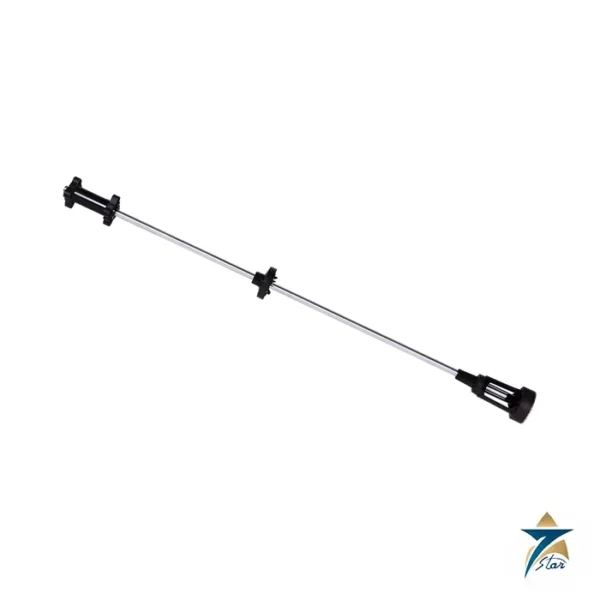
- Cut the electrode rods to the lengths that give the required pump ON, pump OFF and MAX switchpoints before commissioning.
- Use screened cable between the electrode and the switch and keep it separate from power cables.
- Check the function regularly by lowering and raising the water level and confirming that the pump and alarm contacts respond.
- Inspect and clean electrode tips and insulation at boiler shutdowns; deposits and damaged insulation can change the switching behaviour.
Typical Applications in Oman & the GCC
The NRS 1-54 suits steam boilers and pressurised hot-water systems in food and beverage plants, hospitals, laundries, refineries and process industries, as well as auxiliary boilers in power and desalination plants. Feedwater in the region often comes from desalinated or demineralised sources with low conductivity, so selecting the correct sensitivity range is important.
Why Source from Seven Star LLC
Seven Star LLC supplies GESTRA level switches and electrodes across Oman and the GCC. Send the switch type, electrode model, rod lengths and boiler details, and our team can help confirm the correct ordering code before a quotation is issued.










Reviews
There are no reviews yet.