Brand:

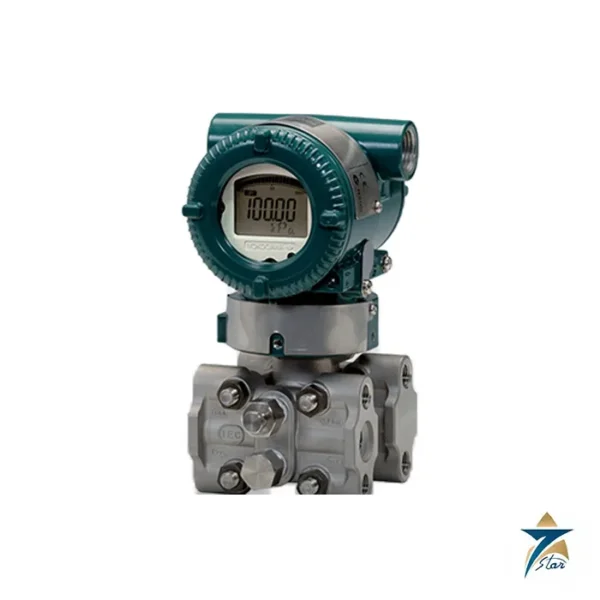
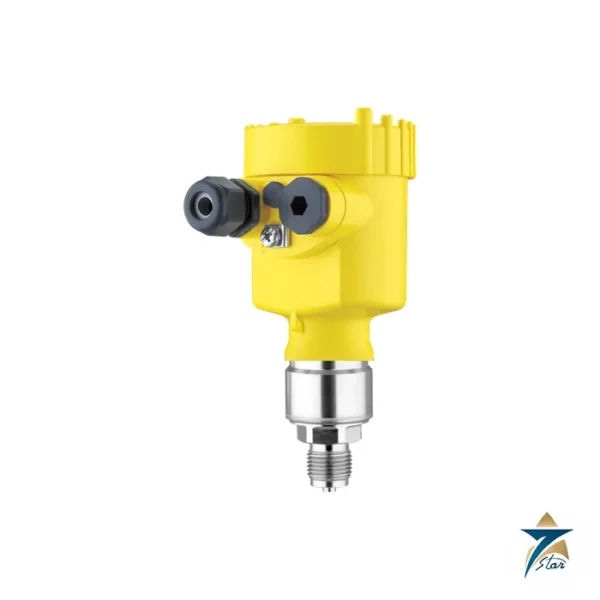
Trafag EXNA 8852/8853 Ex Pressure Transmitter

Description

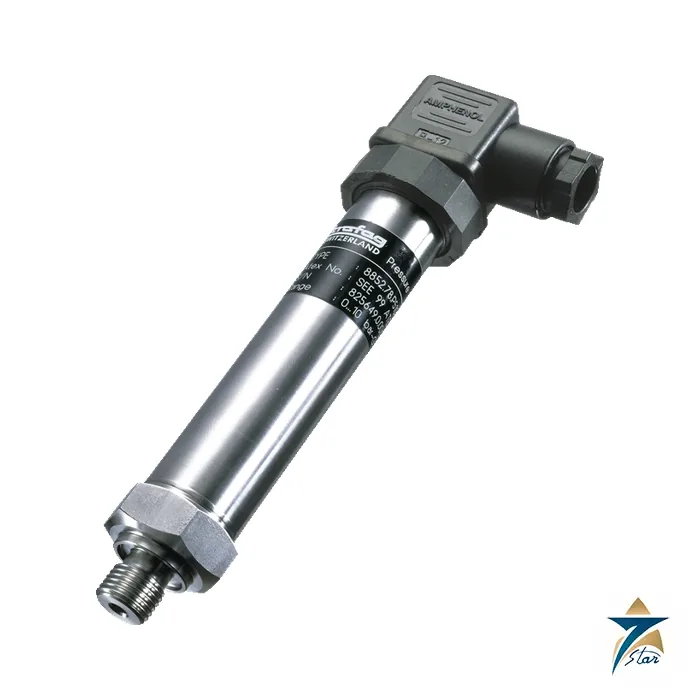
Intrinsically safe pressure transmitter for Zone 0 gas and Zone 20 dust

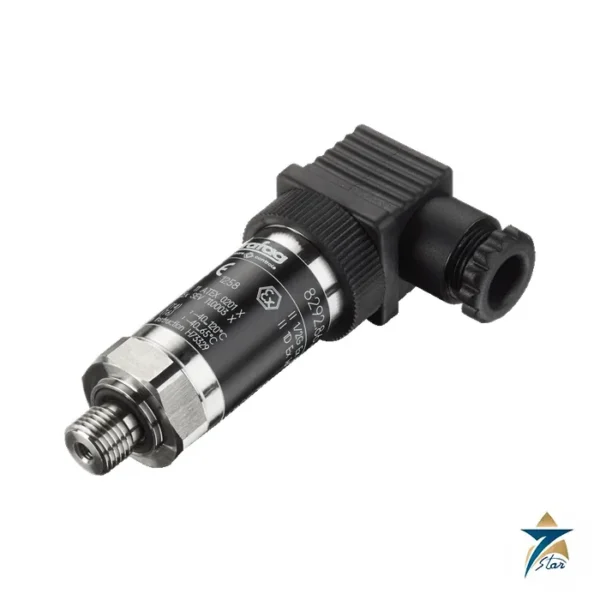
The Trafag EXNA 8852/8853 is an intrinsically safe piezoresistive pressure transmitter with a 4 to 20 mA output. The 8852 measures relative pressure and the 8853 absolute pressure. Trafag certifies the family to ATEX under certificate SEV 11 ATEX 0145 X for gas Zones 0, 1 and 2, dust Zones 20, 21 and 22 and underground mining, and it also carries a DNV-GL marine approval.

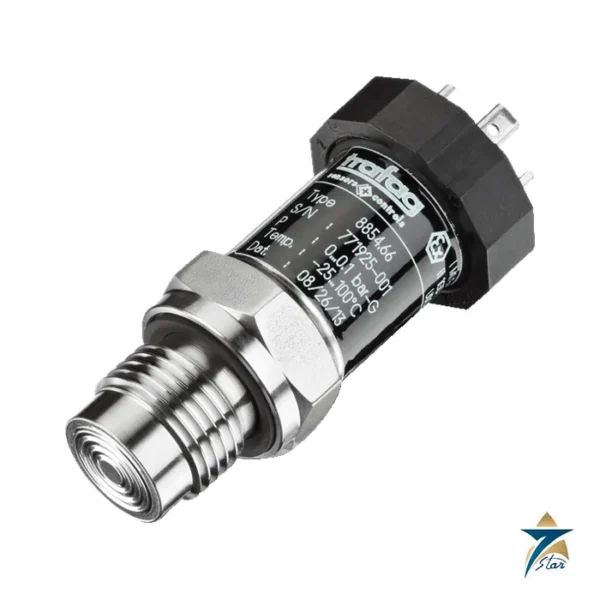
The transmitter covers ranges from 100 mbar to 1000 bar and is built in 316L stainless steel, with frontal or flush diaphragm versions for viscous or contaminated media. It is a typical choice for pressure monitoring on hazardous process lines, pump skids and marine systems where an Ex ia loop is already specified.

Technical specifications of the EXNA 8852/8853

Parameter Specification
Manufacturer Trafag AG, Switzerland
Product codes 8852 (relative pressure), 8853 (absolute pressure)
Measuring principle Piezoresistive
Measuring range 0 … 0.1 bar to 0 … 1000 bar
Output signal 4 … 20 mA, supply 10 … 30 VDC
Load RL not more than (US – 9 V) / 20 mA
Type of protection II 1G Ex ia IIC T3 … T6 Ga; II 1D Ex ia IIIC T125 °C Da; I M1 Ex ia I Ma
Certificate Ex SEV 11 ATEX 0145 X; DNV-GL
Media temperature T3: -25 to +150 °C; T4: -25 to +100 °C; T6: -25 to +55 °C
Ambient temperature T3/T4: -25 to +85 °C; T6: -25 to +55 °C
Accuracy NLH Type 05: 0.5 % FS; type 02: 0.25 % FS; type 01: 0.1 % FS (range dependent)
Rise time Typically 1 ms (10 to 90 % of nominal pressure)
Protection Minimum IP65
Vibration / shock 6 g (25 to 2000 Hz) / 50 g, 1 ms
Wetted parts and housing 1.4435 (AISI 316L); titanium option
Seal FKM 70 Sh
Weight About 220 g
Mounting torque 25 Nm

Ordering and configuration options

Trafag builds the EXNA to order from a type code. The pressure range sets the overpressure and burst ratings, and the datasheet lists ranges from 0 to 0.1 bar up to 0 to 1000 bar. For example, the 0 to 10 bar range has an overpressure rating of 30 bar, and the 0 to 100 bar range 300 bar.

Process connections include G1/4 female, G1/4 male, G1/2 male, manometer-style G1/4 and G1/2 male threads, and G1/2 male with frontal or flush membrane. Electrical connections include DIN 43650-A, M12x1, Binder 723 and MIL-C 26482 plugs, and PUR or FEP cable. Options include lightning protection to IEC 61000-4-5 at 10 kA, special oil filling, temperature class T3, T4 or T6 selection and titanium construction.

Selecting and installing in hazardous areas

Choose the temperature class from the process and ambient temperatures together, because the allowed media temperature falls from 150 degrees C at T3 to 55 degrees C at T6. Confirm that the associated barrier or isolator is certified for the transmitter entity parameters, and keep the loop calculation on file.

Use the frontal or flush membrane version for viscous media or media with solids, and fit damping elements where pressure peaks are expected. Apply the mounting torque of 25 Nm and follow the Trafag mounting and safety instructions when installing.

How the EXNA 8852/8853 Ex pressure transmitter works

A piezoresistive sensor converts the process pressure into a small change of resistance in a measuring bridge. The electronics amplify and linearise this signal and drive a two-wire 4 to 20 mA current, so the same two conductors carry both supply and measurement. Because the signal is a current, it is tolerant of long cable runs and electrical noise, which suits plant layouts where the control room is far from the measuring point.

The choice between the 8852 and the 8853 depends on the reference. A relative (gauge) transmitter measures against atmosphere and is the normal choice for line and pump pressures. An absolute transmitter measures against vacuum and is used where the reading must not change with weather or altitude, for example in vacuum service or for vapour pressure measurement.

For an Ex ia loop the transmitter must be connected through an approved associated apparatus, either a Zener barrier or a galvanically isolated barrier, located in the safe area or in a suitably protected enclosure. The entity parameters of the barrier, the cable capacitance and inductance and the internal values of the transmitter given in the datasheet must be compared so that the total stays inside the permitted limits. This calculation, together with the barrier certificate, forms part of the intrinsic safety descriptive system document for the loop.

Selection and installation tips

Select a range so that normal operating pressure sits in the upper part of the span, while pressure peaks stay below the overpressure rating for that range. Use the flush diaphragm version where the medium is viscous, crystallising or contains solids that could block a port. Mount the transmitter with an isolating valve so that it can be removed or checked without shutting down the line, and fit a snubber or siphon where pulsation or hot steam is expected. Tighten the process connection to the specified torque and route the cable with a drip loop so water does not run into the electrical entry.

In every hazardous-area installation the instrument is only one part of the protection concept. The certificate conditions, the cable and gland selection, the earthing and the documentation all have to agree with the area classification. Keep a copy of the certificate and the datasheet with the loop or equipment file, and record the tag number, type code and serial number at installation so that later inspections can trace each device back to its approval.

Supply in Oman and the GCC

Seven Star LLC supplies Trafag EXNA 8852/8853 instruments across Oman and the GCC for oil and gas, petrochemical, utilities and marine projects. Send the full type code or the details listed below and our team can help confirm the correct ordering code before you request a quote. Where a project has several measuring points, list them together so that ranges, connections and certification can be checked against one another in a single review rather than one tag at a time.

Documents and quotation

The Trafag datasheet for the EXNA 8852/8853 (H72227l, 10/2024) is available from the link below. Browse our Pressure Instrumentation category for related transmitters and switches.

To request a quote, send the type code or the pressure range, process connection, electrical plug, temperature class and accuracy class.

Datasheets & Documents
  • PDF Datasheet Trafag EXNA 8852/8853 Ex Pressure Transmitter datasheet (H72227l) Download
Reviews (0)

Reviews

There are no reviews yet.

How would you rate this product?

It takes about 10 seconds — just tap a star. Your email is never published.

About brand

Trafag is a Swiss manufacturer of pressure, temperature and gas density sensors and switches, founded in 1942 by Oscar Pfrunder and headquartered in Bubikon, near Zurich. It began as a transformer maker, which is where the name comes from, and from 1974 shifted its focus to measurement and control technology, introducing its first pressure transmitters in 1977. Trafag remains a family business.

Seven Star LLC is an independent supplier in Muscat. We list Trafag hazardous-area instruments for oil and gas, petrochemical and utility users in Oman and the GCC.

Trafag company profile

Founded 1942, Switzerland, by Oscar Pfrunder
Headquarters Bubikon, Switzerland
Ownership Family business
Original business Transformers; measurement and control focus from 1974
Markets Railways, hydraulics, shipbuilding, large engines, hazardous areas and power transmission
Product families NAT and EPI pressure transmitters, mechanical and electronic pressure switches, thermostats and temperature transmitters, SF6 gas density monitors and sensors, ATEX and IECEx explosion-proof sensors

Milestones

  • 1942: Oscar Pfrunder founds Trafag.
  • 1974: The company refocuses on measurement and control technology.
  • 1977: Trafag introduces its first pressure transmitters.

Trafag product series

Ex pressure transmitters include the EXNA 8852/8853 and EXNA 8854 transmitters and the EXNT 8292, and the EXNAL 8858 and 8859 are submersible pressure transmitters for level measurement.

Ex switches include the EXP 900/904/912 pressostat pressure switches, the EXPK 944/947/953 piston pressostats for high pressures, the EXS 404/414 Industat thermostats and the EXAS 409/419 Indu Ambistat room thermostats.

Trafag Ex transmitters use thin-film-on-steel or thick-film-on-ceramic sensor technology, chosen by range and medium, while the pressostats switch a microswitch directly from a diaphragm or piston with no supply voltage. The piston versions handle high pressures and pressure peaks, and the submersible EXNAL transmitters hang in tanks or wells to measure hydrostatic level.

Where Trafag instruments are used

Pressure and level measurement and switching in hazardous areas of wellsites, refineries, gas plants, tank farms and chemical plants, plus room temperature control in Ex-rated buildings and shelters.

Trafag products we list

Family Examples
Pressure Instrumentation EXNA 8852/8853 Ex Pressure Transmitter, EXNA 8854 Ex Pressure Transmitter, EXNT 8292 Ex Pressure Transmitter, EXP 900/904/912 Ex Pressostat Pressure S…, EXPK 944/947/953 Ex Piston Pressostat
Temperature Instrumentation EXAS 409/419 Ex Indu Ambistat Room Therm…, EXS 404/414 Ex Industat Thermostat
Level Instrumentation EXNAL 8858 Ex Submersible Pressure Trans…

Ordering Trafag instruments: what we need

Send the type and full order code, range, output or switch contact, process connection, electrical connection and the Ex certification needed (ATEX, IECEx or others).

Facts checked against Trafag's own company pages and image brochure (trafag.com), October 2026.

FAQ

Questions about the Trafag EXNA 8852/8853 Ex Pressure Transmitter

Answers from our engineering team on installation, compatibility and integration.

01Which zones is the EXNA 8852/8853 certified for?
Gas Zones 0, 1 and 2, dust Zones 20, 21 and 22 and underground mining, under certificate Ex SEV 11 ATEX 0145 X.
02What is the difference between 8852 and 8853?
The 8852 measures relative (gauge) pressure and the 8853 measures absolute pressure.
03What output and supply does it use?
A 4 to 20 mA output with a 10 to 30 VDC supply.
04What pressure ranges are available?
From 0 to 0.1 bar up to 0 to 1000 bar.
05How accurate is it?
Accuracy NLH is 0.5 percent FS for type 05, 0.25 percent for type 02 and 0.1 percent for type 01, depending on the range.