Overview
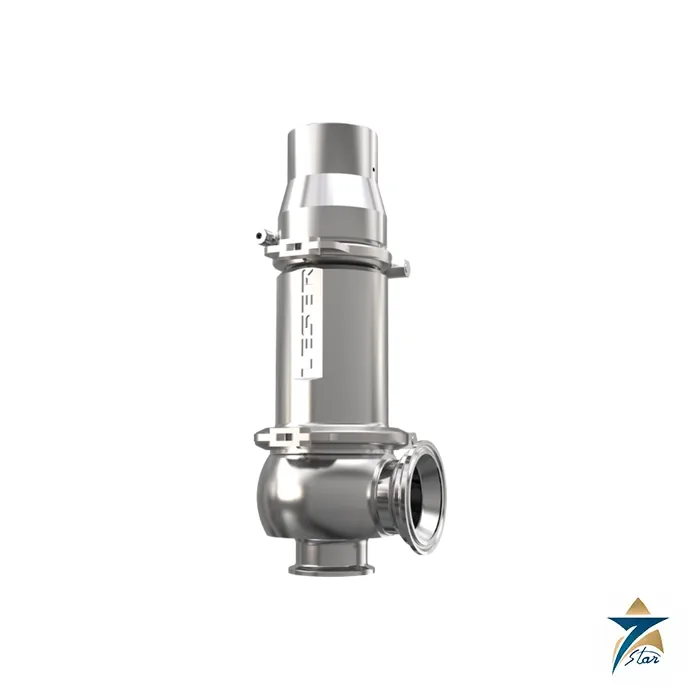
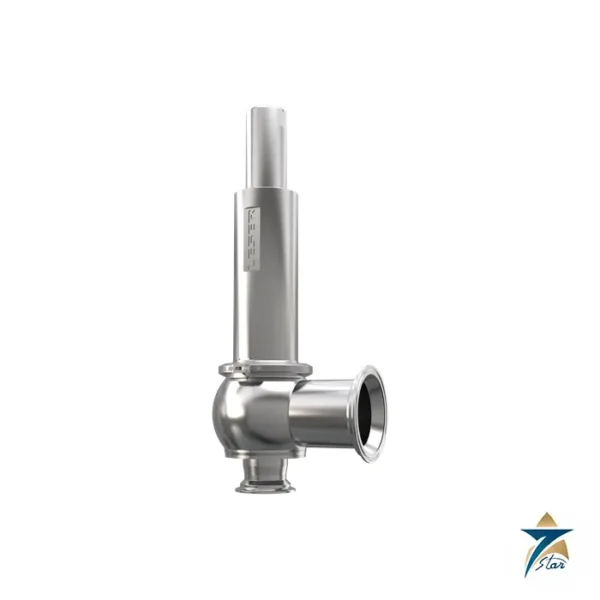
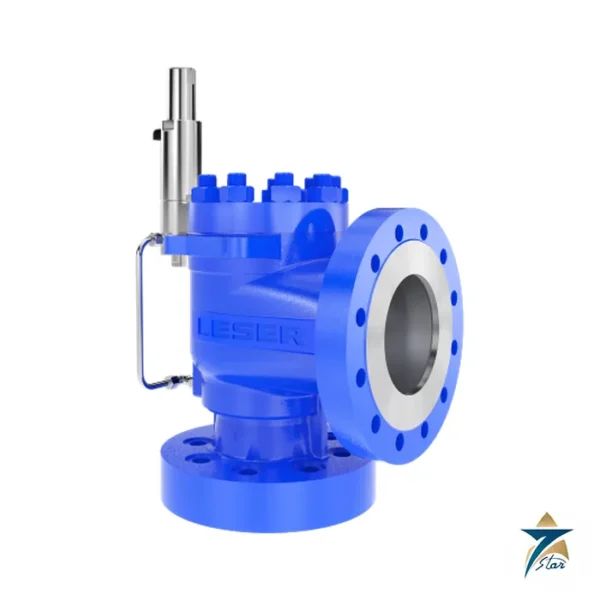
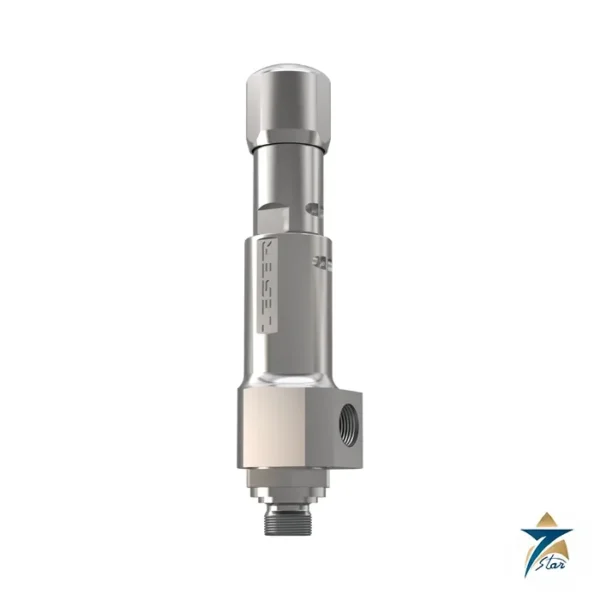
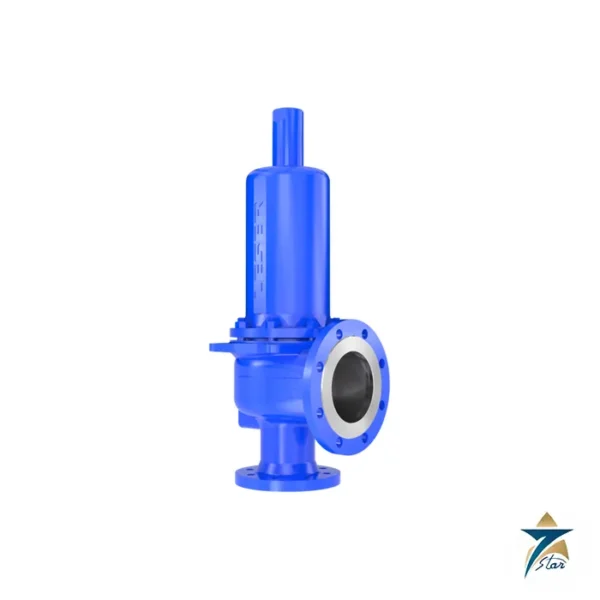
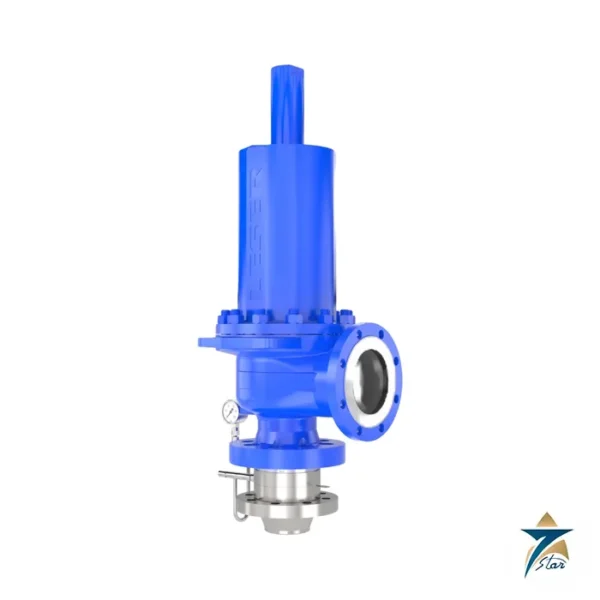
The LESER Clean Service Series is LESER’s dedicated safety valve line for hygienic and high-purity applications, built around five distinct types — Type 481, Type 483, Type 484, Type 485, and Type 488 — each addressing a different connection style and capacity requirement within food, beverage, and pharmaceutical processing. What unifies the series is not a single body casting but a shared design commitment to crevice-free wetted surfaces, standardized aseptic or hygienic connections, and stainless steel construction suitable for CIP/SIP cleaning regimes, so that a plant can select the right connection geometry for each point in a process line while staying within one certified hygienic product family.
Operating Principle
Each type in the Clean Service Series is a direct-acting, spring-loaded safety valve, identical in lift mechanism to LESER’s industrial lines, but re-engineered at the wetted surface to eliminate the threads, gaskets, and crevices that would otherwise trap product residue or harbor bacteria in a hygienic process. Instead of screwed or standard flanged connections, the series uses aseptic clamp or hygienic pipeline connections that mount flush with the process line, and the disc/seat interface is designed so the valve can be cleaned in place without disassembly during a plant’s normal CIP (clean-in-place) or SIP (steam-in-place) cycle.
The practical consequence of this design approach is that a Clean Service valve behaves functionally like any other spring-loaded relief valve during an overpressure event — the disc lifts once the calibrated spring force is exceeded and reseats once pressure falls — while remaining fully compliant with the surface finish, material certification, and cleanability standards that food and pharmaceutical regulators and auditors require of any component in direct product contact.
Engineering Design of the LESER Clean Service Series
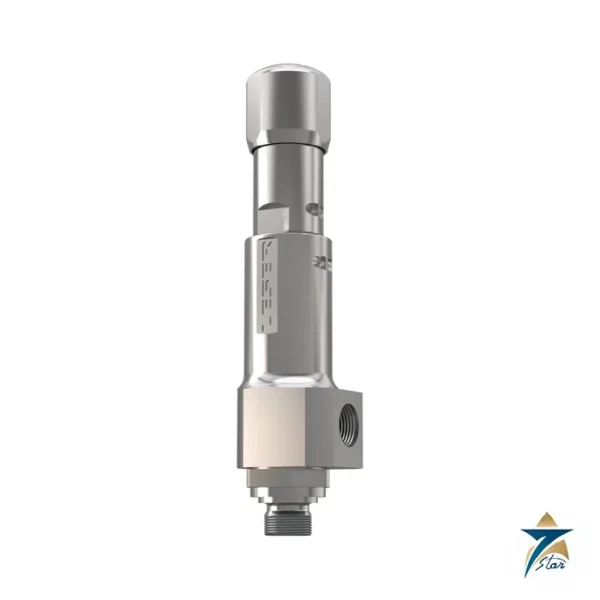
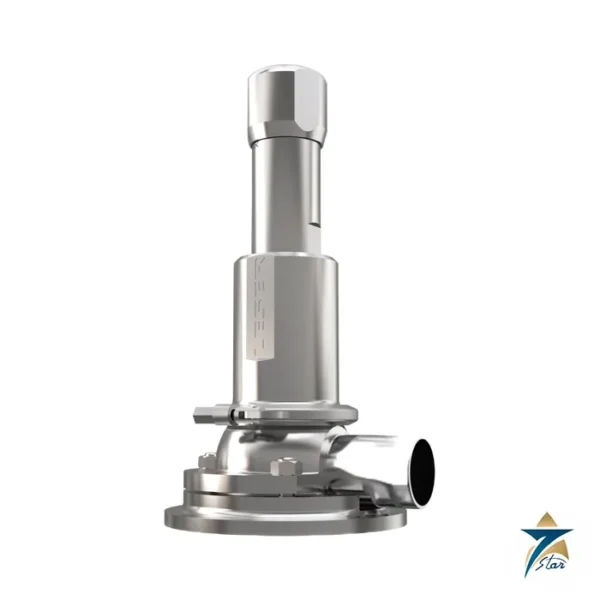
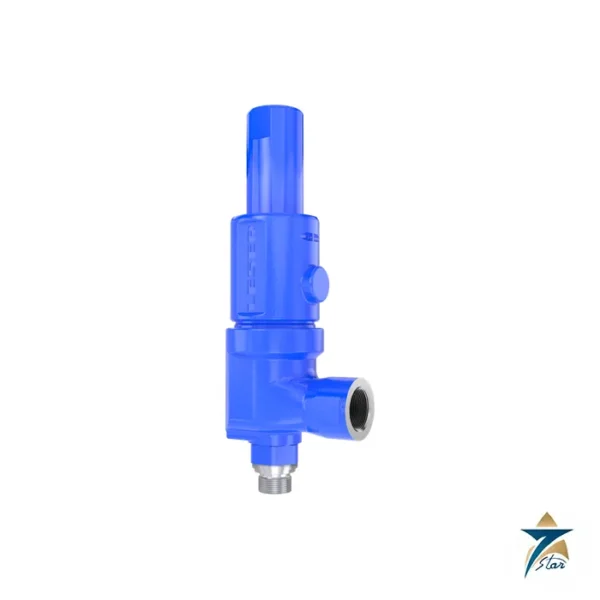
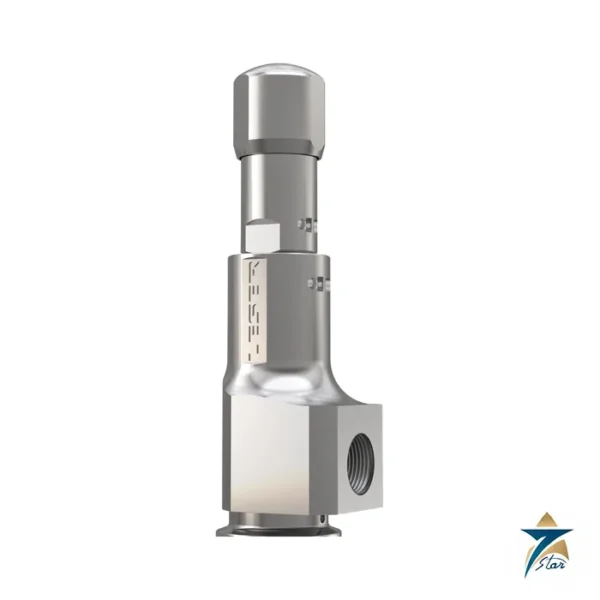
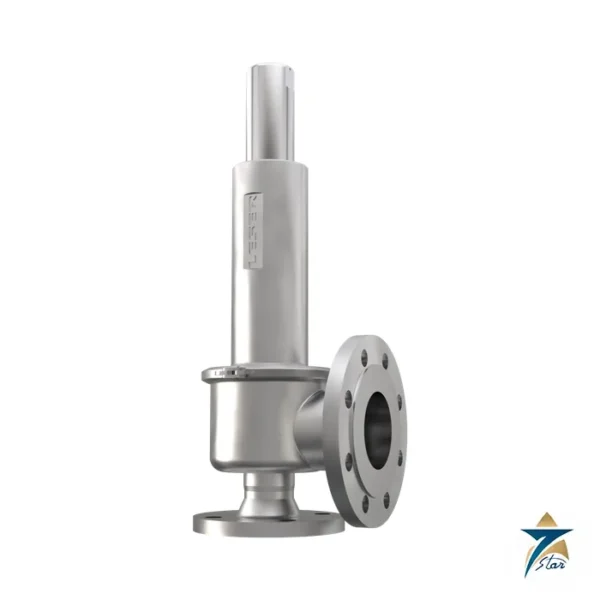
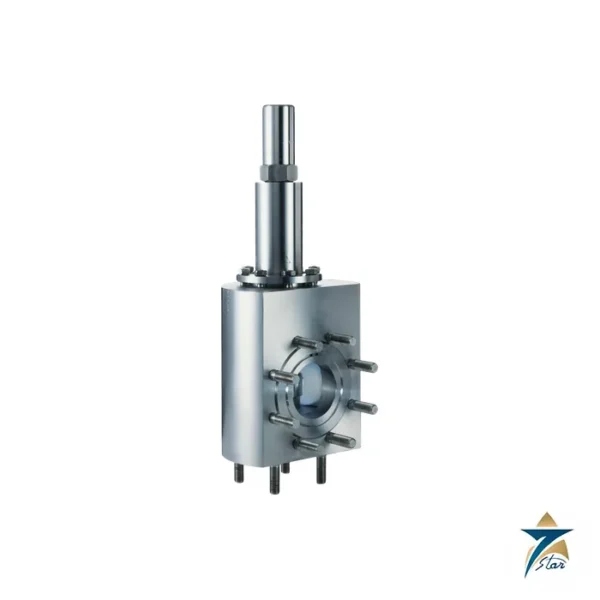
Type 481 is the smallest-capacity member of the family, sized DN 15 to DN 25 (NPS ¾ to 1) and rated 0.1 to 68 bar, intended for safeguarding secondary hygienic processes rather than the main product line. Type 483 uses standardized aseptic connections on DN 25 to DN 40 (NPS 1 to 2) at 0.1 to 16 bar, purpose-built for crevice-free elastomer-sealed hygienic duty. Type 484 is designed for direct integration into a vessel or container flange rather than a pipeline, at 0.1 to 16 bar, for protecting tanks and mixing vessels at the point of connection. Type 485 integrates directly into pipework on DN 25 to DN 50 (NPS 1 to 2) at 0.1 to 16 bar for in-line protection of process piping, and Type 488 is the highest-capacity member of the family, covering DN 25 to DN 100 (NPS 1 to 4½) at 0.1 to 16 bar for protecting larger hygienic process lines and vessels where higher relief flow is required.
All five types are constructed in stainless steel suitable for CIP/SIP cycles and are finished to the surface-roughness standards expected in food, beverage, and pharmaceutical manufacturing. Because the family spans container-mount, in-line, and aseptic-clamp connection styles at broadly similar pressure ranges, a hygienic plant can specify the connection geometry that matches each point in the process — vessel, pipeline, or aseptic branch — while keeping every safety valve on site within the same certified Clean Service family.
Key Features
The LESER Clean Service Series brings the following strengths to hygienic and high-purity process protection:
- Crevice-free, stainless steel wetted surfaces across all five types meet food, beverage, and pharmaceutical hygienic design standards.
- Type 483’s standardized aseptic connections and elastomer seal are purpose-built for direct hygienic pipeline duty.
- Type 484 mounts directly to a vessel or tank flange for point-of-connection protection without added pipework.
- Type 485 integrates into the pipeline itself for straightforward in-line installation on hygienic process lines.
- Type 488 extends the family up to DN 100 for higher-capacity protection of larger hygienic vessels and lines.
- CIP/SIP-compatible construction allows cleaning and sterilization without valve disassembly.
- Pressure coverage from 0.1 bar up to 68 bar (Type 481) spans both very light secondary-process duty and standard hygienic process pressures.
- A shared design language across all five types simplifies specification, spares stocking, and maintenance training for hygienic-plant engineering teams.
Industrial Applications
The LESER Clean Service Series is specified across dairy processing, brewing and beverage bottling, food ingredient manufacturing, and pharmaceutical production, wherever a safety valve is in direct or near-direct contact with a food-grade or pharmaceutical-grade product and must meet the same hygienic design standard as the rest of the process equipment. These applications are present across Oman and the GCC’s growing food and beverage manufacturing base and its expanding pharmaceutical and life-sciences sector.
With engineering support in Muscat, Seven Star LLC supplies the Clean Service Series on request to food and beverage manufacturers, dairies, and pharmaceutical producers across Muscat, the Sohar Freezone, the Salalah Free Zone, and the wider Sultanate of Oman and GCC, with manufacturer documentation and technical support from a locally based team.
Technical Specifications
The comparison below sets each Clean Service type against its verified connection style and pressure range:
| Type |
Size Range |
Pressure Range |
Connection Style |
Key Feature |
| Type 481 |
DN 15 – DN 25 / NPS ¾ – 1 |
0.1 – 68 bar |
Hygienic |
Small-capacity secondary hygienic process protection |
| Type 483 |
DN 25 – DN 40 / NPS 1 – 2 |
0.1 – 16 bar |
Aseptic clamp |
Standardized aseptic connections, elastomer seal |
| Type 484 |
Container flange |
0.1 – 16 bar |
Vessel/container mount |
Direct integration into tank or container flange |
| Type 485 |
DN 25 – DN 50 / NPS 1 – 2 |
0.1 – 16 bar |
In-line pipework |
Integrated pipeline protection |
| Type 488 |
DN 25 – DN 100 / NPS 1 – 4½ |
0.1 – 16 bar |
Hygienic |
Highest-capacity member for larger hygienic lines |
Request a Quote for LESER Clean Service
Seven Star LLC invites food, beverage, and pharmaceutical plant engineers and procurement teams across Oman and the GCC to submit a formal RFQ for the LESER Clean Service Series, covering Type 481, 483, 484, 485, and 488. Full technical datasheets and direct access to the Seven Star LLC instrumentation and valve division are available on request.
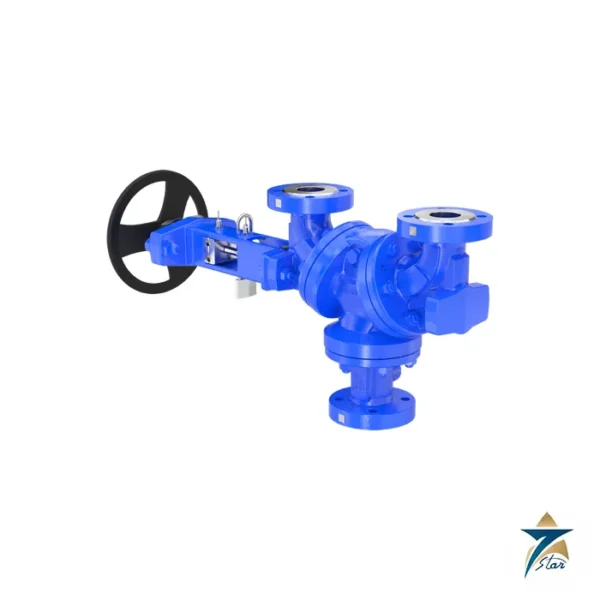
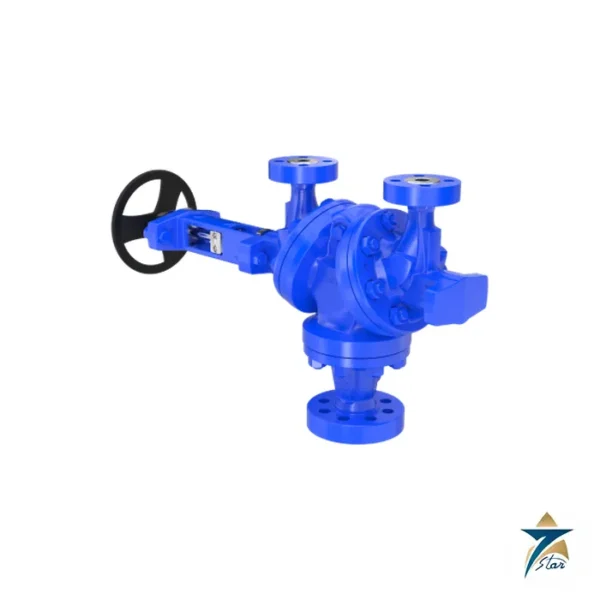
Also available: LESER Change-Over Valve Series (Type 320/330)

























Reviews
There are no reviews yet.