Brand:

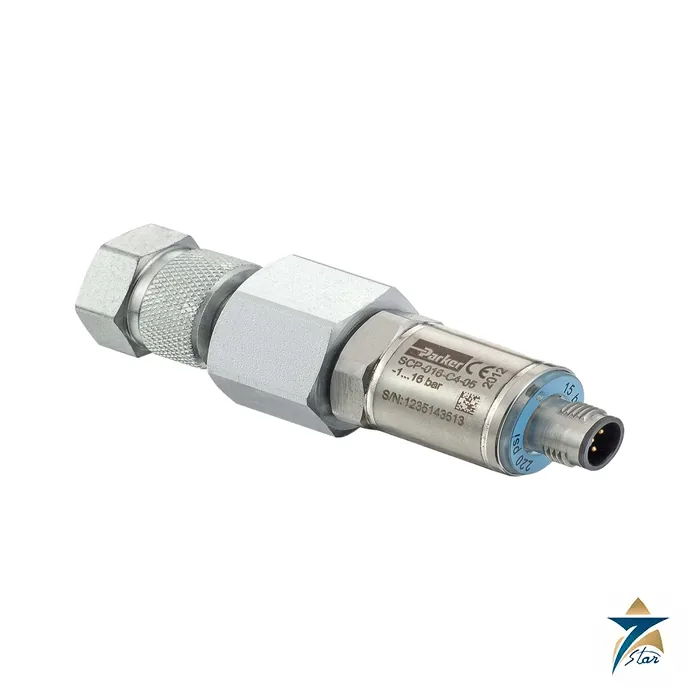
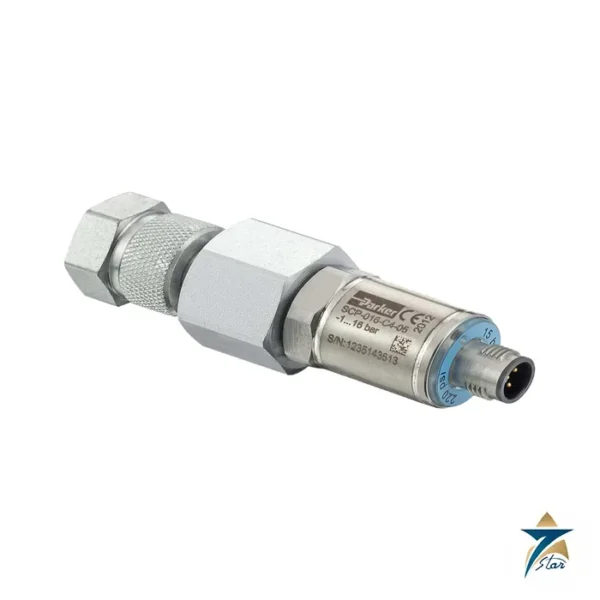
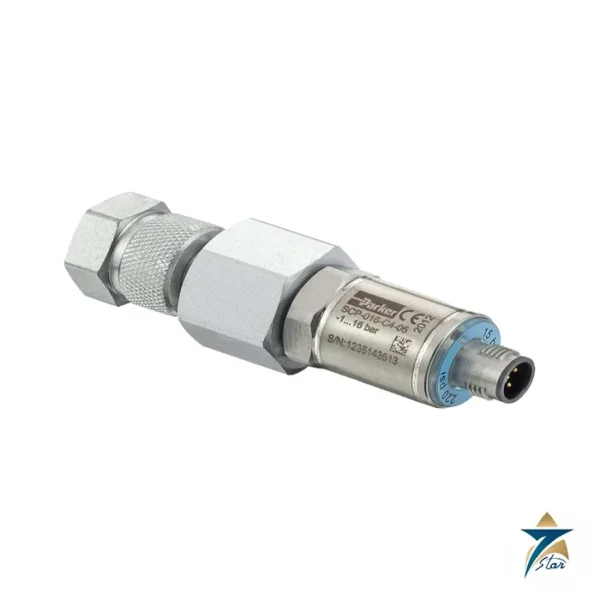
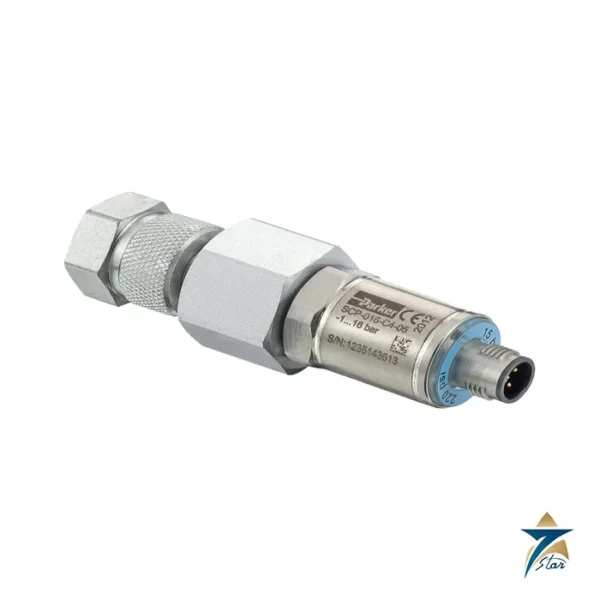
Parker SCP-016-C4-05 SCP Pressure Sensor, -1 to 16 bar

Description

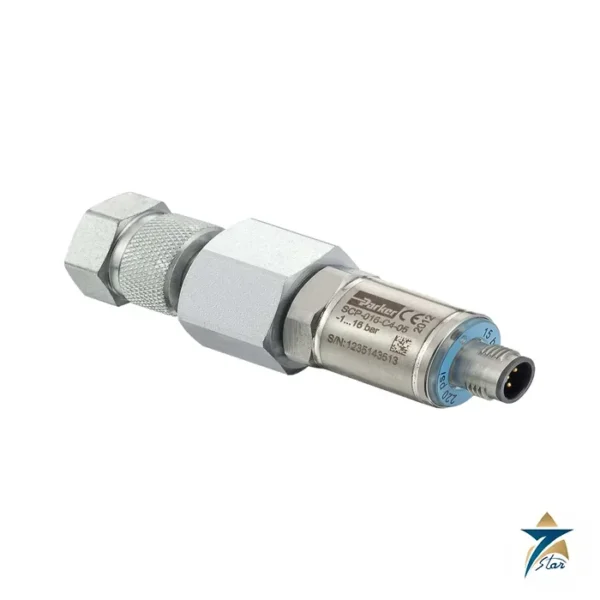
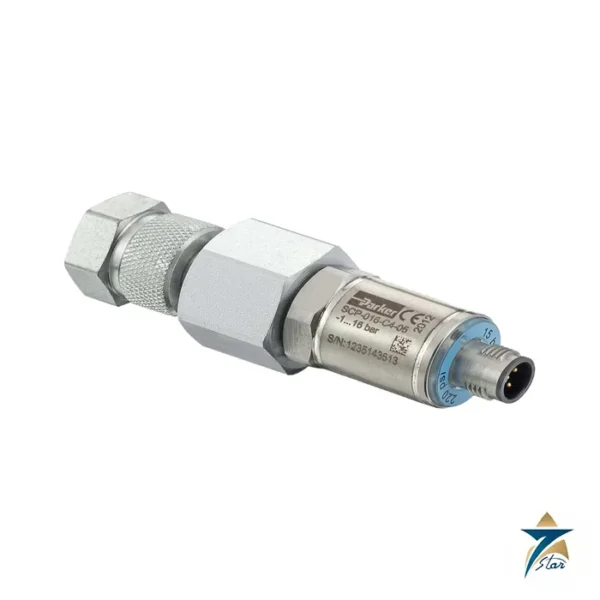
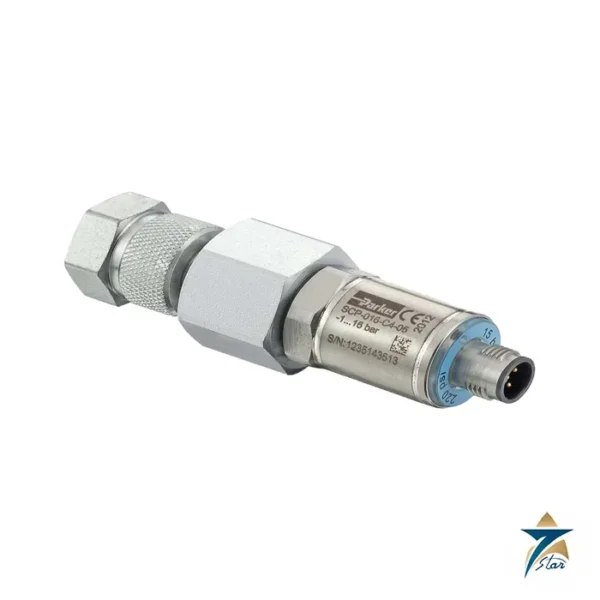
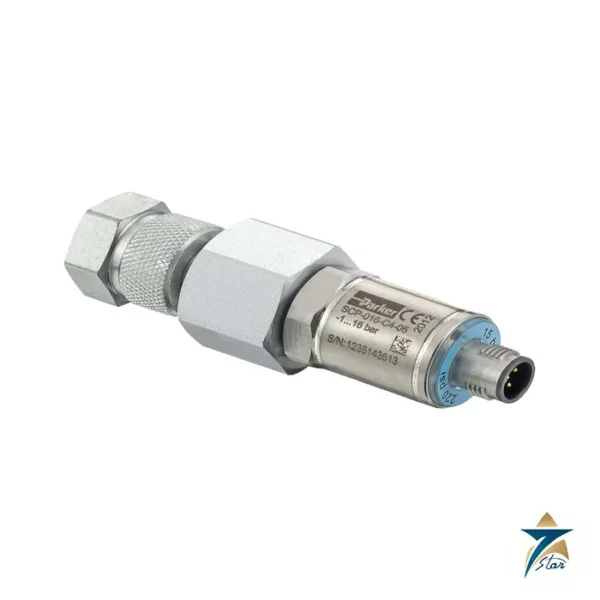
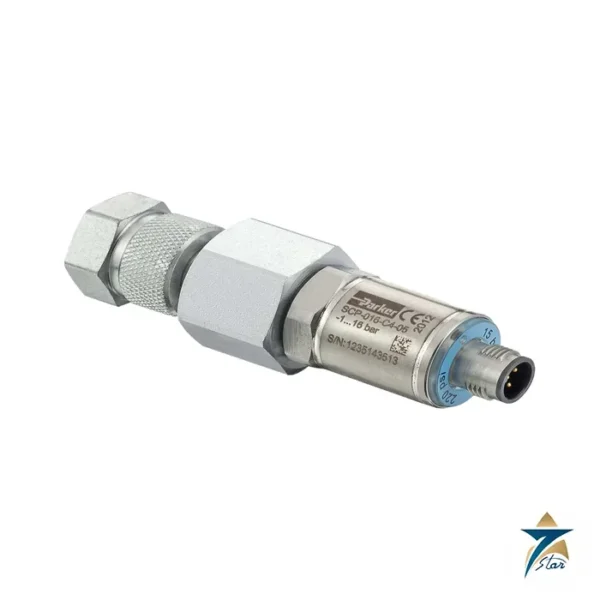
SCP-016-C4-05 pressure sensor for low-pressure and vacuum CAN measurement

The Parker SCP-016-C4-05 is a CAN bus pressure sensor from the SCP (SensoControl) range, built as a diagnostic sensor for Parker hand-held and portable measuring instruments. This is the lowest-range member of the CAN-bus SCP family. Its range of -1 to 16 bar covers vacuum through low positive pressure, and the CAN output lets it share a network with other Parker diagnostic sensors. It is made of stainless steel, uses a strain-gauge measuring element and is delivered with a diagnostic adapter installed, so it can be connected to a measuring point in seconds.

How to read the part number SCP-016-C4-05

Element Meaning
SCP Pressure sensor from the SCP series
016 Measuring range code: -1 to 16 bar
C4 CAN bus output for Parker meters
05 5-pin M12 CAN connection

Parker also lists a PD-adapter version of most CAN ranges, with the suffix -PD, and a calibration-certificate version with the prefix K-. This page covers the standard version SCP-016-C4-05.

SCP-016-C4-05 technical specifications

Parameter Specification
Manufacturer / part number Parker / SCP-016-C4-05
Product Pressure sensor, SCP series (SensoControl)
Measuring range -1…16 bar (-14.5…232 psi)
Output type CAN signal for hand meters
Technology Strain gauge (DMS)
Overload pressure 32 bar (464 psi)
Burst pressure 160 bar (2320 psi)
Accuracy (full scale) ± 0.5 % + 0.2 %/year
Response time 1 ms
Electrical connection 5-pin M12x1 plug
Process connection 1/4" BSPP, supplied with a diagnostic adapter (M16x2) fitted
Housing / seal Stainless steel / FKM
Body diameter 22 mm
Weight approx. 195 g
Ambient temperature -25…+85 °C
Media temperature -25…+105 °C
Storage temperature -25…+85 °C
Shock / vibration 50 g / 11 ms (IEC 60068-2-27); 20 g (IEC 60068-2-6)
Load cycles 100 million
Protection class IP67 (EN 60529)
Specifications met CE

How the SCP-016-C4-05 measures pressure

The sensing element is a strain gauge in a stainless-steel body, like the analogue version, but the signal is digitised in the sensor and sent over CAN bus. A digital signal is less sensitive to cable length and electrical noise, and several sensors can share one cable run through Y- and T-junctions. A blue identification light ring around the connector makes it easy to find the right sensor on a machine with many measuring points.

The sensor is intended to be used with a measuring hose and a test-point coupling. The diagnostic adapter installed on the 1/4" BSPP port ends in an M16x2 female thread, which matches the EMA-3 measuring connection used on Parker test points. Parker states that a CAN network requires a terminating resistor, listed as SCK-401-R.

Instruments and accessories that work with SCP-016-C4-05

The CAN SCP sensors work with the Parker Serviceman Plus SCM-155-2-05 and with the Service Master CONNECT SCM-600-00 or SCM-600-0A. Parker lists SCK-401 cables for the network: SCK-401-0.5-4F-4M, SCK-401-02-4F-4M, SCK-401-05-4F-4M and SCK-401-10-4F-4M (0.5 m to 10 m), the junctions SCK-401-Y, SCK-401-0.3-Y and SCK-401-T, and the terminating resistor SCK-401-R. Related sensors in the catalogue include the other CAN pressure ranges, such as SCP-016-C4-05, SCP-060-C4-05, SCP-600-C4-05 and SCP-1000-C4-05, and the pressure and temperature sensors SCPT-xxx-C2-05.

The measuring chain also includes the measuring hose (SMA3 series), the adapter SCA-EMA-3/3 and the measuring connection EMA-3 on the system side. Check that each element is rated for the pressure you intend to measure.

Choosing the SCP-016-C4-05 range

Choose this range for pneumatic systems, suction lines, charge circuits and lubrication loops where pressure stays below about 16 bar. The overload rating of 32 bar is two times the top of the range, so the sensor should not be used on circuits that can surge far above its span. The blue light ring around the connector identifies the sensor on the bench or in the machine. For a hydraulic working-pressure measurement look at the 060 or higher ranges.

  • Pneumatic headers and instrument air
  • Vacuum and suction-side checks on pumps
  • Charge circuits and lubrication loops
  • Low-pressure logging on a CAN bus

Selection and ordering checklist for SCP-016-C4-05

  • Confirm the highest working pressure and the highest expected peak, and compare both with the -1 to 16 bar range and the overload rating.
  • Confirm that your hand meter or data logger has a matching CAN input.
  • Decide whether you need the standard adapter, the PD adapter variant or a calibration certificate (K- prefix).
  • Check the process connection: 1/4" BSPP male on the sensor, with an M16x2 female diagnostic adapter.
  • Check the media: the sensor housing is stainless steel and the seal is FKM, with a media temperature of -25 to +105 °C.
  • Plan the cables and, for CAN, the terminating resistor.

Use, care and maintenance of the SCP-016-C4-05

Always depressurise the circuit before connecting or removing the sensor, and use a measuring hose with a rating at or above the highest pressure. Connect the sensor to the test point, then the cable to the meter, and only then pressurise the system. Remove the sensor when the measurement is complete rather than leaving it on the machine, as it is a diagnostic tool and not a permanent transmitter.

Accuracy is stated as ± 0.5 % of full scale plus 0.2 % per year, which means a periodic check or recalibration is part of normal use. Store the sensor in a clean, dry place between jobs, keep the connector clean and dry, and replace the cable when the insulation or the plug shows wear. The sensor is rated IP67, so it should be kept away from jets of water and from heavy contamination when in use.

Where the SCP-016-C4-05 is used in Oman and the GCC

In regional plants it fits instrument air header checks, vacuum and suction line monitoring on pumps, lubrication-circuit verification on turbo machinery auxiliaries and charge-pressure logging on mobile machinery during commissioning. The IP67 rating helps in hosed-down areas and in dusty yards where a plug connection must tolerate splashes.

Heat is a factor on exposed equipment in the Gulf. The ambient range is -25 to +85 °C and the media range reaches +105 °C, so a sensor left on a sun-heated line should be checked against those limits. Fine dust and humidity are also constant concerns, which makes it wise to cap the connector and the diagnostic adapter when the sensor is stored.

Information to send with an RFQ for SCP-016-C4-05

  • Part number SCP-016-C4-05 and quantity
  • Standard, PD adapter or calibration-certificate version
  • Meter model or logger that the sensor will connect to
  • Cable lengths and accessories needed
  • Project name, site and delivery location

Documents and quotation

The official Parker Parker SensoControl Diagnostics – Test Equipment for Hydraulics, Catalogue 4054-4/EN is attached to this page as a PDF. It covers the following points: Section 10 ‘Pressure measurement SCP CAN’ (page 48-51); order designation SCP-xxx-C4-05 for -1…016, 0…060, 0…600, 0…1000 bar and other ranges (page 51); Overload / burst pressure: SCP-016 32/160 bar, SCP-060 120/550 bar, SCP-600 1000/2000 bar, SCP-1000 1000/2000 bar (PN 630 bar, peaks to 1000 bar) (page 50); Accuracy ±0.5 % FS + 0.2 %/year, response time 1 ms, M12 5-pin connection, 1/4″ BSPP process connection, IP67 (page 50). Include the SCP-016-C4-05 code, the quantity and the delivery location in your inquiry and we will reply with availability and a written quotation.

Seven Star LLC supplies Parker pressure sensors and other hydraulic and pneumatic products in Oman and the GCC from Muscat.

Other Models in the Parker Scp Can Range

Seven Star LLC supplies models from the Parker Scp Can range in Oman and the GCC. Compare the related models below and request a quote for the one that matches your application.

ModelCategory
Parker SCP-016-C4-05 SCP Pressure Sensor, -1 to 16 barPressure TransmittersYou are viewing this model
Parker SCP-060-C4-05 SCP Pressure Sensor, 0 to 60 barPressure TransmittersView details
Parker SCP-600-C4-05 SCP Pressure Sensor, 0 to 600 barPressure TransmittersView details
Parker SCP-1000-C4-05 SCP Pressure Sensor, 0 to 1000 barPressure TransmittersView details
Datasheets & Documents
  • PDF Catalogue Parker SCP-016-C4-05 Catalogue (official PDF) Download
Reviews (0)

Reviews

There are no reviews yet.

How would you rate this product?

It takes about 10 seconds — just tap a star. Your email is never published.

About brand

Parker Hannifin is an American manufacturer of motion and control technologies, founded in 1917 in Cleveland, Ohio, by Arthur L. Parker as the Parker Appliance Company. Its first product was a pneumatic brake system for trucks and buses. In 1957 the company bought Hannifin, a maker of hydraulic and pneumatic cylinders and valves, and took the Parker Hannifin name. It is headquartered in the Cleveland area and listed on the New York Stock Exchange.

Seven Star LLC supplies the Parker items that maintenance teams request most: Lucifer solenoid valves, including NAMUR types for actuated valves, along with filter elements and hydraulic gear pumps.

Parker company profile

Founded 1917, Cleveland, Ohio, USA, by Arthur L. Parker
Headquarters Cleveland area, Ohio, USA
Ownership Public company, New York Stock Exchange (PH), listed since 1964
First product Pneumatic brake system for trucks and buses
Product families Hydraulic pumps, cylinders and valves, pneumatic valves and FRLs, instrumentation fittings and valves, hoses and couplings, filtration (including Racor and Velcon), seals and O-rings

Milestones

  • 1917: Arthur L. Parker starts the Parker Appliance Company in Cleveland.
  • 1924: Parker restarts the business after a 1919 accident destroyed its inventory.
  • 1957: Parker acquires Hannifin and becomes Parker Hannifin.
  • 1964: The shares are listed on the New York Stock Exchange.

Parker product lines listed here

Most of the listing is Lucifer, the Parker solenoid valve line that many nameplates still show as a brand in its own right. The 341N types (341N01, 341N22, 341N31) are NAMUR-interface valves that bolt straight onto a pneumatic actuator to pilot it. The E131K03 is a direct-acting 3/2 valve, and the 322K4706 and 7341NAKBHNM0 are further Lucifer solenoid valves. Parker sells Lucifer valve bodies and their coils or electrical parts as separate items, so one body can be combined with different voltages and enclosure types.

Other Parker lines appear: a hydraulic gear pump (P51A478BEY25-07-ZY), a coalescing filter element (9000040001) and a Triple-Lok 37-degree flare tube fitting.

Where Parker components are used

Lucifer NAMUR valves sit on quarter-turn actuators for on-off and shutdown valves in oil and gas, power and water plants across the GCC. Line-mounted solenoid valves switch instrument air, water, steam and light oils on skids and machines. Gear pumps drive hydraulic power units and mobile equipment, and coalescing elements protect instrument air and gas sampling systems from oil and water aerosols.

Parker products we list

Family Examples
Solenoid Valves 7341NAKBHNM0 Lucifer Series Solenoid Valve, Lucifer 322K4706 2-Way Solenoid Valve, Lucifer 341N01 NAMUR Solenoid Valve, Lucifer 341N22 SOLENOID VALVE, Lucifer 341N31 NAMUR Solenoid Valve, Lucifer E131K03 Solenoid Valve
Filtration Elements 9000040001 Coalescing Filter Element
Pumps P51A478BEY25-07-ZY Hydraulic Gear Pump
Pipes & Fittings Triple-Lok 37° Flare Tube Fitting

Ordering Parker parts: what we need

Parker part numbers are long and every character counts. Please send:

  • Solenoid valves: valve number from the body, coil or electrical part number, voltage and frequency, and the Ex marking if the coil is certified
  • Gear pumps: the complete code from the nameplate, including the assembly number, which fixes displacement, shaft, ports and rotation
  • Filter elements: element number and the housing model it fits

A photo of the nameplate is welcome. We check the code against Parker documentation and identify the manufacturer's current equivalent if a number has been superseded.

Facts checked against Parker's centennial timeline and the Encyclopedia of Cleveland History, October 2026.

FAQ

Questions about the Parker SCP-016-C4-05 SCP Pressure Sensor, -1 to 16

Answers from our engineering team on installation, compatibility and integration.

01What is the Parker SCP-016-C4-05 used for?
It is a diagnostic pressure sensor for Parker hand-held measuring instruments, used for low-pressure and vacuum CAN measurement. It is connected through a test point and a measuring hose and is not meant to stay permanently in the line.
02What pressure range does the SCP-016-C4-05 cover?
The measuring range is -1 to 16 bar (-14.5 to 232 psi). Overload pressure is 32 bar (464 psi) and burst pressure is 160 bar (2320 psi).
03Which instruments does the SCP-016-C4-05 connect to?
It connects to the Parker Serviceman Plus SCM-155-2-05 and to the Service Master CONNECT SCM-600-00 or SCM-600-0A, through SCK-401 CAN cables with a terminating resistor on the network.
04What are the process and electrical connections of the SCP-016-C4-05?
The process connection is 1/4" BSPP male, supplied with a diagnostic adapter that has an M16x2 female thread. The electrical connection is a 5-pin M12x1 plug with protection class IP67.
05How accurate is the SCP-016-C4-05?
The stated accuracy is ± 0.5 % of full scale plus 0.2 % per year, so periodic recalibration or a replacement is advisable. A version with a calibration certificate per ISO 9001 is listed with the prefix K-.