W150 miniature proximity sensor for 2 to 100 mm
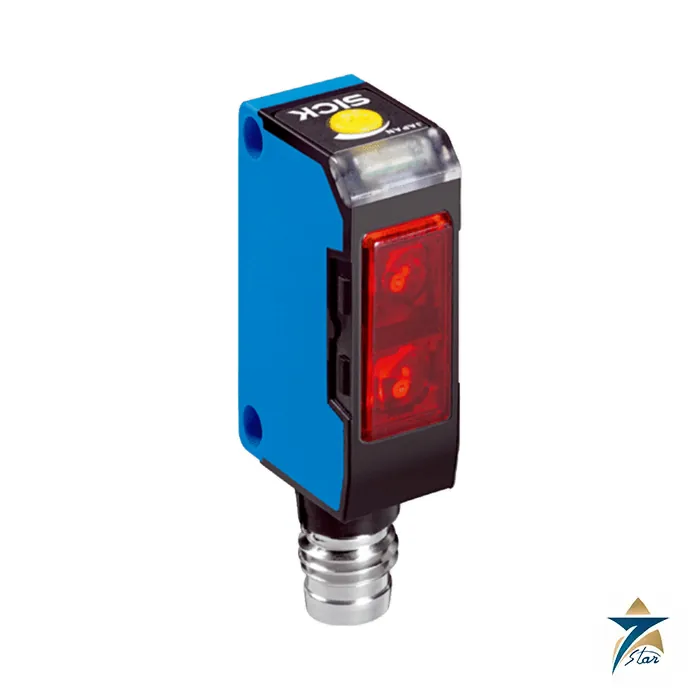
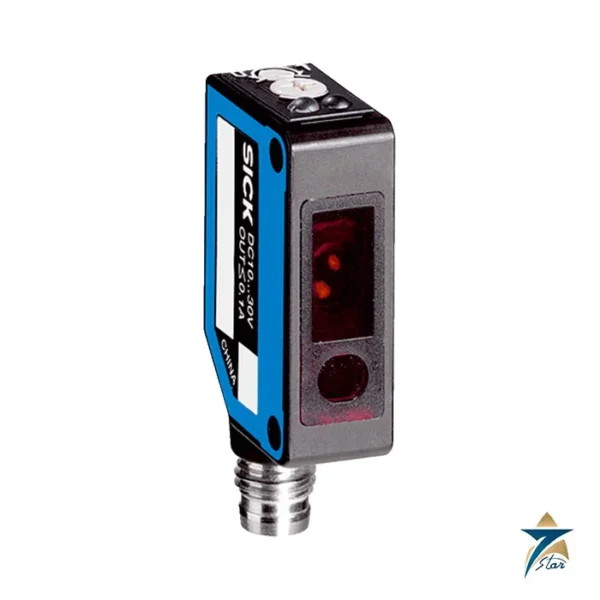
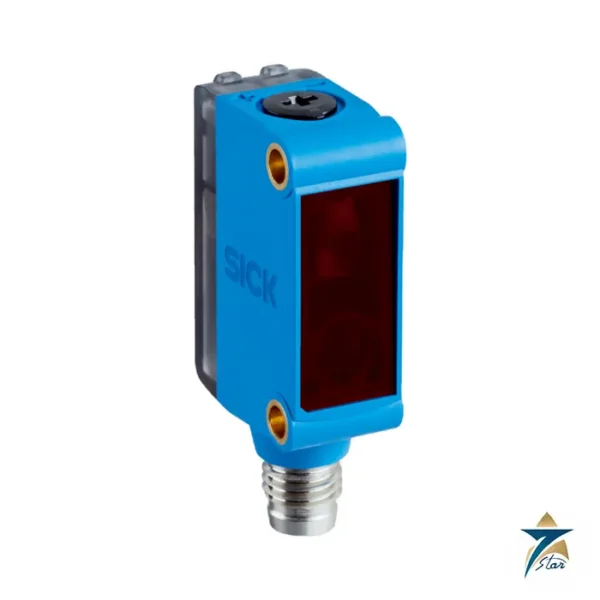
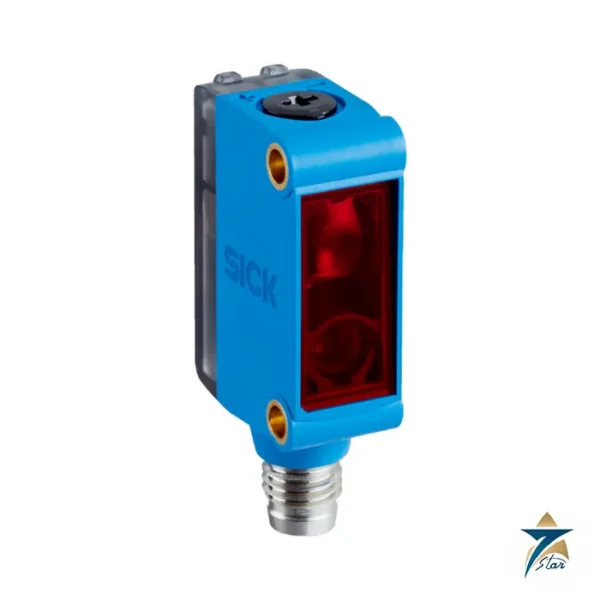
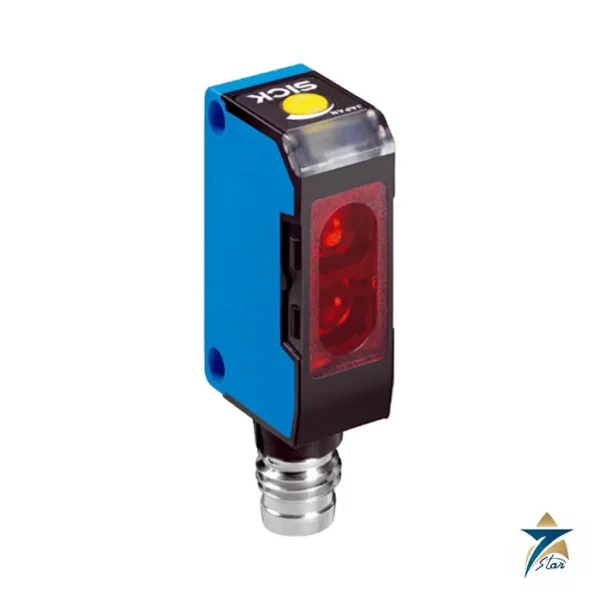
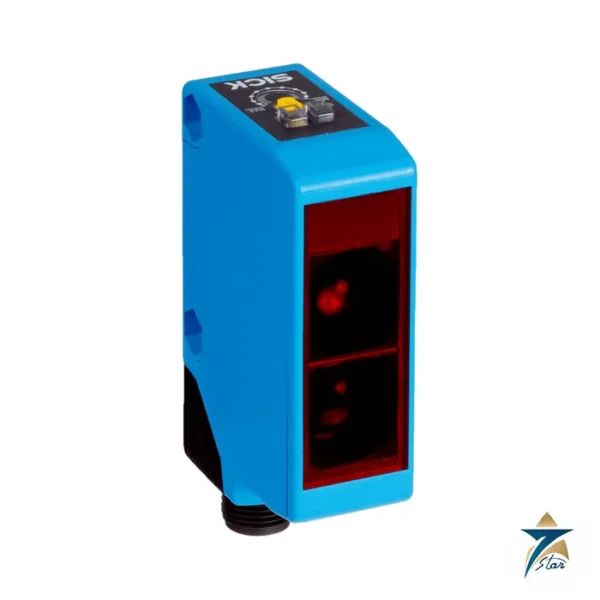
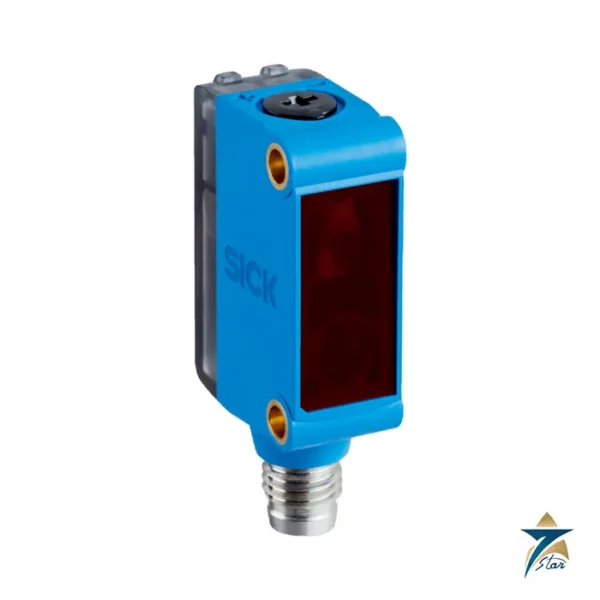
The SICK WT150-P460 (part no. 6011050) is a W150 miniature photoelectric proximity sensor with background suppression for 2 mm to 100 mm. At 10 mm by 28 mm by 18 mm and 7 g, it is among the smallest sensors of the SICK range and is used on small assemblies, handling grippers and compact feeders. The housing is plastic ABS with PC optics and protection class II.
SICK shows this type in its catalogue archive on sick.com, so check availability and successor information before using it in new designs.
Technical specifications
| Parameter |
Specification |
| Manufacturer |
SICK |
| Type / family |
WT150-P460 / W150 |
| Part no. |
6011050 |
| Functional principle |
Photoelectric proximity sensor, background suppression |
| Sensing range max. |
2 mm … 100 mm (90 % remission) |
| Light source / type |
LED, visible red light; focus and dispersion approx. 5 degrees |
| Adjustment |
Potentiometer, 5 turns |
| Supply voltage UB |
10 V DC … 30 V DC |
| Ripple |
10 % |
| Current consumption |
20 mA |
| Output |
PNP, light/dark switching selectable via L/D control cable |
| Output current Imax. |
100 mA |
| Response time / switching frequency |
0.5 ms max. / 1,000 Hz |
| Protection class |
II |
| Dimensions (W x H x D) |
10 mm x 28 mm x 18 mm |
| Housing / optics |
Plastic ABS / plastic PC |
| Connection |
Male connector M8, 4-pin |
| Weight |
7 g |
| Enclosure rating |
IP67 |
| Items supplied |
BEF-W150-A mounting bracket |
| Ambient temperature |
-25 °C … +55 °C operation; -40 °C … +75 °C storage |
| MTTFD |
1,686 years (DCavg 0 %) |
| UL file no. |
NRNT2.E128350 and NRNT8.E128350 |
Using a 7 g sensor in compact machines
The WT150-P460 suits short-range detection where space is the main limit, such as detecting a part in a gripper, checking presence on a small nest or counting items at a chute exit. Its focus of about 5 degrees gives a defined sensing window, and the five-turn potentiometer lets you place the switching point precisely between 2 mm and 100 mm.
Light/dark switching is selected with the L/D control cable: leave it open or connect it according to the data sheet wiring. A BEF-W150-A bracket is supplied. Mount the sensor firmly, as vibration at this size can move the sensing window.
Lifecycle and ordering
Quote WT150-P460 and part number 6011050. The same W150 family includes a retro-reflective WL150-P430 and a transparent-object WL150-P420 in this order list. The type appears in the SICK archive listing, so Seven Star LLC advises verifying current availability or an equivalent with SICK before purchase.
Checking the detection task
Background suppression works by triangulation: the sensor switches on objects closer than the set distance and ignores surfaces behind it. Before choosing the WT150-P460 for a position, confirm three things. First, the object must pass within the 2 to 100 mm range with some margin, remembering that the 100 mm figure is given for a target with 90 % remission, and that dark or matt objects may need a shorter setting. Second, the background should sit clearly further away than the object, so that the switching point can be placed between them. Third, the object must stay in the light spot long enough for the 0.5 ms response time, which is rarely a limit but worth checking on fast indexing tables. Shiny parts such as polished metal or foil packaging can reflect light away from the receiver, so test them with a real sample before the design is fixed.
Mounting, wiring and adjustment
Fit the sensor with the supplied BEF-W150-A bracket and tighten the screws without over-stressing the plastic housing. Align it so that objects move across the light spot rather than straight towards the lens where possible, since lateral entry gives a more stable switching point. Connect the M8 4-pin connector with a suitable cable, check the supply is within 10 to 30 V DC, and wire the L/D control line to select light or dark switching as the machine logic requires. Then place the object at its normal position, turn the five-turn potentiometer until the output switches, move the object away and confirm that the output drops reliably with the background in place. A small mark on the housing beside the potentiometer setting helps if the adjustment is ever disturbed.
Routing the cable on moving parts
On grippers and moving carriages, the cable sees repeated bending. Use a cable rated for drag chain or flexing duty, give it a generous bend radius, and clamp it close to the sensor so that movement does not load the connector.
Keeping the sensor reliable on site
Dust is the most common cause of drifting switching points in Omani plants, from cement and quarry dust to fine sand carried by the wind. Wipe the optics with a soft, clean cloth during routine checks and avoid solvents that could attack the PC optics or ABS housing. The IP67 rating protects against dust and water entry, but it does not stop deposits forming on the front window. Keep the sensor out of direct sunlight where possible, both to stay within the operating temperature range and to avoid stray light reaching the receiver. Because the type is listed in the SICK catalogue archive, keep a record of installed positions and settings so that a replacement can be set up quickly.
Documents and quotation
Download the manufacturer data sheet for WT150-P460 (part no. 6011050) from this page; it is the source of every specification listed here. SICK lists this type in its catalogue archive, so lifecycle status and any named successor should be checked first. To request a price, send the type code and part number to Seven Star LLC, an independent supplier based in Muscat, together with the quantity and the site where the goods are needed. Please confirm before ordering that the version, connector and accessories (a mounting bracket or matching M12 cordset) match your drawings, because published data may change without notice. Related items can be found in sensors and transmitters and in the SICK WTB4-3 miniature photoelectric sensor.


Reviews
There are no reviews yet.