High-speed laser contrast detection in a nickel-plated zinc barrel
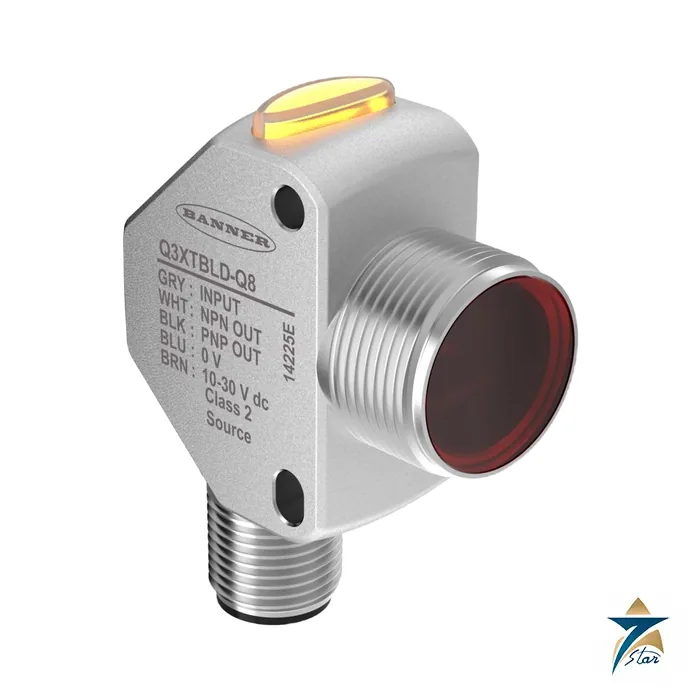
The Q3XTBLD-Q8 is the 300 mm laser diffuse model of Banner Engineering’s Q3X laser contrast sensor range. It uses a visible red Class 2 laser at 655 nm and a bipolar (one PNP and one NPN) output to detect small differences in contrast, such as a printed mark, a dark part on a dark conveyor or an orientation feature, and can respond in as little as 250 microseconds, equivalent to up to 2,000 events per second.
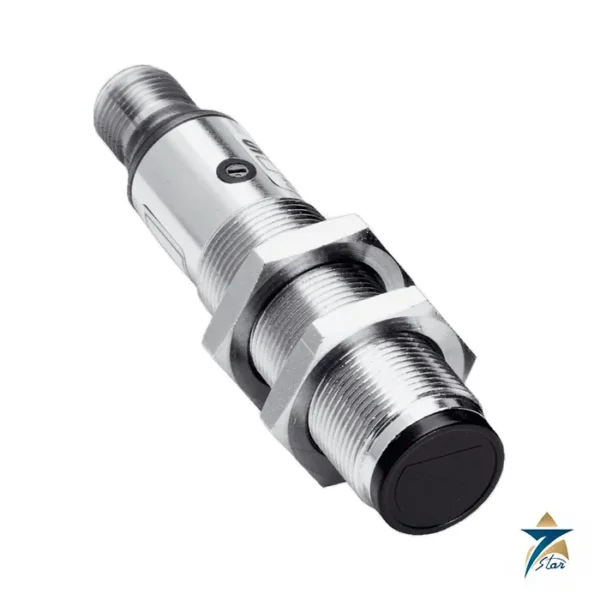
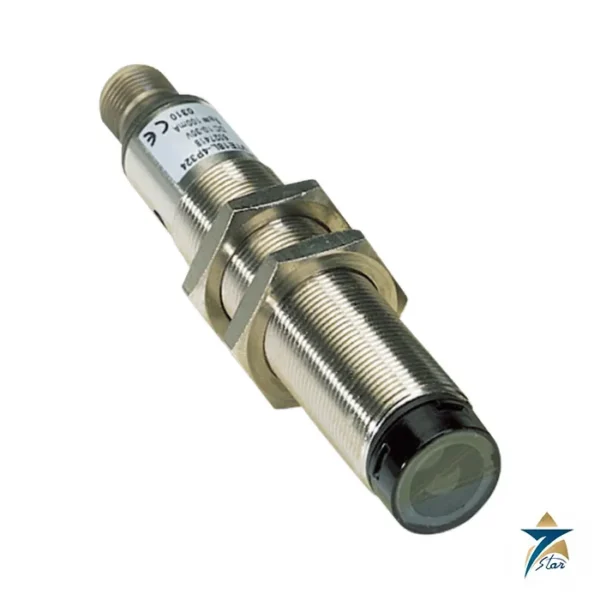
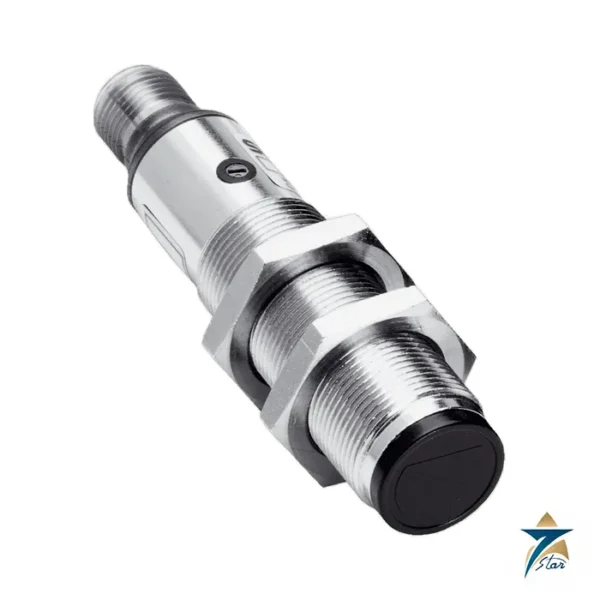
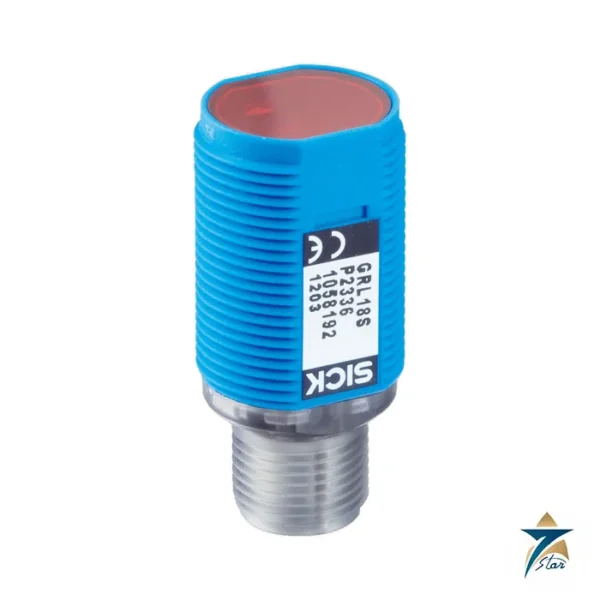
The 18 mm threaded barrel body is nickel-plated zinc die-cast with a scratch-resistant PMMA lens, an angled three-digit display and two tactile buttons for TEACH and menu setup. Banner positions the housing for environments with cutting fluids and oils, and the datasheet lists IP67, IP68 and IP69K ratings.
Technical specifications
| Parameter |
Specification |
| Model / output |
Q3XTBLD-Q8, bipolar (1 PNP and 1 NPN) output, 5-pin M12 integral connector |
| Sensing mode |
Laser diffuse contrast sensing; no background suppression on this 300 mm model |
| Sensing range |
0 to 300 mm (11.81 in) |
| Sensing beam |
Visible red Class 2 laser, 655 nm |
| Supply voltage |
10 V DC to 30 V DC; supply power under 675 mW; current under 28 mA at 24 V DC |
| Response speed |
User selectable: 250 microseconds, 1 ms or 5 ms |
| Repeatability / power-up delay |
60 microseconds / 1 s |
| Output rating |
100 mA maximum; leakage under 10 uA; NPN saturation under 1.0 V at 100 mA; PNP under 2.0 V at 100 mA |
| Ambient light immunity |
Above 5000 lux |
| Construction |
Nickel-plated zinc die-cast housing, nickel-plated aluminium side cover, PMMA acrylic lens, polysulfone display window, 316 stainless steel buttons |
| Mounting torque |
Side mounting 1 N-m (9 in-lbs); nose mounting 10 N-m (88 in-lbs) |
| Environmental rating |
IP67 and IP68 per IEC 60529; IP69K per ISO 20653 |
| Operating temperature |
-10 degrees C to +50 degrees C; 35 % to 95 % relative humidity |
| Shock / vibration |
MIL-STD-202G, Method 213B (100 g) and Method 201A (10 Hz to 60 Hz) |
Where the 300 mm version fits
The Q3X family has five housings in the same 18 mm barrel: the 300 mm range model without background suppression and four shorter versions with fixed background suppression, LD50 with a 60 mm BGS distance, LD100 with 120 mm, LD150 with 190 mm and LD200 with 280 mm. The Q3XTBLD-Q8 is the choice when the target distance varies or when no shiny background is present behind the object.
Spot size shrinks with distance, from 5.9 by 2.3 mm at 20 mm to 3.0 by 1.2 mm at 300 mm according to the datasheet table, which is why the sensor can resolve small contrast steps. Presence/absence and orientation detection are the typical uses printed by Banner.
Setup and accessories
Configuration is performed from the housing: the angled display shows a clear intensity readout, a green LED indicates a stable signal, and the display can be inverted for upside-down mounting. The remote input wire accepts 0 to Vcc and is active low through an internal weak pull-up.
Mounting brackets SMBQ4XFA, SMBQ4XFAM10 and SMBQ4XFAM12 suit the housing, and 5-pin M12 cordsets such as MQDC1-506 (2 m), MQDC1-515 (5 m) and MQDC1-530 (9 m) are listed, with washdown MQDC-WDSS-0506 versions. The Q8 suffix means a 5-pin integral quick-disconnect, so a mating cordset must be ordered separately.
Selection checks for the Q3XTBLD-Q8
Before choosing this model, describe the contrast you need to detect: the mark or feature, the colour and finish of the surrounding surface, and how much both vary from batch to batch. Take a few real samples, including the lightest and darkest acceptable products, so the difference can be checked on site rather than assumed. Then measure the distance from the planned mounting point to the target and how much that distance moves as products pass, since the 300 mm model has no background suppression and is meant for applications where the target distance changes or nothing reflective sits behind it.
Check the line speed and the size of the feature against the selectable response times, and confirm whether the PLC input needs the PNP or NPN output. Plan the cordset length and routing at the same time, because the M12 mating cordset is ordered separately.
Mounting and commissioning
Mount the sensor on a rigid bracket so vibration does not move the spot across the target, and tighten to the torque values listed for side or nose mounting. Angle the beam slightly away from perpendicular when the target surface is glossy, so that direct reflection does not dominate the signal. Because the sensor uses a Class 2 laser, position it so that the beam does not point at the eye level of operators, and fit the warning labels required by site rules.
During setup, run TEACH with real production parts in their normal position, then watch the intensity readout as several parts pass to confirm a stable margin between the two conditions. Test the output at the PLC with the line running slowly, then at full speed, and record the final settings for each sensor location.
Plant conditions in Oman and the Gulf
The sensor is rated for operation up to 50 °C, so the air temperature around it matters in Omani factories, warehouses and packing lines that are not air conditioned. Sensors mounted close to ovens, shrink tunnels, motors or roofs exposed to the sun may see temperatures above the room average; measure at the mounting point during the hottest part of the day and relocate or shield the sensor if needed.
Airborne dust and fine sand gradually settle on the lens and reduce the received signal, which can push a contrast setting closer to its switching point. Strong daylight from open doors and skylights can also add to the light reaching the target. Shade the sensing area where practical and recheck the signal margin after major layout or lighting changes. Where humidity is high near the coast, route the cordset with a drip loop so water does not run into the connector.
Cleaning and periodic checks
Clean the lens with a soft cloth and a mild cleaning agent compatible with acrylic, avoiding abrasive pads. At planned intervals, confirm the bracket is tight, the cordset is undamaged, and the intensity readout with good and reject parts still shows a clear difference; repeat TEACH if products or materials have changed.
Documents and quotation
The manufacturer document (Banner Q3X Laser Contrast Sensor Quick Start Guide, p/n 181486 (manufacturer, unaltered)) is attached to this page as a PDF. Send the complete type code or part number you need through the quotation form and we will reply with availability and delivery terms; please confirm the range version, connector and mating cordset against the plant specification before ordering. More in Sensors & Transmitters.



Reviews
There are no reviews yet.