IMI STI RTQH hydraulic scotch yoke quarter-turn actuator
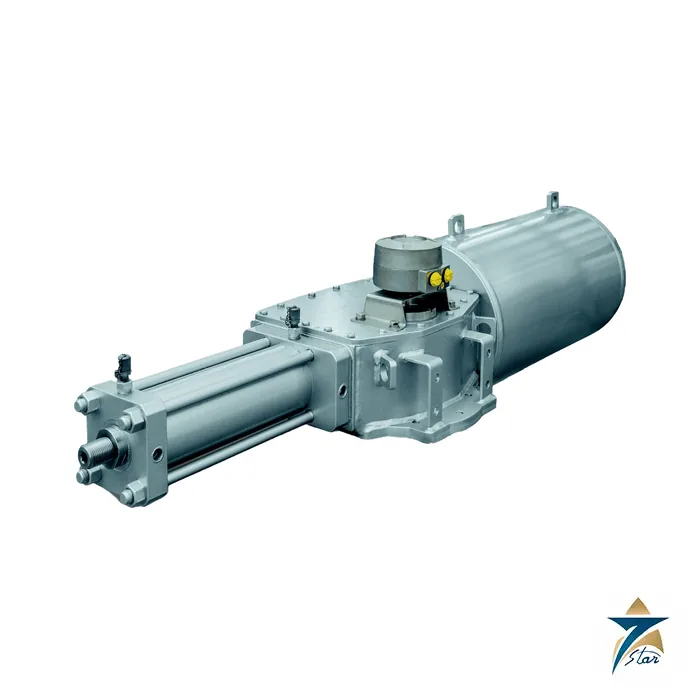
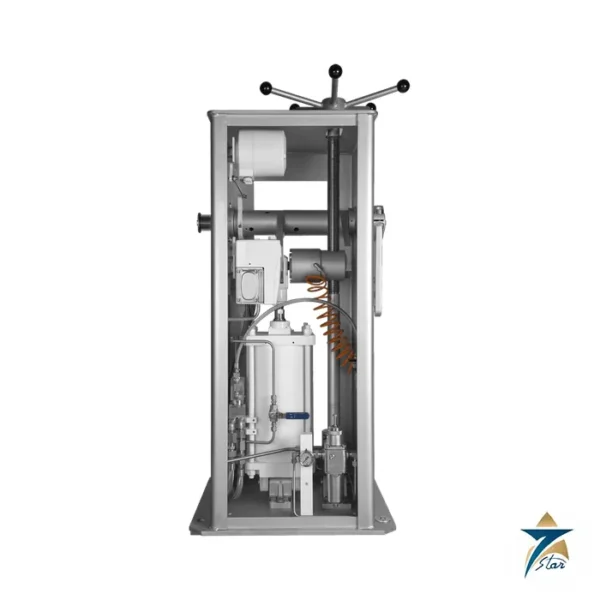
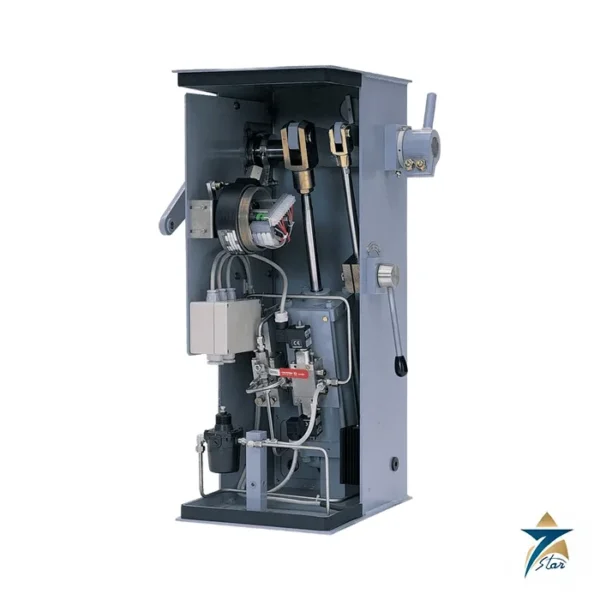
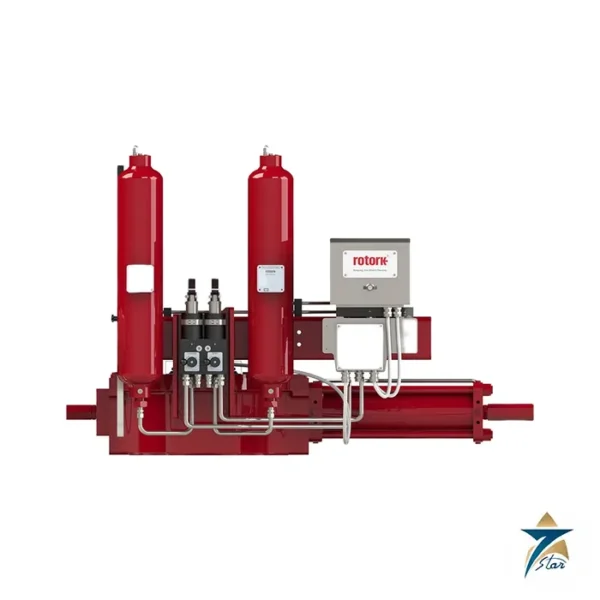
The IMI STI RTQH is a series of high-torque hydraulic quarter-turn actuators based on the scotch yoke principle. Seven Star LLC supplies the IMI STI RTQH range in Oman and the GCC as an independent supplier in Muscat, for ball, plug and butterfly valves that need large, reliable torque on both on-off and modulating duty. The brochure describes the range as suitable for onshore and offshore service and for valves in all pressure classes.
“RTQH” is the series code, not a single ordering number. The brochure does not give a coded ordering string, so a quotation depends on the torque and travel the valve needs, double acting or spring return operation, the hydraulic supply pressure and the required options. Model sizes cover output torques from 2,000 Nm up to 600,000 Nm in double acting form, with higher values available on request, so the actual RTQH size is picked from your valve torque data.
IMI STI RTQH technical specifications
| Parameter |
Specification |
| Manufacturer / part number |
IMI STI / RTQH (Scotch Yoke Hydraulic Actuator) |
| Operating pressure |
Up to 350 bar for the double acting version |
| Output torque, double acting |
2,000 Nm to 600,000 Nm; higher on request |
| Spring ending torque, single acting |
1,650 Nm to 165,000 Nm; higher on request |
| Standard supply medium |
Hydraulic oil; special version for fire-resistant fluids on request |
| Standard operating temperature |
-30°C to 100°C; high or low temperature design on request |
| Housing |
Welded carbon steel, totally sealed weatherproof, with no cast, grey or ductile iron or aluminum parts |
| Mechanism |
Scotch yoke, canted or symmetrical |
| Valve interface |
ISO 5211 flange; position indicator with VDI/VDE 3845 NAMUR drive slot |
| Travel adjustment |
Stainless steel travel stops, angular adjustment between 82° and 98° |
| Optional features |
Integral hand pump; full stainless steel cylinder, index and valve adaptation; control system panels or cabinets mounted or supplied loose |
| Certifications and approvals listed in the brochure |
PED 2014/68/EU; ATEX 2014/34/EU; EAC TR TS 012/2011; Machinery Directive 2006/42/EC; IP66/67M per IEC/EN 60529; SIL3 certified per IEC 61508 as a single device; designed and tested per EN 15714-3 |
How the RTQH scotch yoke design works
In a scotch yoke actuator, the linear thrust of a hydraulic piston is converted into rotation through a yoke and a sliding block. The RTQH housing contains the yoke, the guide bar and the bushings, and sits between the hydraulic cylinder or cylinders and the valve flange. The brochure lists a chromium-plated guide bar that absorbs transverse forces, bronze alloy bushings, and a sliding block in bronze alloy, so that side loads do not reach the cylinder rod.
The mechanism is available in canted or symmetrical form. A symmetrical yoke gives the highest torque at both ends of travel, which suits valves with high breakaway torque at open and closed positions. A canted yoke shifts the torque curve, giving more torque at one end, usually the seating end, and less in the middle, which can better match the torque profile of many ball and plug valves and reduces actuator size. Choose between them using the torque curve of the valve, not only the peak figure.
Double acting units move in both directions under hydraulic pressure. Spring return units add a spring module so the valve returns to a defined fail-safe position when pressure is released. The brochure says the spring modules are interchangeable, so the fail-safe direction can be reversed without any hazard to the technician, and it describes the spring pack as inherently safe in its design.
Construction and materials of the RTQH
The breakdown in the brochure lists the main parts and their materials.
| Component |
Material |
| Housing, scotch yoke, guiding block, cover, head and end flanges |
Carbon steel |
| Yoke bushing, sliding block |
Bronze alloy |
| Guide bar, piston rod, tie rod, spring rod |
Alloy steel, chromium plated where noted |
| Cylinder tube, piston, spring container |
Carbon steel; the cylinder is electroless nickel plated to reduce friction and corrosion |
| Piston seal, rod seal |
PTFE/NBR |
| O-rings |
NBR |
| Stop screw protection, lock nut with gasket |
Stainless steel; stainless steel with PTFE |
| Position indicator |
Aluminium |
Selecting an RTQH
- Valve torque: obtain the breakaway, running and end-of-travel torques from the valve maker, including a margin for service conditions, then compare with the RTQH torque for your hydraulic supply pressure.
- Action: double acting, or spring return with the fail-safe direction (open or close) clearly stated.
- Hydraulic supply: working pressure, which can go up to 350 bar for double acting, and the fluid type. Fire-resistant fluid versions are available on request.
- Mechanism: symmetrical or canted yoke, picked from the valve torque curve.
- Mounting: ISO 5211 flange size and drive dimensions, and NAMUR details for the position indicator and accessories.
- Temperature: standard -30°C to 100°C, or a high or low temperature design if the site is outside that range.
- Options: hand pump, stainless steel cylinder, control panel or cabinet, hazardous area requirements and approvals needed on the nameplate.
- Travel: stainless steel travel stops give angular adjustment between 82° and 98°.
Installation, commissioning and maintenance of the RTQH
The housing has multiple lifting lugs positioned to balance the center of gravity, so use all lugs and certified lifting gear when handling the unit, because large RTQH sizes are heavy. Mount the actuator on the valve flange per ISO 5211 and check the alignment of the drive and stem before tightening. Threaded fasteners use controlled tightening, and the brochure notes that the design is intended to provide zero clearance between mechanical components.
Commissioning starts with flushing and filling the hydraulic circuit with clean fluid of the right grade, bleeding air from the cylinders and checking all connections for leaks. Stroke the valve slowly, set the stainless steel travel stops to the exact open and closed positions, and record the torque or pressure needed for each direction. Control panels and cabinets can be mounted on the actuator or supplied loose for remote mounting, which helps limit exposure to heat and vibration.
The cylinder design allows the seals to be replaced in the field. Include periodic checks of fluid cleanliness, leaks at cylinder rod seals, travel stop tightness and the condition of the external paint. Spring return units should only be opened according to the manufacturer’s procedures, since the spring pack stores energy.
Typical applications in Oman and the GCC
Hydraulic scotch yoke actuators are used where very large valves, high pipeline pressures or remote locations make pneumatic actuation impractical. In Oman and the GCC this includes oil and gas pipeline block valves, wellhead and manifold valves, export terminals, large gas processing valves and offshore platforms. The all-steel weatherproof housing, nickel-plated cylinders and stainless steel stops suit hot, humid and salt-laden coastal conditions. The wide torque range also allows one actuator family to be used across a plant, which simplifies spares and training.
RTQH configuration overview
| Configuration |
Torque data |
Typical use |
| Double acting |
2,000 to 600,000 Nm |
Hydraulic pressure in both directions; no fail-safe action |
| Spring return |
1,650 to 165,000 Nm spring ending torque |
Hydraulic pressure stroke one way, spring returns to fail-safe position |
| Symmetrical yoke |
Even torque curve |
Valves with high torque at both ends |
| Canted yoke |
Torque shifted toward one end |
Valves with high seating torque at one end |
What to send with an RTQH request for quotation
- Part number RTQH and the required torque data for the valve.
- Valve type, size, pressure class and ISO 5211 flange.
- Action: double acting or spring return, and fail-safe direction.
- Hydraulic supply pressure and fluid.
- Ambient temperature range, area classification and approval needs.
- Accessories: hand pump, control panel, limit switches, solenoids.
- Quantity, delivery location and documents needed.
Documents and quotation
The manufacturer brochure for the IMI STI RTQH is attached on this page as a PDF, so your engineers can compare it with the data above before ordering. Seven Star LLC is an independent supplier in Muscat and does not act on behalf of the brand, and we do not publish prices online.
To receive a quotation for the IMI STI RTQH, send the details listed in the previous section by email or through the RFQ form. We reply with availability, lead time and commercial terms for delivery in Oman and across the GCC.
Other Models in the Sti Actuator Quarter Turn Range
Seven Star LLC supplies models from the Sti Actuator Quarter Turn range in Oman and the GCC. Compare the related models below and request a quote for the one that matches your application.


















Reviews
There are no reviews yet.