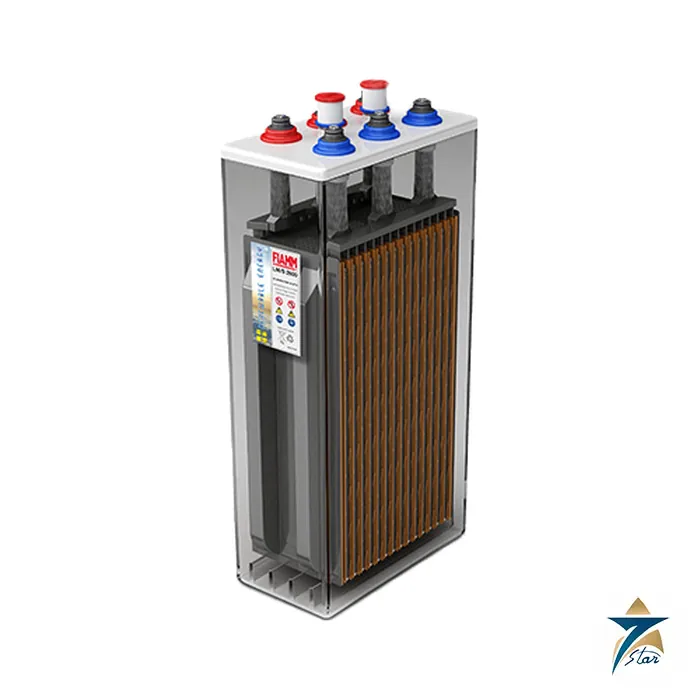
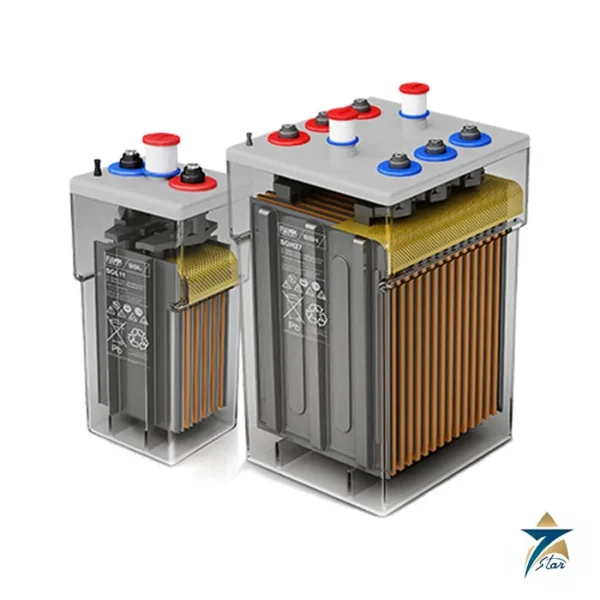
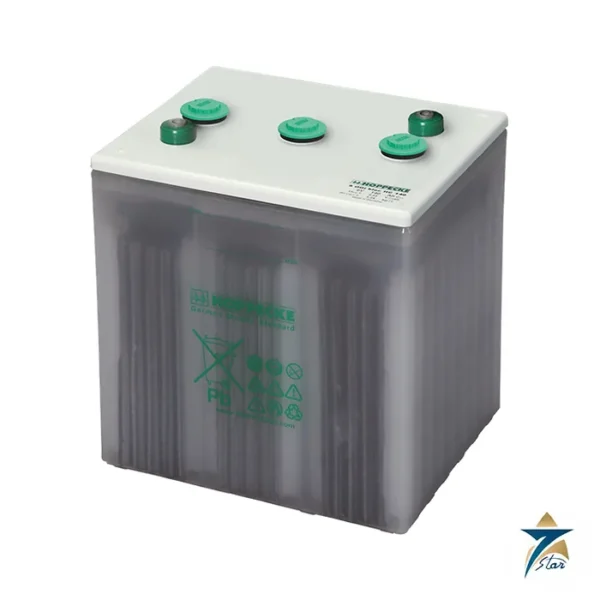
LM/S 710 is a 2 V vented tubular-plate cell from the FIAMM LM/S range, which the folder calls a very long-life flooded battery perfect for energy storage applications. Capacity is printed as 710 Ah at the 120-hour rate to 1.85 volts per cell at 20 °C, in a 166 x 206 x 536 mm case with 8.7 litres of electrolyte and a weight of 38.2 kg.
A cyclic OPzS cell rated on the 120-hour basis used for solar storage
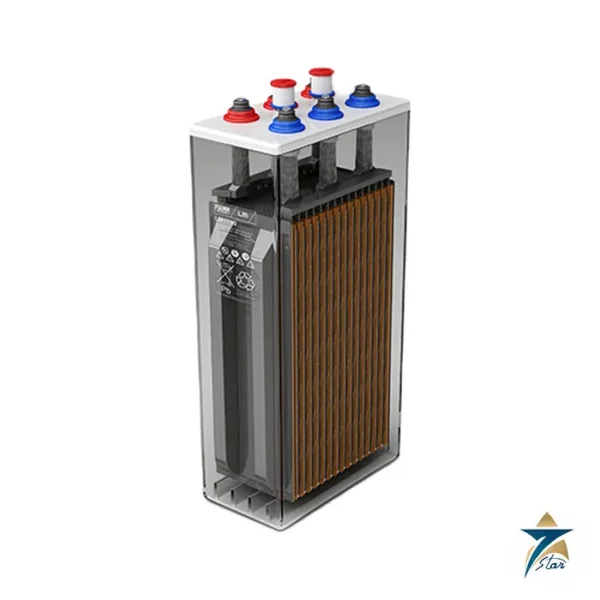
LM/S is vented range designed by FIAMM for stored energy in renewable applications, with an OPzS design and tubular low-antimony die-cast plates giving very low water consumption. Under normal float topping-up is required every three years, and the cell is intended for duty cycles where discharge reliability matters most.
The key difference to LM is the rating basis. LM/S capacities are given at 120 hours to 1.85 V per cell, the slow rate typical of off-grid photovoltaic design, so the 710 Ah figure is not comparable with the 10-hour values in the LM table even though the cases look alike.
Features and standards named for LM/S
- IEC 61427 (secondary cells for photovoltaic energy systems) is listed among the standards.
- DIN 40736 OPzS specification, DIN 43539 part 5 deep discharge and DIN 40740 electrolyte level indicator are listed.
- IEC 60896 part 11 vented types is listed for requirements and tests.
- Topping-up every three years on float; low self-discharge in storage; fully recyclable.
- A folder table of sizes from 150 Ah up to 5000 Ah, starting in jars 103 mm wide and 420 mm tall.
Technical specification
Data printed for LM/S 710 in the LM/S folder
| Parameter |
Specification |
| Battery type |
LM/S 710 |
| Nominal voltage |
2 V per cell |
| Nominal capacity, 120 h to 1.85 V per cell, 20 °C |
710 Ah |
| Length x width x height |
166 x 206 x 536 mm |
| Electrolyte quantity |
8.7 litres |
| Typical weight with electrolyte |
38.2 kg |
| Plate design |
Tubular positive plate, low-antimony die-cast |
| Standards listed |
IEC 61427, DIN 40736, DIN 43539 T5, DIN 40740, IEC 60896-11 |
Values from the flooded engineering manual
| Parameter |
Specification |
| Capacity range of the LM/S range |
150 to 5000 Ah at 120 h to 1.85 V per cell |
| Float voltage at 20 °C |
2.23 V per cell |
| Boost charge |
2.40 V per cell, limit 0.15 C10, 0.001 C10 or 24 h end |
| Terminal torque |
M10 female, 20 to 25 Nm |
| Electrolyte specific gravity |
1.24 at 20 °C |
Derived values (calculated here, not printed)
| Parameter |
Specification |
| Energy at the C120 rating |
about 1.42 kWh per cell (2 V x 710 Ah) |
| 24-cell 48 V string float voltage |
24 x 2.23 = 53.5 V at 20 °C |
Sizing LM/S 710 for a solar battery bank
Because capacity is quoted at 120 hours, use the slow-rate figure only for long autonomy; a daily-cycle design should apply the manual curves for discharge rate and the temperature correction factor. Neighbouring types are LM/S 610 (610 Ah, 145 mm wide) and LM/S 870 (870 Ah, 711 mm tall).
A 48 V bank needs 24 cells in series; the manual advises that usually up to four parallel strings are practical, so one string of 710 Ah cells can reach about 2840 Ah at the same rate.
Commissioning and operating notes from the manual
Dry-charged cells are filled with electrolyte to the MAX line, charged at 0.10 C10 to 2.70 V per cell and monitored hourly for string voltage and temperature, stopping at 45 °C until the temperature falls to about 35 °C.
Do not exceed ripple limits: the manual wants charger regulation better than plus or minus 1 percent from 5 to 100 percent load. Keep the room between 10 and 30 °C if possible, avoid direct sunlight, and note the 9, 5 and 3 month storage limits at 10, 20 and 30 °C.
Solar, hybrid and remote power sites
The folder tags the renewable application. Remote Omani sites such as solar-hybrid telecom towers, pumping stations and off-grid camps can use vented cyclic cells where staff can top up every three years. General engineering note: in hot desert sites, battery enclosure temperature is the first design check, since the manual shows life shrinking above 20 °C.
Related FIAMM items
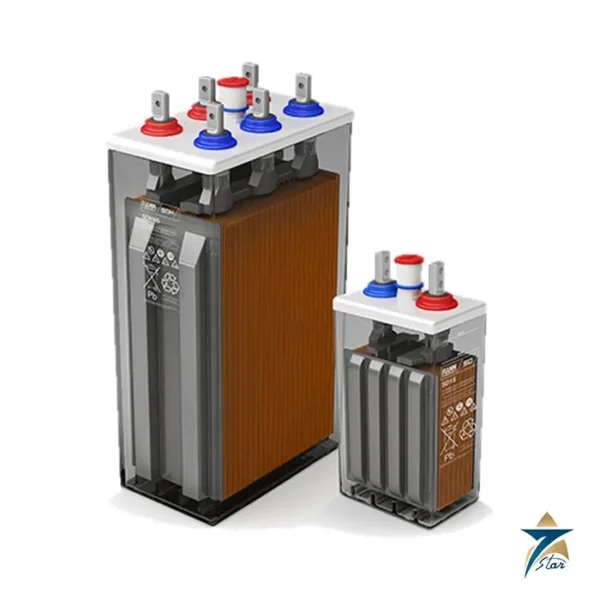
SMG/S is the maintenance-free gel counterpart for the same duty, LM is the 10-hour-rated version for standby UPS, and the FIAMM manual lists racks and electrolyte level indicators for the range.
Battery room and maintenance notes
Solar and hybrid systems in the region, such as remote telecom sites, farms, pumping stations and off-grid facilities, need batteries that accept daily cycling. Size the battery bank from the daily energy use, the number of days of autonomy and the allowed depth of discharge, using the 120-hour rating where the folder gives it. Make sure the solar charge controller uses the charging voltages and temperature compensation given in the manual.
Flooded cells produce hydrogen during charging, so the battery room or enclosure must be ventilated as required by the manual and the applicable standard. High temperatures shorten battery life, so shade and ventilate the battery room. Check electrolyte levels and cell voltages at the intervals in the manual and top up only with the specified water.
Information to send with an enquiry
- Daily energy use and system voltage
- Days of autonomy and depth of discharge
- Charge controller or inverter model
- Quantity
Frequently asked questions
At what rate is LM/S 710 rated?
710 Ah at 120 hours to 1.85 volts per cell and 20 °C.
What application is it designed for?
The folder says stored energy in renewable applications.
Which solar standard is listed?
IEC 61427 for secondary cells in photovoltaic energy systems.
How often must it be topped up?
Every three years under normal float conditions per the folder.
What does it weigh?
38.2 kg with electrolyte, holding 8.7 litres.
Documents and quotation
This page carries the official FIAMM datasheet and manual for LM/S 710. Seven Star LLC is an independent supplier in Muscat and sources FIAMM products on request; tell us the quantity and delivery point to receive a quotation. Always confirm the order code and technical values in the documents first. See more in the product category.




Reviews
There are no reviews yet.