- Automation & ControlView all 3,153 products
- Automation Accessories
- AC Drives
- PLC & I/O Cards
- Industrial Communications
- Vibration Monitoring
- Controllers & Data Acquisition
- Isolator & Barrier
- Safety Switches & Guard Locking
- Encoders
- Motor Soft Starters
- CCTV & Security
- Pneumatic Cylinders
- HMI Displays
- Servo Drives
- Industrial Computers
- Machine Vision
- Automation Software
- Robotics
Brand: Autonics
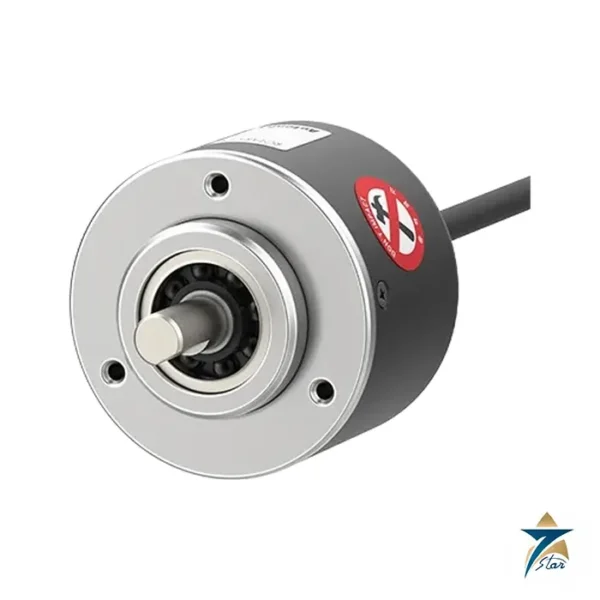
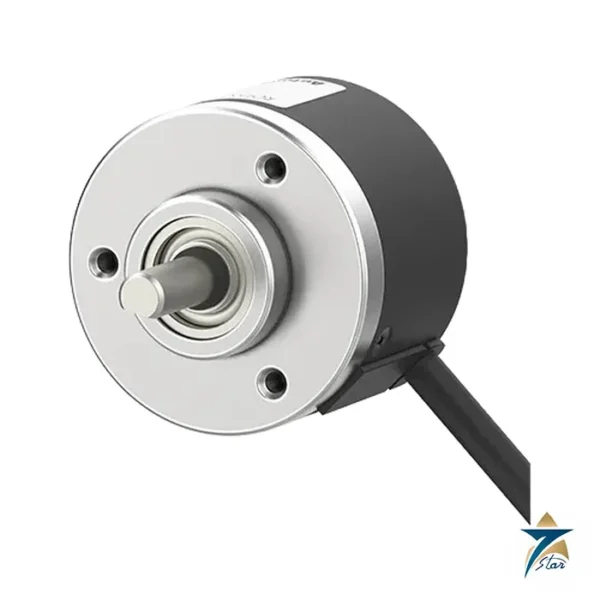
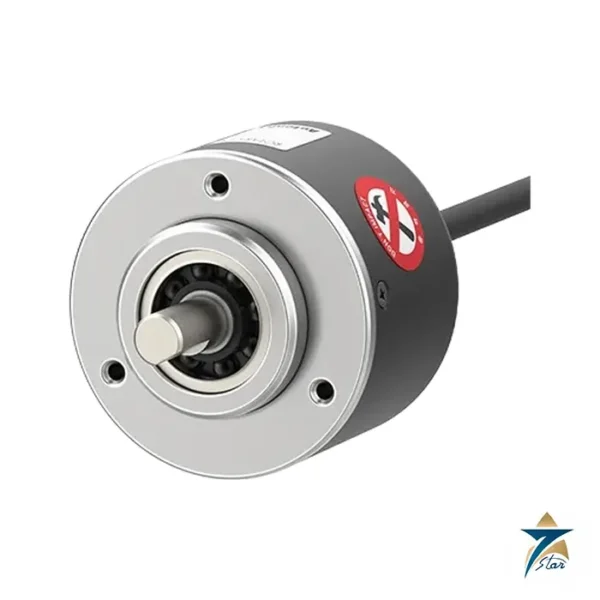
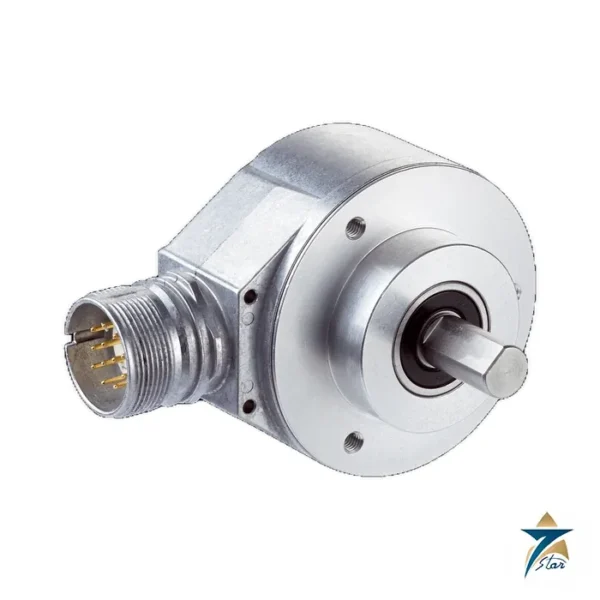
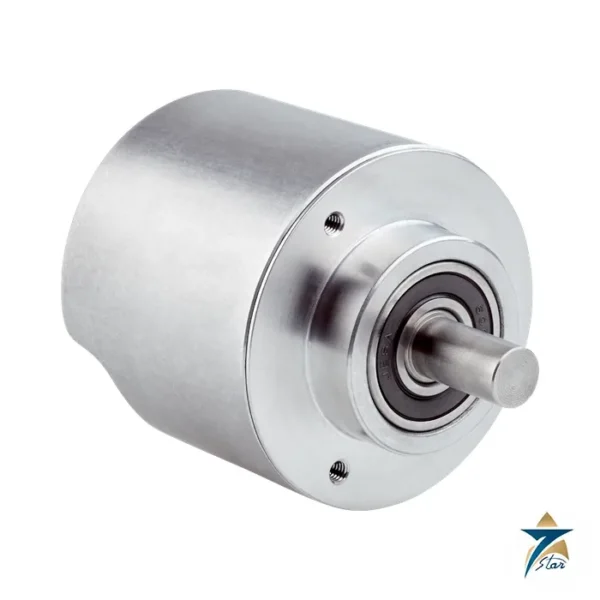
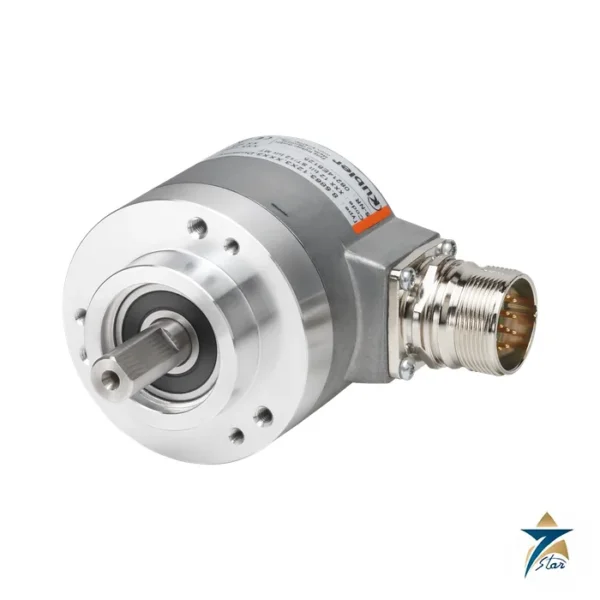
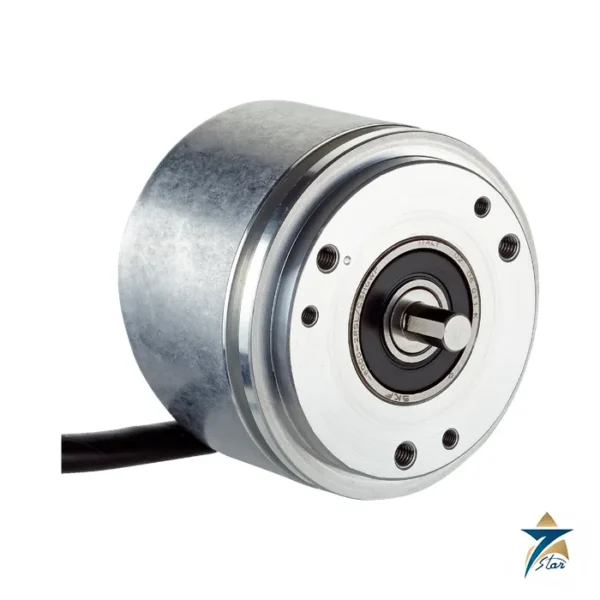
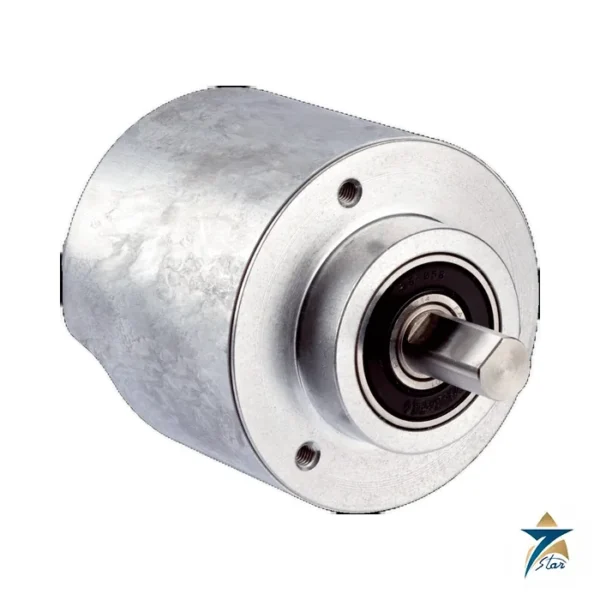
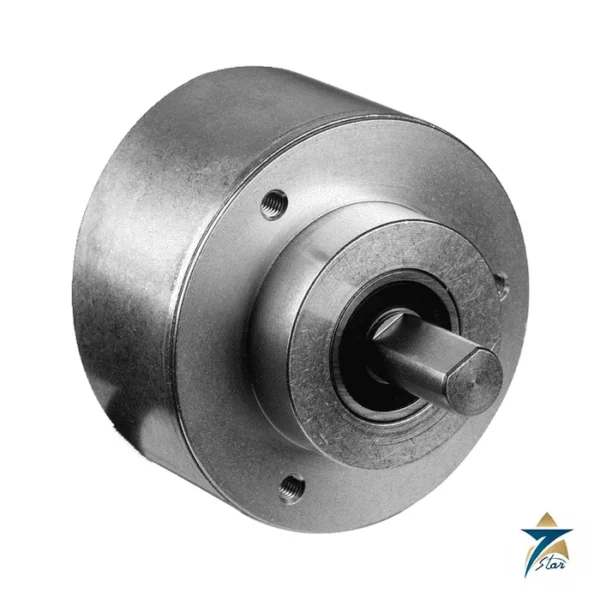
Autonics E40S8-1000-3-T-24 40 mm Incremental Rotary Encoder
Description
Overview
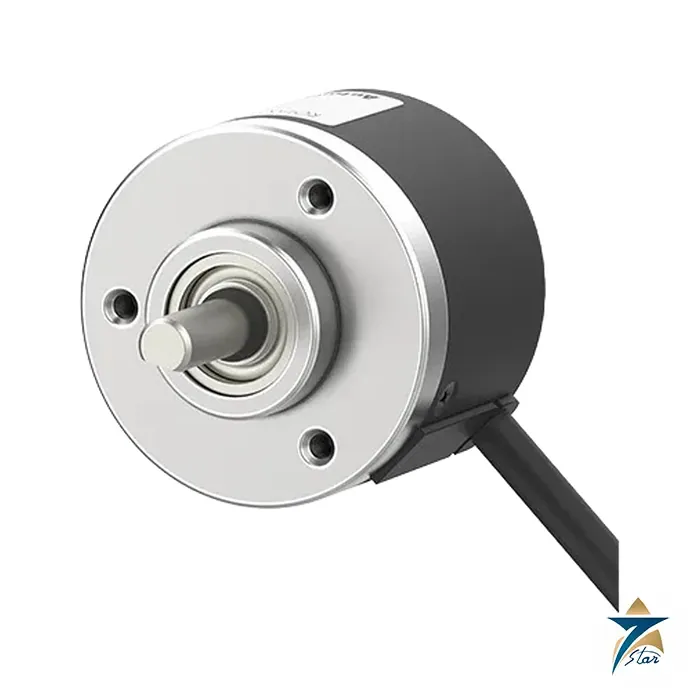
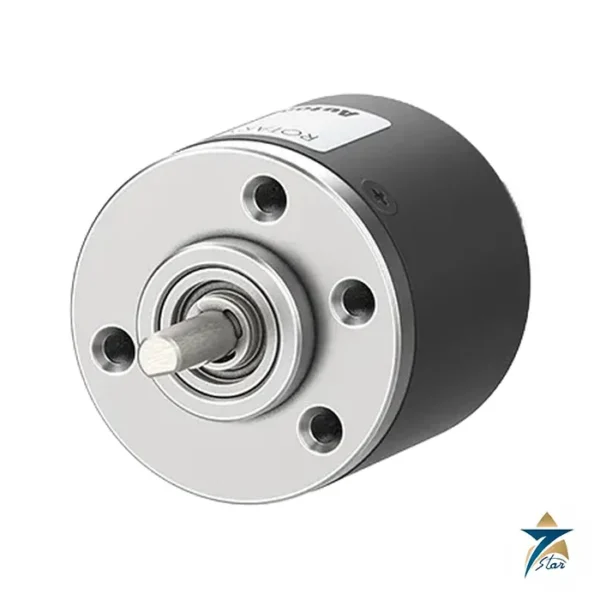
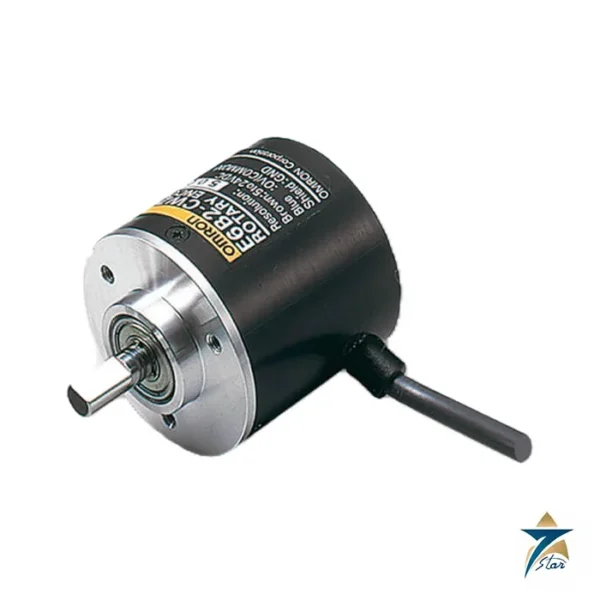
Compact size is the main strength of the Autonics E40S8-1000-3-T-24. The body of this incremental rotary encoder is only 40 mm in diameter, it has a solid 8 mm shaft, delivers 1,000 pulses per revolution on A, B and Z through a totem-pole output and runs on 12 to 24 V DC. Seven Star LLC is an independent supplier serving Oman and the GCC. The figures below are from the E40S/H/HB instruction manual and describe this code only.
Order code E40S8-1000-3-T-24 in detail
| Item | Data |
|---|---|
| E40 | 40 mm diameter series |
| S8 | Shaft type, 8 mm shaft (E40S6 is the 6 mm version) |
| 1000 | 1,000 pulses per revolution |
| 3 | Output phases A, B, Z |
| T | Totem-pole output |
| 24 | Supply 12 to 24 V DC plus or minus 5 percent |
| No suffix | Radial cable type, 2 m shielded cable |
Electrical and mechanical data of Autonics E40S8-1000-3-T-24
| Item | Data |
|---|---|
| Max response frequency | 300 kHz |
| Response speed | 1 microsecond or less |
| Max revolution | 5,000 rpm |
| Sink current | 30 mA or less |
| Source current | 10 mA or less |
| Residual voltage | 0.4 V or less |
| High-level output at 12-24 V | VCC minus 3.0 V or more |
| Current consumption | 80 mA or less |
| Starting torque | 0.004 N m or less |
| Moment of inertia | 40 g cm2 or less |
| Shaft load | Radial 2 kgf, thrust 1 kgf |
| Insulation resistance | 100 megohm or more at 500 V DC |
| Dielectric strength | 750 V AC for one minute |
| Ambient temperature | -10 to 70 C |
| Protection | IP50 |
| Weight | About 120 g |
A short, light encoder for tight spaces
With a starting torque of only 0.004 N m and an inertia of 40 g cm2 or less, this encoder places almost no load on small motors, stepper shafts or light spindles. The shaft is 8 mm in diameter, the face is 40 mm across, and the manual refers to the CAD files on the manufacturer site for exact dimensions.
The trade-off is load capacity: radial load is limited to 2 kgf and thrust to 1 kgf, a fifth of what the 50 mm encoder tolerates. Always connect through a flexible coupling and keep parallel misalignment at 0.25 mm or less.
How Autonics E40S8-1000-3-T-24 compares with E50 and E40H codes
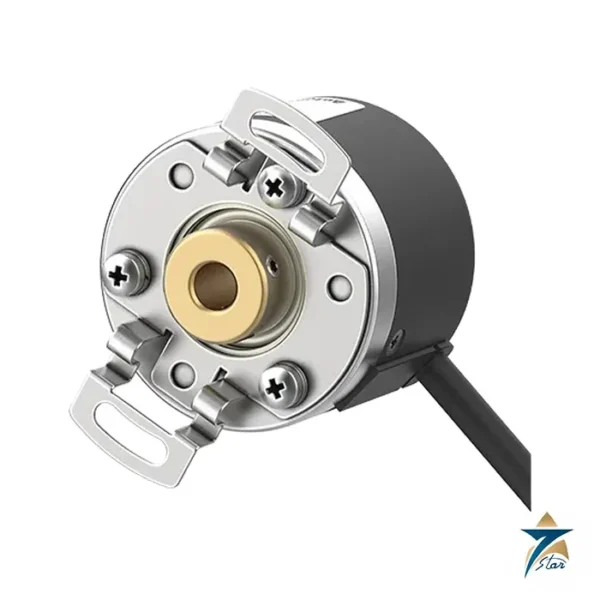
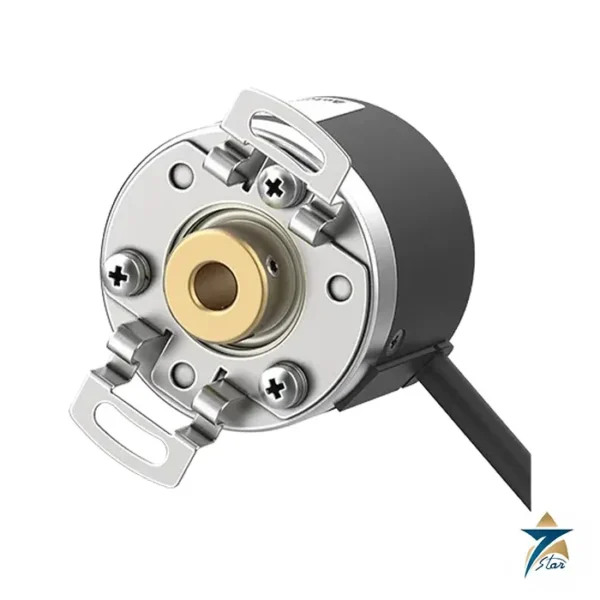
The 50 mm E50S8-1000-3-T-24 shares the shaft diameter and the resolution but handles a radial load of 10 kgf and offers IP64 connector options. The hollow E40H12-1000-3-N-24 slides over a 12 mm shaft and needs no coupling. The solid shaft E40S6 has a 6 mm shaft. Within E40S8 this totem-pole version can drive both NPN and PNP inputs, whereas the N version only sinks and the L version needs an RS-422 receiver.
Signals and counting
At 1,000 PPR the channel A frequency is about 16.7 kHz at 1,000 rpm and 83.3 kHz at the 5,000 rpm limit. A quadrature counter reading all edges counts 4,000 per revolution, equal to 0.09 degrees per count. The Z channel gives one mark per revolution. With Autonics E40S8-1000-3-T-24, the clockwise direction as seen from the shaft side gives A leading B.
Installation notes
Install within the rated environment of -10 to 70 C and 35 to 85 percent humidity without condensation. Do not hammer a coupling onto the shaft, and tighten any screw or coupling with a torque below 0.15 N m. Ground the shield and the housing to frame ground, insulate any unused wire, and keep cables away from power lines. If a switching power supply is used, put a noise capacitor between 0 V and frame ground.
The cable has five wires: positive supply, 0 V, A, B and Z. After fixing the encoder and the cable, do not pull the cable with more than 30 N. When extending the cable, check the response frequency, since the capacitance of a long cable raises the residual voltage and distorts the waveform.
Selecting the supply and the cabling
The suffix 24 on the Autonics E40S8-1000-3-T-24 stands for the 12 to 24 V DC supply with a tolerance of plus or minus 5 percent and a ripple of 5 percent or less. This is wide enough to run directly from a regulated 24 V control supply, but because the tolerance is tight, a rail that sags under load or has high ripple from a poorly filtered rectifier will degrade the output levels. The manual asks for an isolated and limited voltage or Class 2 or SELV supply, which also helps to keep noise out of the encoder.
The output stage is totem-pole, so the logic high level approaches the supply minus 3 V and the low level is below 0.4 V. When the encoder feeds a counter that requires a minimum high of 15 V on a 24 V input, the output of about 21 V is comfortably above the threshold. When it feeds a 12 V input, the high level is about 9 V or more, so check the input threshold of the receiver.
Cable length also matters. The response speed of 1 microsecond or less is specified with a 2 m cable and a 20 mA sink load. Longer cables slow the edges, and at high pulse frequencies the effect is greater, so consider a line driver version over a long distance.
Typical applications
In Omani and Gulf plants the E40S is found on small conveyors for bottling, textile and packaging machines, on feeder and dosing drives, on laboratory and test equipment, and on positioning axes with small servo motors. The IP50 rating suits clean indoor machinery, and a cover is advisable in dusty or wet locations. Flammable or explosive atmospheres are excluded by the manual.
Replacement checklist
When replacing an old encoder with the Autonics E40S8-1000-3-T-24, compare shaft diameter, flange pattern, resolution, supply voltage and output type. A different resolution requires a scaling change in the controller. Test the direction of count after fitting. If the machine already uses a 5 V encoder, note that the suffix 5 version is a different part number.
Related items you may also need: Autonics PR18-8DN M18 Inductive Proximity Sensor 8 mm | Autonics E40S6-2500-6-L-5 Rotary Encoder Incremental | SICK AFS60A-S1PC262144 AFS/AFM60 SSI Encoder | All Autonics products.
Documents and quotation
The E40S/H/HB instruction manual is attached as the datasheet. Send an RFQ for E40S8-1000-3-T-24 to Seven Star LLC giving quantity and delivery location, and we will confirm availability and lead time for Oman and the GCC.
Other Models in the E40 Range
Seven Star LLC supplies models from the E40 range in Oman and the GCC. Compare the related models below and request a quote for the one that matches your application.
| Model | Category | |
|---|---|---|
| Autonics E40H8-1000-6-L-5 40 mm Hollow Shaft Encoder | Encoders | View details |
| Autonics E40S6-1024-3-N-24 40 mm Incremental Rotary Encoder | Encoders | View details |
| Autonics E40H12-1000-3-N-24 40 mm Hollow Shaft Rotary Encoder | Encoders | View details |
| Autonics E40S8-1000-3-T-24 40 mm Incremental Rotary Encoder | Encoders | You are viewing this model |
Datasheets & Documents
- Datasheet Autonics E40S8-1000-3-T-24 40 mm Incremental Rotary Encoder Datasheet Download
Reviews (0)
How would you rate this product? Cancel reply
About brand
Autonics is a South Korean maker of sensors and controllers, founded in 1977 as a small engineering business making controllers for looms. It took the Autonics name in 1988 and opened a new corporate headquarters in Busan in 2014. Autonics makes proximity and photoelectric sensors, rotary encoders, temperature controllers, counters, timers and stepper motor systems, with factories in Busan and Yangsan.
Seven Star LLC lists the Autonics E40S6-2500-6-L-5 incremental rotary encoder and supplies Autonics sensors and control devices in Oman and the GCC.
Autonics company profile
| Founded | 1977, South Korea |
|---|---|
| Current name | Autonics, since 1988 |
| Headquarters | Busan, South Korea |
| Factories | Busan and Yangsan |
| Product families | E40 and E50 rotary encoders, PR proximity sensors, BJ photoelectric sensors, TK temperature controllers |
Milestones
- 1977: The company is founded.
- 1988: Renamed Autonics Corporation.
- 2014: Opens its Busan headquarters.
Reading the Autonics E40S encoder code
E40S is the 40 mm diameter shaft-type incremental encoder, and the 6 that follows is the 6 mm shaft. 2500 is the resolution in pulses per revolution. The next 6 means six output signals: A, B and Z with their inverted signals. L is a line driver output and the final 5 is a 5 V DC supply. The same 40 mm body is made in hollow shaft form as the E40H and E40HB series.
Where Autonics encoders are used
Servo and spindle feedback, conveyor length measurement, packaging and printing machines.
Ordering Autonics encoders: what we need
Send the complete model string from the label. If it is worn off, give the body and shaft diameter, pulses per revolution, output type, supply voltage and cable or connector style.
Facts checked against Autonics corporate profiles, October 2026.
Browse Autonics products by category: Encoders.
FAQ
Questions about the Autonics E40S8-1000-3-T-24 40 mm Incremental Rotary
Answers from our engineering team on installation, compatibility and integration.
01What shaft diameter does Autonics E40S8-1000-3-T-24 have?
The 8 in S8 is the shaft diameter in millimetres; it is a solid shaft that must be connected through a flexible coupling.
02What is the output of E40S8-1000-3-T-24?
A totem-pole output on phases A, B and Z, sinking up to 30 mA and sourcing up to 10 mA with a residual voltage of 0.4 V or less.
03What is the maximum speed of E40S8-1000-3-T-24?
The maximum allowable revolution is 5,000 rpm, giving about 83.3 kHz on channel A at 1,000 PPR.
04How much radial load can E40S8-1000-3-T-24 take?
Only 2 kgf radial and 1 kgf thrust, so use a flexible coupling and keep misalignment below 0.25 mm parallel and 5 degrees angular.
05Is E40S8-1000-3-T-24 dust and water proof?
It is rated IP50, which protects against dust but not water, so use a cover where splashing or washdown occurs.


Reviews
There are no reviews yet.