Rotork GO Range gas-over-oil pipeline actuators
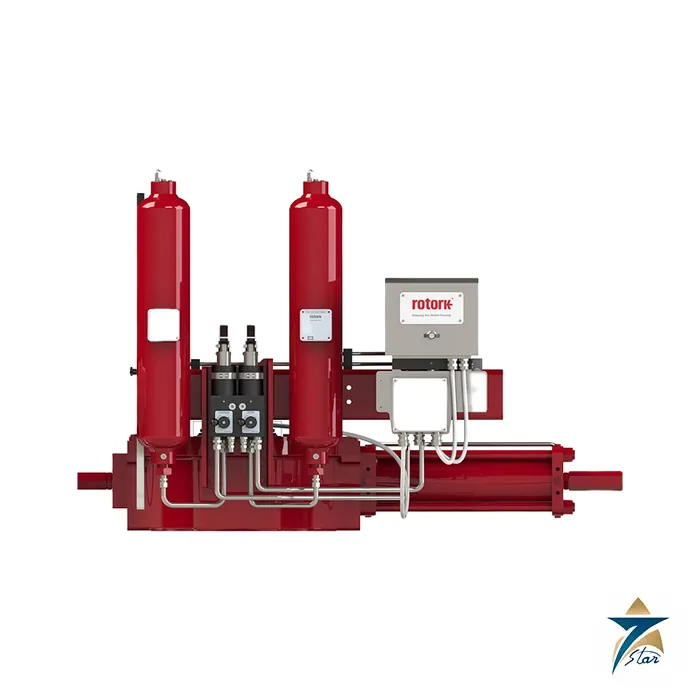
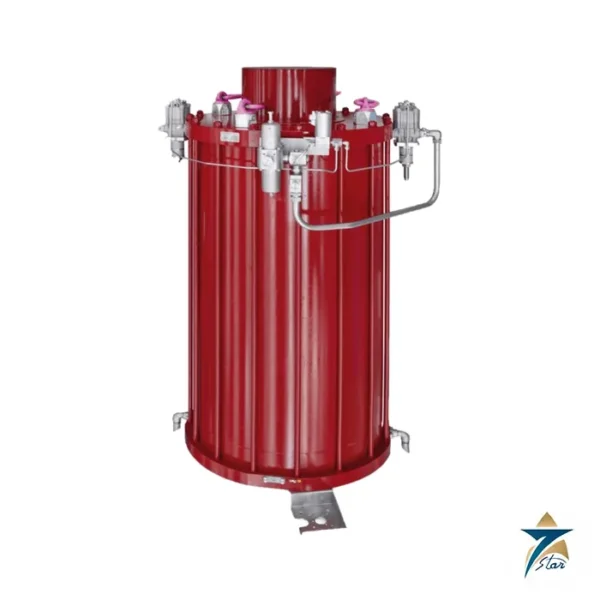
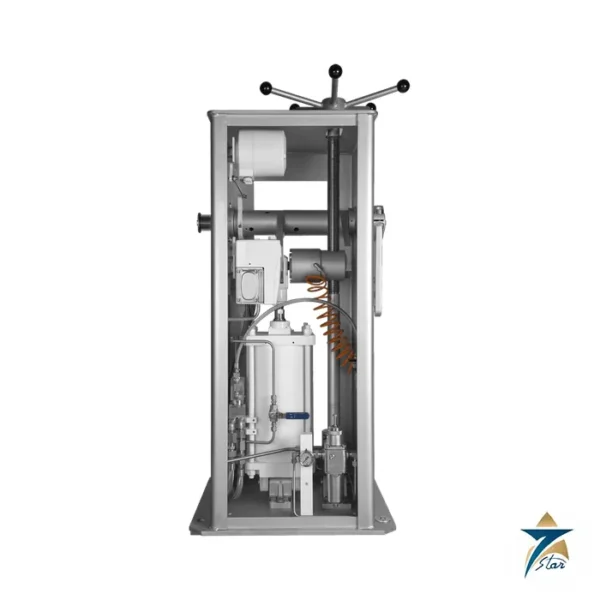
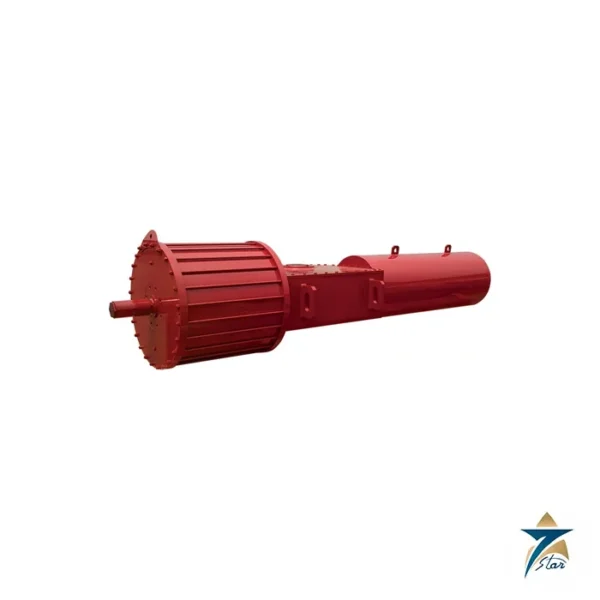
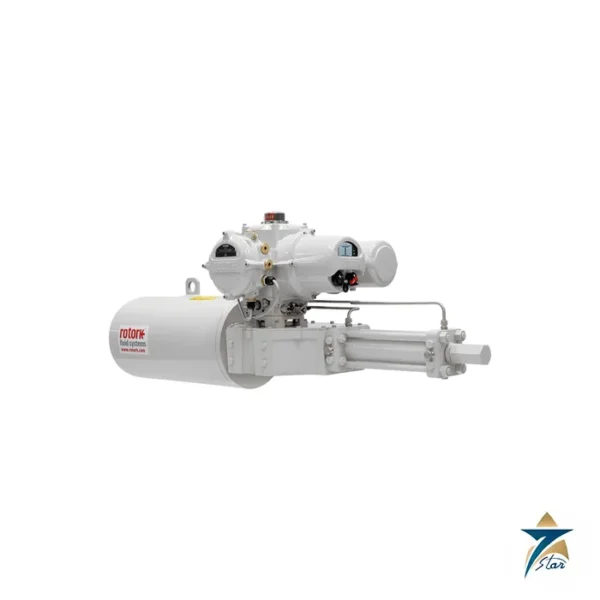
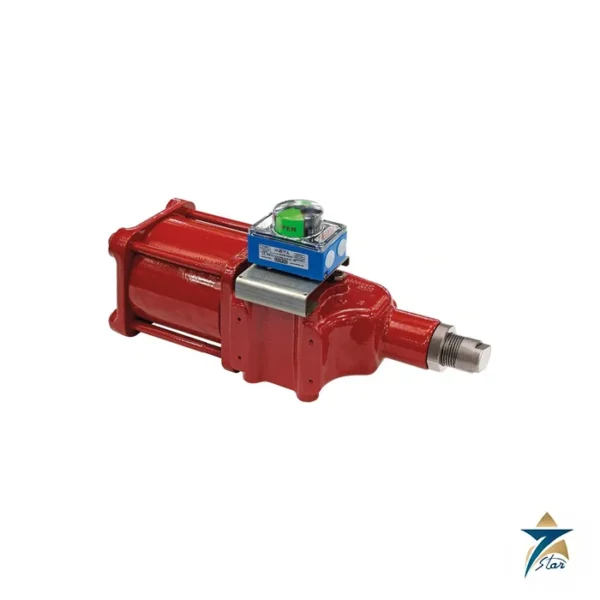
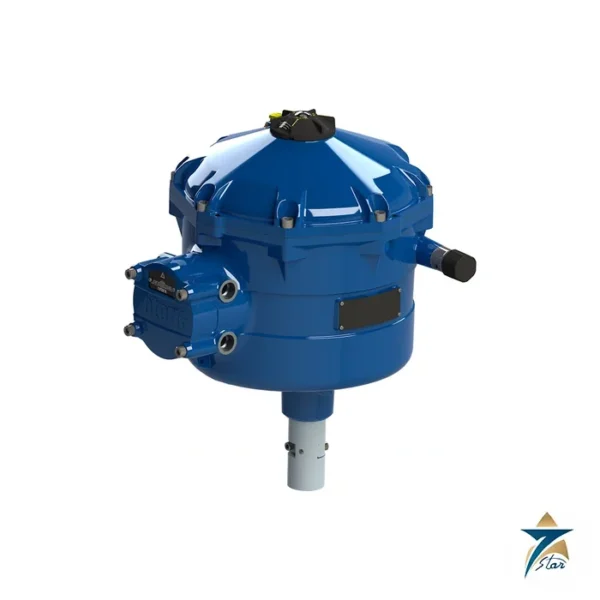
The Rotork GO Range is a set of fluid-power valve actuators designed to run on the gas already flowing in a pipeline. Instead of requiring electricity or instrument air at a remote block valve, the actuator takes pipeline gas through a control manifold and uses it to pressurise oil in a pair of tanks. The pressurised oil drives a scotch-yoke quarter-turn or a linear piston actuator. Because oil, not gas, acts on the cylinder, contaminants and moisture in the gas never reach the actuator internals. Seven Star LLC quotes GO Range packages to customers in Oman and the GCC as an independent supplier in Muscat.
GO Range specifications
| Parameter |
Specification |
| Manufacturer / part number |
Rotork / GO Range (gas-over-oil) |
| Actuator types |
Double-acting rack-and-pinion and scotch-yoke (symmetric or canted yoke) quarter-turn; double-acting piston type for linear valves |
| Working pressure |
10 to 105 barg (145 to 1,500 psig); higher on application |
| Maximum quarter-turn torque |
600,000 Nm (5,300,000 lbf.in) |
| Maximum linear thrust |
5,500,000 N (1,236,450 lbf) |
| Temperature range |
Standard -29 to +60 °C; low option -46 to +40 °C; others on request |
| Hazardous-area approvals listed |
ATEX/IECEx II 2 G Ex e, d, ia IIB T4 IP65 minimum; UL/CSA Class I Div 1 Groups C and D, Class II Div 1 Groups E, F and G, NEMA 3 minimum |
| Gas/oil tanks |
Externally painted carbon steel with dip stick, removable oil filter and magnetic ring; PED, ASME VIII Div. 1 (U stamped or not) available |
| Manual override |
Two independent hand pumps, one for each direction |
| Control manifold |
Modular multi-function block with leak-free poppet valves, anodised aluminium, fail-safe versions |
How gas-over-oil actuation works
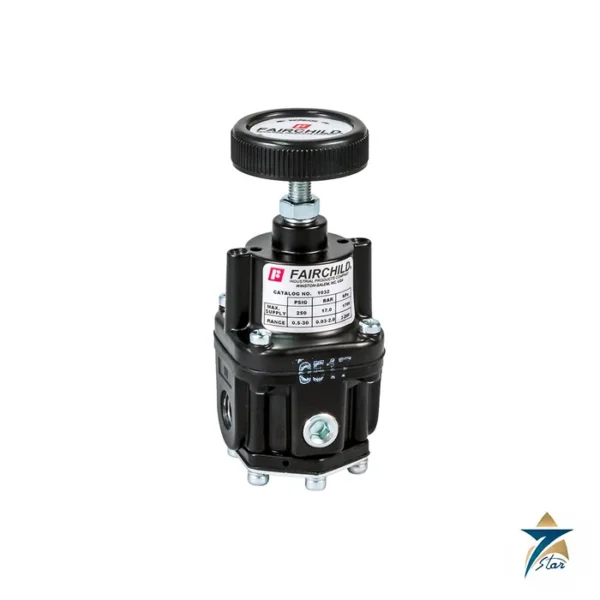
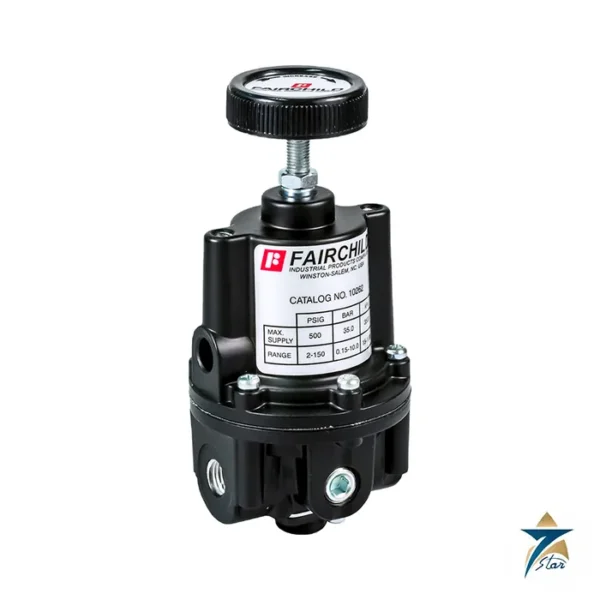
Line gas enters the multi-function manifold, which routes it to one of the two gas/oil tanks. Gas pressure pushes the oil from that tank to one side of the actuator piston while the opposite tank accepts the return oil and vents its gas. Reversing the routing reverses the stroke. Two hydraulic flow-control valves meter the oil in each direction, giving a smooth and adjustable stroke time that a direct gas actuator cannot provide. The controls are rated for the full line pressure, so a failed pressure regulator cannot overload the system, and a stainless gauge shows the gas supply pressure. If supply is lost, the two hand pumps move oil directly to operate the valve; selector valves permit local operation and dual pumps prevent oil mixing between the tanks.
GO Range control functions for pipeline safety
| Function |
Purpose |
| Local and remote control |
Operate by levers in the gas block or by solenoid valves; two solenoids for open and close |
| Torque limit |
Limits maximum output to protect a stuck valve or stem |
| High differential open inhibit |
Blocks opening when the differential across the valve exceeds a set point; pneumatic or electric |
| Low pressure close |
Closes the valve automatically when line pressure falls below a set point |
| Pneumatic line break |
Closes the valve on a rate of pressure drop greater than a set point |
| Electronic line break (ELB) |
Self-contained electronic monitor with rate-of-drop and rate-of-rise, high and low pressure actions, partial stroke and manual reset |
| Electric ESD |
Dedicated solenoid valve moves the actuator to its fail-safe position when de-energised |
| Opposite movement inhibit |
Prevents a reverse stroke once a stroke has begun |
| Partial stroke test |
Pneumatic partial stroke using pneumatic and mechanical devices |
Options and accessories for GO actuators
- Lockable high-pressure ball valve for isolating the system during maintenance.
- High and low inlet pressure select, and a second inlet gas connection for an alternative supply.
- Custom particulate gas filtration and a dehydrator filter for removing water from incoming gas.
- Back-up gas tank to complete a stroke if the gas supply fails.
- Electric pressure switch for indication when pressure drifts from the set point.
- Local/remote selector that gives priority to local mode, and hand-pump locking device with an indication switch.
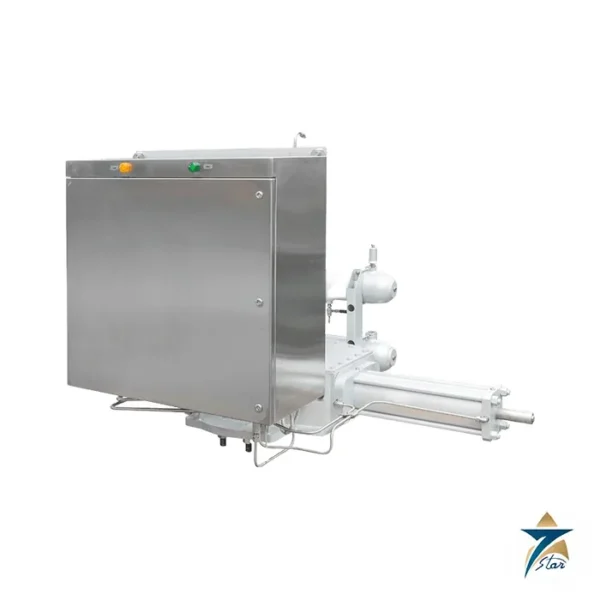
- Lockable 316 stainless steel control cabinet at IP65 minimum.
Selecting a GO Range package: ordering checklist
Provide the valve torque or thrust at the minimum line pressure that will be available, since the actuator must be sized for the lowest supply, not the design pressure. Specify whether the valve is quarter-turn or linear, the fail action required on loss of signal or pressure, the stroke time, and the functions listed in the table above. Ask Rotork for the cabinet material and certification if the location is hazardous, and confirm gas quality because sour or wet gas drives filter, dehydrator and material choices. Because the standard certification statement lists ATEX/IECEx and UL/CSA categories for the design, always give the exact area classification and gas group so the package is built to it.
Installation, commissioning and maintenance of gas-over-oil actuators
Mount the actuator on the valve using the correct bracket and coupling, connect the tapping to the pipeline gas supply with an isolation point, and fill the tanks to the dip-stick mark with the specified oil. Bleed air from the hydraulic lines, adjust the two flow-control valves to reach the target stroke times, then test local, remote, manual and every protective function in turn. Line-break and ELB set points should be validated against real pipeline pressure behaviour to avoid nuisance trips. During maintenance check oil level and cleanliness (the filter and magnetic ring collect debris), gas filter condition, hand-pump function and seal condition. Keep spares for solenoids, filter elements and pressure switches.
GO Range applications in Oman and the GCC
Gas-over-oil actuators suit remote pipeline block valves where there is no instrument-air or power supply: gas transmission lines, compressor station isolation, metering and regulating stations, and gas gathering systems. Rotork states that it has designed and supplied direct-gas actuators to many national and international end-user specifications. In Oman and the GCC the harsh sun, dust and large temperature swings call for a stainless control cabinet, correct paint and the right oil and seal selection, and low-temperature options are available for colder desert nights at altitude. Fire-safe and fail-safe designs can be combined with the ELB for pipeline break protection.
Information to send with a GO Range RFQ
- Valve type, size, class and torque or thrust at minimum line pressure.
- Minimum, normal and maximum gas supply pressure, and gas composition.
- Fail action and ESD requirements.
- Required functions: line break, low pressure close, high differential inhibit, partial stroke.
- Area classification, ambient range and site corrosion category.
- Control signals available (solenoid voltage) and any panel or SCADA interface.
- Quantity and delivery location in Oman or the GCC.
Documents and quotation
The Rotork GO Range brochure is attached on this page and lists the functions and options in more detail.
Send the valve and pipeline data and Seven Star LLC will confirm the GO Range configuration and quote delivery to Oman and the GCC.




















Reviews
There are no reviews yet.