IMI STI CS quick exhaust two-way valve for actuator trip and fail action
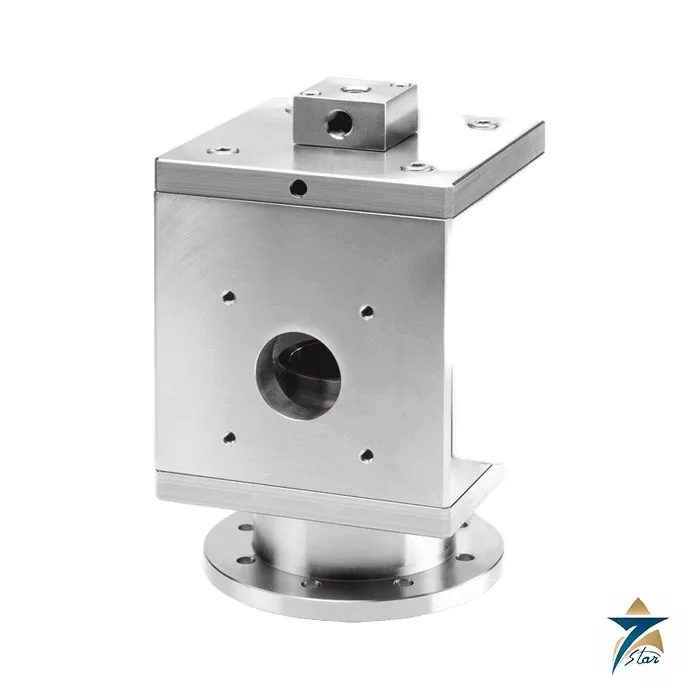
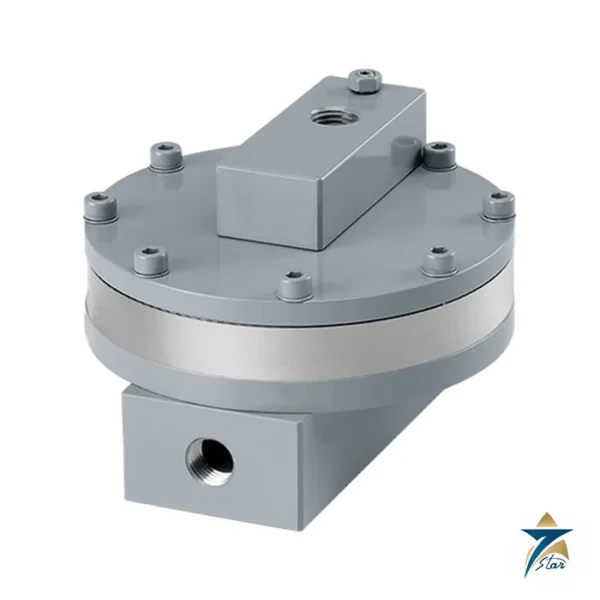
The IMI STI CS is a pilot-operated, two-way quick exhaust valve. Its job is simple and safety-relevant: when it opens, it dumps the air from the connected actuator chamber straight to atmosphere through a large flow path, so the valve it serves moves to its trip or fail position quickly. Seven Star LLC supplies IMI STI CS valves in Oman and the GCC as an independent supplier in Muscat, and this page collects the verified data you need to prepare a clear enquiry.
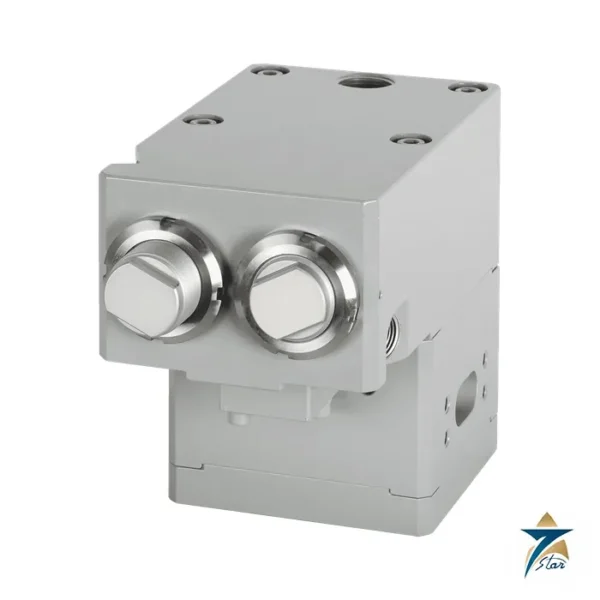
The CS is built as a flange-mounted block. It bolts directly to the actuator connection instead of being piped to it with fittings, which shortens the exhaust path and keeps the flow capacity high. Because it is piloted, even a small solenoid valve with a low CV can command it, and the CS then does the heavy lifting of venting a large actuator volume.
CS part number scope and what the brochure defines
CS is a model name rather than a coded part number. The manufacturer brochure for the CS defines the following choices, and these are the points to settle when you quote or order:
- Housing material: anodised aluminium or stainless steel 316.
- Operating temperature band: -20°C to 70°C, -40°C to 70°C, or -20°C to 85°C. Lower or higher temperatures are available on request.
- Actuator connection: a dedicated flange, matched to the actuator it is mounted on.
- Exhaust connection: dedicated to the SL exhaust protection system.
The full ordering structure is not printed in the brochure, so the exact configuration for your actuator should be confirmed from the instruction manual or by the manufacturer before purchase.
CS technical specifications
| Parameter |
Specification |
| Manufacturer / part number |
IMI STI / CS (quick exhaust, two-way valve) |
| Function |
On/off movement, trip or fail, fully exhausting the connected actuator chamber |
| Actuator types |
Single-acting and double-acting |
| Housing materials |
Anodised aluminium; stainless steel 316 |
| Actuator connection |
Dedicated flange |
| Pilot signal connection |
1/4" NPT |
| Exhaust connection |
Dedicated to the SL exhaust protection system |
| CV max |
Inlet 60; outlet 20 |
| Operating pressure |
2.5 bar minimum, 7 bar maximum |
| Design pressure |
10 bar |
| Operating temperature |
-20°C to 70°C; -40°C to 70°C; -20°C to 85°C (other ranges on request) |
| Weight |
Aluminium 5 kg; stainless steel 316 12.5 kg |
| Construction |
Metal piston operated, free of diaphragm |
How the CS quick exhaust valve works
In normal operation the pilot signal holds the CS closed, and the air trapped in the actuator chamber stays where it is. When the pilot pressure is removed, for example because a solenoid de-energises or a pressure switch trips, the CS opens and the chamber empties through the exhaust port. A metal piston, not a rubber diaphragm, performs the switching, which is why the manufacturer lists the diaphragm-free design as a benefit.
On a modulating actuator the same principle allows rapid venting on demand, even when the pilot comes from a device with a small CV. That is the practical reason to fit a CS: the response time of the final element is no longer limited by the size of the solenoid valve that commands it.
Where the CS fits in an actuator and trip system
The CS sits at the actuator, between the supply and the chamber that must be vented. In IMI STI assemblies it is one of the instrument valves used around the actuator, alongside the 3-way CO operating valve and the CF fast commutator, which serve different switching tasks. The CS is the choice when the requirement is pure venting; the CO and CF are used when a pilot-controlled change-over between supply and exhaust is needed.
The brochure notes compatibility with the SL exhaust protection system, with one to three SL units depending on the exhaust flow you need. Choosing the number of SL units lets the installer match the exhaust protection to the flow the actuator needs, which is worth planning for in the dusty conditions common in the region.
Selection and ordering checklist for the CS
- Actuator type and size: single-acting or double-acting, and the chamber volume to be exhausted.
- Required stroke time on trip, which sets how much exhaust CV you need.
- Supply pressure, which must sit between 2.5 bar and 7 bar for normal operation.
- Housing material: aluminium for general service, stainless steel 316 for offshore or corrosive atmospheres.
- Ambient temperature range at site, from the three standard bands above.
- Flange pattern of the actuator the valve will be mounted on.
- Number of SL exhaust units to be fitted.
- Standard, offshore, sandstorm or copper-free ambient conditions, all listed as suitable by the manufacturer.
Installation, commissioning and maintenance of the CS
Mount the CS on the actuator flange with the correct seals and make sure the pilot line is clean, dry instrument air. Because the valve exhausts a large volume quickly, leave the exhaust path unobstructed and do not reduce it with extra fittings. Check that the SL protection units, if used, are free of blockage.
During commissioning, trip the system from the real command source and time the actuator travel. Compare the result with the required safety response time, and record it. Repeat the test at planned shutdowns. Leaks at the pilot connection or a slow trip are the usual first signs of contamination, so keep the supply air filtered. The manufacturer publishes an instruction manual for the CS; follow it for torque values, seal replacement and spare parts.
Typical CS applications in Oman and the GCC
Fast venting of actuator chambers is used wherever a valve must reach a safe position quickly: emergency shutdown and trip valves in oil and gas facilities, steam and fuel isolation in power stations, and critical on/off valves in petrochemical and desalination plants. In the Gulf, the aluminium or stainless steel housing choice and the temperature band matter as much as the flow rating, because equipment sees high ambient heat, dust and salt-laden humidity. The brochure lists standard, offshore, sandstorm and copper-free ambient conditions, which map well onto coastal and desert sites.
CS compared with related IMI STI instrument valves
| Model |
Type |
Typical role |
| CS |
Two-way quick exhaust |
Fully vent an actuator chamber for trip or fail action |
| CO |
Three-way pilot-operated valve |
High-flow change-over for safety, trip or shutdown |
| CF |
Fast commutator for two 3-way valves |
Fast switching with a shared pilot, used with FT positioners and BV/BW boosters |
Information to send with a CS RFQ
- Part number CS and the quantity.
- Actuator manufacturer, model and flange pattern.
- Single or double acting and the volume to vent.
- Housing material and ambient temperature band.
- Supply pressure and required trip time.
- Whether SL exhaust protection units are needed, and how many.
- Delivery location in Oman or the GCC.
Documents and quotation
A manufacturer brochure for the IMI STI CS is attached on this page for reference. It contains the specification table and dimensional drawing summarised above.
To request a quotation for the CS, send the part number, quantity and the actuator details listed above, and we will confirm availability and lead time.
Other Models in the Imi Sti Instrument Valves Range
Seven Star LLC supplies models from the Imi Sti Instrument Valves range in Oman and the GCC. Compare the related models below and request a quote for the one that matches your application.




















Reviews
There are no reviews yet.