A flaw detector built around apps, touch and a live scan plan
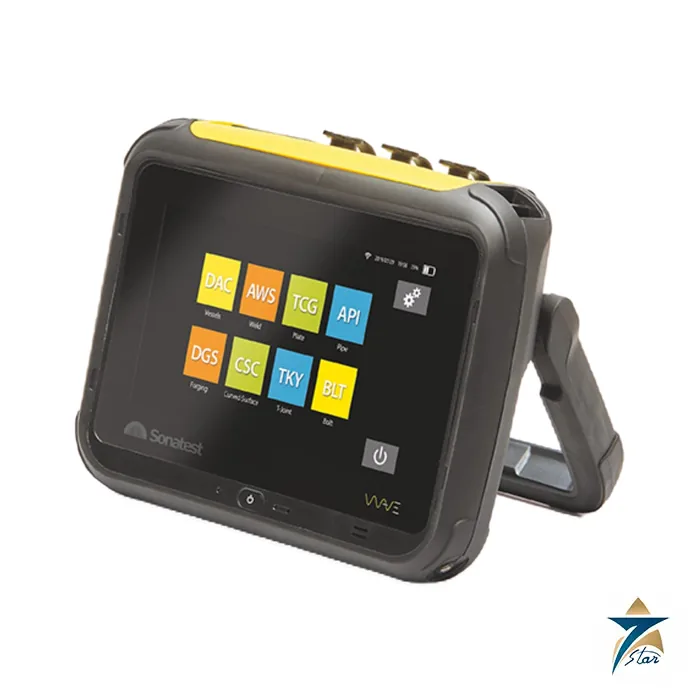
The Wave is Sonatest’s interactive touchscreen flaw detector. Instead of a menu tree, it presents customisable application tiles, so the settings an inspector needs are available in less than two clicks. Sonatest says the interface can be tailored to each procedure, which reduces training and operator error. A unique embedded interactive scan plan with ray tracing, simulation tools and CAD import is intended to separate real flaws from geometric indications and avoid unnecessary repairs.
The 1.7 kg body, 7 inch wide display and 10 hour battery make it a handheld instrument, and Wi-Fi allows files, apps, calibration dates and software versions to be managed from a computer.
Technical specifications
| Parameter |
Specification |
| Dimensions (W x H x D) |
222 x 172 x 66 mm |
| Weight with battery |
1.7 kg |
| UT ports |
1 TX/RX and 1 RX; LEMO 1 or BNC |
| Encoder and GPIO |
LEMO 1, 16 pins; USB-C for charging and wired Ethernet; tripod socket 1/4-20; adjustable stand 0 to 180 degrees |
| Display |
7 in wide TFT, 154 x 90 mm, 1024 x 600 pixels, 16.7 million colours, anti-glare, high contrast mode |
| Touch |
Projective capacitive multi-touch, operable with gloves, tolerant of liquid; glove or normal sensitivity |
| Pulser |
Square wave negative; width 50 ns to 1 microsecond; 100, 150, 250, 300, 350, 400, 450 or 500 V; PRF 1 to 1500 Hz; edge time 10 ns at 300 V |
| Receiver |
0 to 110 dB; bandwidth 250 kHz to 30 MHz; 26 digital filters (13 narrow and wide pairs from 0.5 to 20 MHz) plus 2 broadband filters |
| Modes |
Pulse-echo, pitch-catch, through-transmission |
| Digitizer |
12 bit at 125 MHz |
| Averaging |
0 (off), 2, 4, 8, 16, 32 |
| Gates |
4 gates with IFT; peak, flank, first-peak triggering; 4 colour-coded alarms |
| Sizing |
DAC (16 points, 3 sub-DACs), TCG, split DAC, DGS, AWS D1.1/D1.5, API and BEA |
| Interactive scan plan |
Flat, curved, T-joint and corner joint parts; single and double V, U, J and bevel welds; live ray tracer; CAD import |
| Calibration |
Velocity 500 to 18000 m/s; range 0 to 30000 mm; probe zero 0 to 1000 microseconds |
| Memory |
16 GB total (12 GB for apps and data); up to 50 apps; 100,000 A-scans; 3,000 thickness grids of 200 x 200 |
| Remote API |
MQTT v5; A-scan streaming up to 8192 samples at 60 Hz; 4 measurement streams |
| Battery |
10.8 V, 73 Wh Li-ion; typical 10 h; USB-C power delivery up to 20 V and 3 A |
| Environmental |
Designed to meet IP67; MIL-STD-810F vibration and shock; operating -10 to 45 deg C; storage -30 to 75 deg C |
Interactive scan plan and ray tracer
The scan plan shows probe, wedge and part. Crown and root geometries, weld overlays, TKY, nozzle and flange shapes and curved surfaces are supported, and a projected A-scan shows true depth on complex shapes. As the probe is moved on screen, the ray-tracer overlays the real skip path on the A-scan, including reflective weld caps. The Wave Companion software can import a custom CAD part so that sound propagation can be checked before the inspection.
Application concept and exam mode
Apps can hide, lock and rearrange tiles. The specification lists an exam mode app with anti-tampering protection (unique ID and timer), which is useful for operator certification. The Companion software is included with the instrument.
Ordering codes
| Code |
Description |
| WAVE Lemo / WAVE BNC |
Wave unit with LEMO or BNC connectors |
| 195000 |
Wave carry case |
| 242000 |
Wave smart Li-ion battery pack |
| 800001 |
Wave AC/DC battery charger |
| WAVE-ACC-001 |
Hand strap assembly |
| WAVE-ACC-002 / WAVE-ACC-003 |
4-point working harness / single-point safety harness |
| WAVE-ACC-004 / WAVE-ACC-005 |
Screen protector kit, clear / tint |
| 136001 / 192001 |
Ethernet-to-USB adaptor / 1 m Ethernet cable |
| 147441 |
Quick start guide |
Where it fits
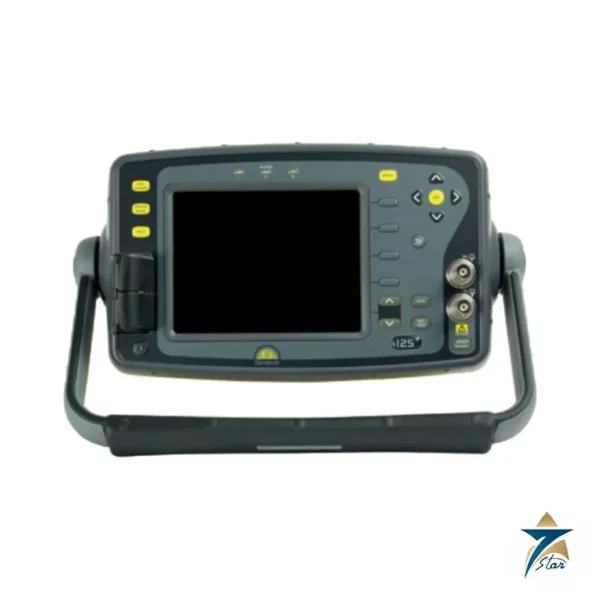
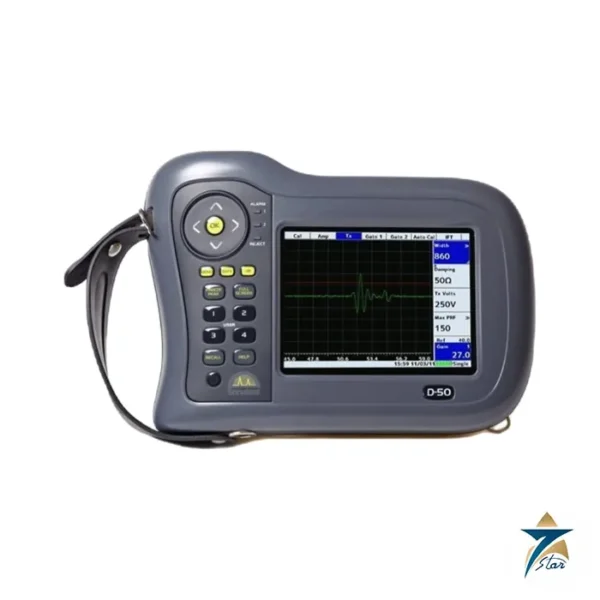
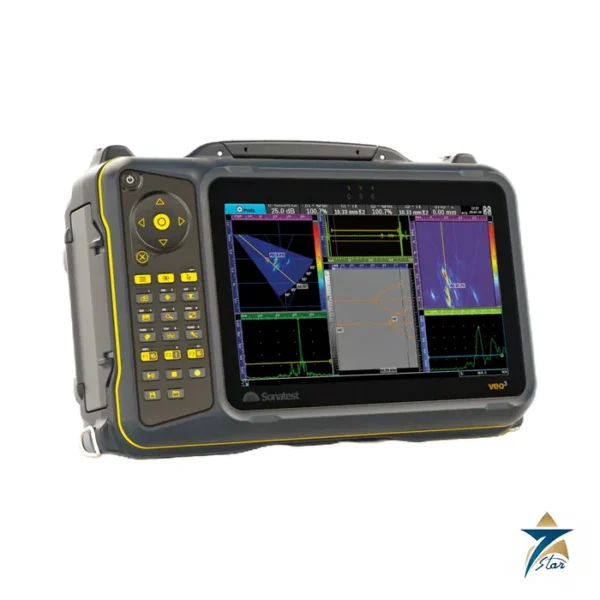
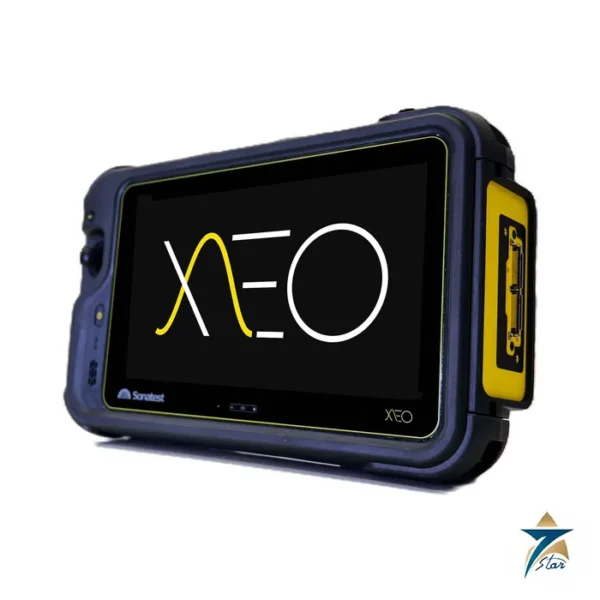
Choose the Wave for weld, pipe and nozzle inspections where the procedure is fixed and the operator must follow it, and where a 4-gate instrument with TCG, DGS, AWS and API is required in a handheld form. For multi-element phased array imaging, see the Veo3 and XEO listings.
Using the Wave on sites in Oman and the GCC
Conventional ultrasonic weld inspection remains the daily work of most inspection teams in the region, on piping, structural steel, storage tanks and pressure vessels. The scan plan with ray tracing helps inspectors decide whether an indication comes from the weld geometry or from a real flaw, which can avoid unnecessary repairs and the cost of reopening welds on a live project.
The glove-friendly touch screen is practical in summer, when inspectors work in protective gloves, and the Wi-Fi link lets a supervisor keep application files, calibration dates and software versions the same across a fleet of instruments. For hot surfaces, check that the probes and couplant are rated for the actual metal temperature, as the instrument rating applies to the unit itself and not to the test surface.
Information to send with an enquiry
- LEMO 1 or BNC probe connectors
- Applications and options needed, such as sizing tools and the scan plan
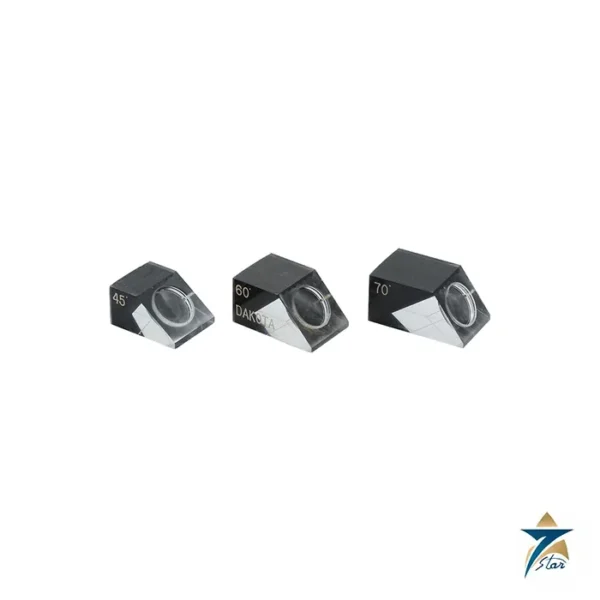
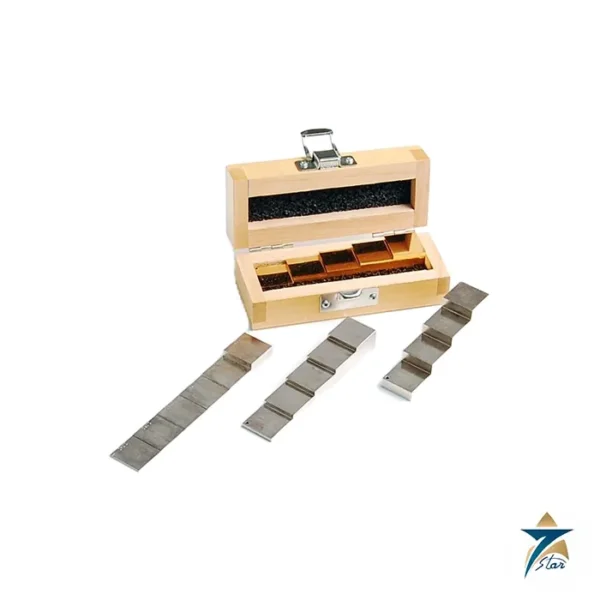
- Probes, cables and calibration blocks for your procedure
- Number of instruments and any training requirement
- Whether calibration certificates must accompany each instrument on delivery
Documents and quotation
The Sonatest Wave full specification (version 2.2) is attached, and the brochure is on the Sonatest product page. See more handheld flaw detectors. Seven Star LLC supplies Sonatest equipment on request; send the connector type and quantity.
Frequently asked questions
What is an application on the Wave?
A pre-set screen layout for a specific procedure, built in the free Wave Companion software and installed by USB-C, Ethernet or Wi-Fi; the unit stores up to 50 apps.
Can a part be drawn on the instrument?
The interactive scan plan covers flat, curved, T-joint and corner parts with welds, and a custom part can be imported from CAD.
Does it work with gloves and couplant?
Sonatest states that the UTouch panel tells couplant from a finger, and the specification lists glove-mode sensitivity.
Which sizing codes are standard?
DGS, AWS D1.1/D1.5, API, BEA, TCG, split DAC and curved-surface correction are listed as standard on the product page.
Can data be streamed to another system?
The specification lists a read/write remote API over MQTT v5 and streaming of A-scans and four measurements at up to 60 Hz.






Reviews
There are no reviews yet.