Four-column apparatus for aromatics, olefins and saturates by FIA
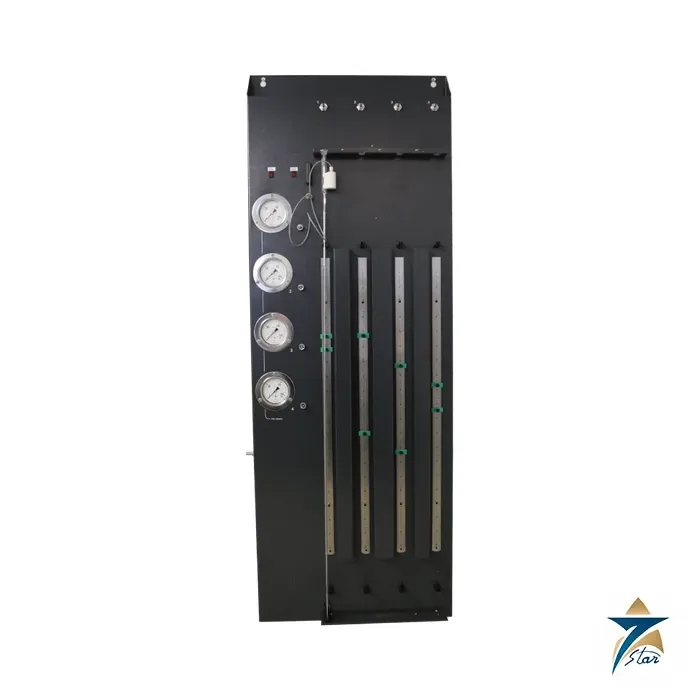
The Normalab FIA Classic is a fluorescent indicator adsorption (FIA) apparatus for determining hydrocarbon types in petroleum products. A sample is run through a silica gel column holding a fluorescent dye, and under ultraviolet light the aromatics, olefins and saturates separate into zones that the operator reads on graduated scales. The FIA Classic carries four positions, so up to four columns can be run side by side, with integrated UV lamps, precision or standard columns at choice and a set of accessories included.
Technical specifications
| Parameter |
Specification |
| Manufacturer / model |
Normalab FIA Classic |
| Order number |
941600 |
| Positions |
4 columns |
| Illumination |
Integrated UV lamps |
| Columns |
Precision or standard columns at choice |
| Delivered measurement scales |
4 graduated scales with index |
| Air control |
4 needle valves (one per column) |
| Pressure monitoring |
4 pressure gauges, one per glassware set |
| Packing aid |
1 electric vibrator for packing silica gel |
| Compressed air supply |
125 kPa maximum |
| Power |
230 V, 50 Hz, 1 A |
| Dimensions (W x D x H) |
700 x 160 x 1900 mm |
| Weight |
35 kg in the brochure; 30 kg on the product page |
Method, range and use
The brochure cites ASTM D1319 and IP 156. The method determines hydrocarbon types over concentration ranges of 5 to 99 volume percent aromatics, 0.3 to 55 volume percent olefins and 1 to 95 volume percent saturates in petroleum fractions that distil below 315 °C. According to Normalab the test characterizes the quality of petroleum fractions as gasoline blending components and as feeds to catalytic reforming, and it is also important for characterizing products of catalytic reforming and thermal and catalytic cracking as blending components for motor and aviation fuels.
Refineries, fuel terminals and independent labs use FIA results to check gasoline and jet fuel against specifications for aromatics and olefins content. The tall bench-standing frame keeps the glass columns vertical and protected, and the pressure gauges let the operator apply the controlled air pressure that drives the sample and the alcohol desorbent through the gel.
Scope of delivery
- 4 graduated scales for measurement, with index
- 4 needle valves to adjust the air inlet separately
- 4 pressure gauges, one per column
- 1 electric vibrator for packing the silica gel
- 1 accessory set (lower joints, upper joints and clamps for the spherical connector)
Reagents are supplied on request and are not part of the standard package; the glass columns are chosen as precision or standard types.
Packing quality decides the accuracy of an FIA test. The silica gel in each column must be uniform, which is why the apparatus includes an electric vibrator, and the dyed gel layer is read against the scale only after the desorbent has pushed the sample through the column. Reading the boundaries between the aromatic, olefin and saturate zones under UV light takes practice, and operators usually calibrate their eye with a known reference blend. Plan for glassware spares and for a place to dispose of the used gel and alcohol in line with site rules.
Installing the FIA Classic in the laboratory
The FIA Classic is a tall, bench-standing frame, so the first installation check is simply space: confirm that the bench or floor position can take the stated height and footprint with room for the operator to stand in front of the columns and reach the needle valves comfortably. The frame should stand level and stable, away from doors and walkways where it could be knocked while glass columns are fitted.
Two utilities are needed. The electrical supply must match the 230 V, 50 Hz rating in the specification table, and the compressed air supply must be clean, dry and regulated so that it never exceeds the 125 kPa maximum. Oil or water carried over from a workshop compressor can contaminate the columns, so many laboratories take air from a dedicated instrument air line or fit suitable filtration and regulation upstream of the apparatus.
Lighting and ventilation
Zone boundaries are read under the integrated UV lamps, and strong ambient light makes this harder. Choose a position where room lighting can be dimmed or where the apparatus is shielded from direct daylight. The test uses alcohol as desorbent, so the area should have suitable ventilation and the storage and handling of solvents must follow the laboratory’s chemical safety rules.
Commissioning and first runs
Once the frame is installed, fit the glassware using the supplied joints and clamps, check every connection for leaks at low air pressure, and confirm that each pressure gauge responds as its needle valve is adjusted. Practise packing columns with the electric vibrator before running real samples, because uniform packing is essential to a valid result.
A sensible commissioning plan is to run a known reference blend on all four positions and compare the readings between columns and between operators. This shows whether the packing technique, air control and zone reading are consistent before the apparatus is used for routine ASTM D1319 or IP 156 testing. Keep the results as a baseline for later checks.
Working conditions in Oman and the GCC
Refinery and terminal laboratories in the region often deal with high outdoor temperatures and fine dust. Keep the laboratory air-conditioned and as stable as possible, since temperature swings affect solvent behaviour and operator comfort during long readings. Dust settling on glassware, joints or the silica gel supply can affect results, so store gel and clean glassware in closed containers and keep the column area clean.
Where the laboratory compressed air is generated locally, high humidity on coastal sites can increase moisture in the air line. Check drains and filters on the air supply regularly so that only dry air reaches the FIA Classic.
Routine care of the apparatus
Inspect glass columns before every run and withdraw any that are chipped or cracked. Clean the columns according to the method and the laboratory procedure, check the needle valves for smooth adjustment and look for wear on the joints and clamps in the accessory set. Keep a log of UV lamp condition and of any unusual readings, and plan glassware and consumable spares so that a single broken column does not stop testing.
Documents and quotation
The Normalab brochure is linked here. Seven Star LLC, an independent supplier in Muscat, quotes the apparatus under liquid analytical systems. A manufacturer photo of sufficient resolution was not available when this page was built. Confirm the column type, the reagents, the compressed air source and the exact weight before ordering, since the brochure and product page differ.








Reviews
There are no reviews yet.